
When shopping for a portable cot—whether for weekend staycations, visits to grandparents, or space-saving nursery setups—ensuring the sleep environment is structurally sound and compliant with safety standards is paramount. Because portable cots are designed to fold, pack, and travel, they rely on joints, hinges, and lightweight materials that differ significantly from standard wooden cribs. To verify a portable cot’s safety before buying, you must check for recognized international safety standards (such as European standard EN 716, American standard ASTM F406, or Australian/New Zealand standard AS/NZS 2195), inspect physical design elements like mesh breathability and locking mechanisms, and confirm the mattress is firm and perfectly fitted.
Why Safety Verification is Critical for Portable Cots
Unlike permanent wooden cribs, portable cots (often called travel cots or play yards) are engineered for mobility. This convenience requires a design with multiple moving parts, folding joints, and lightweight fabrics. While highly practical, these features introduce specific physical risks if the product is poorly designed, manufactured with substandard materials, or assembled incorrectly.
Entrapment and strangulation represent some of the most severe hazards associated with non-compliant portable cots. If the mesh walls are too loose or if the mattress does not fit perfectly against the sides, a baby can slip into the resulting gaps. This can lead to the child’s head or limbs becoming trapped between the mattress and the fabric wall, posing an immediate danger.
Products mentioned in this guide
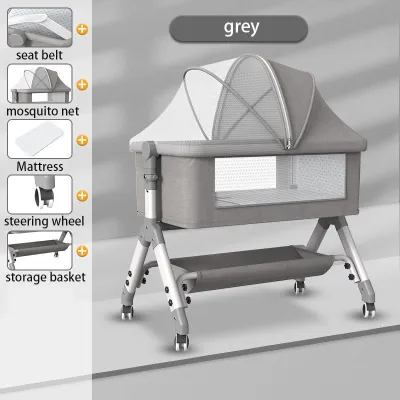
![[SG Stock]Brotish Multifunctional 2 Layer Portable Infant Baby Cot Playpen Travel Cot Bed Double-deck Playpen Sleep Bed](https://img.lazcdn.com/g/p/9306630fe674b3e82e74c940f19a16cd.jpg_400x400q80.jpg_.webp)
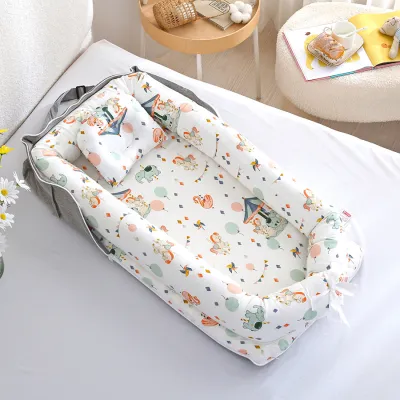
![[SG SELLER] BABY BED FOLDABLE PORTABLE LOUNGER NEST BED COT Baby Separated Bed Baby Cot Newborn Sleeper Sleep By Your Side](https://img.lazcdn.com/g/p/c41c8927ef30d1f6f6a1d479daeb9c05.jpg_400x400q80.jpg_.webp)
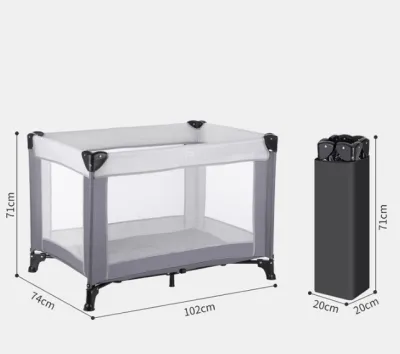

Prices are valid at publication and may change. Please refer to the product page for the latest price.
Structural collapse is another critical risk. Portable cots rely on locking hinges along the top rails and a central locking mechanism on the floor. If these joints are faulty, made of weak plastics, or fail to lock securely, the entire structure can fold inward while the child is inside. This can trap the child under the weight of the frame and fabric.
Suffocation risks are frequently linked to the sleep surface itself. Parents often worry that the thin, firm mattress pad provided with a portable cot is uncomfortable and may attempt to add soft blankets, pillows, or thicker aftermarket mattresses. However, soft or uneven surfaces can easily obstruct an infant’s airway if they roll over onto their stomach, making a firm, flat surface non-negotiable for safe sleep.
Key Physical Safety Features to Inspect Before Buying
When evaluating a portable cot in a retail store or inspecting it immediately after delivery, you should conduct a thorough physical assessment. Do not rely solely on product photos or marketing descriptions; instead, look closely at the physical construction of the cot to ensure it meets basic safety expectations.

First, examine the mesh walls. The mesh fabric must be strong, durable, and woven finely enough to prevent small fingers, toes, or clothing buttons from getting caught. A fine weave also ensures excellent ventilation, which is particularly important in warm and humid climates to prevent overheating. When the cot is fully assembled, the mesh should remain completely taut without sagging, even when you apply gentle outward pressure.
Next, assess the mattress fit and firmness. The mattress pad included with the cot must be exceptionally firm; when you press your hand down on it, it should not conform to your hand or leave an indentation. It must also fit snugly within the base of the cot. As a general rule, there should be no gap wider than two fingers between the edge of the mattress and the fabric sides of the cot. Any larger gap indicates an ill-fitting mattress that poses an entrapment risk.
Inspect the locking mechanisms with care. A safe portable cot features a multi-step locking system on the top rails and the base. These locks must require a deliberate, child-resistant action to disengage, ensuring that a curious toddler cannot accidentally trigger a collapse from the inside. When setting up the cot, you should hear a distinct click as each rail locks into place, and the joints should remain completely rigid under pressure.
Finally, examine the frame and hinges. Run your hands along the top rails, legs, and corners to check for smooth edges, exposed metal parts, or sharp plastic corners. All folding hinges and joints must be fully covered or padded with durable fabric to prevent skin pinching during setup, takedown, or daily use. The base of the cot should also feature multiple support legs to distribute weight evenly and prevent the cot from tipping over if the child moves to one side.
How to Verify Safety Compliance and Manufacturer Claims
Beyond a physical inspection, verifying formal safety certifications is the most reliable way to ensure a portable cot has undergone rigorous mechanical and chemical testing. Manufacturers must comply with specific regional standards to legally sell these products in many markets, and these standards serve as your benchmark for safety.
Start by locating the compliance labels on the product itself. Reputable manufacturers permanently sew safety labels into the fabric of the cot or print them clearly on the frame. Look for recognized international standards such as EN 716 (the European standard for folding cots), ASTM F406 (the US standard for non-full-size baby cribs and play yards), or AS/NZS 2195 (the Australian and New Zealand standard). These codes indicate that the cot has passed strict tests for stability, strength, mesh durability, and non-toxic materials.
Next, review the instruction manual thoroughly. A compliant portable cot must come with a comprehensive, easy-to-understand manual featuring clear assembly diagrams and explicit safety warnings. The manual should clearly state the maximum weight and height limits for the child. If the manual is poorly translated, lacks clear safety warnings, or does not specify weight limits, treat this as a significant red flag.
Before making a purchase, it is also wise to check official consumer product safety recall databases. In Singapore, you can refer to safety alerts and product recall lists published by Enterprise Singapore or international consumer protection agencies. Searching the manufacturer’s name and the specific model number will reveal if the product has been flagged for design flaws, mechanical failures, or safety hazards.
Be cautious of vague or unverified marketing claims. Terms like “pediatrician approved,” “eco-friendly,” or “premium safety design” are often used for marketing purposes and do not carry legal weight. Always look for concrete proof of compliance with established safety standards rather than relying on subjective adjectives. If a brand cannot provide a specific standard code (like EN 716 or ASTM F406) upon request, it is best to choose a different product.
Safe Setup Practices and Usage Boundaries
Even the safest, most highly certified portable cot can become hazardous if it is assembled incorrectly or used beyond its designed limits. Establishing safe usage habits is just as important as choosing the right product.
Always follow the correct assembly sequence specified by the manufacturer. For most portable cots, this involves keeping the center floor hub raised while locking the four top rails into place first. Once the rails are securely locked, you push the center hub down to tension the entire frame. Before placing your child inside, perform a quick push-down test: press firmly on the center of the floor and shake the top rails to ensure everything is locked and rigid.
Never add aftermarket mattresses, pillows, bumper pads, or loose bedding to the portable cot. While it may be tempting to add a soft mattress topper to make the cot feel more comfortable, doing so alters the engineered dimensions of the sleep space. A thicker mattress raises the child higher, reducing the effective height of the side walls and increasing the risk of the child climbing or falling out. It also creates dangerous gaps where a baby’s head can become wedged.
Monitor your child’s physical milestones to determine when they have outgrown the portable cot. Most manufacturers specify a maximum weight limit (typically around 14kg to 15kg) or a height limit (such as when the child reaches 86cm). However, developmental milestones are often more critical than numerical limits. You must stop using the portable cot immediately if your child can sit up, kneel, pull themselves up to a standing position, or attempt to climb out of the cot, as these actions significantly increase the risk of falls.
Frequently Asked Questions (FAQ)
Can I use a thicker aftermarket mattress for extra comfort?
No, you should never use a thicker aftermarket mattress in a portable cot. Portable cots are designed and safety-tested as a complete system, which includes the specific, thin mattress pad provided by the manufacturer. Adding a thicker mattress reduces the distance between the top of the mattress and the top rail of the cot, making it much easier for a baby to accidentally fall out. Furthermore, aftermarket mattresses rarely fit perfectly, creating soft, compressible gaps along the mesh walls where an infant can become trapped and suffocate. For your child’s safety, use only the original mattress pad supplied with the cot.
Are second-hand or hand-me-down portable cots safe to use?
Using a second-hand portable cot carries inherent risks and requires extreme caution. Over time, plastic joints can degrade, locking mechanisms can wear out, and fabric mesh can tear or lose its tension, compromising the structural integrity of the cot. Additionally, older models may not comply with current safety standards or may have been subject to product recalls that the previous owner was unaware of. If you choose to accept a hand-me-down, you must perform a rigorous physical inspection, test all locking joints repeatedly, verify that the original instruction manual is present, and cross-reference the model number with active recall databases to ensure it is safe for use.

Community discussion
Share your experience or ask a question. Comments are reviewed before publication.