
Cleaning a baby’s ears and nose is a routine part of infant grooming, but it requires a careful approach to prevent accidental injury. The most important rule to remember is that cotton swabs should never be inserted into the ear canal or deep into the nasal passages. Instead, these tools are meant exclusively for cleaning the outer parts of the ear and the very edge of the nostrils. By understanding the physical limits of these delicate areas and choosing the right tools, you can keep your baby clean and comfortable without risking their safety.
Understanding the Safety Boundaries of Cotton Swabs
To clean your baby safely, you must first understand the anatomy of their ears and nose. An infant’s ear canal is short, straight, and highly sensitive, with the delicate eardrum positioned close to the entrance. Similarly, the nasal passages are narrow and lined with a thin, fragile membrane called the nasal mucosa, which contains many tiny blood vessels. Introducing any foreign object into these narrow spaces can easily cause physical trauma.
When you insert a cotton swab into the ear canal, you risk pushing earwax deeper rather than removing it. Earwax, or cerumen, is a natural substance that protects, lubricates, and cleans the ear canal by trapping dust and debris. The ear is self-cleaning, gradually moving old wax outward to the entrance of the canal. Pushing a swab inside disrupts this natural process, packing the wax tightly against the eardrum, which can lead to pain, temporary hearing loss, or infection. In severe cases, a sudden movement from the baby can cause the swab to puncture the eardrum.
Products mentioned in this guide
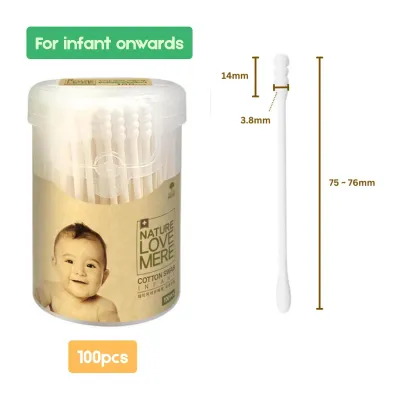
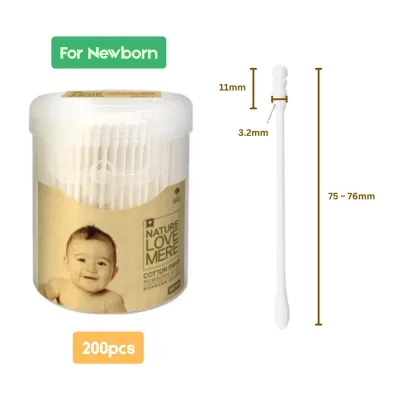
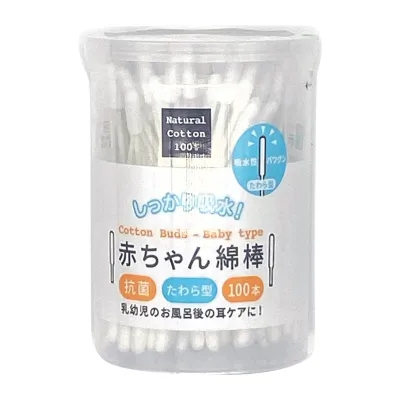
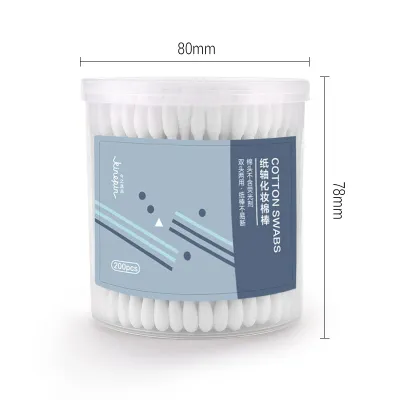
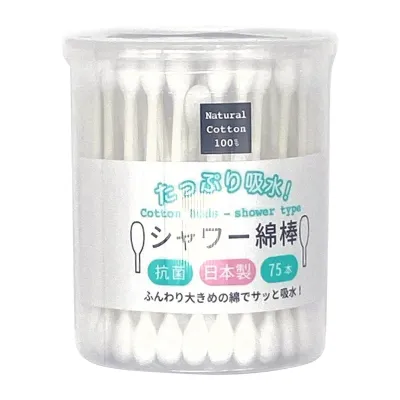

Prices are valid at publication and may change. Please refer to the product page for the latest price.
In the nasal passages, inserting a swab too deep can scratch the delicate lining, leading to immediate bleeding or swelling that makes breathing even more difficult. Pediatric guidelines and manufacturer instructions included in baby grooming kits consistently warn against deep insertion. These instructions are designed to protect your baby’s developing sensory organs, and following them is essential for safe home care.
Choosing the Right Cotton Swabs for Baby Grooming
Not all cotton swabs are created equal, and using standard adult swabs on an infant is highly discouraged. When selecting grooming supplies, look for specialized baby cotton swabs, which are often included in infant grooming kits or sold separately. The most critical feature of a baby-safe swab is its shape.

Safety swabs, often called bulb-shaped or safety-rimmed swabs, feature a unique design where the cotton tip is narrow at the very end but quickly widens into a thick bulb. This physical barrier helps prevent the swab from being inserted too deeply into the ear canal or nostril, making them an appropriate choice for parents. Other shapes, such as spoon-shaped or spiral tips, are sometimes available and can be useful for gently lifting loose debris from the outer ear folds, but they still require a steady hand and must never be inserted deeply.
The materials used in the swab’s construction also play a major role in safety and comfort. Look for tips made of 100% pure cotton that is tightly wound. Loose cotton fibers can easily unravel and remain trapped in the baby’s ear or nose, causing irritation or localized infections. The stem of the swab should be sturdy yet flexible. Paper stems are highly recommended because they provide excellent control but will bend under sudden pressure, reducing the risk of injury if your baby makes an unexpected movement. Bamboo stems are strong and rigid, while plastic stems are flexible but can sometimes snap with sharp edges.
Before purchasing, check the product packaging for age recommendations, sterilization indicators, and specific baby-safe labels to verify. Ensure that the packaging is sealed and undamaged to keep the swabs clean and hygienic for use on your baby’s sensitive skin.
Step-by-Step Guide to Cleaning Baby's Outer Ears
Cleaning your baby’s outer ears is a simple process when done at the right time and with the correct technique. The goal is to remove sweat, milk residue, and dust that naturally accumulate in the outer folds of the ear (the pinna) and the area behind the ear.
Timing is highly influential when it comes to infant grooming. A suitable time to clean your baby’s ears is immediately after a warm bath. The humidity and warm water naturally soften any dried secretions or wax, making them much easier to wipe away without scrubbing. Ensure your baby is calm and relaxed, and work in a well-lit room so you can clearly see every fold of the ear.
To begin, lay your baby flat on a secure, comfortable surface, such as a changing table, or hold them securely in your lap. If your baby tends to squirm, ask another caregiver to gently hold their head still, or wait until the baby is in a quieter mood. Lightly moisten the tip of a baby safety cotton swab with warm water. Do not saturate the swab, as excess water can drip into the ear canal and cause discomfort or create a moist environment where bacteria can grow.
Gently wipe the outer contours of the ear, tracing the folds of the pinna to lift away dirt and oils. Next, gently fold the ear forward to clean the crease behind the ear. This area is highly prone to sweat buildup, milk spills, and dry skin flakes, which can cause redness or a sour odor if left uncleaned. Throughout the process, keep the swab strictly on the outside of the ear. Never let the tip enter the dark opening of the ear canal.
You must stop the cleaning process immediately if your baby becomes distressed, starts crying, or moves violently. Forcing a swab near a moving baby’s head increases the risk of accidental insertion. Additionally, if you notice any unusual discharge, such as yellow or green fluid, or if the skin behind the ear is cracked and bleeding, stop cleaning and consult a healthcare professional.
Safe Techniques for Clearing Baby's Nasal Passages
Infants are obligatory nasal breathers, meaning they breathe primarily through their noses during their first few months of life. Because of this, even a small amount of dried mucus can make their breathing sound noisy and cause discomfort. In warm, air-conditioned indoor environments, nasal secretions can dry out quickly, forming hard crusts at the rim of the nostrils.
Before attempting to remove any dried mucus, you must soften it. Trying to pull out dry, crusty secretions can tear the delicate nasal lining and cause bleeding. Administer one or two drops of sterile saline solution into each nostril. Wait a minute or two to allow the saline to moisten and loosen the crusts. You will often notice that the baby sneezes after receiving saline drops, which naturally helps push the mucus closer to the exit.
Once the secretions are soft, take a clean baby safety cotton swab. Hold the swab near the tip for maximum control. Place the bulbous tip gently at the very edge of the nostril, known as the nasal vestibule. Using a gentle rolling motion, turn the swab outward. This rolling action allows the soft cotton fibers to catch the loosened mucus and pull it out of the nose. Never push the swab upward or inward into the nasal cavity.
If your baby has deep nasal congestion or runny mucus that is further back in the nasal passages, cotton swabs are not designed for this purpose. Attempting to use a swab for deep congestion will only push the mucus further back, worsening the blockage. In these situations, transition to a manual nasal aspirator or a silicone bulb syringe. These tools use gentle suction to safely draw out mucus from deeper within the nasal cavity without making physical contact with the sensitive inner lining.
Recognizing When to Stop and Seek Professional Help
While routine outer cleaning is safe to perform at home, there are times when infant ear and nose issues require professional medical attention. Knowing when to stop grooming and consult a pediatrician is crucial for your baby’s health.
Watch for red-flag symptoms that indicate a potential ear infection or injury. If you notice yellow, green, or foul-smelling discharge draining from your baby’s ear, this is a clear sign of infection that requires medical evaluation. Other signs include persistent ear tugging, rubbing, or crying when the ear is touched, as well as an unexplained fever. If you suspect that your baby’s ear canal is blocked by a hard plug of impacted wax, do not attempt to remove it yourself. A pediatrician can safely dissolve or flush out the wax using specialized tools.
For nasal issues, seek medical help if your baby has severe congestion that interferes with their ability to feed, sleep, or breathe comfortably. If you notice bloody nasal secretions that do not stop after a few minutes, or if the skin around the nostrils becomes severely cracked, red, and irritated, consult a doctor for appropriate treatment options.
Finally, never attempt to use improvised tools such as metal tweezers, hairpins, or your own fingernails to extract visible objects or deep wax from your baby’s ears or nose. These rigid items can easily puncture the eardrum, scratch the nasal lining, or push foreign objects deeper into the airway, causing severe harm. If you suspect a foreign object is lodged in your baby’s ear or nose, seek immediate medical care.
Frequently Asked Questions (FAQ)
Can I use regular adult cotton swabs for my baby?
No, regular adult cotton swabs are not safe for infants. Adult swabs have a straight, narrow design without a safety bulb, making it very easy to accidentally insert them too deeply into a baby’s tiny ear canal or nostril. Additionally, the cotton tips on adult swabs are often larger and less tightly wound, which can push debris further inside or leave loose fibers behind. Always choose specialized baby safety swabs with a widened base to protect your child from accidental injury.
How often should I clean my baby's ears and nose?
You should clean your baby’s ears and nose only on an as-needed basis rather than following a strict daily schedule. The human body naturally clears earwax and nasal secretions over time. Daily cleaning is unnecessary and can irritate your baby’s delicate skin. Simply inspect their ears and nose during daily care, and perform a gentle outer cleaning when you see visible buildup of sweat, milk, or softened mucus that causes discomfort.
What should I do if a cotton swab tip breaks off inside the ear?
If a cotton swab tip or any part of it breaks off and becomes lodged inside your baby’s ear canal, do not attempt to retrieve it yourself. Using tweezers, fingers, or another swab will almost certainly push the object deeper, risking damage to the eardrum. Keep your baby as calm and still as possible to prevent them from rubbing the ear, and take them to a clinic or pediatric emergency department immediately so a healthcare professional can safely extract it.

Community discussion
Share your experience or ask a question. Comments are reviewed before publication.