
A baby head protection pillow can help cushion backward falls while your little one learns to sit, crawl, or stand. These backpack-style cushions are designed to provide a soft barrier between the back of your baby’s head and hard flooring during transitional motor milestones. However, an improperly fitted protector can cause neck strain, restrict natural movement, or create new safety hazards. To ensure the product provides effective cushioning without compromising your baby’s comfort, you must learn how to fit, adjust, and monitor it correctly.
Achieving a secure fit requires careful attention to strap tension, cushion alignment, and your baby’s physical responses. Because every baby develops at a unique pace, parents must prioritize the manufacturer’s specific guidelines and observe their child’s cues during use. This guide walks you through the essential steps to inspect, fit, and verify the safety of a baby head protection product.
When to Use a Baby Head Protection Pillow
Determining if your baby is at the right developmental stage is the first step before introducing a head protector. These accessories are most useful when infants are actively practicing motor milestones that involve a high risk of falling backward, such as learning to sit up independently, crawling, or pulling themselves up to stand. During these stages, babies have not yet fully developed their balance or the protective reflex to catch themselves with their arms when tipping over.
Products mentioned in this guide
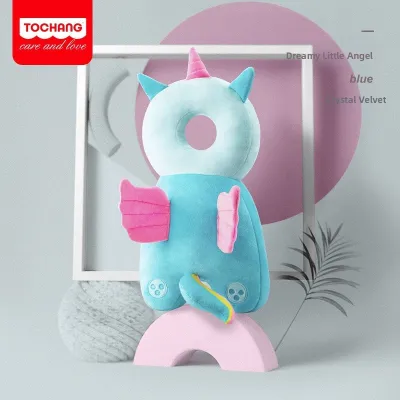
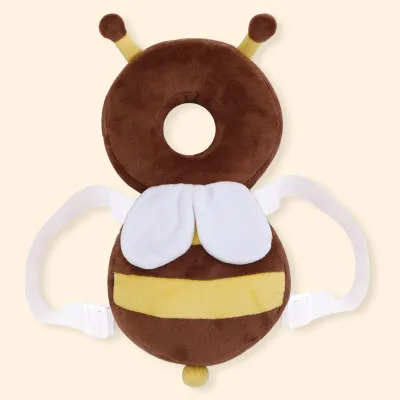
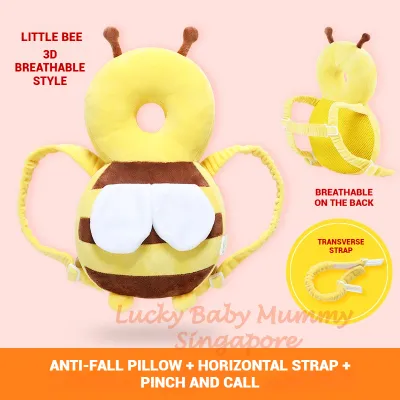
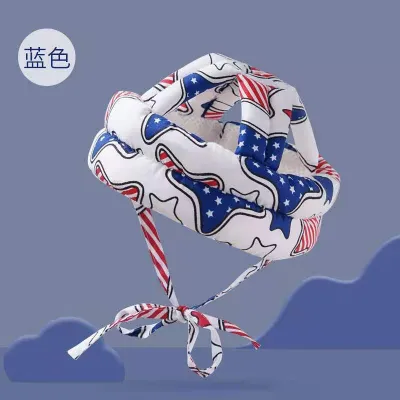
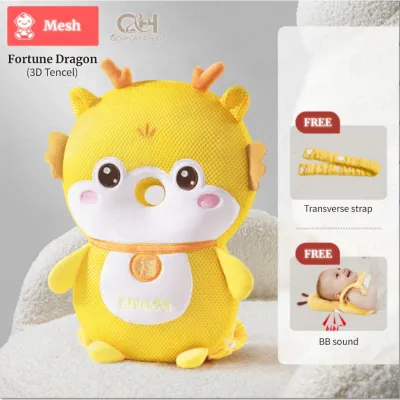
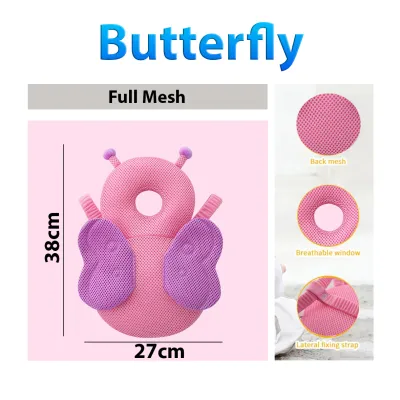
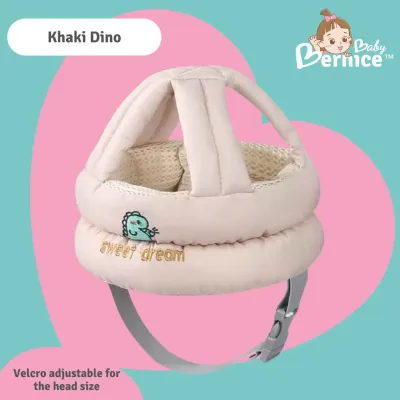
Prices are valid at publication and may change. Please refer to the product page for the latest price.
Before purchasing or using a head protector, always check the manufacturer’s recommended age, weight, and height limits printed on the product packaging or instruction manual. Because physical dimensions vary greatly among infants, never rely solely on age recommendations. Verify that your baby falls safely within the specified weight range to ensure the straps can be adjusted properly and the cushion is scaled correctly for their body size.
Your baby must also possess sufficient neck strength and head control to support the extra weight and bulk of the pillow. Adding even a lightweight accessory to a baby’s back alters their center of gravity. If your baby struggles to hold their head steady, tilts forward under the weight of the cushion, or shows signs of fatigue, they are not yet ready for this product. Introduce the pillow only when your baby can comfortably support their own head while sitting or crawling.
Pre-Fit Checks: What to Inspect Before Use
Before placing the head protection pillow on your baby, perform a thorough physical inspection of the product to ensure it is in safe working condition. Examine all shoulder straps, chest clips, and seams for any signs of wear, fraying, or loose stitching. Weakened seams or damaged straps can fail during a fall, causing the cushion to shift out of place and leaving the baby unprotected.

Next, verify that the internal padding is intact and evenly distributed. Whether the pillow uses synthetic fiber filling or a breathable 3D mesh structure, the cushioning material must be free from hard lumps, deep indentations, or shifted filling. Uneven padding can reduce the shock-absorbing capabilities of the pillow or create uncomfortable pressure points against your baby’s head and spine.
Your baby’s clothing and the surrounding environment also play a significant role in safety and comfort. Dress your baby in breathable, non-slip clothing, such as a cotton onesie or t-shirt, which helps keep the straps from sliding off the shoulders. Avoid dressing them in slippery synthetic fabrics or overly bulky outfits that interfere with a snug strap fit. In warm, humid climates, choose a head protector made of lightweight, breathable mesh to prevent heat retention and sweat buildup during indoor play.
Step-by-Step Guide to Fitting and Adjusting
To secure the head protection pillow correctly, start by placing the straps over your baby’s shoulders just like a standard backpack. Position the main padded section so that the circular opening or thickest part of the cushion aligns directly with the back of your baby’s skull. The cushion must sit flat against the upper back and head without pushing the head forward or blocking your baby’s peripheral vision and hearing.
Once the pillow is positioned, adjust the shoulder straps to achieve a snug but comfortable fit. Slide the plastic adjusters slowly, ensuring both sides are tightened evenly so the pillow remains centered. To verify the tension, use the two-finger check: you should be able to slide two fingers flat between the strap and your baby’s shoulder or chest. If you cannot fit your fingers, the straps are too tight and may restrict circulation or cause chafing; if there is excess gap, the straps are too loose.
Many baby head protectors feature a horizontal chest strap or cross-clip to prevent the shoulder straps from slipping off sloped shoulders. Fasten this clip and adjust its position so it sits flat across the middle of the chest, well below the throat. The chest strap must be loose enough to allow natural ribcage expansion when your baby breathes, and it should never restrict their arm movement or press against the neck.
Finally, test the stability of the fit by gently tugging the cushion in different directions. The pillow should stay relatively centered and should not slide over your baby’s face, tilt excessively to one side, or ride up toward the neck. Observe your baby as they begin to move on the floor; if the pillow sways wildly or droops, immediately sit the baby up and readjust the straps to secure the position.
Comfort and Safety Verification
Continuous monitoring is essential whenever your baby is wearing a head protection pillow. Watch your baby’s posture from the side while they play. If you notice that the cushion pushes their head forward into an unnatural chin-to-chest position, remove the pillow immediately, as this posture can restrict their airway. Look for signs of neck fatigue, such as your baby resting their head on the floor more frequently than usual or showing general fussiness.
Regularly check your baby’s skin for signs of irritation, redness, or sweat buildup, especially around the shoulders, underarms, and the back of the neck. Synthetic straps and plush fabrics can trap heat and cause friction against delicate skin, potentially leading to chafing or heat rash. It is wise to remove the pillow during quiet play intervals to let the skin breathe and cool down.
Pay close attention to your baby’s mood and overall mobility. The head protector is meant to support safe play, not restrict it. If the added weight makes your baby top-heavy, causing them to lose balance more frequently, or if they express distress and try to pull the pillow off, discontinue use. A baby’s natural movement and comfort should always take priority over the use of protective accessories.
When to Stop Using the Head Protector
As your baby grows and refines their motor skills, they will naturally outgrow the need for a head protection pillow. Transition away from using the pillow once your baby walks confidently, demonstrates a stable sense of balance, and rarely falls backward. At this stage, their natural protective reflexes—such as stepping back or putting their hands out to break a fall—are fully functional, making the cushion unnecessary.
Physical growth is another clear indicator that it is time to retire the product. Regularly check your baby’s physical dimensions against the manufacturer’s maximum weight, height, or chest circumference limits. If the shoulder straps are fully extended and still leave red marks on your baby’s skin, or if the cushion no longer aligns properly with the back of the head, the baby has outgrown the device.
Finally, stop using the head protector immediately if you detect any structural failure. Over time, elastic straps can lose their elasticity, and plastic buckles can become brittle or fail to click securely into place. If the padding becomes permanently compressed and loses its springiness, it will no longer provide adequate impact absorption. Discard and replace any worn-out safety gear to prevent accidental injury.
Frequently Asked Questions (FAQ)
Can a baby sleep while wearing a head protection pillow?
No, a baby must never sleep while wearing a head protection pillow. These products are designed strictly for active, supervised play and learning. If a baby falls asleep while wearing a backpack cushion, there is a severe risk of airway restriction or suffocation if they roll onto their side or stomach. Always remove the pillow immediately if your baby shows signs of sleepiness or is placed down for a nap.
How do I clean the baby head protection pillow?
Always refer to the sewn-in care label on your specific product for detailed cleaning instructions. Many head protectors require gentle hand washing in cold water with a mild baby detergent to preserve the shape of the padding and the elasticity of the straps. If machine washing is permitted by the manufacturer, use a delicate cycle and place the pillow inside a mesh laundry bag. Allow the pillow to air-dry completely in a well-ventilated area before the next use to prevent mold or mildew from developing inside the dense filling.

Community discussion
Share your experience or ask a question. Comments are reviewed before publication.