
Selecting the right baby training spoon is a foundational step in your child’s weaning journey, directly influencing their comfort, confidence, and motor skill development. Rather than choosing a utensil based solely on aesthetics, caregivers must match the spoon’s physical design—such as handle length, bowl depth, and material flexibility—to the baby’s specific age, developmental milestones, and emerging motor skills. As your baby transitions from passive swallowing to active self-feeding, their grip evolves from a whole-hand grasp to a precise finger pinch, requiring a corresponding shift in spoon shape. By understanding how these physical attributes align with your baby’s physical capabilities, you can create a positive, safe, and developmentally appropriate mealtime environment.
Understand Your Baby's Weaning Stage and Motor Skills
Before purchasing any weaning supplies, observe your baby’s physical readiness for self-feeding. Around six months of age, many infants begin to show clear signs of readiness, such as sitting upright with minimal support, maintaining steady head control, and showing active interest in the food on your plate. Another critical milestone is hand-to-mouth coordination, which you can observe when your baby naturally brings toys, fists, or teething rings directly to their mouth. These behaviors indicate that their nervous system and muscles are preparing for the complex task of navigating a utensil.
As your baby grows, their fine motor skills progress through distinct stages that dictate how they interact with objects. Initially, infants use a palmar grasp, wrapping their entire fist around an object to hold it. This grip offers limited control and makes it difficult to direct a long, thin utensil accurately. Over the subsequent months, this grasp gradually refines into a pincer grasp, where the baby uses their thumb and index finger to pinch and manipulate smaller items. Recognizing where your baby falls on this developmental spectrum helps you choose a spoon that matches their current grip strength and coordination level.
Products mentioned in this guide
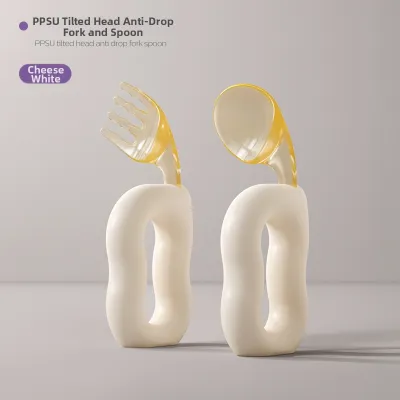
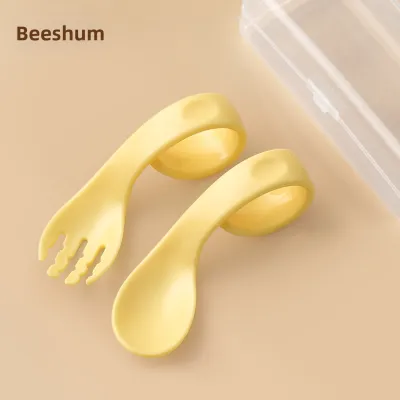
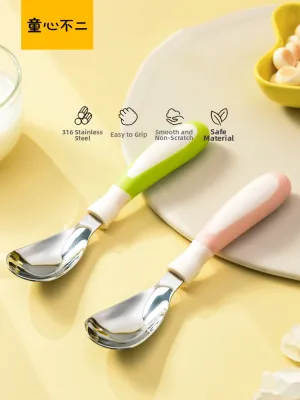
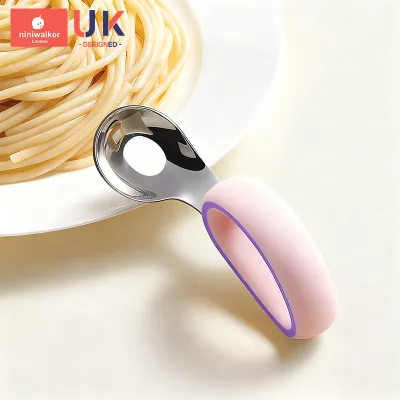
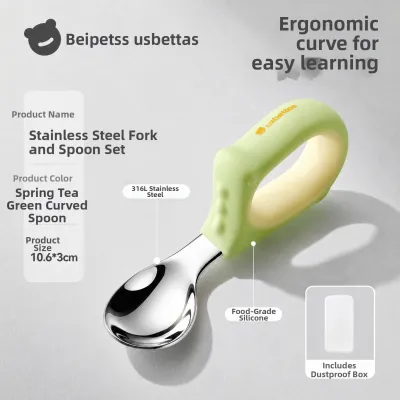
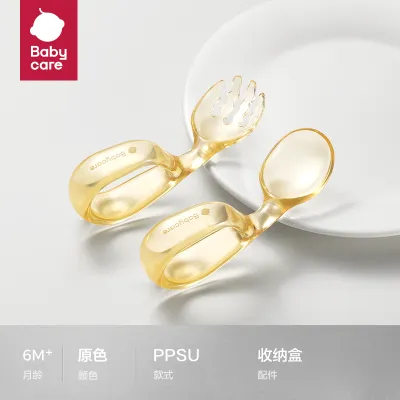
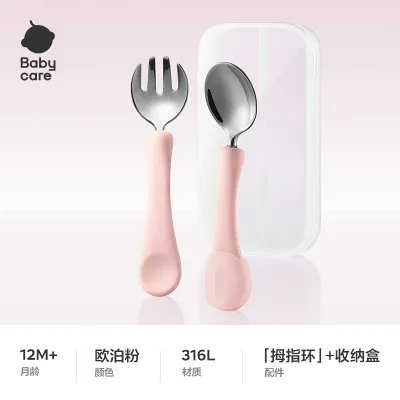
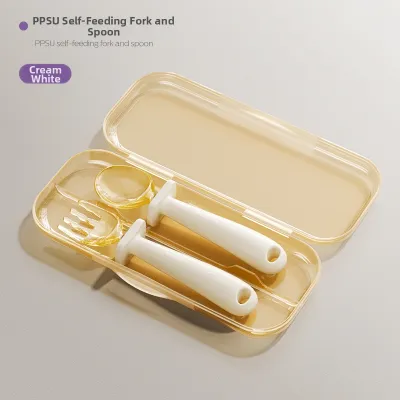
Prices are valid at publication and may change. Please refer to the product page for the latest price.
The weight and shape of the training spoon must directly support this motor development. A spoon that is too heavy can cause fatigue and frustration, leading the baby to abandon self-feeding efforts. Conversely, a spoon with a slight, intentional weight can provide valuable proprioceptive feedback, helping the baby’s brain register the utensil’s position in space relative to their mouth. The shape of the handle must also accommodate their grip; a bulbous, textured handle is far easier for a palmar-grasping infant to secure than a flat, slippery metal handle.
Evaluate Key Physical Features of a Training Spoon
When evaluating training spoons, the handle design is one of the most critical features to analyze. A well-designed handle should feature an ergonomic grip that fits comfortably within a baby’s small palm. Look for handles with non-slip textures, such as raised silicone ridges, dimples, or rubberized sleeves. These textures prevent the spoon from slipping out of greasy or puree-covered hands, reducing mealtime mess and frustration. The thickness of the handle should match the baby’s grip style, with thicker, rounder handles being ideal for early self-feeding stages.

The dimensions of the spoon bowl also play a vital role in how successfully your baby can eat. For beginners, a shallow bowl is highly recommended because it requires very little lip clearance. During the early stages of weaning, babies do not yet know how to scrape food off a deep spoon using their upper lip; instead, they rely on a simple sucking or licking motion. A shallow bowl allows them to access the food easily without leaving half of the portion behind. As their oral motor skills mature, you can transition to slightly deeper bowls that hold larger portions and teach them to use their lips to clear the spoon.
Material flexibility and sensory feedback are equally important considerations, especially for teething babies with sensitive gums. Soft, flexible materials like food-grade silicone or thermoplastic elastomers (TPE) provide a gentle surface that cushions accidental bumps against the gums or emerging teeth. These materials also offer a comforting chewing surface, turning the spoon into a multi-sensory tool that eases teething discomfort while encouraging oral exploration. Harder materials, such as bamboo, firm plastics, or stainless steel, should be introduced later when the baby has developed better control and is less likely to poke themselves aggressively.
Match the Spoon to Your Baby's Age and Milestones
As your baby transitions from passive, caregiver-led feeding to active, independent scooping, their utensil requirements will shift dramatically. A single spoon style is rarely sufficient to cover the entire weaning journey, which typically spans from six months to well past the first year. Understanding how to transition between different spoon designs ensures that your baby always has the right tool for their current developmental stage, minimizing frustration and promoting a positive relationship with food.
Early Weaning: Spoons for Initial Tastes (Around 6 Months)
During the initial stage of weaning, which typically begins around six months of age, the primary goal is introducing new flavors and textures rather than consuming large volumes of food. At this point, feeding is largely caregiver-led, though the baby may attempt to grasp the spoon. For this phase, spoons with longer handles are highly beneficial. A longer handle gives the caregiver excellent control and leverage when guiding the spoon into the baby’s mouth, and it allows the baby to place their hand over yours to practice the hand-to-mouth motion together.
The bowl of an early weaning spoon must be exceptionally shallow and narrow. A tiny, narrow bowl fits comfortably inside a six-month-old’s small mouth without triggering the gag reflex or overloading their limited swallowing capacity. It also ensures that the baby can easily clear the entire puree portion with their upper lip, making the experience rewarding and efficient.
Safety and comfort are paramount during these early tastes, making soft, highly flexible materials the ideal choice. Look for spoons made entirely of soft silicone that bend easily under pressure. This flexibility protects the baby’s delicate gums and newly emerging incisors from painful impacts, ensuring that their first experiences with solid foods are free from physical discomfort.
Active Self-Feeding: Spoons for Scooping Practice (8 to 12 Months)
Between eight and twelve months, babies typically enter an active self-feeding phase characterized by a strong desire for independence. During this stage, their wrist rotation is still developing, and they rely heavily on a palmar grasp. To support this transition, you should switch to spoons with shorter, thicker handles. A short handle reduces the distance between the baby’s hand and their mouth, making it much easier for them to coordinate the movement and successfully deliver food to their target.
The bowl design should also evolve to assist with active scooping and food retention. Slightly deeper or subtly angled bowls are highly effective during this phase. An angled bowl compensates for the baby’s limited wrist supination (the ability to rotate the wrist upward), allowing them to bring food to their mouth horizontally without spilling it over the side. These designs help keep the food on the spoon, reinforcing their efforts and reducing mealtime mess.
As babies become more active and forceful with their utensils, the materials must be sturdy enough to withstand biting, dropping, and enthusiastic banging on the high chair tray. While the tip should remain relatively soft to protect the mouth, the core of the spoon should offer more rigidity. Look for spoons that combine a firm, durable inner core with a soft outer silicone coating, providing the perfect balance of structural integrity and oral safety.
Verify Safety, Materials, and Hygiene Standards
When selecting any product for your baby, verifying safety and hygiene standards is a non-negotiable step. Always carefully inspect the manufacturer’s packaging and labels for clear declarations regarding the materials used. Ensure the product is labeled as food-grade, BPA-free, phthalate-free, and non-toxic. While these labels are standard in many markets, including Singapore, it is always wise to verify these claims directly on the packaging rather than assuming compliance based on appearance alone.
Before introducing a new spoon to your baby, conduct a thorough physical inspection of the product. Check for any small, detachable parts, such as decorative plastic characters or removable suction bases, which could pose a severe choking hazard if they become loose. Run your fingers along the edges of the spoon to ensure there are no sharp molding seams, rough plastic edges, or manufacturing defects that could scratch your baby’s sensitive lips or gums. If you notice any structural weaknesses or tears in the silicone, discard the spoon immediately.
Hygiene is another critical factor, as baby utensils require frequent, thorough cleaning to prevent bacterial growth. Review the manufacturer’s instructions to verify whether the spoon is dishwasher-safe or requires hand washing with mild baby-safe detergent. Some materials, particularly certain plastics or natural wood handles, cannot withstand the high temperatures of steam sterilizers or dishwashers without warping or degrading. Additionally, pay close attention to multi-part spoons where water and food residue can become trapped in crevices; single-piece molded silicone spoons are often the easiest to keep clean and hygienic over long-term use.
Introduce the Training Spoon Successfully at Mealtime
Introducing a training spoon to your baby requires patience, consistency, and a low-pressure approach. One highly effective strategy to encourage early success is “pre-loading” the spoon. Instead of expecting your baby to master the complex task of scooping food from a bowl, you can dip the spoon into the puree or soft food yourself and hand the pre-loaded utensil to your baby. This allows them to focus entirely on the hand-to-mouth coordination and the rewarding experience of tasting the food, building their confidence before they attempt the harder task of scooping.
Allowing your baby to engage in exploratory play with the spoon is another excellent way to build familiarity. Give your baby an empty spoon to hold, chew on, and examine outside of regular mealtimes, such as during floor play. This helps demystify the object and reduces any anxiety they might feel when it is presented at the high chair. During meals, model the scooping and eating motions yourself using your own spoon, as babies learn rapidly by imitating the actions of their caregivers.
While learning to self-feed involves a natural learning curve, it is important to monitor your baby’s reactions and know when to take a step back. If your baby exhibits extreme frustration, persistent refusal, or frequent gagging that does not improve over time, pause the training spoon introduction and return to caregiver-led feeding for a few days. Every baby develops at their own unique pace, and forcing the issue can create negative associations with mealtime. If you have ongoing concerns about your baby’s feeding progress, oral motor development, or persistent gagging, consult your pediatrician or a qualified pediatric feeding specialist for personalized guidance.
Frequently Asked Questions (FAQ)
When should I transition from a training spoon to a regular toddler spoon?
You can transition your baby from a training spoon to a regular toddler spoon when they demonstrate consistent self-feeding success and refined motor skills. Look for signs such as improved wrist rotation, where they can bring a straight spoon to their mouth without spilling, and the development of a precise pincer grasp. Additionally, if your baby has outgrown the small capacity of their training spoon’s shallow bowl or requires a longer handle to reach into deeper toddler bowls, it is likely time to introduce a standard toddler utensil.
Are angled or curved training spoons necessary for all babies?
Angled or curved training spoons are not necessary for all babies, though they can be highly beneficial for some. These specialized designs are specifically engineered to assist infants who have limited wrist rotation or mobility challenges, making it easier for them to guide food into their mouths. However, for babies developing typical motor milestones, standard straight training spoons are perfectly sufficient. Most infants will naturally learn to adjust their arm and wrist movements to navigate a straight spoon successfully over time.

Community discussion
Share your experience or ask a question. Comments are reviewed before publication.