
Keeping a nursery tidy can feel like a constant battle against an ever-growing mountain of plush toys, building blocks, and baby books. A well-designed toy storage bag offers a flexible, space-saving solution that adapts to your daily routine, making cleanup quick and effortless. Unlike rigid plastic bins, fabric or mesh storage bags can be easily tucked away, hung on doors, or moved from room to room as your child plays.
To choose the right toy storage bag, you must look beyond aesthetics and focus on practical factors like accessibility, material safety, and durability. The ideal bag should match your child’s developmental stage, allowing them to reach their favorite items safely while helping you maintain a clutter-free environment. By evaluating how a bag handles daily wear, spills, and different toy sizes, you can establish an organized system that grows alongside your family.
Key Features to Look for in Nursery Toy Storage Bags
Choosing a storage solution for a baby’s room requires a careful balance of convenience and safety. Because these bags will be kept in close proximity to infants and toddlers, every design element—from the closure mechanism to the fabric weave—must be evaluated with a nursery environment in mind.
Products mentioned in this guide
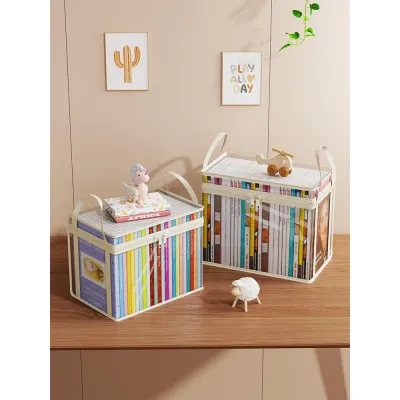
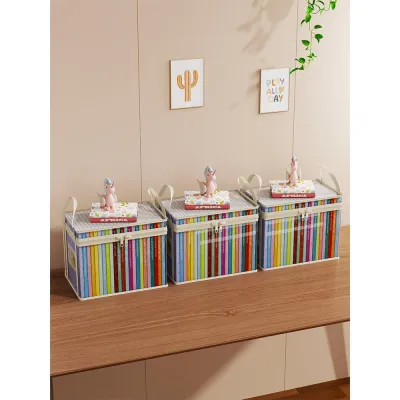
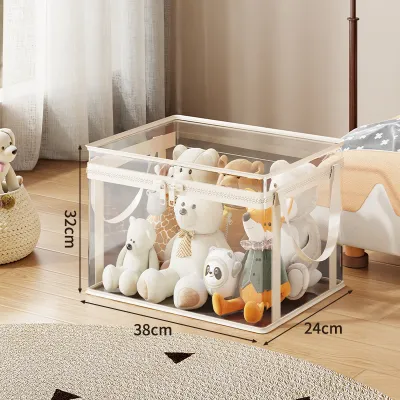
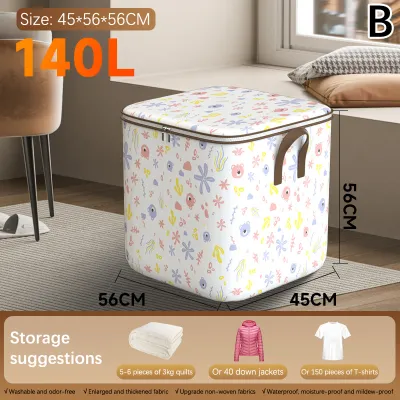
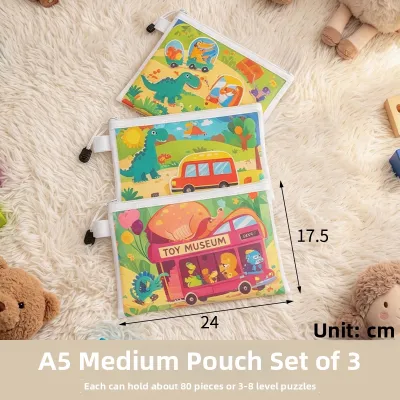
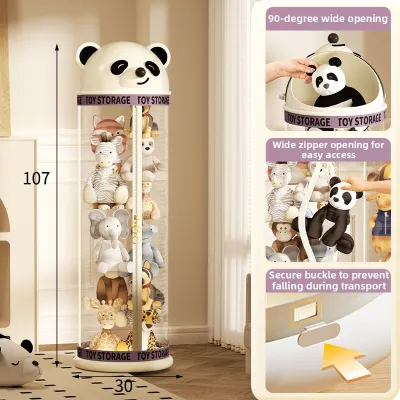
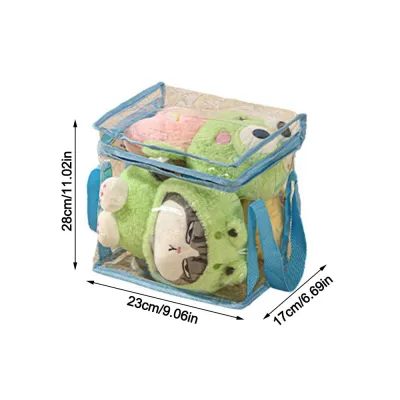
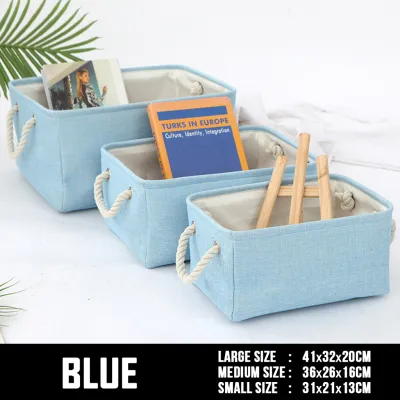
Prices are valid at publication and may change. Please refer to the product page for the latest price.
When organizing a nursery, deciding between clear and opaque storage bags is a key first step. Clear panels, made from mesh or transparent plastic, allow you to see contents at a glance. This visibility is helpful when searching for small toys or puzzle pieces. However, transparent bags do not hide visual clutter, which can make a small nursery feel less organized.
Opaque designs, such as those made from thick canvas or woven cotton, offer a clean and uniform look that hides mismatched toys from view. While they contribute to a calmer visual environment, they require you to remember what is stored inside or use external labels. Many parents find that a combination of both styles works best, using clear bags for multi-piece toy sets and opaque bags for larger, bulkier items.
The way a storage bag opens and closes directly impacts how safe and usable it is for both you and your child. Zippers are excellent for securing toys during travel or long-term storage, but they must be high-quality and easy to operate. Look for large, rounded zipper pulls that are easy for small hands to grasp, and ensure the zipper teeth are smooth to prevent scratches.
Drawstrings are incredibly common in toy bag designs, but they require close inspection in a nursery setting. Long, loose cords present a serious strangulation hazard for infants and toddlers. If you choose a drawstring bag, look for designs with short cords, breakaway safety clasps, or integrated toggle locks that keep the cord secured and out of reach. Alternatively, consider bags with wide, open tops, magnetic closures, or simple hook-and-loop fasteners that allow easy access without any cord hazards.
Nursery items are inevitably exposed to drool, spilled milk, spit-up, and dust, making material choice a top priority. Before purchasing any toy storage bag, check the manufacturer’s care label to see how easily the fabric can be cleaned. Some materials can be tossed directly into the washing machine, while others are spot-clean only or require specialized care.
For everyday use, look for durable, tightly woven fabrics like cotton canvas, polyester, or nylon. Canvas is highly breathable and durable, though it may require a gentle cycle and air drying to prevent shrinking. Polyester and nylon are often water-resistant and can be wiped down quickly with a damp cloth, making them excellent choices for storing art supplies or outdoor toys. Avoid materials that trap moisture or are difficult to sanitize, as they can quickly become breeding grounds for dust mites and bacteria.
Some toy storage bags are completely soft and collapsible, while others feature reinforced bases or internal wire frames that help them stand upright. Self-standing bags are highly practical for daily cleanup because they keep their shape even when empty. This open-mouth design allows you to toss toys inside quickly with one hand while holding your baby with the other.
Collapsible bags, on the other hand, excel in space-saving efficiency. When they are not in use, you can fold them completely flat and store them in a drawer or closet. While they are highly portable, they can be frustrating to fill if they constantly collapse inward while you are trying to pack away toys. Consider how you plan to use the bag daily to decide whether structural rigidity or easy folding is more important for your routine.
Types of Toy Storage Bags and Their Best Uses
Not all toys are created equal, and a storage bag that works perfectly for soft plushies might fail miserably when filled with heavy wooden blocks. Understanding the different styles of toy storage bags allows you to match the container to the specific characteristics of your child’s toy collection.

Small, multi-piece toy sets like building bricks, puzzle pieces, and plastic figurines are easily lost in deep, dark toy chests. Clear or mesh storage bags are the ideal solution for these items because they keep everything contained while remaining fully visible. Mesh bags are particularly useful because they allow air to circulate, which helps prevent moisture buildup if a toy is slightly damp when put away.
When selecting mesh bags, pay close attention to the size of the weave. Fine mesh is excellent for preventing tiny accessories from slipping through, while wider mesh is highly breathable but best reserved for larger items. Ensure the seams are double-stitched, as the sharp corners of plastic toys can easily puncture or tear lightweight mesh over time.
For soft items like plush animals, baby blankets, and dress-up clothes, canvas or cotton drawstring bags are an excellent choice. These natural fabrics are soft to the touch, making them safe to keep near a crib or play area. Because cotton and canvas are highly breathable, they prevent musty odors from developing when fabric toys are stored for extended periods.
These bags also offer a classic, minimalist aesthetic that blends seamlessly with modern nursery decor. They are sturdy enough to hold heavy wooden blocks or train tracks without tearing, and they can be easily hung from wall hooks to keep the floor clear. Just ensure that any drawstring mechanism is kept out of reach of unsupervised infants.
Larger, heavier toys require a storage solution that can support their weight without sagging or tipping over. Structured bags, often reinforced with internal wire frames, cardboard inserts, or thick felt panels, provide the stability needed for these bulky items. They function similarly to traditional toy boxes but remain lightweight and soft enough to prevent painful bumps if a toddler collides with them.
These structured bags are perfect for storing large plastic trucks, building blocks, or activity sets. Because they maintain their open shape, they encourage toddlers to practice independent cleanup by making it easy to drop toys back into the container. When choosing a structured bag, verify that any internal wire frames are fully padded and securely stitched to prevent them from poking through the fabric.
For parents looking to streamline their daily cleanup routine, a combined play mat and storage bag is a highly innovative option. These designs open up completely flat to serve as a clean, soft play surface on the floor. When playtime is over, you simply pull the integrated drawstrings or zippers, and the mat cinches up into a fully enclosed storage bag, gathering all the toys inside in a single motion.
This style is incredibly effective for tiny toys like building bricks, marbles, or small action figures that are tedious to pick up individually. However, because these bags rely on drawstrings to cinch closed, you must ensure the excess cord is safely tucked away or stored in an integrated pocket once the bag is closed. This prevents toddlers from pulling on the long cords during play.
Matching the Storage Bag to Your Nursery Layout and Routine
An organized nursery is not just about having the right containers; it is about placing them where they make the most sense for your physical space and your daily habits. By aligning your storage choices with your room layout and your child’s routine, you can create a system that feels natural and easy to maintain.
In smaller nurseries, floor space is at a premium, making large, bulky toy boxes impractical. Hanging or door-mounted toy storage bags are excellent alternatives that utilize vertical space. These bags can be hung on the back of the nursery door, from closet rods, or on secure wall hooks, keeping the floor completely clear for play.
If you have a larger nursery or a dedicated play corner, floor-standing bags are highly accessible and can serve as visual anchors for different play zones. For example, you can place a large canvas bag next to a reading chair for stuffed animals, and a structured bag near the play table for building blocks. This spatial organization helps teach children that different toys have specific “homes” within the room.
Your child’s age and physical abilities should heavily influence the type of storage bags you choose. For crawling infants and young toddlers, accessibility and safety are paramount. Choose low, wide-mouth, soft fabric bags with no sharp edges, heavy lids, or long cords. At this stage, toys should be easy for the child to pull out independently, encouraging sensory exploration.
As your child grows into a walking toddler and preschooler, you can transition to bags that encourage them to participate in cleaning up. Self-standing bags with simple open tops are perfect for this stage, as toddlers can easily understand the concept of dropping toys inside. For older children, bags with simple zippers or color-coded labels can help them learn to sort and categorize their toys by type.
One of the most effective ways to reduce visual clutter and maintain your child’s interest in their toys is to implement a toy rotation system. Instead of keeping every single toy accessible at all times, you can divide the collection into three or four groups and rotate them every week or two. Toy storage bags are ideal for this system because they are highly portable and easy to swap out.
To set up a rotation, purchase several identical or color-coded canvas bags. Fill each bag with a balanced mix of toys—such as one puzzle, a few books, some building blocks, and a couple of soft toys. Keep one bag active in the nursery play area, and store the remaining bags out of sight in a closet or storage room. When you swap the bags, the “new” toys will capture your child’s attention, reducing boredom and minimizing the number of toys scattered on the floor at any given time.
Safety, Care, and Pre-Purchase Checks
Before bringing any new product into your baby’s nursery, it is essential to perform a thorough safety and quality check. Marketing claims can sometimes overshadow practical safety considerations, so taking a few minutes to inspect the product details will help protect your child.
Always start by checking the manufacturer’s product tags and packaging for age recommendations and safety warnings. Look for explicit statements regarding material composition, ensuring the bag is free from harmful chemicals such as lead, phthalates, and BPA. This is especially important for clear plastic bags or bags with waterproof inner linings, as young children often put toys and storage containers in their mouths.
If you are purchasing a bag made from synthetic materials, ensure it does not emit a strong chemical odor upon opening. A strong smell can indicate the presence of volatile organic compounds (VOCs), which are unsuitable for a poorly ventilated nursery. If a bag has a slight manufacturing scent, wash it or air it out completely in a well-ventilated space before placing it in your child’s room.
The durability of a toy storage bag is directly tied to its safety. Inspect all seams, handles, and hardware to ensure they are robust and securely attached. Loose threads can wrap around tiny fingers, while poorly stitched handles can tear under the weight of heavy toys, causing the bag to fall and potentially injure a child.
Pay close attention to zipper pulls, snaps, and decorative elements like buttons or tassels. Ensure that zipper pulls are enclosed or large enough that they cannot be easily detached and swallowed. Avoid bags with small, glued-on decorations or loose plastic toggles on drawstrings, as these can quickly become choking hazards if they break off during rough play.
Nursery storage bags will inevitably require cleaning, so it is vital to understand the manufacturer’s care instructions before you buy. In humid climates, such as Singapore’s, fabric bags can easily trap moisture and develop mold or mildew if they are not cleaned and dried properly. Check whether the bag is machine washable, hand wash only, or spot-clean only.
If a bag is machine washable, verify the recommended water temperature and drying instructions. Air drying is generally safest for preserving the shape and water-resistant coatings of fabric bags, but you must ensure they dry completely in a sunny, well-ventilated area before refilling them with toys. For spot-clean-only bags, ensure you have a safe, baby-friendly fabric sanitizer or mild detergent on hand to handle spills and stains.
Even the highest-quality toy storage bags will eventually show signs of wear and tear after months of daily use. Establish a routine of inspecting your nursery storage bags every few weeks. Look for fraying drawstrings, weakening seams, torn mesh panels, or stiff zippers that are difficult to glide.
If you notice any significant damage, such as a tear that exposes an internal wire frame or a drawstring that has lost its safety clasp, remove the bag from the nursery immediately. Replacing a worn bag promptly is a simple and effective way to prevent accidents and ensure your nursery remains a safe, secure environment for your child to play and grow.
Frequently Asked Questions (FAQ)
Can I use regular laundry bags for toy storage in the nursery?
While regular laundry bags are inexpensive and readily available, they are generally not recommended for nursery toy storage. Standard laundry bags often feature very long, thin drawstrings without safety release clasps, which pose a serious strangulation hazard for young children. Additionally, laundry bags are designed for lightweight clothing and may quickly tear, fray, or spill their contents when filled with heavy, sharp-edged toys. It is much safer to invest in purpose-built toy storage bags that feature short cords, secure closures, and durable, child-safe materials.
How do I clean and sanitize fabric toy storage bags?
To clean fabric toy storage bags, always begin by consulting the manufacturer’s care label for specific washing instructions. For machine-washable cotton or canvas bags, use a gentle cycle with a mild, baby-safe detergent and run an extra rinse cycle to remove any soap residue. If the bag is spot-clean only, wipe it down with a damp cloth and a mixture of warm water and mild soap, then sanitize it using a baby-safe fabric spray. In humid environments like Singapore, it is critical to let the bag air dry completely in a sunny, well-ventilated space to prevent the growth of mold and mildew before placing toys back inside.

Community discussion
Share your experience or ask a question. Comments are reviewed before publication.