
Choosing the right toy cabinet for a nursery in Singapore requires balancing compact urban layouts with safety, accessibility, and long-term durability. In typical high-rise homes like HDB flats and condominiums, floor space is at a premium, meaning storage must work harder without overwhelming the room. The ideal toy cabinet is one that fits securely within your physical floor plan, anchors firmly to the wall to prevent tipping, and adapts to your child’s changing developmental needs from infancy through toddlerhood. By focusing on precise spatial measurements, robust safety features, and modular configurations, you can establish an organized, clutter-free environment that encourages independent play while keeping your child safe.
Assessing Your Nursery Space and Storage Needs
Before browsing online marketplaces or visiting local furniture showrooms, you must accurately evaluate the physical boundaries of your nursery. Singaporean bedrooms often feature structural columns, built-in wardrobes, or specific window placements that dictate where furniture can safely stand. Begin by measuring the length, width, and height of the designated wall space using a metal measuring tape. Do not rely on visual estimates; even a discrepancy of a few centimeters can prevent a cabinet from fitting flush against a wall or block a door from opening fully. Ensure you account for door swings, window clearances, and the walking paths required to move comfortably around the room.
The next step is to audit your child’s current toy collection and project how it will grow over the next few years. Toys vary significantly in size, weight, and storage requirements. Grouping these items systematically helps determine the type of shelving or bin configuration you need. For example, bulky items like plush toys, play mats, and activity gyms require deep, open compartments or large baskets. Conversely, smaller items like wooden blocks, puzzle pieces, and art supplies are best organized in shallow, removable bins that prevent pieces from getting lost at the back of a deep shelf. Heavy wooden toys and books should always be designated for the lowest shelves to keep the cabinet’s center of gravity low and stable.
Products mentioned in this guide
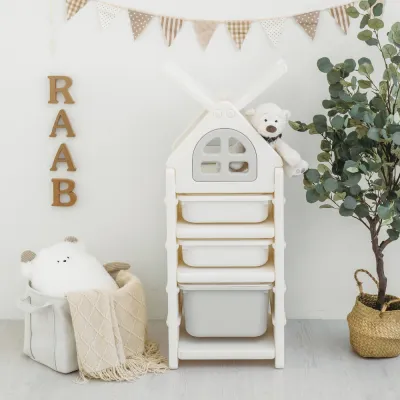
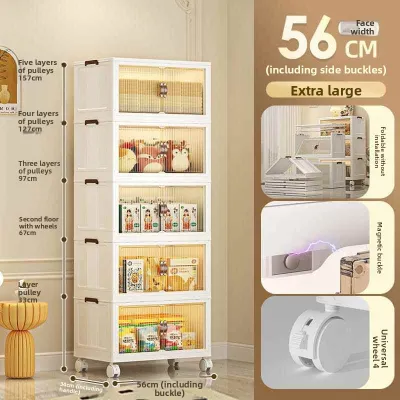
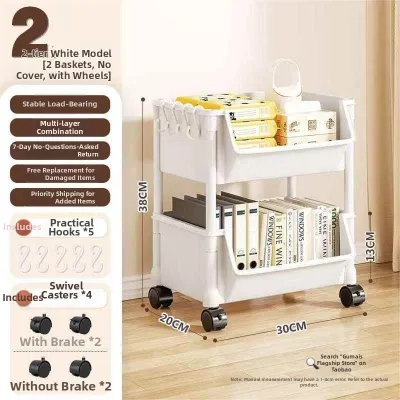
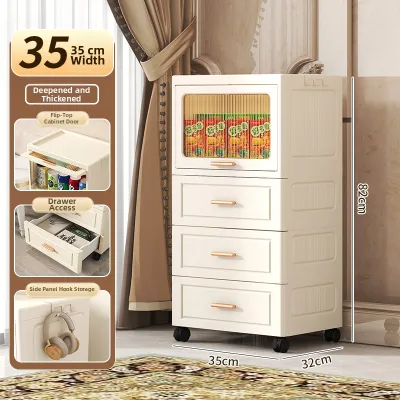
Prices are valid at publication and may change. Please refer to the product page for the latest price.
In compact nursery layouts, multi-functional furniture is highly advantageous. Consider whether your toy cabinet can serve more than one purpose to maximize your floor space. Some low-profile cabinets are designed with sturdy, flat tops that can accommodate a padded cushion, transforming the storage unit into a cozy reading bench for your toddler. Other configurations can integrate seamlessly with a changing table station or a display bookshelf. By selecting a multi-functional unit, you reduce the overall number of furniture pieces in the room, preserving valuable open floor space where your child can crawl, roll, and play safely.
Essential Safety and Stability Features
Safety is the absolute priority when selecting any piece of furniture for a child’s room. As babies transition into toddlers, they naturally use furniture to pull themselves up, climb, and explore. This behavior poses a severe risk of tip-over accidents if the cabinet is not properly secured. When purchasing a toy cabinet, always verify that the manufacturer includes an anti-tip kit or specifies wall-anchoring requirements. In Singapore, the type of wall in your nursery determines the anchoring hardware you must use. Concrete or brick walls, common in HDB flats, require masonry drills and sturdy wall plugs, whereas drywall partitions, found in some modern condominiums, require specialized hollow-wall anchors or stud finders to secure the brackets to the wooden studs.

Beyond wall anchoring, examine the physical design of the cabinet for potential physical hazards. Look for units with rounded corners and smooth, chamfered edges rather than sharp, ninety-degree angles to minimize the risk of bumps and bruises during active play. If the cabinet features doors, drawers, or a lift-up lid, inspect the hinge mechanisms carefully. Soft-close hinges and safety lid supports are essential features that prevent heavy doors or lids from slamming shut on tiny fingers. Avoid any design that relies on free-falling lids or stiff, spring-loaded hinges that could trap a child’s hand or arm.
Another critical safety consideration is ventilation, particularly for enclosed cabinets, large toy chests, or deep storage wardrobes. Children often engage in imaginative play, such as hide-and-seek, and may attempt to climb inside large storage compartments. To mitigate the risk of suffocation, verify that any enclosed unit features built-in ventilation holes, open back panels, or finger gaps along the door frames that allow continuous airflow even when the doors are fully shut. If a cabinet lacks these safety features, it is best to opt for open shelving or removable fabric bins that eliminate the risk of entrapment entirely.
Material Durability and Maintenance Requirements
The materials used to construct your nursery toy cabinet directly impact its longevity, weight capacity, and how easily it can be cleaned. Solid wood is highly durable, offers excellent structural integrity, and can support heavy books and wooden toys without bowing over time. However, solid wood can be sensitive to Singapore’s high tropical humidity, which may cause the wood to expand, contract, or warp if not properly sealed. Engineered wood, such as medium-density fiberboard (MDF) or particle board, is a popular and budget-friendly alternative that provides a smooth, uniform finish. When choosing engineered wood, check the manufacturer’s specifications to ensure it uses low-formaldehyde adhesives, often labeled as E0 or E1 compliant, to maintain healthy indoor air quality.
High-density plastics, such as polypropylene (PP) or high-density polyethylene (HDPE), are commonly used for modular toy organizers and removable bins. These materials are exceptionally lightweight, highly resistant to moisture, and virtually immune to the staining and warping that can affect wood. They are also incredibly easy to clean, making them ideal for storing art supplies, sensory play items, or outdoor toys. However, plastic frames generally have lower weight capacities than wood, so they may not be suitable for storing heavy board games or large book collections.
Nursery furniture must withstand daily wear, spills, drool, and the occasional crayon drawing. Before purchasing, check the manufacturer’s labels for the type of finish applied to the surfaces. Look for non-toxic, water-based paints, varnishes, or food-grade plastic coatings that do not emit strong chemical odors. Avoid furniture that requires harsh chemical solvents or specialized polishes to clean. Instead, prioritize smooth, non-porous surfaces that can be easily wiped down with a damp microfiber cloth and a mild, child-safe soapy solution. Additionally, inspect the quality of the hardware, such as metal drawer slides with ball bearings and robust shelf brackets, to ensure smooth, reliable operation under daily use.
Choosing the Right Configuration for Your Layout
Selecting the right configuration involves balancing visual order with child accessibility. Open shelving units paired with removable bins are highly recommended for toddlers. This setup allows children to see their toys clearly, which stimulates interest and encourages independent play. It also simplifies the cleanup process, as toys can be easily sorted into designated bins without the need to open heavy doors or navigate complex drawer slides. The primary drawback of open shelving is that it can look visually cluttered and tends to accumulate dust quickly, especially in Singapore’s breezy high-rise apartments where windows are frequently left open for ventilation.
Closed cabinets and drawers, on the other hand, offer a clean, minimalist aesthetic by keeping toys completely out of sight when playtime is over. This helps create a calm, restful environment conducive to sleep. Closed storage also protects toys from dust and pet hair. However, closed cabinets can make it more difficult for young children to access their toys independently, and they may forget about items that are hidden behind solid doors. A hybrid configuration is often the most practical solution: use open, low-level bins for daily, child-accessible toys, and closed upper cabinets or drawers for items that require parental supervision, such as board games with small pieces, art supplies, or electronic toys.
Modular and stackable storage units offer excellent flexibility for growing families. As your child’s toy collection expands and their interests shift, modular systems allow you to add extra shelves, drawers, or bin racks vertically or horizontally without needing to replace the entire unit. This adaptability is highly cost-effective and ensures your furniture remains useful from infancy through the primary school years. For exceptionally tight nursery layouts, consider corner storage units that utilize underperforming corner spaces, or tall, narrow vertical cabinets that maximize wall height while preserving precious floor space.
Building Your Shortlist: Pre-Purchase Verification
Once you have identified a few potential toy cabinets, it is time to build your shortlist and perform a final round of pre-purchase verifications. Start by cross-referencing the exact product dimensions with your measured nursery space. To ensure a realistic assessment, use masking tape to outline the cabinet’s footprint directly on your nursery floor. This physical template allows you to verify that there is sufficient clearance for fully extended drawers, swinging cabinet doors, and comfortable walking paths. Remember to check the depth of the cabinet as well; a unit that protrudes too far into a narrow hallway or walkway can create a constant tripping hazard.
Next, carefully review the manufacturer’s age and weight recommendations. Some lightweight plastic organizers are designed specifically for toddlers and may not be sturdy enough to support the heavy books or complex playsets of older children. Conversely, heavy wooden cabinets with high shelves may be difficult and unsafe for a young toddler to navigate independently. Ensure the height of the accessible shelves aligns with your child’s current reach and developmental stage.
Finally, investigate the logistics of delivery, assembly, and customer support. Large furniture items delivered to Singapore homes often require self-assembly, which can be time-consuming and require specific tools. Check if the retailer offers professional assembly services, either included in the price or as an optional add-on, to ensure the unit is constructed safely and securely. Review the warranty terms to understand what is covered in the event of manufacturing defects, and clarify the return policy for large items, as returning bulky furniture can incur significant transport fees if not handled correctly.
Frequently Asked Questions (FAQ)
At what age can a child safely access a toy cabinet independently?
Children can typically begin accessing low, open toy bins independently around 12 to 18 months of age, as they develop the motor skills to crawl, stand, and grasp objects. At this stage, storage should consist of lightweight, soft fabric baskets or open plastic bins placed on the lowest shelves to prevent any risk of injury. As children grow and refine their motor skills, they can gradually transition to using shallow drawers and open shelves. Regardless of your child’s age, always secure heavy books, toys with small parts, or items requiring close supervision on higher, completely inaccessible shelves to maintain a safe play environment.
How can I prevent a toy cabinet from becoming a cluttered dumping ground?
To maintain order, implement a toy rotation system where only a curated selection of toys is accessible at any given time, while the rest are stored away in a closet or storeroom. Swapping the toys every few weeks keeps play fresh and prevents the cabinet from being overwhelmed. Additionally, use visual labels, such as simple pictures or icons representing blocks, dolls, or cars, on the front of each bin. This helps toddlers understand exactly where each toy belongs, turning cleanup into an engaging, educational game. Regularly adjust shelf heights and bin sizes as your child’s toy collection evolves from large, bulky baby items to smaller, multi-piece sets.

Community discussion
Share your experience or ask a question. Comments are reviewed before publication.