
The ideal Spectra breast pump depends on your daily routine, mobility needs, and milk supply goals. While Spectra offers various models ranging from standard rechargeable to portable options, there is no single universal recommendation. You must match the pump’s verified specifications to your personal lifestyle to ensure comfort, efficiency, and safety. Evaluating your typical pumping environments, frequency, and physical comfort will guide you to the right decision. This guide outlines how to assess your needs, compare key specifications, and maintain your equipment for long-term success.
Assess Your Daily Routine and Pumping Needs
Evaluating your pumping frequency and typical locations is the first step in choosing the right equipment. If you plan to pump exclusively or multiple times a day while returning to a shared workplace, your requirements will differ significantly from someone who pumps occasionally at home. A stationary setup works well if you have a dedicated, private space with easy access to power outlets. However, if you are commuting or hot-desking, you will need a lightweight, quiet, and highly portable option.
Consider whether you need to remain active while pumping. Parents managing multiple children or busy household tasks often benefit from hands-free, wearable designs that fit discreetly inside a nursing bra. If you do not mind sitting down for short sessions, a standard personal double pump with a carrying handle may offer more robust settings while still allowing some movement.
Products mentioned in this guide
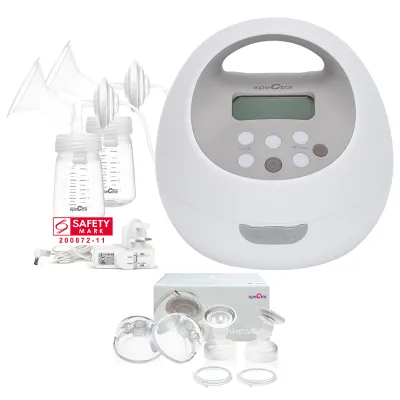
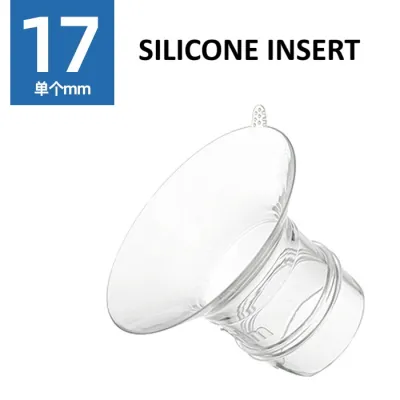
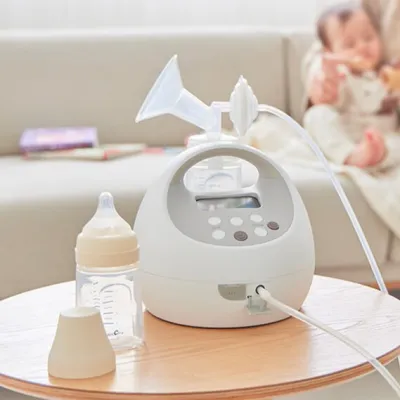
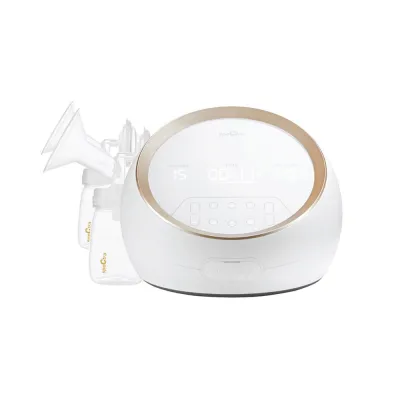
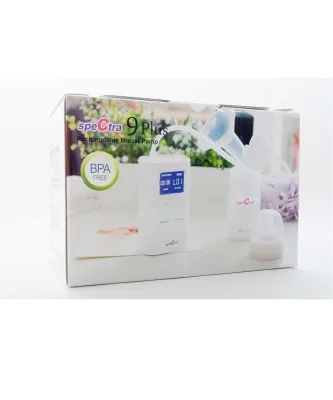
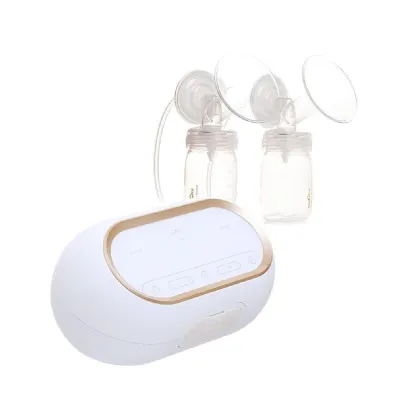
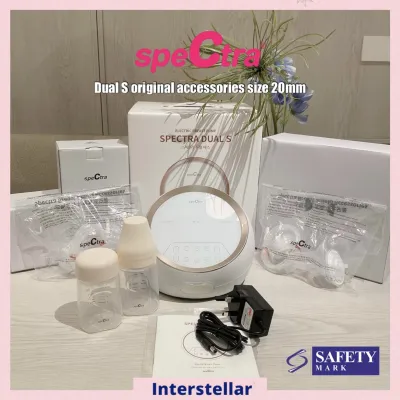
Prices are valid at publication and may change. Please refer to the product page for the latest price.
Your pumping frequency is closely tied to your supply goals. Establishing a milk supply for a newborn or a premature infant requires consistent, high-efficiency stimulation, often necessitating a heavy-duty or hospital-grade pump. If you are maintaining an established supply or simply pumping to build a freezer stash for occasional relief, a flexible, mid-range portable model may be more than sufficient.
Key Spectra Pump Specifications to Compare
When comparing models, look closely at the adjustable expression and massage modes on the device interface. Massage mode uses fast, shallow cycles to stimulate the letdown reflex, while expression mode uses slower, deeper cycles to draw milk efficiently. Verify the range of vacuum levels (measured in mmHg) in the product manual to ensure the settings can be adjusted to your comfort level without causing pain.

Check whether the pump requires a continuous connection to a mains outlet or features an integrated rechargeable battery. A built-in battery offers the freedom to pump anywhere without searching for a power source, which is highly convenient for travel. Review the manufacturer’s specifications for the estimated battery life per charge and the charging time required.
The physical footprint of the pump motor affects how easily you can transport it. Some models are compact enough to fit in a small handbag or pocket, while others are larger and designed to sit on a tabletop. Consider whether the model includes a carrying handle, a clip, or a wearable design that eliminates external tubing entirely.
| Feature | Personal Rechargeable Model | Portable/Wearable Model | Hospital-Grade Model |
|---|---|---|---|
| Primary Power Source | Rechargeable Battery / Mains | Rechargeable Battery | Mains Power (typically) |
| Typical Weight | Moderate (with handle) | Lightweight (pocket-sized/wearable) | Heavy (tabletop design) |
| Best Suited For | Daily home & office use | Commuting & active multitasking | Supply establishment & heavy use |
| System Type | Closed System (verify on box) | Closed System (verify on box) | Closed System (verify on box) |
All Spectra pumps utilize a closed-system design, which features a physical barrier (the backflow protector) to prevent milk from entering the tubing or motor. This design helps maintain hygiene and prevents mold growth. Always verify this feature on the official packaging or product manual before purchasing.
Matching Pump Types to Your Breastfeeding Goals
Standard rechargeable personal models are excellent all-rounders if you pump primarily at home or in a dedicated office space. They offer a balance of strong, adjustable suction, dual-pumping capabilities, and reliable battery life. While they are larger than wearable models, they are highly efficient for daily, high-volume use.
If you commute frequently, work in multi-use environments, or need hands-free mobility, a portable or wearable model is highly suitable. These compact units allow you to pump discreetly, though they may have smaller milk collection capacities or fewer cycle adjustments than larger models.
If you are establishing supply for a premature baby, managing a low supply, or exclusively pumping, a hospital-grade model is often recommended. These heavy-duty pumps are designed for maximum efficiency and frequent use. Verify rental or purchase availability through local medical suppliers or authorized distributors.
If you have specific medical needs, require specialized flanges, or experience persistent low supply, consult a certified lactation professional or healthcare provider. They can help you determine if a specific pump type or setting is necessary for your physical comfort and milk production.
Essential Fit and Maintenance Checks
A proper fit is essential for comfort and milk expression. Measure your nipple diameter before a pumping session and check the manufacturer’s sizing guide. An incorrect flange size can cause friction, pain, or reduced milk yield. If you experience persistent discomfort, stop using the pump and consult a lactation specialist.
Inspect your tubing and backflow protectors regularly for moisture, condensation, or wear. Spectra pumps utilize a closed system with a physical barrier to prevent milk from entering the tubing, but any signs of mold or damage mean you must replace the parts immediately. Using worn-out parts can reduce suction efficiency and compromise hygiene.
Follow the specific model’s user manual for daily cleaning. Typically, parts that come into contact with breast milk must be washed in warm, soapy water and sanitized according to the manufacturer’s instructions. Never wash or submerge the pump motor or tubing in water, as this will damage the electrical components and void the warranty.
Final Selection Checklist and Next Steps
Verify the warranty terms and after-sales support availability in Singapore. Purchasing from authorized local distributors ensures you have access to valid warranty coverage and customer service if issues arise.
Check official brand stores or authorized online marketplaces to avoid counterfeit parts. Counterfeit accessories may not meet food-grade safety standards or could damage your pump motor.
Confirm what accessories are included in the box (such as bottles, tubing, and standard flange sizes). Budget in S$ for any necessary add-ons, such as alternative flange sizes, extra valves, or specialized breast milk storage bags.
Frequently Asked Questions (FAQ)
How do I determine the correct flange size for my pump?
Measure the diameter of your nipple base (excluding the areola) in millimeters using a ruler or a printable sizing tool. Add approximately 2mm to 3mm to your measurement to find your starting flange size. If you experience rubbing, pain, or if a large portion of your areola is pulled into the tunnel during pumping, stop and try a different size.
Are Spectra pumps compatible with standard baby bottles?
Spectra pumps typically feature wide-neck breast shields that connect directly to wide-neck bottles. If you prefer to use narrow-neck baby bottles or other specific brands, you must verify the thread compatibility. Official or third-party adapters are widely available to bridge different bottle neck sizes safely.

Community discussion
Share your experience or ask a question. Comments are reviewed before publication.