
Finding the right size baby disposable pad for your changing table is essential for maintaining a hygienic, dry, and safe nursery environment. A properly fitted pad acts as a reliable barrier against unexpected diaper leaks, protecting your furniture from moisture damage while providing a clean surface for your little one. To achieve this, you must measure the flat, usable surface of your changing table, compare these figures with the exact numerical dimensions on the pad’s packaging, and verify that the pad lies completely flat without any overhang or large gaps.
In Singapore’s warm and humid climate, moisture control is particularly critical to prevent the growth of mold and bacteria on wooden changing tables or fabric covers. A mismatched pad that is too small leaves vulnerable gaps where liquids can seep through, leading to tedious cleanups and potential hygiene issues. Conversely, an oversized pad that hangs over the edges can easily be pulled down by an active baby or snagged by a caregiver’s clothing, creating a safety hazard. By taking precise measurements and understanding how to read product labels, you can select a pad size that fits your setup seamlessly.
Measure Your Changing Table's Usable Surface
Before purchasing any baby disposable pad, you must determine the exact physical dimensions of the area where the pad will actually rest. Many parents make the mistake of measuring the entire exterior frame of the changing table, which often includes decorative wooden borders, raised safety barriers, or accessory trays. To get an accurate baseline, use a standard measuring tape to measure only the flat, horizontal surface where your baby lies during a diaper change.
Products mentioned in this guide




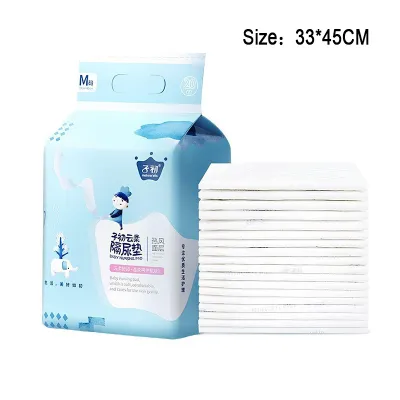

![[SG Seller]Disposable Sheet/baby changing pad/Underpads/maternity pad/diaper changing pad/Pet pad/diaper changing pad](https://img.lazcdn.com/g/p/1e18d5044cc6a8981a574358039de40b.png_400x400q80.png_.webp)
Prices are valid at publication and may change. Please refer to the product page for the latest price.
Start by measuring the length from the head of the changing area to the foot, ensuring your tape measure remains completely flat against the surface. Next, measure the width from one side to the other, focusing strictly on the usable flat zone. If your changing table features a safety barrier or raised wooden frame, place the tape measure inside these borders rather than over them, as the disposable pad must sit securely within these boundaries to remain flat.
For changing tables that feature a recessed tray design or a deep wooden frame, you must also note the depth or thickness of the changing area. This depth measurement is crucial because a thick changing mattress or pad insert will occupy some of this vertical space, which affects how a disposable liner sits on top. If the disposable pad is too thick or wide for a recessed tray, it may bunch up at the corners, creating an uneven and unstable surface for your baby.
Once you have gathered these measurements, write down the exact length, width, and depth in both centimeters and inches. Having both units of measurement on hand is highly beneficial, as different manufacturers label their disposable pads using different measurement systems. Keep this record on your phone or near your changing station so you can easily reference it whenever you are shopping for nursery supplies.
Read and Compare Disposable Pad Dimensions
With your changing table’s exact measurements in hand, the next step is to carefully evaluate the dimensions printed on the packaging of the baby disposable pad. Do not rely on generic marketing terms such as “standard,” “medium,” “large,” or “extra-wide” to guide your purchase. These terms are highly subjective and vary significantly from one brand to another, meaning a “standard” pad from one manufacturer might be much smaller than a “standard” pad from another.

Instead, look for the specific numerical dimensions, which are typically printed on the back or bottom of the packaging. These measurements represent the actual physical boundaries of the pad, including the absorbent core and the waterproof plastic border. Compare these numbers directly against the baseline measurements you recorded from your changing table to ensure a compatible match.
When comparing dimensions, pay close attention to the width of the waterproof border, often referred to as the sealing edge. Some disposable pads have a wide plastic border that does not contain absorbent material, which means the actual functional absorption area is slightly smaller than the overall dimensions of the pad. If your changing table is compact, as is common with space-saving nursery furniture in Singapore apartments, you want to ensure the absorbent zone covers the primary contact areas.
Additionally, check whether the dimensions on the packaging are listed as the flat size or the folded size. While most brands display the fully unfolded dimensions, some imported products may list package dimensions instead, which can lead to confusion. Verifying the unfolded length and width ensures you do not accidentally purchase a pack of pads that are far too small for your changing table setup.
Ensure a Safe and Secure Fit on the Table
Achieving a safe and secure fit on your changing table is paramount to protecting your baby and keeping the changing area sanitary. One of the most critical fit issues to avoid is pad overhang, which occurs when a disposable pad extends past the edges of the changing table or mattress. An overhanging pad is a significant safety risk, as an active baby can easily grab the loose edge and pull the pad—along with anything on it—down, or a caregiver’s clothing can catch on the overhang, shifting the baby’s position.
Conversely, you must also prevent large uncovered gaps between the edge of the disposable pad and the safety barriers of the changing table. Gaps leave the underlying fabric cover or wooden table surface exposed to sudden leaks, spills, and messes, defeating the purpose of using a disposable liner. Over time, repeated exposure to moisture in these uncovered gaps can ruin the changing table mattress or lead to persistent odors that are difficult to eliminate.
A properly fitted baby disposable pad must lie completely flat against the changing surface without bunching, wrinkling, or sliding. If the pad is too large and bunches up, it creates an uneven surface that can compromise your baby’s stability during a diaper change. Furthermore, ensure that the pad does not cover or interfere with the changing table’s built-in safety straps or securement mechanisms, which must always remain fully accessible and functional to secure your baby safely.
Remember that while a well-fitted disposable pad provides excellent protection against messes, it is never a substitute for active caregiver supervision. Always keep one hand on your baby during diaper changes, regardless of how secure the pad or table feels. Regularly inspect the pad during use to ensure it has not shifted or bunched up under the baby’s weight, adjusting it immediately if you notice any slipping.
Adjust the Pad Size as Your Baby Grows
As your baby grows and develops, their physical size and level of mobility will change dramatically, requiring you to re-evaluate your disposable pad setup. During the newborn stage, babies remain relatively still during diaper changes, making smaller pads highly effective at containing messes. However, as your baby reaches developmental milestones such as kicking, stretching, and actively rolling, a small pad may no longer provide adequate coverage.
Monitor your baby’s movements closely during diaper changes to determine when it is time to transition to a larger pad size. If you notice that your baby’s limbs, head, or torso frequently extend beyond the edges of the disposable pad, or if they manage to roll off the protected area before you can complete the change, the current pad is too small. Growth spurts can happen rapidly, so make it a habit to assess the fit of the pad every few weeks.
When your baby becomes highly active and begins rolling vigorously, you may need to evaluate alternative changing setups for safety. If the changing table feels too confined or if the baby’s movements make using an elevated table risky, transitioning to changing your baby on a larger disposable pad placed on a clean, flat floor is a highly practical and safe alternative. This eliminates the risk of falls while still protecting your flooring from leaks.
Keep in mind that sizing up your disposable pad does not mean you have to discard your remaining smaller pads. Smaller pads can still be highly useful as portable changing liners in your diaper bag, as quick-use liners for stroller seats, or for protecting car seats during travel. Repurposing smaller pads ensures you get full value from your purchase while keeping your home changing station properly equipped with the correct size.
Troubleshoot Common Sizing and Fit Issues
It is not uncommon to find yourself with a pack of baby disposable pads that do not fit your changing table perfectly, whether due to a gifting mistake, a hasty purchase, or a change in furniture. If you have pads that are slightly too small for your changing table, you can troubleshoot this by placing a secondary, reusable waterproof liner or a soft cotton towel underneath the disposable pad. This setup catches any edge leaks that bypass the disposable pad while still allowing you to use up your current stock.
If you are dealing with disposable pads that are slightly too large, you can safely manage the excess material by folding the edges underneath the pad. When doing this, ensure that the folded edges are tucked flat and secure under the weight of the changing mattress or the pad itself, preventing any loose flaps that could create a tripping or slipping hazard. Avoid folding the pad in a way that creates a thick, uneven ridge, as this can make the changing surface unstable for your baby.
However, there are situations where a poorly fitting pad simply cannot be safely accommodated. If a disposable pad is so oversized that it cannot be folded flat, or if it constantly slides around and compromises your baby’s stability, you must stop using it on the elevated changing table immediately. Using a pad that violates the changing table manufacturer’s safety guidelines or interferes with safety straps poses an unacceptable risk to your child’s safety.
In such cases, the best course of action is to relegate the ill-fitting pads to floor-use only, where slipping or overhang does not present a fall hazard. Alternatively, you can exchange unopened packs at your local retailer or donate them to other parents. Prioritizing a secure, flat, and stable changing surface is always more important than trying to force an incompatible pad to fit your nursery furniture.
Frequently Asked Questions (FAQ)
Can I use a regular bed protector instead of a dedicated changing pad?
While regular bed protectors or underpads designed for adults may seem like a cost-effective alternative, they are generally not recommended for use on a baby changing table. Bed protectors are typically designed for larger, flat mattress surfaces and lack the specific dimensions required to fit a compact nursery changing table, leading to significant overhang and bunching. Furthermore, standard bed protectors often lack slip-resistant backing or securement features, meaning they can easily slide around on a smooth changing table surface under an active baby, creating a serious safety hazard. Dedicated baby disposable pads are specifically sized and textured to stay in place on changing tables, ensuring a much safer and more stable environment for diaper changes.
Do contoured changing tables require specially shaped disposable pads?
Contoured changing tables, which feature raised safety edges or curved sides to help keep the baby centered, do not necessarily require specially shaped disposable pads, but they do require careful measurement. When choosing a pad for a contoured table, you must measure only the inner flat area where the baby’s body rests, completely excluding the raised, sloped sides. Placing a rectangular disposable pad over the contoured edges can cause the pad to buckle, slide, or lift off the surface, which compromises its stability and effectiveness. Always ensure the disposable pad lies flat within the recessed center of the contoured table, and consult your changing table manufacturer’s specific guidelines to verify which liner dimensions are recommended for their particular design.

Community discussion
Share your experience or ask a question. Comments are reviewed before publication.