
Transitioning to a straw cup is a major milestone in a baby’s weaning journey. It marks a shift from the instinctual sucking reflex used during breastfeeding or bottle-feeding to the more mature oral motor coordination required for drinking. Selecting the right Richell straw cup model is not merely a matter of looking at the age recommendation on the box. Instead, parents must carefully match the cup’s flow rate, grip design, and spill-prevention features to their baby’s specific developmental stage, physical coordination, and oral motor skills. By understanding how these design elements align with your child’s growing abilities, you can ensure a smoother, frustration-free transition that supports healthy oral development.
Recognizing Your Baby's Readiness for a Straw Cup
Before purchasing a straw cup, it is essential to observe your baby’s physical and developmental milestones. While chronological age is a helpful starting point, physical readiness is a far more reliable indicator. One of the primary motor skills to look for is the ability to sit upright unassisted. A baby who can maintain a stable, upright posture has developed the core strength necessary to swallow liquids safely from a straw without slouching, which significantly reduces the risk of choking. Additionally, look for hand-to-mouth coordination, such as your baby reaching for objects, holding them firmly, and bringing them directly to their mouth.
Oral motor signs are equally critical when determining readiness. Observe whether your baby can swallow purees or liquids smoothly without immediately pushing them out with their tongue—a reflex known as the tongue-thrust reflex, which typically diminishes around six months of age. Another clear sign of readiness is your baby showing active interest in what you are drinking, often reaching for your cup or mimicking drinking motions. If your baby can manage small sips of water from an open spoon or cup held by a caregiver without coughing or sputtering, they may be ready to try a training straw cup.
Products mentioned in this guide
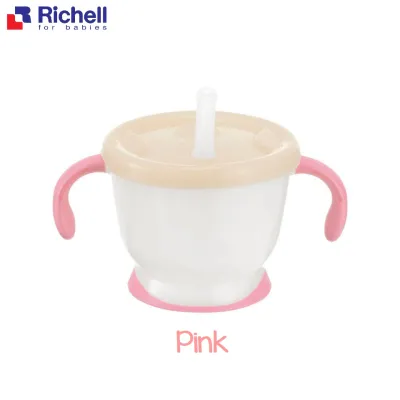
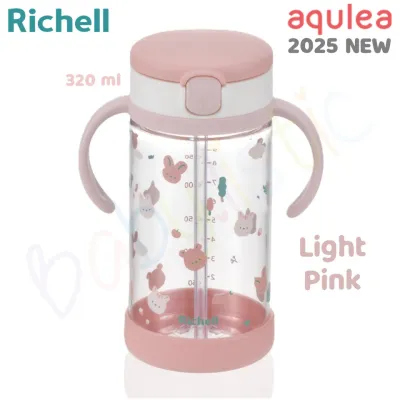
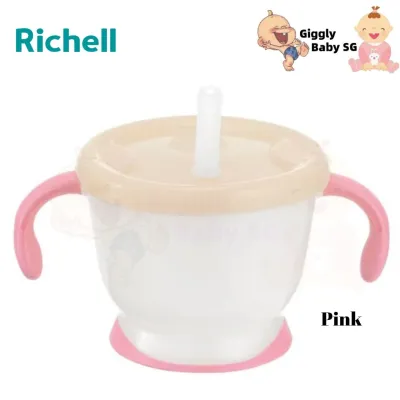
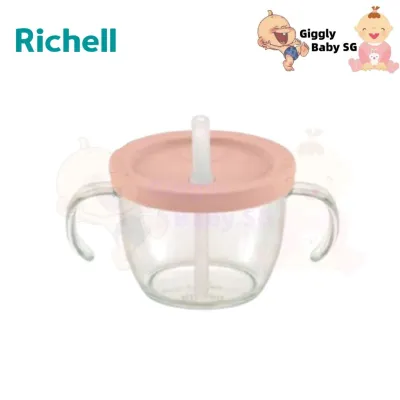
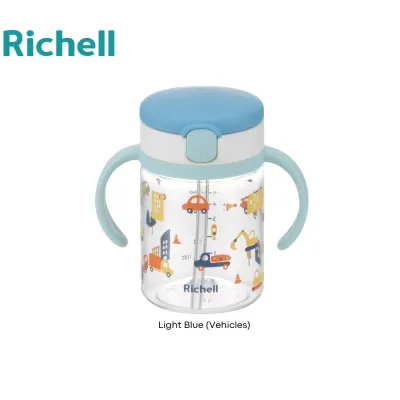
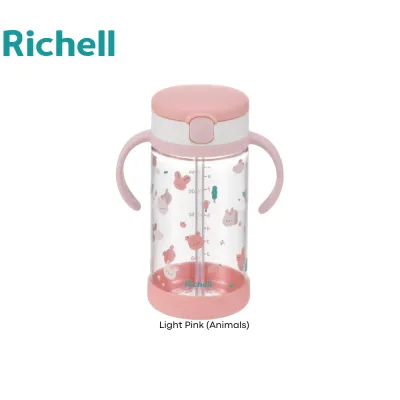
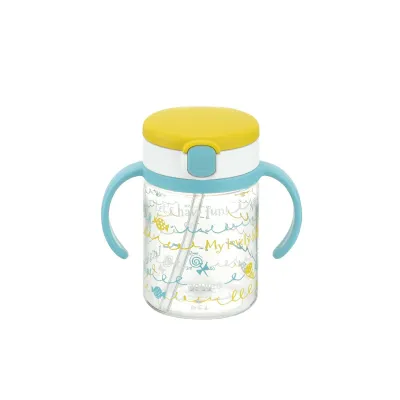
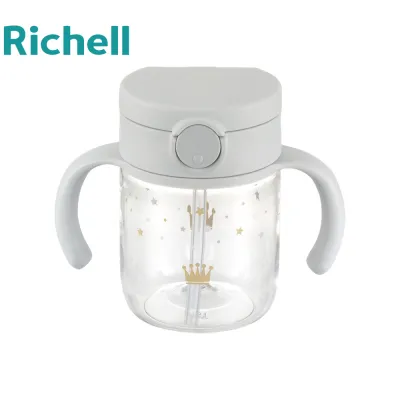
Prices are valid at publication and may change. Please refer to the product page for the latest price.
While typical age guidelines suggest introducing a straw cup around six to eight months of age, every baby develops at their own pace. Some infants may grasp the concept of straw drinking almost immediately, while others may require several weeks of practice and gentle encouragement. Forcing a cup before a baby is physically ready can lead to frustration, cup aversion, or accidental choking. Caregivers should monitor these individual developmental cues closely and consult a pediatrician or pediatric speech-language pathologist if they have concerns about their baby’s swallowing mechanics or oral motor progress.
Evaluating Straw Valve, Grip, and Lid Features
When exploring the range of Richell straw cups, understanding the specific engineering of the cup’s components will help you select a model that matches your baby’s current skill level. The straw valve mechanism is one of the most critical features to evaluate. Beginner cups often utilize specialized valves, such as cross-cut or slit valves, which require the baby to bite down slightly on the silicone tip to open the pathway before sucking. This design prevents liquid from flowing too quickly and choking a novice drinker, while also acting as an effective spill-prevention barrier. As your child’s suction control improves, you can transition them to standard, open-bore straws that allow a more natural, continuous flow of liquid with less physical effort.

The design of the handles plays a vital role in encouraging self-feeding and fine motor skill development. For beginners, dual handles that curve slightly forward or downward are ideal, as they allow small hands to grip the cup securely from both sides using a palmar grasp. This symmetrical grip helps babies stabilize the cup and guide the straw to their mouth independently. As toddlers grow and refine their manual dexterity, they can transition to handle-free cups or models with removable handles. These streamlined designs mimic adult cups, fit easily into stroller cup holders, and encourage the development of a mature, single-handed grip.
Lid configurations and spill-prevention mechanisms must also be matched to your child’s mobility level. For younger babies who primarily drink while seated in a high chair, a simple push-button lid that flips open to reveal the straw is highly convenient. However, for active toddlers who carry their cups around the house or during outdoor outings, a secure, locking lid mechanism is essential. Look for lids that feature a tight silicone seal around the straw base and a secure latch that prevents accidental opening when the cup is tossed into a diaper bag or dropped onto the floor.
Finally, consider the practical aspects of the cup’s body, such as material transparency and measurement markings. Clear, transparent materials like PPSU (polyphenylsulfone) or high-grade copolyester allow you to monitor exactly how much liquid is left in the cup at a glance. Clear, easy-to-read measurement markings on the side of the cup are invaluable for tracking your baby’s daily fluid intake, ensuring they receive adequate hydration alongside their milk feeds. This is particularly useful during the warm, humid climate of Singapore, where monitoring hydration levels is a daily priority for parents.
Matching Cup Features to Weaning and Developmental Stages
To simplify the selection process, it is helpful to view the transition to a straw cup as a progressive journey divided into distinct developmental stages. Rather than relying solely on generic age labels, parents should evaluate their child’s current feeding abilities and match them to the corresponding cup features. Always verify the manufacturer’s specific age, weight, and developmental recommendations printed on the product packaging before introducing any new cup to your baby.
Early Weaning: Transitioning and Learning to Suck
The initial introduction of a straw cup can be challenging, as babies do not naturally understand how to draw liquid upward through a tube. During this early weaning phase, which often begins around six months of age, a specialized training straw cup is highly recommended. These beginner models frequently feature a unique lid design that allows caregivers to gently press a designated push-pad on the lid. This action pushes a small amount of liquid up into the straw, helping the baby associate the physical sensation of the straw in their mouth with the reward of receiving water.
When selecting a cup for this stage, check the manufacturer’s packaging to ensure the flow rate is restricted and designed specifically for beginners. The straw should be soft, highly flexible, and gentle on sensitive, teething gums. Because babies at this stage are still developing their swallowing coordination, close and active caregiver supervision is absolutely mandatory during every single use. Never leave a baby unattended with a training cup, and stop use immediately if the baby coughs, chokes, or shows signs of distress.
Developing Independence: Mastering the Sip and Grip
Once your baby has mastered the basic concept of sucking and can draw liquid up independently, they enter the stage of developing independence, typically around eight to twelve months. At this point, you can transition them to a standard straw cup with a moderate flow rate. The focus during this phase shifts toward refining their self-feeding skills and hand-eye coordination. Look for cups equipped with ergonomic, easy-to-grip dual handles that help the baby lift and tilt the cup without dropping it.
Spill prevention becomes increasingly important during this stage, as babies love to shake, drop, and experiment with gravity. Evaluate the cup’s lid to ensure it forms a tight, leak-resistant seal when closed. The straw should feature a reliable backflow prevention valve to stop liquid from leaking out when the cup is tipped upside down. While these cups are designed for seated or slightly active use, caregivers should still maintain a watchful eye to ensure the baby does not run or walk while holding the cup, which poses a safety hazard.
Active Toddlerhood: Hydration on the Move
For older babies and toddlers aged twelve months and beyond, hydration needs to adapt to an increasingly active lifestyle. Toddlers are constantly on the move, exploring their environment, and requiring frequent hydration throughout the day. For this stage, prioritize robust, highly durable straw cups with secure, leak-proof locking lids. The lid should lock firmly in place to prevent accidental spills when the cup is jostled inside a diaper bag, placed in a stroller basket, or carried during family outings to local parks.
At this age, toddlers also begin to develop stronger teeth and a tendency to bite down on objects. It is crucial to assess the durability and bite-resistance of the silicone straw, checking for reinforced tips that can withstand moderate chewing. Additionally, because these cups are frequently taken outdoors, they are highly susceptible to dirt and bacteria. Verify that the cup design allows for complete disassembly of all parts, including the straw, lid, and silicone gaskets, to facilitate thorough cleaning and sanitization after a busy day out.
Checking Material Safety and Sterilization Limits
Ensuring the safety of the materials used in your baby’s straw cup is paramount. Before making a purchase, carefully inspect the product packaging and manufacturer’s documentation to locate explicit declarations confirming that the cup is BPA-free, phthalate-free, and made from food-grade materials. Look for recognized safety standard marks applicable to infant feeding products in your region, which indicate that the product has undergone rigorous testing for chemical safety and structural integrity.
Different cup materials—such as polypropylene (PP), copolyester (such as Tritan), and polyphenylsulfone (PPSU)—have vastly different physical properties, particularly regarding heat resistance. It is vital to check the manufacturer’s instruction manual for the precise temperature limits of each individual component, including the cup body, lid, straw, and silicone gaskets. Never assume that all parts of a cup can withstand the same sterilization methods, as exceeding the recommended temperature thresholds can cause material degradation, warping, or the release of unwanted chemicals.
When sterilizing your Richell straw cup, strictly follow the manufacturer’s guidelines for your specific model. Some materials are compatible with boiling water, steam sterilizers, and microwave sanitizing bags, while others may be sensitive to high heat or UV sterilization. For instance, certain clear plastics may cloud or degrade prematurely if subjected to repeated UV exposure or extreme temperatures. Always disassemble all components completely before sterilization to ensure that steam or hot water reaches every surface, and allow the parts to air dry completely in a clean area to prevent the growth of mold or bacteria.
Where to Buy and What to Inspect Upon Delivery
To guarantee the safety and authenticity of your baby’s straw cup, it is highly recommended to purchase only from authorized retailers, official brand stores, or reputable e-commerce platforms. Counterfeit baby products are a significant safety hazard, as they may use substandard, non-food-grade plastics containing harmful chemicals, or feature poorly constructed parts that present choking hazards. Avoid purchasing from unverified third-party sellers on online marketplaces where product origins cannot be guaranteed.
Upon receiving your cup, perform a thorough physical inspection before its first use. Check that the packaging is fully sealed and shows no signs of tampering. Verify that all included accessories—such as the instruction manual, replacement straws, or specialized cleaning brushes—are present in the box. Carefully examine the cup body, lid, and silicone parts for any visible defects, sharp edges, or manufacturing flaws. If you notice any discrepancies, missing parts, or damage, contact the retailer immediately to utilize their return or exchange policy.
Frequently Asked Questions (FAQ)
How often should I replace the straw and silicone parts?
Silicone components, including the straw and inner gaskets, are subject to natural wear and tear from regular use, cleaning, and biting. You should inspect these parts daily for signs of degradation, such as discoloration, stickiness, tearing, or deep bite marks. If you observe any of these signs, replace the parts immediately to prevent them from tearing off and becoming a choking hazard. As a general guideline, manufacturers often recommend replacing silicone straws and gaskets every two to three months, or sooner if your baby is actively teething and biting the straw.
Can I use a Richell straw cup for hot liquids?
It is highly recommended to avoid using straw cups for hot or boiling liquids. Always check the maximum temperature threshold explicitly stated on the product label or instruction manual for your specific model. Pouring hot liquids into a sealed straw cup creates internal air pressure as the air inside warms and expands. This pressure buildup can force the hot liquid up through the straw, causing it to spray or leak unexpectedly when the lid is opened, which poses a serious risk of scalding your baby. For safety, only fill the cup with room-temperature or lukewarm liquids.

Community discussion
Share your experience or ask a question. Comments are reviewed before publication.