
Choosing the right potty training stool requires balancing your toddler’s physical development with the spatial realities of your home bathroom. To make the best choice, you must measure your toilet’s height, assess the available floor clearance, and match these dimensions to your child’s current height and climbing confidence. A well-fitted stool not only allows your child to reach the toilet seat independently but also supports their feet during bowel movements, which aligns their body in a natural position to make elimination easier.
In compact living environments, such as Singapore HDB flats and condominiums, bathroom floor space is at a premium. A stool that is too bulky can block the bathroom door or create a tripping hazard for adult family members, while one that is too small might not provide enough height or stability for a young toddler. By focusing on verifiable safety features, accurate measurements, and adaptable designs, you can select a stool that supports your child’s independence without cluttering your shared living space.
Understanding Your Toddler's Developmental Stage
Before browsing product listings or visiting a baby department store, you need to evaluate your child’s physical readiness. Potty training on a standard adult toilet requires a higher level of motor control, balance, and coordination than using a low, floor-level standalone potty. Observe whether your toddler can climb stairs with minimal assistance, stand steadily on one foot for a few seconds, and sit down and stand up from a low chair without tipping over. If your child still wobbles when walking or struggles to maintain balance while climbing, they may need a wider, more stable two-step stool or additional time on a floor-level potty before transitioning.
Products mentioned in this guide
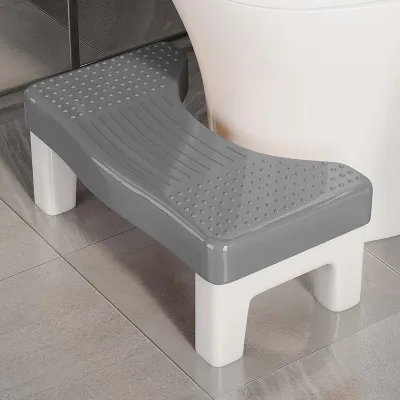
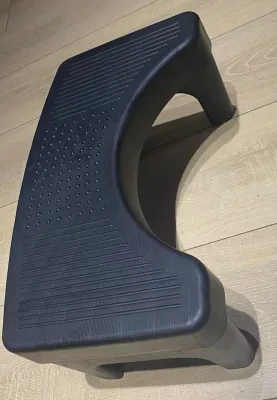
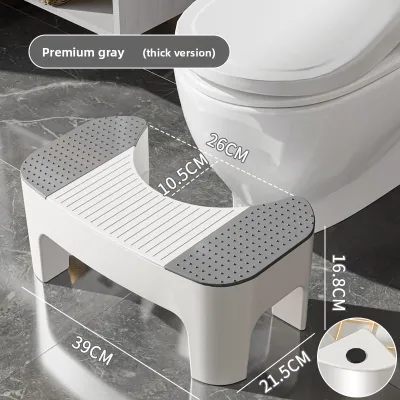
![[SG Stock]Anti Slip Design Bathroom Chair Squat Step Stool Potty Toilet Portable Sturdy Footstool Toilet Training](https://img.lazcdn.com/g/p/6aef88552f03e0481efb01a91808244c.jpg_400x400q80.jpg_.webp)
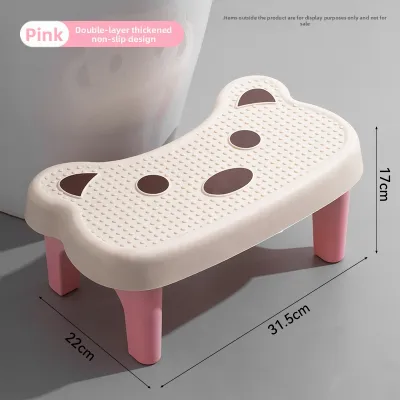
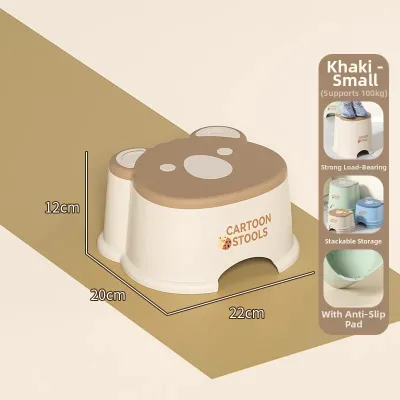
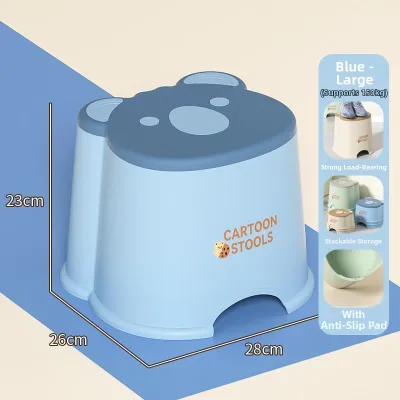
Prices are valid at publication and may change. Please refer to the product page for the latest price.
To determine the ideal height for a step stool, you should measure your child’s inseam. Have your toddler stand against a wall and measure from their crotch down to the floor. When your child sits on the toilet, their feet must rest flat on the stool’s surface with their knees bent slightly higher than their hips. This posture relaxes the lower pelvic muscles, making bowel movements much easier. Subtract your child’s inseam from the height of your toilet bowl (measured from the floor to the top of the seat) to find the approximate stool height required to keep their feet fully supported.
Weight capacity is another critical factor that you must verify on the manufacturer’s product label. While most toddlers weigh well within the limits of standard plastic stools, children grow at highly individual rates. Check your child’s current weight against standard growth percentiles to project how long the stool will remain safe to use. Keep in mind that a stool with a higher weight limit often features a more robust structural design, which can prevent the plastic from flexing or cracking when older siblings or adults accidentally step on it.
Matching the Stool to Your Bathroom Configuration
The physical layout of your bathroom dictates the maximum footprint of the stool you can safely accommodate. In many Singapore apartments, bathrooms are designed with compact layouts where the toilet sits close to the shower screen, vanity, or bathroom door. Before purchasing, use a measuring tape to determine the exact clearance around the base of your toilet bowl. Measure the distance from the front of the toilet base to the opposite wall or door, as well as the lateral clearance between the toilet and adjacent fixtures. This ensures that the stool can remain in place or be easily tucked away without obstructing walkways.

The shape and height of your toilet bowl also influence your choice, especially if you are considering a stool with an attached seat reducer or a ladder-style setup. Standard toilet bowls are generally classified as either round or elongated, and their heights can vary significantly between older pedestal models and modern wall-hung designs. If you choose an integrated ladder stool, verify that the top attachment matches the curvature of your toilet seat and that the legs can be adjusted to the specific height of your bowl. An improper match can cause the ladder to wobble, creating a safety hazard for a climbing child.
Storage and multi-functional use are essential considerations for shared family bathrooms. If multiple family members use the same toilet, a large, non-folding stool can quickly become an inconvenience. Look for stools that feature a curved, contoured design that hugs the base of the toilet bowl when not in use, allowing adults to stand comfortably without stubbing their toes. Alternatively, if space is exceptionally tight, a foldable or collapsible model can be hung on a wall hook or tucked into the narrow gap between the vanity and the toilet after each use.
Essential Safety and Stability Features to Verify
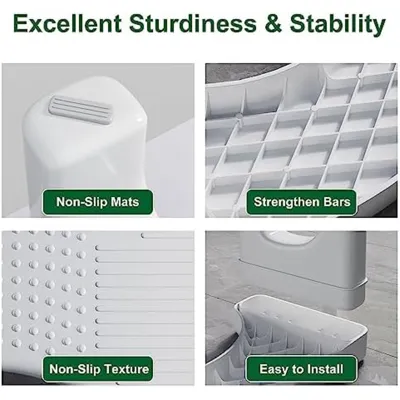
When evaluating a potty training stool, safety features must take precedence over aesthetics or color schemes. The most critical safety component is the non-slip mechanism on both the top surface and the base of the stool. Inspect the product specifications or physical item to ensure the base features continuous rubberized striping or heavy-duty rubber feet rather than small, hard plastic nubs. Hard plastic can easily slide on wet bathroom tiles, whereas high-quality thermoplastic elastomer (TPE) or rubber grips provide the friction needed to keep the stool anchored when a child steps onto it with force.
The top surface of the stool must also offer excellent traction, as toddlers often have wet feet after bath time or washroom use. Look for stools with textured patterns, raised rubber dots, or non-slip stepping pads integrated directly into the plastic. Avoid stools with completely smooth, glossy plastic surfaces, which become incredibly slippery when exposed to moisture or condensation. A textured surface ensures your child can maintain a firm footing even if they are wearing socks or have damp feet.
Tipping resistance is directly related to the stool’s footprint and center of gravity. A safe stool should have a wide, flared base that is broader than the top stepping platform. This trapezoidal shape prevents the stool from tipping over if your child steps too close to the outer edge. When inspecting a stool, press down firmly on the outer corners of the step to see if the opposite side lifts off the ground. If the stool tilts easily under localized pressure, it lacks the stability required for an active, climbing toddler.
Finally, examine the physical construction of the stool for potential pinch points and sharp edges. In tight bathroom spaces, children are prone to bumping into furniture, so a stool with rounded corners and smooth transitions is highly preferable. If you are looking at a folding or adjustable model, inspect the hinges and locking mechanisms to ensure they lock securely into place and do not leave gaps where small fingers could get pinched. Always review the manufacturer’s care instructions, as some materials can degrade or become brittle if cleaned with harsh chemical disinfectants.
Comparing Common Potty Stool Designs
Understanding the structural differences between common potty stool designs will help you select the most practical option for your home. Standard single-step stools are the most common and affordable option on the market. These are typically lightweight, easy for a toddler to carry, and highly versatile, as they can also be moved to the sink for handwashing. However, because they generally range from 13 to 18 centimeters in height, they are best suited for older, taller toddlers who only need a boost to reach the toilet seat and can already climb comfortably.
Two-tier or adjustable step stools provide a progressive solution that grows alongside your child. These stools feature two distinct steps, allowing younger or shorter toddlers to climb up in manageable increments. The lower step provides a platform for turning around, while the top step brings them to the correct height for the toilet. Some adjustable models allow you to remove the top tier as your child grows, eventually transitioning into a standard single-step stool. While highly functional, two-tier stools have a larger physical footprint and may require more floor space in your bathroom.
Foldable or collapsible stools are specifically engineered for space-constrained environments. These models can be folded flat with a single motion, making them easy to store behind a door or inside a cabinet when not in use. They are also highly portable, making them a convenient option for travel or visits to grandparents’ homes. When choosing a foldable model, it is vital to verify the structural integrity of the folding joints. Ensure the locking mechanism is robust enough to prevent accidental collapse while your child is standing on it.
Stools with integrated seat reducers, often called potty training ladders, combine a step stool and a child-sized toilet seat into a single unit. This design is highly reassuring for toddlers who feel insecure sitting on a large adult toilet seat, as it provides built-in handrails and a secure, smaller opening. The ladder design allows the child to climb up, turn around, and sit down independently. The primary drawback is that these units are bulky and must be removed and folded away every time an adult needs to use the toilet, which can become tedious in a single-bathroom household.
Building Your Final Shortlist
To narrow down your choices and make a confident purchase, follow a systematic filtering process. Start by taking precise measurements of your bathroom floor space and toilet height, keeping in mind the specific layout of your home. Next, measure your child’s current height and inseam to determine whether a single-step, two-step, or adjustable design is required. Once you have established these physical parameters, you can filter out models that do not meet your space or height requirements, leaving you with a shortlist of compatible designs.
When evaluating specific models on your shortlist, ask yourself several practical questions. Is the stool easy to clean, or does it have deep crevices where dirt and moisture can accumulate? Can your toddler lift and move the stool independently, or is it too heavy for them to manage? If you are shopping in a physical store, place the stool on the floor and apply pressure to different areas to test its stability and non-slip grip. If shopping online, carefully read customer feedback regarding the durability of the rubber feet and how well the stool fits against various toilet shapes.
While potty training is a standard developmental milestone, every child progresses at their own pace. If your child shows extreme physical resistance, struggles significantly with balance despite using a stable stool, or experiences persistent developmental delays, it is best to pause the training process. Do not force the transition if your child is fearful of the height or the toilet itself. In such cases, consult your pediatrician or a qualified child development specialist to ensure there are no underlying physical or sensory challenges, and to receive personalized guidance on the best path forward.
Frequently Asked Questions (FAQ)
When should I transition from a standalone potty to a toilet step stool?
You should consider transitioning your child to a toilet step stool when they demonstrate consistent balance, can climb stairs independently, and show an interest in using the adult toilet. Physical signs of readiness include outgrowing the bowl of a standalone potty and having the leg length to sit comfortably on the adult seat with their feet supported by a stool. If your child expresses a desire for independence or wants to mimic family members, introducing a step stool can make the transition smooth and encouraging.
How do I clean and maintain a potty stool to prevent slipping?
To maintain the effectiveness of the non-slip grips, clean the stool regularly with mild soap and warm water. Avoid using harsh chemical cleaners, bleach, or abrasive scrubbing pads, as these can degrade the rubber or TPE material on the base and steps, causing it to become brittle, slick, or detached over time. Periodically inspect the underside of the stool to remove hair, dust, and soap scum that can accumulate around the rubber feet and reduce traction on wet bathroom tiles.

Community discussion
Share your experience or ask a question. Comments are reviewed before publication.