
Potty training is a major milestone in your child’s early development, marking a transition toward personal independence and physical coordination. While much of the focus naturally centers on selecting the right potty seat or training pants, the step stool is an equally critical component of this routine. A high-quality step stool for kids provides the necessary elevation, stability, and security that allows a toddler to transition from ground level to an adult-sized toilet safely.
To choose the right step stool, you must look for several essential features: a height that allows your child’s feet to rest flat, a wide and flared base to prevent tipping, robust non-slip rubber grips on the bottom, a textured slip-resistant top surface, and durable, moisture-resistant materials. These physical attributes work together to support natural anatomical alignment and build your child’s confidence. Selecting a stool that perfectly matches your bathroom’s physical layout and your child’s current height ensures a smoother, safer transition to independent toilet use.
Why a Standard Stool Falls Short for Potty Training
Using standard household furniture or generic stools for potty training poses significant physical and developmental challenges. Adult step stools or decorative wooden stools are engineered for individuals who already possess fully developed balance, core strength, and adult proportions. When a toddler attempts to climb or stand on these items, the structural differences become immediately apparent and can lead to safety hazards.
Products mentioned in this guide
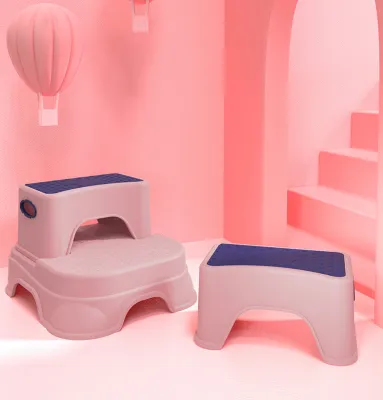
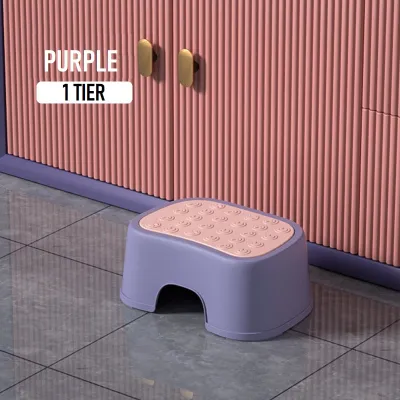
![[MUMof2boys] Kids 2-Step Anti-Slip Stool for Bathroom & Toilet Training – Toddler Safety Step Stool](https://img.lazcdn.com/g/p/be8bd22f9e1b0e16b60f4496256fd05b.png_400x400q80.png_.webp)
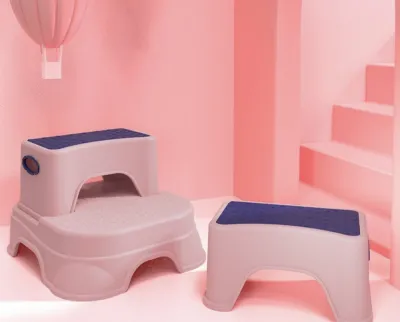
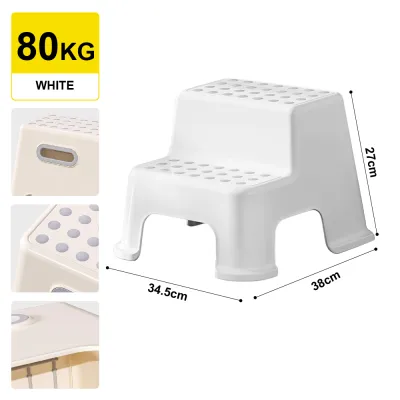
Prices are valid at publication and may change. Please refer to the product page for the latest price.
Standard household stools typically feature a narrow base and a high center of gravity. This design is highly susceptible to tipping when a child unevenly distributes their weight, which frequently happens when a toddler twists around to sit on the toilet or reaches for a towel. Furthermore, the surface texture of standard furniture is often polished wood, smooth plastic, or metal. These materials become exceptionally slick when exposed to wet bathroom environments, offering virtually no traction for bare feet or socks.
In contrast, a dedicated step stool for kids is engineered with a low center of gravity and a flared base, ensuring that the footprint of the stool is wider than the stepping platform. This structural design resists tipping even when a child stands on the very edge of the step. The surface is molded with rubberized ridges, raised patterns, or non-slip materials specifically designed to provide traction under wet conditions, keeping small feet securely planted.
Beyond physical safety, a specialized step stool offers profound psychological and physiological benefits. To climb onto an adult toilet, a child must feel secure; any sensation of wobbling or slipping can trigger anxiety, causing them to resist the potty training process altogether. A stable, secure platform fosters a sense of control and independence, allowing the child to focus on the task at hand rather than the fear of falling.
Physiologically, a dedicated stool supports the body in a way that standard household items cannot. When a child sits on a toilet with their legs dangling, their pelvic floor muscles tighten, making bowel movements difficult and uncomfortable. A properly sized step stool supports the feet, elevating the knees slightly above the hips to mimic a natural squatting position, which relaxes the puborectalis muscle and facilitates easier elimination.
Improvising with unstable household objects like plastic storage boxes, upturned buckets, or dining chairs introduces severe risks. Bathroom floors are prone to condensation, splashes, and spills, which can cause unweighted, non-rubberized objects to slide instantly across ceramic tiles. Investing in a purpose-built toddler step stool is a fundamental step in creating a safe, supportive, and successful potty training environment.
Core Features That Make a Step Stool Safe and Effective
Selecting the ideal step stool requires a systematic evaluation of its physical design and material composition. Rather than choosing a model based solely on aesthetics or color, parents must focus on structural integrity and safety specifications. By evaluating a stool across four primary pillars—height, grip, stability, and material durability—you can ensure the product meets the rigorous demands of daily bathroom use.

Before making any purchase, it is essential to cross-reference the stool’s dimensions and weight ratings with your child’s current physical development. Always consult the manufacturer’s specific guidelines, age recommendations, and warning labels to confirm the product is suitable for your household.
Height and Foot Support
The primary function of a step stool during potty training is to bridge the gap between the floor and the toilet seat, ensuring your child’s feet are fully supported. When a child sits on the toilet, their feet must rest completely flat on a solid surface. This flat-foot contact provides the necessary leverage for the child to balance themselves, shift their weight, and push during bowel movements.
To determine the correct stool height for your bathroom, you must take precise measurements. Use a standard measuring tape to measure the distance from your bathroom floor to the top rim of your toilet bowl (excluding the seat). Next, measure your child’s lower leg length from the back of the knee to the bottom of the heel while they are seated. The ideal step stool height should equal the toilet height minus your child’s seated leg length, allowing their feet to plant firmly on the platform.
If a step stool is too short, your child’s feet will dangle in the air. This lack of support causes physical strain on the lower back, leads to rapid fatigue, and creates a feeling of instability. A child who feels unstable is likely to tense up, which physically hinders their ability to empty their bladder or bowels completely, potentially delaying their potty training progress.
Grip, Base Width, and Slip Resistance
A stool’s ability to remain anchored to the floor is paramount to preventing falls in the bathroom. The base of the step stool must feature robust, non-slip rubber pads or thermoplastic elastomer (TPE) feet. These materials grip the smooth, non-porous surfaces of ceramic or marble tiles, preventing the stool from sliding backward or sideways when a child steps onto it with force.
The physical geometry of the stool’s base is equally critical. Look for designs that feature a wide, flared base where the bottom of the stool is significantly wider than the top platform. This shape lowers the overall center of gravity and ensures that if your child stands near the outer edges, the downward force remains within the stool’s footprint, preventing the unit from tipping over.
Equally important is the top surface where your child stands. The stepping platform must feature an integrated, textured layer, such as raised rubber dots, deep ridges, or a high-traction rubberized coating. Because children often navigate the bathroom with wet feet, damp socks, or smooth-bottomed pajamas, a high-friction top surface is essential to prevent slips and slides during mounting and dismounting.
Material Durability and Hygiene
The bathroom is a high-humidity environment exposed to frequent water splashes, cleaning chemicals, and bodily fluids, making material selection a key factor in durability and hygiene. High-density plastics, such as polypropylene, are highly favored for bathroom step stools because they are entirely non-porous, lightweight, and completely resistant to moisture damage, warping, and rot.
When evaluating materials, carefully check the product labels to ensure the surfaces are easy to wipe clean and free from complex, deep crevices that can trap urine, soap residue, or bathwater. Wooden stools offer a classic aesthetic and excellent weight, but they must be treated with a high-quality, non-toxic, water-resistant sealant to prevent the wood from absorbing moisture, which can lead to mold, mildew, and structural softening over time.
There is a direct trade-off between the weight of the stool and its overall stability. Heavier wooden or thick-walled plastic stools offer exceptional stability and are highly resistant to accidental shifting, but they can be difficult for a young toddler to move independently. Lighter plastic models allow your child to carry the stool from the toilet to the sink on their own, promoting autonomy, but they must be designed with superior floor grips to compensate for their lower physical mass.
Matching the Right Step Stool Design to Your Bathroom
Every home features a unique bathroom layout, ranging from spacious master baths to highly compact powder rooms. Because of these spatial variations, a step stool design that works perfectly in one household may be impractical or unsafe in another. Finding the right match requires balancing your child’s developmental capabilities with the physical constraints of your living space.
The ideal design resolves the tension between space-saving convenience and structural stability. While compact, folding models save valuable floor space, solid, fixed-base models generally offer superior rigidity. Understanding these trade-offs allows you to select a design that integrates seamlessly into your daily routine.
Folding and Space-Saving Models
Ideal For: Folding step stools are exceptionally well-suited for small bathrooms, shared family bathrooms, or compact powder rooms where floor space is limited. These models can be quickly collapsed and tucked away beside the toilet, behind a door, or under the sink vanity when adult family members or guests require access to the facilities.
Limitations: Because folding stools rely on moving parts, hinges, and joints, they naturally possess more potential failure points than solid, single-piece designs. Over time, frequent folding and unfolding can wear down the joints, potentially reducing the overall rigidity and stability of the stool under load.
Pre-purchase Check: Before purchasing a folding model, thoroughly inspect and verify the locking mechanism. The stool must feature a secure, automatic lock that engages fully when opened, ensuring that the structure cannot accidentally fold or collapse while your child is shifting their weight on the platform.
Adjustable and Multi-Tier Models
Ideal For: Multi-tier and adjustable-height step stools are excellent for families seeking a long-term utility solution. These designs typically feature two or three steps, allowing a toddler to climb up to standard toilet heights easily and later use the same stool to reach the bathroom sink for hand-washing and tooth-brushing.
Limitations: Multi-tier models have a significantly larger physical footprint than single-step stools, meaning they remain a permanent fixture on the bathroom floor. Additionally, their increased size and weight make it highly challenging for a young toddler to reposition the stool between the toilet and the sink without adult assistance.
Pre-purchase Check: Ensure that each individual step is wide and deep enough to accommodate your child’s entire foot comfortably. For taller multi-tier models, verify if the design includes integrated side handles or high guardrails to assist your child’s balance as they climb to the upper platform.
Over-the-Toilet Training Systems
Ideal For: These integrated systems combine a step ladder, handrails, and a child-sized potty seat reducer into a single, cohesive unit that rests directly over your existing adult toilet. They are ideal for parents who want a streamlined, all-in-one setup that eliminates the need to buy and store a separate floor potty and independent step stool.
Limitations: Over-the-toilet systems are bulky, occupy a substantial amount of floor space when set up, and must be removed or folded away whenever an adult needs to use the toilet. Furthermore, they are highly dependent on toilet compatibility and cannot easily be moved to other rooms or sinks for secondary tasks.
Pre-purchase Check: Measure your adult toilet bowl carefully to ensure compatibility, paying close attention to whether your toilet is round or elongated, as well as the height of the bowl from the floor. Always verify the manufacturer’s maximum weight limit for both the ladder steps and the seat structure to ensure long-term safety.
Safety Rules and Maintenance for Daily Use
A step stool is a valuable tool for fostering independence, but its safety depends entirely on proper usage, regular maintenance, and consistent parental oversight. No matter how advanced or stable a step stool’s design may be, it cannot replace active adult supervision. Parents must remain within arm’s reach during the initial stages of potty training to guide their child and prevent accidental falls.
Strictly adhere to the manufacturer’s stated maximum weight capacity and age recommendations. Children grow rapidly, and exceeding these limits can compromise the structural integrity of the plastic or wood, leading to sudden cracking or joint failure. Regularly monitor your child’s growth and discontinue using the stool immediately once they approach or reach the specified limits.
Proper physical placement of the stool is critical for daily safety. Always place the step stool on a completely dry, level floor surface. Ensure the area surrounding the stool is free from bathmats, loose towels, discarded clothes, or toys, as these items can get caught under the stool’s feet, causing it to slide, or create tripping hazards for your child as they approach the toilet.
Establish a weekly routine to inspect and maintain the step stool to ensure it remains in peak operating condition. Check for the following structural and safety issues:
- Hairline Cracks: Inspect the plastic body, especially around joint areas and stress points, for any signs of stress whitening or cracking.
- Worn-Out Grips: Examine the rubber pads on the bottom of the legs to ensure they are not worn smooth, peeling off, or missing.
- Loose Hardware: For wooden or adjustable models, check that all screws, bolts, and hinges are securely tightened and have not backed out due to vibration.
To maintain optimal hygiene and prevent the buildup of mold, mildew, and bacteria in the humid bathroom environment, clean the stool regularly. Use a mild, child-safe, non-abrasive cleaner and a soft cloth to wipe down all surfaces, paying close attention to the textured top and the underside crevices where moisture can accumulate. Avoid harsh chemical bleach or abrasive scrubbing pads, which can degrade plastic surfaces and strip away non-slip coatings.
Knowing when to retire or replace a step stool is vital to preventing accidents. If you notice that the stool wobbles when weight is applied, the bottom rubber grips fail to hold the floor firmly, or any structural cracks become visible, you must stop using the stool immediately. Replace the unit or consult the manufacturer for replacement parts to ensure your child’s safety is never compromised.
Frequently Asked Questions (FAQ)
Navigating the details of potty training equipment often brings up specific practical questions. Below are direct answers to common queries regarding timing, safety, and hygiene.
At what age or developmental stage should I introduce a step stool for potty training?
Readiness for using a step stool is determined by physical and cognitive milestones rather than a strict chronological age. Most children are developmentally ready to introduce a step stool between 18 and 30 months of age. Key physical indicators include the ability to walk steadily without support, climb stairs with minimal assistance, and stand on tiptoes comfortably. Cognitively, your child should be able to follow simple, multi-step instructions and express the physical urge to use the toilet. Always consult the specific product’s manufacturer guidelines to verify that your child meets the minimum age, height, and weight requirements before introducing the stool.
Can I use a regular wooden dining chair or stool for my child's potty training?
No, using standard household furniture like dining chairs or decorative stools is highly discouraged for potty training. Standard chairs have a high center of gravity and narrow, vertical legs that easily tip over when a child climbs them from the side or shifts their weight unevenly. Furthermore, adult furniture lacks critical safety features such as non-slip rubber floor grips and high-traction stepping surfaces. Because bathroom floors are frequently wet and slippery due to bath splashes and condensation, using non-specialized furniture introduces an unacceptably high risk of slips, slides, and serious falls. Only purpose-built toddler step stools should be used.
How do I prevent mold and mildew from building up on a plastic step stool?
To prevent mold and mildew growth, you must minimize moisture retention on and around the step stool. After each use, wipe down the stool with a dry cloth to remove any water splashes or condensation, paying close attention to the textured standing platform and folding hinges where water tends to pool. Ensure the bathroom is well-ventilated by running an exhaust fan or opening windows during and after baths. Avoid placing the step stool directly on damp bathmats or leaving it sitting in standing water on the shower floor. If mold does appear, scrub the area thoroughly with a mixture of mild soap and warm water, then allow it to air-dry completely in a well-ventilated area before returning it to the bathroom.
Community discussion
Share your experience or ask a question. Comments are reviewed before publication.