
Selecting the right Pigeon cotton swab for your baby requires matching the specific tip design and stick material to the delicate task at hand. Whether you are addressing outer ear cleaning, nasal hygiene, newborn umbilical cord care, or general skin grooming, using the correct variant ensures both safety and efficacy. Because an infant’s skin and sensory organs are incredibly delicate, safety, adherence to manufacturer guidelines, and proper technique must always be your primary decision factors before making a purchase. By understanding the distinct features of each variant, you can confidently assemble a safe, practical grooming kit that supports your daily care routine.
Understanding the Different Pigeon Cotton Swab Variants
To make an informed choice, it is essential to understand the structural differences and intended uses of the various Pigeon cotton swab designs. These products are not one-size-fits-all; instead, they are engineered with specific physical characteristics to address different parts of a baby’s body. Recognizing these variations helps prevent accidental injury and ensures that each grooming task is performed as efficiently as possible.
The most visible difference among these swabs lies in the shape of the cotton tip. Standard rounded cotton tips are highly versatile and suitable for general surface cleaning, while specialized thin or ultra-thin tips are designed specifically for tiny nostrils and outer ear crevices. Additionally, some variants feature a unique spoon-shaped or olive-shaped tip. The spoon-shaped design is crafted to gently scoop out dry debris, whereas contoured or spiral tips have ridges that help trap and lift away loose particles without pushing them further into delicate cavities.
Products mentioned in this guide
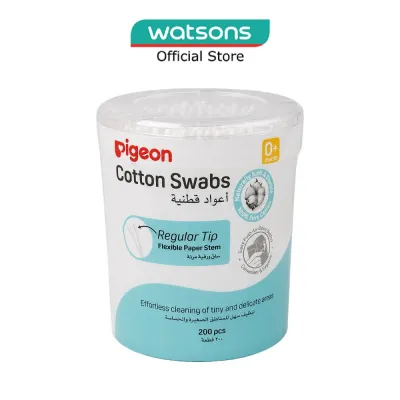
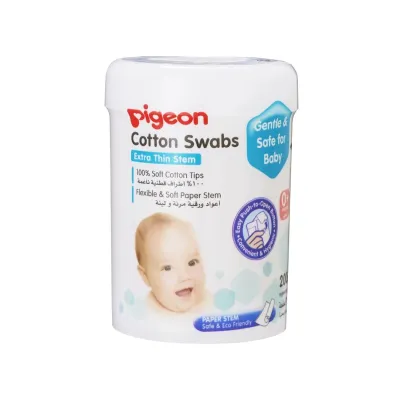
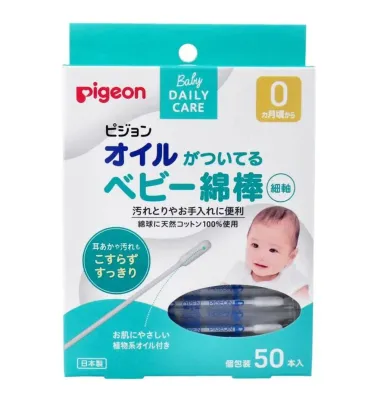
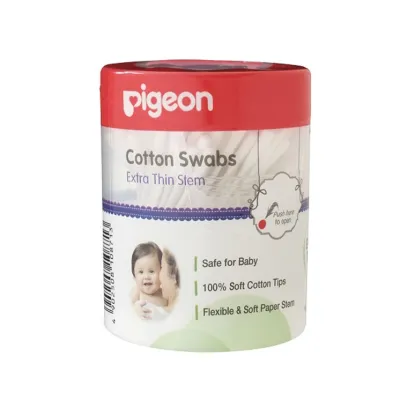
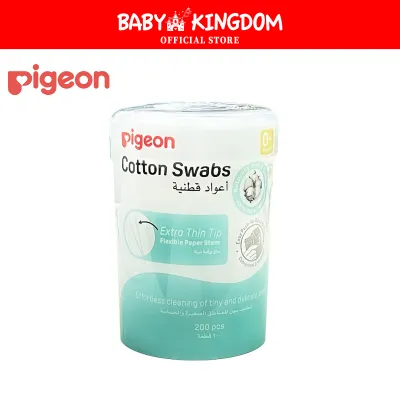
Prices are valid at publication and may change. Please refer to the product page for the latest price.
Beyond the cotton tip, the stick material plays a critical role in control and safety. Pigeon cotton swabs typically feature either flexible plastic stems or biodegradable paper stems. Paper stems are highly favored for their environmental sustainability and their structural rigidity, which provides precise control during targeted cleaning. On the other hand, flexible plastic stems offer a degree of give, reducing the risk of applying excessive pressure against the baby’s skin. Choosing between these materials often depends on your personal preference for handling and your environmental priorities.
Before purchasing or using any variant, always check the manufacturer’s age recommendations and specific use cases printed on the packaging. Infant-specific swabs are manufactured under strict hygienic conditions, but their suitability varies depending on your baby’s developmental stage. For instance, ultra-thin swabs are ideal for newborns, while slightly larger safety-rimmed swabs are better suited for older, more active infants. Reading the packaging ensures you are using the product exactly as intended by the manufacturer.
Matching Swab Types to Specific Baby Care Tasks
Transitioning from understanding product designs to actual daily application requires a clear decision-making process. No single cotton swab type is universally appropriate for every baby care task, and using the wrong variant can lead to discomfort or minor injury. By pairing the physical attributes of each swab with the specific anatomical area you need to clean, you can establish a safe and highly effective grooming routine.

Ear and Nose Cleaning
Cleaning a baby’s ears and nose requires extreme caution and the correct specialized tools. For these delicate areas, choosing a Pigeon cotton swab with a spoon-shaped tip or a specially contoured, ultra-thin tip is highly recommended. These designs are specifically engineered to gently scoop or lift away visible outer debris around the ear and the outer edges of the nostrils, minimizing the risk of pushing blockages deeper.
The strict medical consensus regarding infant hygiene is clear: never insert any cotton swab into the ear canal or deep into the nasal passage. Doing so can pack earwax or mucus tightly against the eardrum or nasal membranes, potentially causing pain, irritation, or even structural damage. The primary goal of using a swab in these areas is purely cosmetic and superficial, focusing only on what is visible on the outer surfaces.
If you observe deep, hardened blockages in your baby’s nose or ears, or if the buildup appears to cause your baby distress or difficulty breathing, do not attempt to clear it yourself with a swab. In these situations, you must stop immediately and consult a pediatrician or qualified healthcare professional. They can safely assess the issue and use professional tools or recommend safe drops to resolve the blockage without risking injury to your child.
Umbilical Cord Care
Newborn umbilical cord care demands a high level of hygiene and gentleness to prevent irritation and support natural healing. For this specific task, you should select highly absorbent, soft-tipped cotton swabs that are explicitly designated for umbilical or newborn care. These swabs are designed to hold sufficient cleaning solution, if recommended by your healthcare provider, while remaining exceptionally gentle on the sensitive stump.
When cleaning the umbilical area, use a gentle dabbing motion to keep the base of the stump clean and dry. It is crucial to strictly avoid any harsh rubbing, scrubbing, or pulling on the cord stump, as this can cause premature separation, bleeding, or skin damage. The objective is to clear away any crust or moisture at the very base of the cord with minimal friction, allowing the area to air-dry completely afterward.
Caregivers must remain vigilant for signs of localized complications during the healing process. If you notice redness, swelling, a foul odor, or any unusual yellow or green discharge around the umbilical stump, stop home care immediately and seek professional medical advice. These symptoms can indicate a localized infection that requires prompt evaluation and treatment by a pediatrician.
General Skin and Crevice Cleaning
Babies have numerous skin folds and delicate areas that accumulate moisture, lint, and sweat, requiring regular, gentle cleaning. Standard soft-tipped Pigeon cotton swabs are highly effective for detailed grooming around these sensitive zones. They allow you to gently clean around the outer tear ducts, behind the ears, and within deep neck or thigh folds where standard washcloths might be too bulky.
These standard swabs are also excellent tools for applying targeted barrier creams or ointments to minor skin irritations or dry patches. Using a clean swab prevents you from introducing bacteria from your fingers into the product container or onto the baby’s skin. However, you must never use the same cotton swab across different body areas. For example, using a swab on the diaper area and then on the face can cause cross-contamination and spread harmful bacteria.
To maintain the highest standards of hygiene, always discard single-use cotton swabs immediately after completing a specific task. Never attempt to wash, sanitize, or reuse a cotton swab, as the structural integrity of the cotton and stick degrades instantly upon contact with moisture. Keeping a dedicated, closed container of fresh swabs nearby ensures that you always have a sterile, safe tool ready for each individual grooming step.
Essential Safety Rules and Manufacturer Guidelines
Using cotton swabs on an infant requires absolute focus and adherence to strict safety protocols. The most critical rule is to ensure direct adult supervision at all times during the grooming process. Babies can move suddenly and unpredictably, which can lead to accidental injury if a swab is near their face. Before you begin, make sure you are in a well-lit room and that you have all your supplies within arm’s reach so you never have to leave your baby unattended.
When performing any cleaning task, it is vital to keep the baby’s head securely still. You can achieve this by gently cradling their head with one hand while operating the swab with the other, or by performing the task when the baby is calm and relaxed. Never rush the process; a sudden jerk or wiggle from the baby while a swab is near their eye, nose, or ear can cause painful scratches or deeper physical trauma.
Always take the time to read and follow the specific warnings, age limits, and usage instructions printed on the Pigeon product packaging. Manufacturers design these guidelines based on rigorous safety standards, and they provide essential context on how to handle each specific variant. For instance, some packaging will explicitly state if a product is not suitable for newborns or if it is intended solely for cosmetic application rather than hygiene.
As a caregiver, you must be prepared to stop the grooming process immediately if certain conditions arise. If your baby begins to move suddenly, shows signs of distress, or if you observe any bleeding or visible skin irritation, withdraw the swab immediately. Continuing to clean a struggling or irritated baby increases the risk of injury. If irritation or bleeding persists, consult a healthcare professional for guidance rather than attempting further home care.
Purchasing Checklist: Verifying Authenticity and Product Condition
Ensuring the safety of your baby’s grooming products starts long before you use them; it begins at the point of purchase. Because counterfeit or poorly stored baby products can pose serious hygiene and physical risks, caregivers must carefully evaluate the items they buy. Following a structured checklist helps guarantee that the Pigeon cotton swabs you use are genuine, clean, and safe for your infant.
First, closely inspect the physical packaging of the swabs before making a purchase. Genuine products should have intact factory seals, clear and professional labeling without spelling errors, and highly legible expiry or manufacturing dates. If the packaging appears crushed, torn, or taped back together, avoid purchasing it, as the sterile environment inside may have been compromised.
To minimize the risk of buying counterfeit goods, always purchase your baby care items through official brand channels, authorized pharmacies, or reputable retail stores. Avoid buying from unverified third-party sellers on online marketplaces or ecommerce platforms, where product sourcing and storage conditions cannot be guaranteed. Investing a small amount of extra effort to buy from trusted sources ensures you receive a product that meets strict quality control standards.
Finally, perform a quick physical inspection of the cotton tips before using them on your baby for the first time. Check that the cotton is tightly and evenly wrapped around the stick, with no loose fibers or unraveling sections that could detach and get stuck in your baby’s nose or ears. The stick should be sturdy and free of splinters or sharp edges. If you notice any structural defects, discard the affected swabs immediately and select a fresh, perfect one from the pack.
Frequently Asked Questions (FAQ)
Can I use regular adult cotton swabs for my baby?
No, you should not use regular adult cotton swabs for your baby. Adult swabs are designed with larger, more loosely wound cotton tips and highly rigid sticks that are unsuitable for an infant’s tiny orifices and delicate skin. Using an adult swab increases the risk of inserting the tip too deeply, causing physical trauma, or leaving loose cotton fibers behind. Baby-specific Pigeon cotton swabs are engineered with ultra-thin tips, flexible or safely rigid stems, and tightly bound cotton to ensure maximum safety and comfort during use.
How often should I clean my baby's ears and nose with a swab?
You should only clean your baby’s ears and nose with a swab when there is visible debris on the outer surfaces, rather than on a strict daily schedule. A baby’s body has natural self-cleaning mechanisms that gradually push earwax and nasal mucus outward. Cleaning too frequently or attempting to clean deep inside can disrupt this natural process and cause irritation. Focus on visual cues, such as dry wax or mucus visible at the very entrance of the ear or nostril, and leave the inner passages completely alone to maintain healthy, natural self-regulation.

Community discussion
Share your experience or ask a question. Comments are reviewed before publication.