
Selecting the right laundry detergent for your baby is a crucial step in protecting their delicate skin barrier while keeping their clothing clean and fresh. Love Mere offers several detergent variants designed to address different stages of physical development and skin sensitivity. To choose the best option, you must evaluate your baby’s current age, observe any signs of skin sensitivity, and match these factors against the specific ingredients and formulations of each variant. By balancing mildness for newborns with effective stain removal for active toddlers, you can maintain clean garments without risking skin irritation.
Assessing Your Baby's Laundry Needs by Age and Skin Type
Your baby’s skin is significantly thinner and more permeable than adult skin, making it highly susceptible to absorbing chemical residues left on clothing. During the newborn stage, which spans from birth to approximately six months, the skin barrier is still developing its natural protective functions. At this stage, infants spend most of their time sleeping or being held, meaning their clothes primarily collect sweat, spit-up, and breast milk or formula. Because their skin is incredibly delicate, newborns require ultra-mild, fragrance-free formulations that rinse out completely, leaving zero chemical residue behind to irritate their skin.
As your baby transitions into the infant and toddler stages, typically around six months and beyond, their laundry needs undergo a dramatic shift. With the introduction of solid foods, crawling, and outdoor play, their garments will encounter a wider variety of stubborn stains, including fruit purees, drool, mud, and grass. While you still need to protect their skin, the detergent must now possess sufficient cleaning power to break down organic proteins and oils. Using a formula that is too weak may leave organic residues in the fabric, which can harbor bacteria and cause odor or skin irritation over time.
Products mentioned in this guide
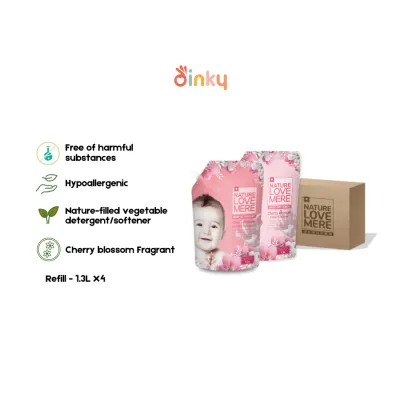
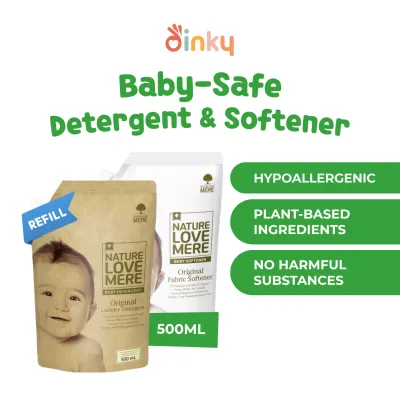
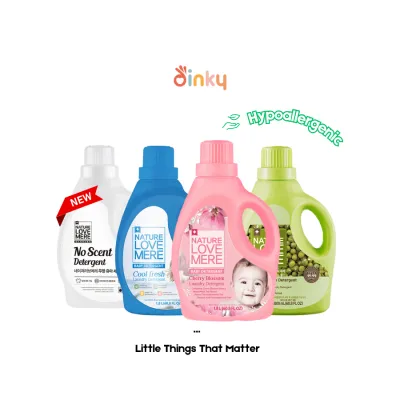
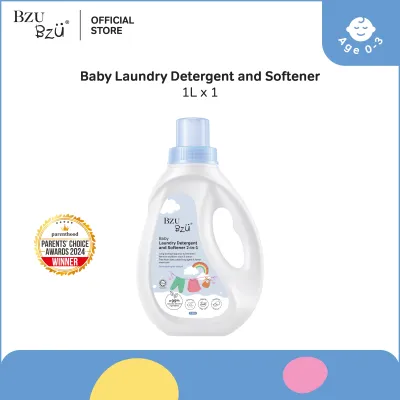
Prices are valid at publication and may change. Please refer to the product page for the latest price.
Individual skin conditions also play a major role in determining the right detergent variant. If your baby shows observable signs of eczema, extreme dryness, or contact dermatitis, their skin barrier is compromised and highly reactive. In these cases, even mild botanical fragrances or certain plant-derived surfactants can trigger flare-ups, characterized by red, rough, or itchy patches on the skin. For babies with these sensitive skin profiles, prioritizing fragrance-free, hypoallergenic, and minimally formulated detergents is essential, regardless of whether they are a newborn or an active toddler.
Decoding Love Mere Product Labels for Safety and Suitability
Navigating the product labels on Love Mere detergents requires a systematic approach to verify that a specific variant aligns with your baby’s needs. Start by examining the packaging for age-specific recommendations or usage guidelines, which are often located on the back label or within the product description. While some variants are formulated generally for all baby garments, others may explicitly highlight suitability for newborns or specify that they are optimized for older infants. Checking these manufacturer guidelines ensures you are using the product within its intended developmental scope.

Ingredient transparency is the next critical factor to evaluate when reading the label. You should actively scan the ingredient list for harsh synthetic surfactants, such as Sodium Lauryl Sulfate (SLS) or Sodium Laureth Sulfate (SLES), which are known to strip moisture from delicate skin. Additionally, look out for optical brighteners—chemicals designed to remain on fabric fibers to make clothes appear whiter—as these can cause contact dermatitis in sensitive infants. Synthetic dyes and heavy artificial fragrances should also be avoided, as they serve no cleaning purpose and are common triggers for skin irritation.
Understanding marketing terms like “dermatologically tested” or “hypoallergenic” is equally important for making an informed decision. These labels generally indicate that the manufacturer has conducted patch tests on human skin under clinical supervision to minimize the likelihood of an allergic reaction. However, because every baby’s skin chemistry is unique, these terms do not offer an absolute guarantee of safety. If your baby has a history of severe skin allergies or persistent eczema, it is always wise to consult a pediatrician or a pediatric dermatologist before introducing a new laundry product to their wardrobe.
Matching Love Mere Formulas to Specific Laundry Scenarios
Choosing the right Love Mere detergent variant involves matching the specific properties of each formula to your daily laundry challenges. Rather than relying on a one-size-fits-all approach, you can optimize your laundry routine by selecting a variant based on your baby’s current developmental stage and the types of stains you encounter most frequently.
For Newborns and Highly Sensitive Skin
When washing clothes for newborns or babies with highly reactive skin, your primary goal is to minimize the chemical load on the fabric. You should prioritize Love Mere variants that are completely fragrance-free and dye-free, utilizing the simplest possible ingredient list to clean the fabric. These minimalist formulations rely on gentle, plant-derived cleansing agents that lift light soils without embedding harsh chemical residues deep within the cotton fibers of sleepwear and onesies.
If you use cloth diapers or specialized infant sleepwear, selecting the gentlest variant is even more critical. Standard detergents with added fabric softeners or heavy oils can coat diaper fibers, reducing their absorbency and leading to leaks and diaper rash. By choosing a clean-rinsing, fragrance-free Love Mere variant, you preserve the natural absorbency of cloth diapers while ensuring that the fabric remains soft and non-irritating against your baby’s most sensitive areas. Always verify the packaging for specific pediatric endorsements or certifications that confirm the formula’s suitability for compromised skin barriers.
For Active Toddlers and Tough Stains
For older babies who are actively exploring their environment, you need a detergent variant that balances skin safety with robust stain-removing capabilities. Look for Love Mere formulations that incorporate plant-based enzymes, such as protease or amylase, which are highly effective at breaking down tough organic stains like baby food, milk, and dirt. These enzymes target the specific molecular structure of the stain, allowing it to wash away easily without requiring harsh synthetic chemicals that could irritate the skin.
Even with increased cleaning power, the ideal toddler detergent must still rinse away cleanly from everyday play clothes. Residue left behind by poorly formulated detergents can rub against your toddler’s skin during active play, causing friction-induced irritation or sweat rashes in Singapore’s warm, humid climate. To tackle particularly stubborn stains without exposing your child’s clothes to harsh adult detergents, you can adjust your washing dosage or use the baby detergent as a pre-treatment spot cleaner directly on the stain before running a standard wash cycle.
Safe Washing Practices and Transitioning Between Variants
Using the correct amount of detergent is just as important as selecting the right variant for your baby’s skin. Overdosing is a common mistake that leads to detergent buildup in the washing machine and on clothing fibers, which can trap dirt and irritate sensitive skin. Always refer to the dosage guidelines on the back of the Love Mere bottle, using the provided measuring cap to match the detergent volume to your load size. If you are washing clothes for a baby with highly sensitive skin or eczema, running an extra rinse cycle is an excellent practice to ensure all traces of detergent are thoroughly flushed out.
In Singapore’s humid environment, proper washing and drying practices are essential to prevent mold and bacterial growth on baby garments. If you dry your laundry indoors or use a front-loading washing machine, ensure your machine is regularly cleaned and that clothes are dried completely before storage. Dampness combined with detergent residue can create an ideal breeding ground for allergens. If you observe new skin reactions, such as localized redness, dry patches, or itching after your baby wears freshly washed clothes, it may be a sign that the current variant is no longer suitable or that detergent residue is remaining in the fabric.
When transitioning your baby to a different Love Mere variant or eventually to a standard family detergent, a gradual approach is highly recommended. Start by washing just a few non-essential items, such as outer jackets or blankets, in the new detergent and monitor your baby’s skin for any signs of irritation over several days. If no reaction occurs, you can gradually transition their entire wardrobe, including sleepwear and undergarments. This cautious method allows you to isolate the cause of any potential skin flare-ups and ensures a safe, comfortable transition as your child’s skin matures and their laundry needs evolve.
Frequently Asked Questions (FAQ)
Can I use Love Mere detergent for the whole family's laundry?
Yes, you can certainly use Love Mere detergent to wash the entire family’s laundry, and doing so offers several distinct advantages. Because baby detergents are formulated to be exceptionally gentle, they are highly beneficial for adults in the household who suffer from sensitive skin, eczema, or contact allergies. Washing shared household items like bedding, bath towels, and family clothing in a mild baby detergent prevents your infant from coming into contact with harsh chemical residues when they are held or cuddled by family members.
However, you should consider the balance between cleaning power and cost-effectiveness when using baby detergent for adult clothes. Adult garments often carry heavier synthetic odors, body oils, and tough outdoor stains that may require a stronger cleaning profile or a larger dosage of baby detergent to clean effectively. While using Love Mere for the whole family simplifies your laundry routine, it may be more economical to reserve the baby detergent for your infant’s clothes and shared bedding, while using a standard, fragrance-free sensitive detergent for the rest of the family’s laundry.
Do I need to use a fabric softener with Love Mere detergent?
It is generally recommended to avoid using standard fabric softeners on baby clothing due to several safety and health risks. Conventional fabric softeners work by leaving a thin chemical coating over the fabric fibers to make them feel smoother, but this coating can severely reduce the flame-resistant properties of specialized baby sleepwear. Furthermore, the strong synthetic fragrances and softening agents used in these products are common skin irritants that can easily trigger eczema flare-ups or respiratory discomfort in young infants.
If you want to keep your baby’s clothes soft without risking their skin health, there are several safe alternatives available. Using wool dryer balls in your tumble dryer is an excellent, chemical-free way to naturally soften fabrics and reduce static cling by gently separating the garments as they dry. Alternatively, you can add a small amount of distilled white vinegar to the fabric softener dispenser of your washing machine during the rinse cycle; vinegar helps break down mineral deposits and detergent residue, leaving clothes naturally soft and completely odor-free once dry.

Community discussion
Share your experience or ask a question. Comments are reviewed before publication.