
Choosing the right diaper rash cream requires matching the formula’s strength to the current state of your baby’s skin. To resolve diaper irritation quickly, you must select a barrier cream with the appropriate concentration of zinc oxide and the correct texture for the rash’s severity. Using a formula that is too weak may fail to protect compromised skin, while using an ultra-thick paste for daily maintenance can make routine cleanups unnecessarily difficult.
In Singapore’s hot and humid tropical climate, diaper rash can develop and escalate rapidly. High humidity levels trap sweat and moisture inside the diaper, which accelerates the breakdown of the skin’s natural protective barrier. By understanding how to evaluate your baby’s skin and matching it to the correct Desitin variant, you can prevent minor chafing from turning into a painful, weeping rash.
Assess Your Baby's Diaper Rash Severity
Before reaching for a tube of diaper cream, you must carefully examine your baby’s diaper area under clear, bright light. Diaper rash is not a single, uniform condition; it progresses through distinct stages that require different levels of skin protection. Categorising the rash correctly ensures you apply a treatment that is strong enough to promote healing without putting unnecessary stress on the skin during cleanups.
Products mentioned in this guide
![[Bundle of 3] Desitin Daily Defense Diaper Rash Protection Cream Instantly Soothe Diaper Rash Discomfort 57g](https://img.lazcdn.com/g/p/b74ae21f7b47f8ec6b2c02dbfd829fc2.jpg_400x400q80.jpg_.webp)

Prices are valid at publication and may change. Please refer to the product page for the latest price.
Mild Diaper Rash
A mild diaper rash typically presents as slight pinkness or light redness across limited areas of the skin. These pink patches are usually localized to high-friction zones, such as the inner thighs, the waistband area, or the folds of the buttocks where the diaper edges rub directly against the skin. At this stage, the skin remains smooth and intact with no raised bumps, peeling, or broken areas. Your baby will generally remain comfortable, showing no signs of distress or pain when you wipe the area during diaper changes.
Moderate Diaper Rash
A moderate diaper rash is characterized by bright red, highly visible patches that cover a larger portion of the diaper region. The skin may feel slightly warm to the touch and appear bumpy, swollen, or raised in certain areas. Unlike a mild rash, a moderate flare-up causes noticeable discomfort. Your baby may become fussy, squirm, or cry during diaper changes, particularly when you wipe the irritated areas. This level of inflammation indicates that the skin barrier is actively compromised and requires immediate, soothing intervention.
Severe Diaper Rash
A severe diaper rash is a painful, highly inflamed condition that requires urgent attention. The skin will appear deep red, purple, or raw, often covering the entire diaper area and extending into the surrounding skin. You may observe peeling, open sores, weeping fluid, or small spots of blood where the top layer of skin has rubbed away. The baby will likely be in significant pain, crying inconsolably during diaper changes, bath time, or even when sitting down.
Identifying Non-Standard Rashes
It is critical to distinguish standard friction- or moisture-induced diaper rash from non-standard skin infections. A classic example is a yeast (Candida) diaper infection, which thrives in the warm, dark, and moist environment of a diaper. Yeast infections typically present as a deep red rash that settles deep within the skin folds—areas often spared by standard friction rashes.
Additionally, you will notice distinct, pinpoint red dots or small pustules, known as satellite lesions, spreading outward from the edges of the main red patch. Standard zinc oxide barrier creams cannot cure a fungal or bacterial infection. If you observe these satellite dots, blisters, or pus, you should bypass standard home treatments and seek professional medical advice.
Match Desitin Variants to Your Baby's Skin Condition
Once you have determined the severity of the rash, you can select the most effective Desitin variant for your baby’s needs. The brand offers different formulations designed to address specific stages of skin irritation, primarily distinguished by their zinc oxide concentrations and overall textures. Always verify the active ingredients and usage instructions printed on the specific product packaging, as formulations can vary by region or import batch.

Daily Prevention and Mild Redness
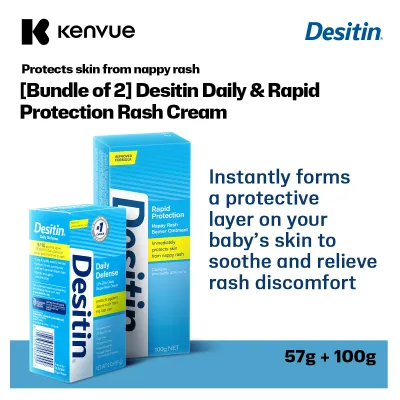
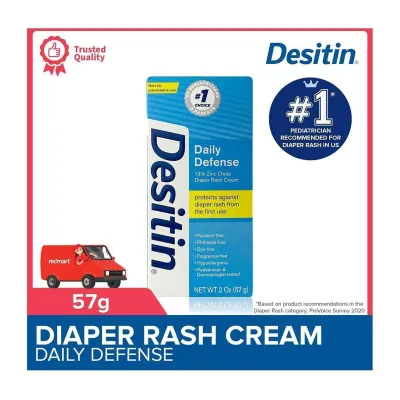
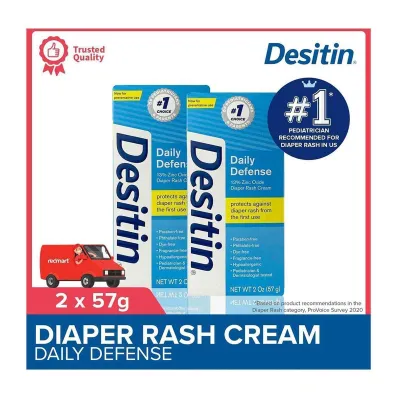
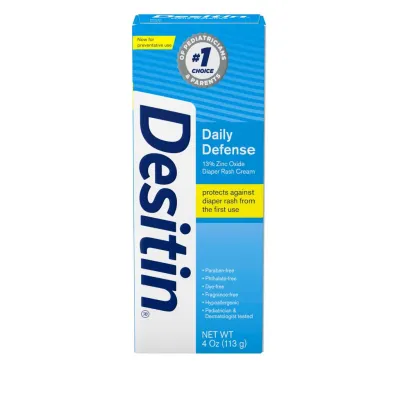
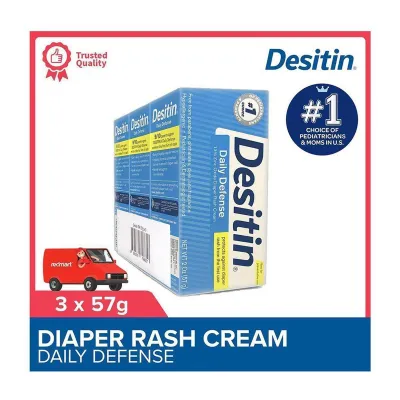
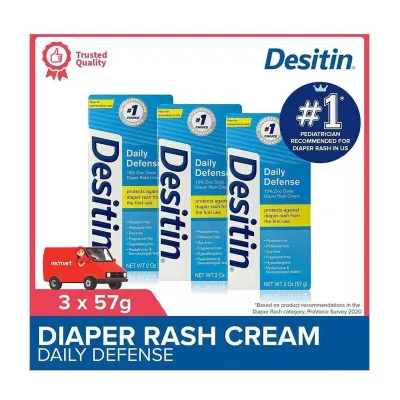
For everyday skin maintenance and the very first signs of pinkness, a lightweight, daily protective cream is the most appropriate choice. Products in this category, such as Desitin Daily Defense (formerly known in some regions as Desitin Rapid Relief or Creamy Protection), are formulated specifically to keep healthy skin intact.
These daily-use variants typically feature a lower concentration of zinc oxide, generally around 10%. This lower concentration allows the cream to have a thinner, lotion-like consistency that glides effortlessly onto the skin. It spreads with minimal friction, which is crucial when applying cream to slightly sensitive areas.
Using a daily prevention cream creates a reliable, breathable barrier that blocks urine and stool from directly contacting the skin. In Singapore’s humid climate, applying this thin protective layer during morning diaper changes or before long periods in a stroller helps repel sweat and moisture, stopping chafing before it starts.
Moderate Irritation and Rapid Relief
When active, bright red patches appear, your baby’s skin needs a formula that can soothe irritation on contact while providing a more robust physical shield. For these mid-level flare-ups, a rapid-relief formula is highly effective.
Desitin Rapid Relief variants are engineered to balance easy spreadability with enhanced skin protection. They contain therapeutic levels of zinc oxide designed to immediately seal out wetness and calm active inflammation. The cream is thicker than the daily prevention lotion, yet it remains smooth enough to apply over tender, bumpy skin without requiring heavy pressure.
This variant is ideal for treating active, non-severe rashes that have progressed beyond simple friction pinkness. It should be applied at the first sign of moderate redness to halt the rash’s progression and support the skin’s natural healing process.
Stubborn, Severe, or Persistent Rashes
When dealing with deep red, raw, or highly persistent rashes that do not respond to lighter creams, you must use a maximum-strength formula to provide the ultimate level of skin defense.
Desitin Maximum Strength is characterized by its exceptionally thick, paste-like consistency. It contains the highest concentration of zinc oxide available in the brand’s lineup, typically 40%. This dense paste does not wash or rub away easily, providing a heavy-duty, long-lasting physical barrier that completely isolates the damaged skin from moisture and digestive enzymes.
This maximum-strength paste is highly recommended for challenging scenarios, such as overnight protection when the baby wears the same diaper for several consecutive hours. It is also excellent for long naps, periods of diarrhea, or when standard daily creams have failed to resolve persistent redness. Because formulations and concentrations can occasionally change, always check the specific product label to verify the exact active ingredient percentage to ensure it meets your baby’s therapeutic needs.
Best Practices for Applying Diaper Rash Cream
Selecting the correct Desitin variant is only half the battle; how you apply the cream directly impacts how quickly your baby’s skin heals. Improper application techniques can inadvertently trap moisture against the skin, prolonging the irritation and rendering the barrier cream less effective.
First, you must ensure the diaper area is completely clean and dry before applying any cream. After gently cleaning the skin with alcohol-free, fragrance-free wipes or warm water, do not rush to put on the cream. Instead, gently pat the skin dry with a soft, clean washcloth, or let the baby air-dry for a few minutes. Applying a zinc oxide barrier cream over damp skin traps that moisture directly against the skin barrier, which can worsen the rash over time.
Second, adjust the thickness of the cream based on the severity of the rash. For daily prevention and mild redness, apply a thin, translucent layer of cream—just enough to provide a light protective sheen. For moderate to severe rashes, use the “frosting a cake” rule. Apply a thick, generous, and completely opaque layer of the maximum-strength paste. The skin underneath should be entirely covered and invisible, ensuring that urine and stool cannot penetrate the barrier.
Third, practice gentle cleanup habits during subsequent diaper changes. You do not need to scrub off every trace of clean diaper cream during every single change, especially if the baby has only urinated. Scrubbing raw, healing skin causes painful friction and delays recovery. Instead, gently wipe away only the soiled top layer of cream containing waste, leave the clean base layer intact, and apply a fresh layer of cream directly over it. Only perform a thorough, complete wash during bath time or after a bowel movement.
When to Stop Home Treatment and See a Paediatrician
While high-quality barrier creams like Desitin are highly effective at resolving standard diaper rashes, home treatment has clear safety limits. Parents must monitor the rash closely and recognize the warning signs that indicate a need for professional medical intervention.
If your baby’s diaper rash does not show visible signs of improvement after 3 to 4 days of consistent, correct barrier cream application, it is time to stop home treatment. A standard diaper rash should begin to fade and shrink within this timeframe. A lack of progress suggests that the underlying cause may not be simple diaper irritation.
You should schedule an immediate consultation with a paediatrician or a general practitioner at a local clinic in Singapore if you observe any of the following red flags:
- The rash spreads significantly beyond the diaper area, appearing on the abdomen, back, arms, or legs.
- You notice blisters, small pimples filled with pus, oozing yellow fluid, or honey-colored crusts, which are common signs of a secondary bacterial infection.
- The baby develops a fever, becomes unusually lethorgy, or cries inconsolably, indicating systemic distress or severe localized pain.
- The skin becomes extremely raw, bleeds easily, or develops deep, open cracks.
These symptoms suggest a fungal infection, a bacterial infection, or a severe allergic reaction, none of which will respond to standard over-the-counter zinc oxide creams. A doctor can properly diagnose the condition and prescribe targeted medical treatments, such as mild topical antifungals, prescription antibacterial ointments, or specialized healing creams to safely resolve the issue.
Frequently Asked Questions (FAQ)
Can I use Desitin on a newborn's skin?
Yes, Desitin variants are generally formulated to be safe for use on a newborn’s delicate skin. However, you must always read the specific product packaging for age recommendations and manufacturer warnings before application. If your baby was born prematurely, spent time in the neonatal intensive care unit (NICU), or has highly sensitive, compromised skin, consult your paediatrician before introducing any new skincare or barrier products.
How do I safely remove thick Desitin paste without hurting my baby?
To safely remove thick, stubborn Desitin Maximum Strength paste without causing painful friction, avoid harsh rubbing or scrubbing. Instead, soak a soft cotton pad or clean washcloth in warm water mixed with a few drops of baby-safe mineral oil or natural coconut oil. Gently press the damp cloth against the paste for a few seconds to loosen and dissolve the zinc oxide barrier, then smoothly wipe it away in a single direction.
Should I apply Desitin at every single diaper change?
Whether you apply cream at every change depends entirely on the variant you are using and your baby’s skin history. Thinner, daily prevention creams with a lower zinc oxide concentration can be applied at every diaper change to maintain a constant moisture barrier, especially for babies prone to frequent flare-ups in humid weather. Conversely, thick, maximum-strength pastes should be reserved for active treatment of moderate-to-severe rashes, overnight protection, or long travel periods, rather than routine daily use.

Community discussion
Share your experience or ask a question. Comments are reviewed before publication.