
Choosing the right children cutlery set is a significant milestone in your child’s journey toward independent eating. The utensils they use do more than just carry food to their mouth; they support fine motor development, build confidence, and prevent mealtime frustration. When a child is handed a tool that matches their physical capabilities, they are more likely to stay engaged with their meal and develop a positive relationship with food. Conversely, using cutlery that is too heavy, too long, or difficult to grip can lead to frustration, spills, and a reluctance to try self-feeding.
While age recommendations on packaging offer a starting point, matching the cutlery’s physical design to your child’s current grip style and coordination is the key to a successful transition. By understanding how motor skills evolve and what design features to look for, you can select a set that makes self-feeding a comfortable and rewarding experience for your little one.
Understanding Cutlery Needs by Developmental Stage
During the early self-feeding stage, which typically occurs between 6 and 12 months, babies are exploring textures and learning the basic mechanics of bringing hands to mouth. At this point, they do not have the finger dexterity to hold a slim handle. Instead, they use a palmar grasp, wrapping their entire fist around an object. Cutlery designed for this stage must feature short, bulbous handles that sit comfortably in the center of their palm. The spoon bowl should be shallow because infants do not yet have the lip coordination to clear a deep bowl; they rely on their upper lip to slide food off. Soft-tipped materials, such as food-grade silicone, are essential to protect tender, teething gums from accidental impacts.
Products mentioned in this guide
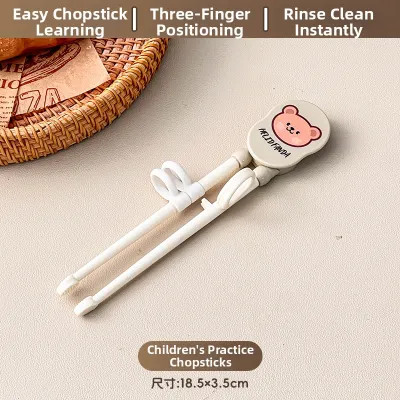
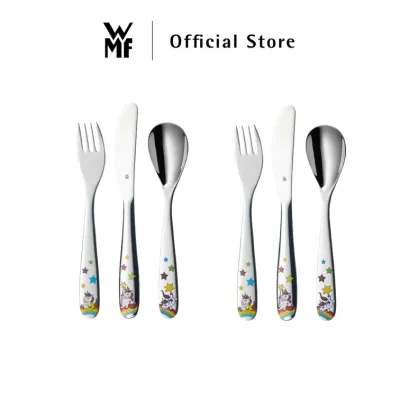
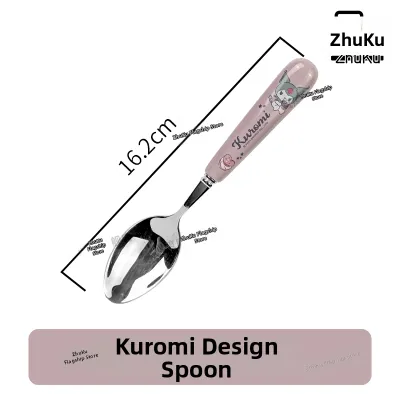
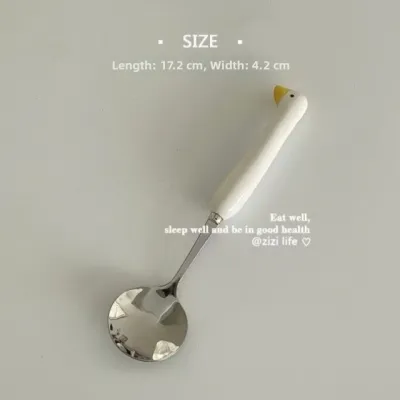
![Stainless Steel Cartoon Spoon/Fork Portable Cutlery Set for Children [SG Ready Stock]](https://img.lazcdn.com/g/p/fe3097da881baffba74c1e6f6a90916f.jpg_400x400q80.jpg_.webp)
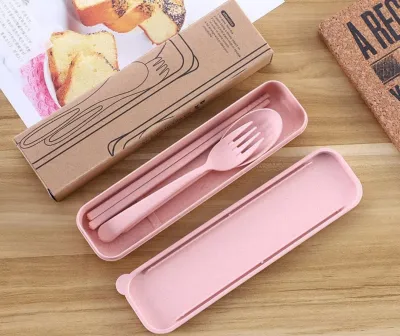
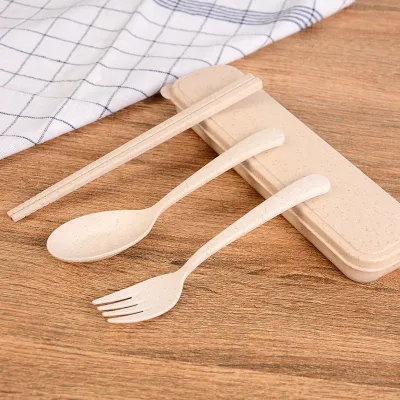
![WHOLESALE ✨💖 [BOX PACKAGING] 3 Pcs Set Cutlery Set l Spoon Fork Knife Cutlery Set l Kids Adults Travel Utensils l Teachers Day Gifts l Children Day Gifts l Christmas Gifts l Birthday Party Goodie Bag l Party Favors Party Pack and Sets](https://img.lazcdn.com/g/p/6ec9ff73843781af0e027a1a43bd5ae4.jpg_400x400q80.jpg_.webp)
Prices are valid at publication and may change. Please refer to the product page for the latest price.
As toddlers enter the stage between 1 and 3 years, their grasp begins to evolve. They start moving away from the full-fist palmar grasp and begin using their fingers to stabilize objects, transitioning toward a digital grasp. This is the ideal time to transition to slightly longer handles that offer more leverage. You can introduce a fork with blunt, rounded tines. The goal of a toddler fork is not to pierce tough meats, but to help them spear soft foods like steamed vegetables, fruit chunks, or pasta. A slightly weighted base can be incredibly helpful here, as it provides sensory feedback that helps the child understand where the utensil is in relation to their hand and mouth.
By the preschool stage, between 3 and 5 years, children are developing a mature pincer grasp, using their thumb and index finger to hold utensils much like an adult does. Their hand-eye coordination is significantly more refined, allowing them to use slimmer, longer handles. At this stage, you can transition them to stainless steel cutlery sets that mimic adult designs but are scaled down to fit smaller hands. The fork tines can be slightly more defined to allow for easier piercing of a wider variety of foods, and the spoon bowl can be deeper to accommodate soups and cereals. This is also the perfect window to introduce a child-safe, blunt-edged knife to teach the basic mechanics of cutting and spreading.
It is vital to remember that chronological age is merely a baseline. Every child develops motor skills at their own unique pace. Some toddlers may show advanced finger dexterity early on, while some preschoolers may still benefit from the stability of thicker, textured handles. Observe how your child interacts with other everyday objects—such as crayons, building blocks, or small toys—to gauge their grip strength and coordination before moving them to the next stage of cutlery.
Key Design Features to Evaluate for Comfort and Control
The physical design of the handle is the primary interface between your child and their food. For early learners, a handle with a non-slip texture is crucial. When hands become slippery with food or water, a smooth plastic or metal handle can easily slide out of a child’s grip, causing frustration. Look for handles wrapped in textured silicone, ribbed patterns, or matte finishes that provide friction. The diameter of the handle should match the size of their palm; a handle that is too thin requires more grip strength than a young child possesses, leading to hand fatigue and dropped utensils.

The shape and size of the utensil head directly impact how much food a child can scoop and how easily they can consume it. A spoon bowl that is too wide or deep can hold more food than a young child can safely manage, increasing the risk of gagging or overfilling their mouth. Look for a spoon with a narrow, shallow profile for beginners. For forks, safety is the primary concern. The tines should be rounded and blunt to prevent any accidental scratches to the lips, tongue, or cheeks. However, they must still have enough structure to hold food; completely flat, plastic tines often slide off food, which can discourage a child from trying.
The weight distribution of a children cutlery set is a subtle but critical factor in how easily a child can control it. If a utensil is top-heavy—meaning the head is significantly heavier than the handle—it will constantly tip forward, spilling food before it reaches the mouth. Conversely, if the handle is too heavy, the utensil may flip backward out of small hands. A well-balanced utensil has a center of gravity that sits comfortably in the middle of the child’s hand. Some specialized toddler utensils feature a weighted base, which helps keep the utensil upright when placed on the table and provides grounding sensory feedback during use.
Many parents wonder if specialized curved or angled cutlery is necessary. These designs are engineered to assist children who have not yet mastered wrist rotation. When a baby first attempts to feed themselves, they bring their hand straight up to their mouth in a linear motion. An angled spoon head compensates for this by pointing toward the mouth even when the wrist remains straight. While highly beneficial for early self-feeders or children facing motor challenges, they are generally a transitional tool. As your child’s wrist flexibility and coordination naturally improve, transitioning them to straight handles will help them develop the standard movements required for adult dining.
Material Safety and Care Instructions to Verify
When shopping for a children cutlery set, material safety should always be your top priority. Always read the manufacturer’s packaging and product labels carefully. Look for explicit declarations that the materials used are food-grade and free from potentially harmful chemicals such as Bisphenol A (BPA), phthalates, and polyvinyl chloride (PVC). High-quality stainless steel (such as 18/10 or 304 grade) is an excellent choice for older toddlers and preschoolers due to its durability and hygienic properties, while food-grade silicone is ideal for younger babies due to its softness and flexibility.
Different materials require different cleaning and maintenance routines. Before purchasing, verify the manufacturer’s instructions regarding dishwasher safety, heat resistance, and sterilization. While silicone and stainless steel are generally highly heat-resistant and can withstand the high temperatures of a dishwasher or steam sterilizer, some plastics can warp, degrade, or release odors when exposed to extreme heat. If you regularly use a UV sterilizer or steam sterilizer at home, ensure the cutlery materials are certified as compatible to prevent premature wear or structural breakdown.
Children’s cutlery undergoes significant wear and tear. Toddlers often bite down hard on spoon bowls and fork tines, especially when they are teething. Inspect product descriptions for durability indicators, such as resistance to biting, scratching, and staining. High-quality silicone should be firm enough to resist tearing under bite pressure, while plastic utensils should be robust enough not to splinter or crack. Stainless steel is virtually indestructible but should be checked to ensure there are no sharp edges or loose joints where the metal meets a plastic or silicone handle.
No children cutlery set lasts forever. It is essential to perform regular visual inspections of your child’s utensils. Over time, constant washing, biting, and dropping can cause materials to degrade. If you observe deep scratches, persistent discoloration, peeling coatings, or any structural damage—such as a loose handle or a cracked tine—stop using the item immediately. Deep scratches can harbor harmful bacteria that are difficult to sanitize, while cracked or loose parts can pose a serious choking hazard or injure your child’s mouth.
Building Your Shortlist: Filtering Options for Your Child
When browsing online marketplaces or physical store shelves, it is easy to get swayed by colorful packaging and broad age recommendations. However, the most effective way to build a shortlist is to match the physical specifications of the cutlery to your child’s actual developmental milestones. If a set is marketed for “18 months+” but features a very slim, adult-like handle, it may not suit a toddler who still relies on a thick grip. Focus on the physical dimensions—such as handle diameter, utensil length, and weight—rather than relying solely on the manufacturer’s age label.
As you filter your options, keep an eye out for common design flaws that can hinder your child’s progress or compromise safety. Avoid utensils with excessively long handles, as these can easily be pushed too far into the mouth, triggering the gag reflex. Steer clear of sets with sharp metal edges, intricate decorative crevices that are difficult to clean, or detachable small parts that could become loose. Additionally, avoid materials that feel excessively heavy, as they can quickly tire out a young child’s hand, turning mealtime into a chore.
Consider the types of meals you are currently introducing to your child when choosing a set composition. For infants starting solid foods, a simple set of two or three soft spoons is all you need. As you introduce more textured and solid foods during the toddler years, a matching spoon and fork set becomes necessary. For preschoolers who are beginning to eat family meals, look for complete three-piece or four-piece sets that include a child-safe, blunt knife. This allows them to practice the dual-handed coordination required for cutting and stabilizing food.
Finally, ensure that the cutlery you choose fits seamlessly into your household’s daily routines and storage setups. If you have limited kitchen drawer space or use a compact drying rack, look for sets that stack neatly or come with their own travel cases. If you prefer quick and easy cleanup, prioritize dishwasher-safe materials over those that require hand-washing. Whether you are looking at a basic set for S$5 or a premium ergonomic set for S$25, aligning the cutlery’s care requirements with your lifestyle ensures that mealtime cleanup remains stress-free and efficient.
Frequently Asked Questions (FAQ)
When should I transition from baby spoons to regular kids' cutlery?
The transition from soft baby spoons to more structured toddler cutlery is guided by your child’s physical coordination rather than a specific age. Look for key developmental signs, such as improved hand-eye coordination, a more controlled grasp, and the ability to rotate their wrist to bring food to their mouth without spilling. If your child shows frustration when trying to scoop thicker foods with a shallow baby spoon, or if they attempt to use their fingers to push food onto their spoon, they are likely ready to transition to a toddler fork and spoon set.
Are angled handles necessary for toddlers learning to self-feed?
Angled or curved handles are not a necessity for every child, but they can be incredibly helpful during the early stages of self-feeding. These specialized designs are engineered to reduce wrist strain by aligning the utensil head with the mouth, compensating for a toddler’s limited wrist rotation. If you notice your child struggling to keep food on a straight spoon as they bring it to their mouth, an angled set can build confidence and reduce spills. However, as their motor skills and wrist flexibility naturally improve, you should gradually transition them to straight handles to prepare them for standard cutlery.

Community discussion
Share your experience or ask a question. Comments are reviewed before publication.