
Selecting the right capacity for baby bags for travel requires balancing the duration of your outing with your baby’s developmental stage and feeding requirements. A quick trip to a local neighborhood park demands a vastly different setup than a full-day excursion or an international flight. By understanding how to calculate your baseline gear volume, you can choose a bag that keeps you organized without adding unnecessary physical strain during your journeys.
While total volume is often measured in litres, the practical space you need depends heavily on how items pack together. A bag that is too small leads to frustration when retrieving items in an emergency, while an oversized bag encourages overpacking and causes physical fatigue. Finding the right balance ensures you remain mobile and prepared for any scenario.
Calculating Your Baseline Baby Gear Volume
Before comparing bag sizes, you must estimate the physical volume of your daily essentials. A baby’s age is the primary factor in determining this baseline. Newborns require frequent diaper changes and are prone to spit-ups, meaning you must pack more diapers, wipes, and change of clothes than you would for an older toddler.
Products mentioned in this guide
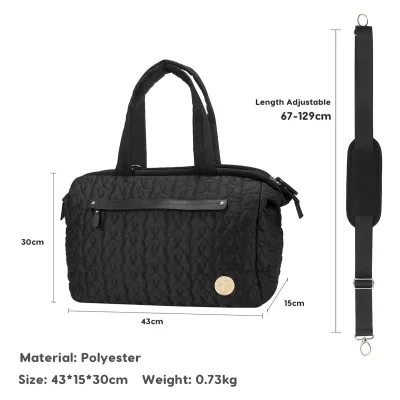
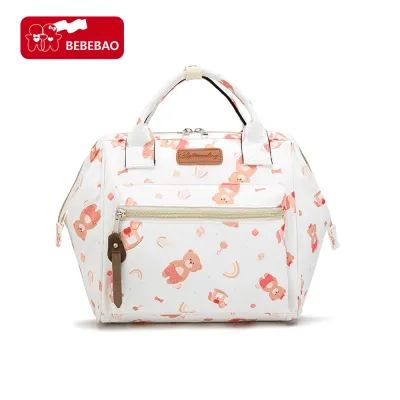
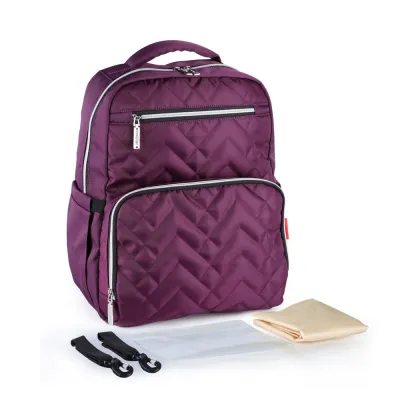
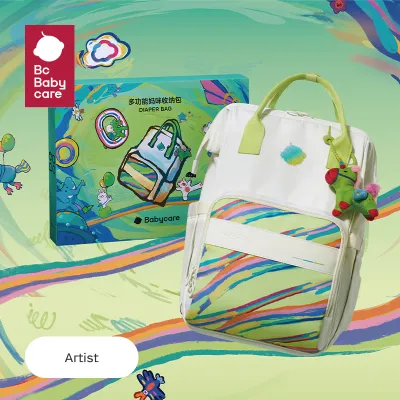
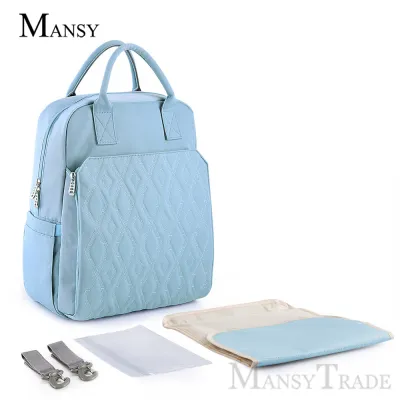
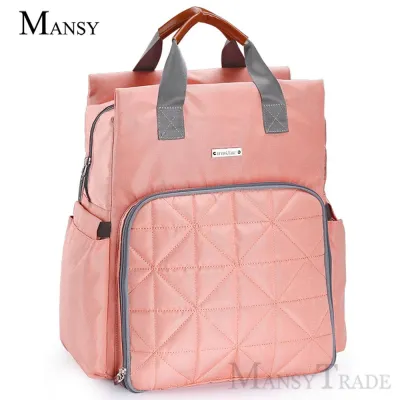
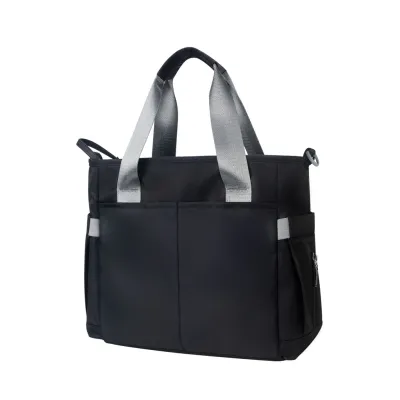
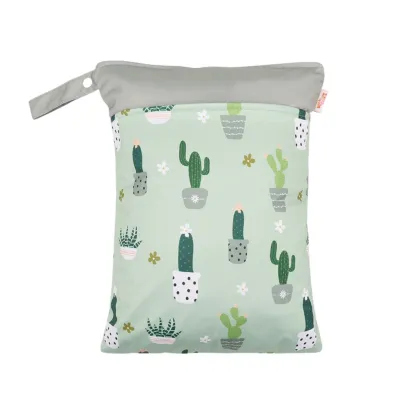
Prices are valid at publication and may change. Please refer to the product page for the latest price.
Feeding methods also dictate your baseline space requirements. If you are formula-feeding, you need to accommodate bottles, insulated flasks of warm water, and formula dispensers. Parents who pump must factor in the physical dimensions of a breast pump, shield kits, and milk storage bags. For older babies on solid foods, rigid snack cups, silicone bibs, and baby utensils take up substantial, non-compressible space in your bag.
Do not forget to account for emergency items. A basic baseline should always include a compact wet bag for soiled garments, a travel-sized changing mat, and a small first-aid pouch. Once you have a clear picture of these daily essentials, you can use them as a measuring gauge when evaluating different bag capacities.
Sizing Your Bag for Short Outings and Quick Errands
For trips lasting under two hours, a minimalist packing strategy prevents unnecessary fatigue. Your inventory for these brief outings can be limited to two diapers, a travel-sized pack of wipes, a single change of clothes, and one feeding option. Carrying a large backpack for these quick trips is often cumbersome and unnecessary.

Compact crossbody slings, small totes, and mini backpacks with a capacity of 10 to 15 litres are highly suitable for quick errands. These smaller designs allow you to move freely through crowded spaces and public transport. They force you to pack only the essentials, keeping the overall weight light and manageable.
Alternatively, you can rely on your stroller’s built-in storage. If your stroller features a spacious under-seat basket, you can place a simple organizer or a compact diaper clutch inside it. This approach eliminates the need to wear a bag altogether, allowing you to focus entirely on steering the stroller and attending to your baby.
Scaling Up for Full-Day Excursions and Appointments
A full-day outing, such as a doctor’s appointment followed by a family gathering, requires a mid-sized bag, typically between 18 and 25 litres. This capacity allows you to pack for multiple feeding sessions, carry five to six diapers, and store extra clothing layers to handle sudden weather changes or cold, air-conditioned indoor spaces.
When carrying this volume of gear, ergonomic design is critical. Look for bags with wide, contoured shoulder straps that feature thick padding to distribute weight evenly across your shoulders. A breathable mesh back panel helps reduce heat buildup, which is particularly beneficial when walking outdoors in warm, humid climates.
Your mid-sized bag should also comfortably integrate your personal items. Look for dedicated, secure pockets for your wallet, keys, phone, and hand sanitizer. Combining your personal belongings with your baby’s gear in one well-organized bag prevents you from having to manage both a handbag and a diaper bag simultaneously.
Managing Multi-Day Travel and Overnight Stays
When embarking on multi-day trips or flights, attempting to fit several days of supplies into a single diaper bag is impractical. The most effective strategy is to separate your immediate transit needs from your bulk luggage. Use a compact day bag for items you need during the journey, and pack bulk supplies in your main suitcase.
Your transit bag should contain enough supplies to cover the travel duration plus potential delays. For flights, verify your airline’s cabin baggage dimensions to ensure your baby bag complies with personal item or carry-on limits. Many airlines allow a dedicated baby bag in addition to your standard carry-on allowance, but it is essential to verify these rules before arriving at the airport.
Bags with expandable compartments or dual-bag systems offer excellent flexibility for travel days. These designs allow you to expand the bag’s capacity while navigating transit hubs, and then compress it back down into a compact daypack once you arrive at your destination and unpack your bulk supplies.
Evaluating Compartments vs. Total Litre Capacity
A bag’s total litre capacity does not always tell the full story of its usability. A large, single-compartment tote might offer high volume on paper, but without internal structure, it can quickly become a chaotic space where small items like pacifiers and diaper creams get lost at the bottom.
Highly compartmentalized backpacks feature dedicated pockets for specific items, such as insulated bottle holders, quick-access wipe dispensers, and waterproof wet pockets. These compartments allow you to locate items rapidly with one hand while holding your baby. However, excessive internal dividers can restrict your ability to pack bulky, rigid items like breast pumps or large food containers.
To choose the right layout, match the bag’s design to your personal packing habits. If you prefer to organize items into separate, color-coded pouches, a spacious bag with fewer dividers is often the most practical choice. If you prefer a designated spot for every individual item, a highly structured backpack with multiple specialized pockets will serve you better.
Common Capacity and Sizing Mistakes to Avoid
One of the most common mistakes parents make is ignoring the empty weight of the bag itself. Heavy canvas, thick faux-leather, and excessive metal hardware can make a bag feel heavy before you have even packed a single item. Prioritize lightweight, durable materials like high-density nylon or polyester to keep the base weight as low as possible.
Another frequent error is purchasing an oversized bag under the assumption that more space is always better. Large bags naturally encourage overpacking, which leads to carrying unnecessary items and experiencing physical discomfort. Stick to the capacity that matches your typical trip duration rather than preparing for rare, extreme scenarios.
Finally, never hang a heavy, fully loaded baby bag over your stroller’s handlebars without checking the manufacturer’s guidelines. Heavy bags can easily cause a stroller to tip backward, especially when you lift your child out of the seat. Always utilize the stroller’s under-seat storage basket for heavier items, or use approved stroller straps positioned low on the frame to maintain stability.

Community discussion
Share your experience or ask a question. Comments are reviewed before publication.