
Selecting the right bedside organizer size is a crucial step in setting up a functional, stress-free nursery, especially when working with the compact layouts typical of Singapore apartments. In many local HDB flats and condominiums, bedroom floor space is highly limited. When you introduce a crib, a changing table, and a nursing chair, the remaining area shrinks rapidly. A well-proportioned bedside organizer keeps essential items—like diapers, wipes, swaddles, and feeding bottles—within arm’s reach during late-night care routines without turning your nursery into a cluttered obstacle course.
Finding the perfect fit requires balancing your daily storage needs with the physical realities of your room. An organizer that is too large can block vital walkways, prevent doors from opening fully, or even create safety hazards near the crib. Conversely, an organizer that is too small will fail to hold your daily essentials, forcing you to make frequent trips to other rooms in the middle of the night. By taking precise measurements and understanding how different form factors utilize space, you can select an organizer that maximizes efficiency and maintains a safe, comfortable environment for your baby.
Assessing Your Nursery Space and Clearance Needs
Before browsing online marketplaces or visiting local baby boutiques, you must accurately assess the physical space surrounding your baby’s crib. Start by using a metal measuring tape to find the exact distance between the crib frame and the adjacent walls or nearby furniture. In tight layouts, even a discrepancy of one or two centimeters can determine whether a piece of furniture fits comfortably or blocks a vital pathway. Take measurements at multiple heights, as walls in residential buildings are not always perfectly plumb.
Products mentioned in this guide
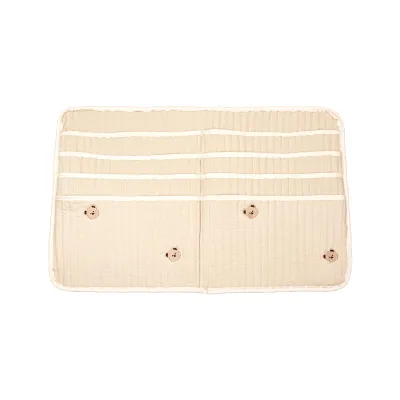

Prices are valid at publication and may change. Please refer to the product page for the latest price.
Next, account for the dynamic flow of the room, focusing on door swings and walking pathways. A bedside organizer must never obstruct the swing radius of bedroom doors, wardrobe panels, or windows. Caregivers need a clear, unobstructed walking path of at least 60 centimeters around the crib to navigate safely in the dark during night feeds. If your nursery features a wardrobe with hinged doors, measure the space required for those doors to open fully without striking the organizer.
In addition to horizontal floor space, consider the vertical clearance of the wall area. If you plan to mount shelves or hanging organizers above or near the crib, ensure there is ample vertical space. The bottom of any wall-mounted unit must be high enough that a standing toddler cannot reach it or use it to pull themselves up. At the same time, it should not be so high that you have to stretch uncomfortably to reach a diaper or wipe in the middle of the night.
Finally, do not overlook the impact of baseboards and wall skirting. Many Singapore homes feature timber, tiled, or PVC skirting boards along the base of the walls. These skirting boards typically protrude by one to two centimeters, preventing floor-standing furniture from sitting completely flush against the wall. If you are planning to place a slim shelf or rolling cart in a tight gap, factor this skirting thickness into your calculations to ensure the unit does not tilt or wobble, which could compromise its stability.
Comparing Bedside Organizer Form Factors for Tight Spaces
Different organizer designs utilize nursery space in unique ways. Understanding these form factors allows you to choose a style that matches your specific spatial constraints and daily routines.

Over-the-crib-rail caddies are an excellent option for nurseries with zero available floor space. These fabric or plastic organizers hang directly from the crib’s wooden or metal rails, keeping diapers and wipes immediately accessible. Before choosing this style, verify your crib manufacturer’s guidelines regarding weight limits and rail thickness to ensure a secure fit. The straps or hooks must fit snugly over the rail without sliding. For safety, always mount the caddy on the exterior side of the crib, and stop using it entirely once your baby is able to pull themselves up to a standing position, as it can become a pulling hazard or a climbing aid.
When evaluating rail-mounted caddies, pay close attention to the attachment mechanisms. Some use fabric straps with hook-and-loop fasteners, while others utilize rigid plastic hooks. Rigid hooks offer excellent stability but must match the exact width of your crib rail to prevent slipping. Fabric straps offer more flexibility for different rail shapes but can stretch over time under heavy loads. Regularly inspect these attachments for signs of wear, and ensure the caddy remains securely positioned.
Wall-mounted or hanging pockets offer another highly efficient, floor-free storage solution. These organizers can be mounted on the wall adjacent to the crib or even on the back of a bedroom door. Because Singapore homes often feature concrete or drywall internal partitions, you must verify your wall material to select the correct mounting hardware and anchors. Ensure the organizer is mounted securely and positioned high enough to remain completely out of reach of a curious infant, while still allowing you to reach items comfortably without bending.
Slim rolling carts or narrow shelving units are ideal if you have a small gap of 20 to 30 centimeters between the crib and an adjacent wall. These multi-tier units provide substantial storage capacity for heavier items like breast pumps, bottles, and extra linen. When selecting a rolling cart, verify that the wheels feature reliable locking mechanisms to keep the unit stationary. Additionally, ensure there is sufficient clearance for any drawers or bins to slide out fully without colliding with the crib frame or blocking the room’s main pathway.
Slim rolling carts are highly versatile, but their mobility can be a double-edged sword in a nursery. As your baby transitions into a crawling toddler, a rolling cart can become an appealing object to push, pull, or lean on. To mitigate this risk, always engage the wheel locks when the cart is stationary. Position the cart in a corner or between other heavy furniture pieces where it is less likely to be tipped over by an active child.
Key Dimensions and Measurements to Check Before Buying
When shopping for a bedside organizer, always verify the manufacturer’s detailed product specifications against your nursery measurements rather than relying on product photos, which can be visually misleading.
Begin by checking the overall footprint, which includes the maximum width, depth, and height of the organizer. Compare these dimensions directly with the physical zone you have mapped out in your nursery. It is wise to leave a small buffer of two to three centimeters on all sides to prevent the organizer from being wedged too tightly, which can make cleaning difficult and scratch your walls or crib frame.
Next, consider the protrusion depth of the organizer when it is fully loaded. Fabric pockets and hanging caddies tend to bulge outward when stuffed with bulky items like diaper packs, wipes dispensers, and toys. If the organizer features drawers or pull-out fabric bins, calculate the total depth required when these compartments are fully extended. This ensures that the organizer remains practical and does not unexpectedly encroach on your walking space during use.
Finally, evaluate the height alignment of the organizer relative to your primary care positions. If you plan to access the organizer while sitting in a nursing chair or standing beside the crib, the top compartments should ideally sit at an ergonomic height—typically between waist and chest level. This alignment minimizes the need for awkward bending or stretching, which is particularly important for postpartum recovery and helps you maintain a safe, steady hold on your baby.
Common Sizing Mistakes to Avoid in Small Rooms
A few common spatial miscalculations can lead to frustration, clutter, or safety hazards in a compact nursery. Being aware of these pitfalls helps you plan a safer and more efficient layout.
One frequent mistake is ignoring the swing radius of nearby fixtures. A bedside organizer might fit perfectly in a corner when all doors are closed, but it can quickly become an obstacle when a wardrobe door is opened or when curtains are drawn. Always visualize the room in its active state—with doors swinging, drawers opening, and curtains moving—before finalizing your organizer’s dimensions.
Another oversight is failing to account for the thickness of crib bedding and mattress edges. If you plan to use a rail-mounted caddy, the thickness of the mattress and any sheets can affect how the organizer hangs. A thick mattress might push the bottom of a hanging caddy outward, causing it to tilt precariously. Always measure your crib’s clearances with the mattress fully installed at its current height setting to ensure a proper, vertical hang.
Lastly, avoid choosing deep or bulky organizers that block essential airflow or utility access. In Singapore’s warm, humid climate, maintaining proper air circulation around the crib is vital for your baby’s comfort and safety. Do not place large organizers directly in front of windows, air conditioning vents, or wall fans. Additionally, ensure the organizer does not cover power outlets or light switches, and keep all electrical cords from baby monitors or nightlights safely routed far away from the storage unit and the crib.
Frequently Asked Questions (FAQ)
Can I use a standard bedside table in a compact nursery?
While a standard bedside table or nightstand is a common household item, it is often too deep and bulky for a compact nursery. Standard tables typically have a depth of 40 to 50 centimeters, which can severely restrict movement in a small room. Furthermore, standard adult furniture often features sharp corners and lacks the specialized, easy-access compartments needed for baby supplies. If you choose to use a standard table, verify that it has rounded edges, can be securely anchored to the wall to prevent tipping, and does not obstruct the safe clearance zone around the crib.
How much clearance should I leave between the crib and the organizer?
To ensure safety and ease of use, maintain a clear gap between the crib and any adjacent floor-standing furniture. Always check your crib manufacturer’s instructions for specific clearance recommendations to prevent entrapment hazards. As a general rule, leave enough space to comfortably lower the crib’s side rails, adjust the mattress height, and change the crib sheets without scraping against the organizer. If the organizer hangs on the crib rail, ensure it sits entirely on the exterior side and does not compress the mattress or create gaps where a baby’s limbs could become wedged.

Community discussion
Share your experience or ask a question. Comments are reviewed before publication.