
Selecting the right changing table for your nursery is a decision that directly impacts your daily comfort, physical health, and peace of mind during those first crucial years of parenthood. The ideal BabyViva changing table model for your home depends on a careful alignment of your available floor space, your storage preferences, and your physical height. By analyzing how different configurations—ranging from compact folding frames to substantial multi-drawer dressers—fit into your nursery layout, you can establish an organized, ergonomic, and secure station that simplifies every diaper change.
Assessing Your Nursery Space and Layout Constraints
Many homes, such as apartments and condominiums, feature bedrooms where floor space is at a premium. Before purchasing any furniture, you must measure the exact footprint of the intended spot. Use a physical measuring tape to map out the width, depth, and height. Remember that a changing table does not just occupy its static footprint; you must calculate the clearance required for active use. This includes the space needed to fully extend drawers, swing open cabinet doors, or deploy any fold-down mechanisms without hitting nearby walls or the crib.
Furthermore, consider the traffic flow of the room. You need to ensure there is ample standing room for the caregiver. When standing at the changing table, you should not find yourself squeezed against the edge of a bed or blocking the main doorway. A minimum clearance of at least 60 to 90 centimeters of open floor space in front of the unit is generally recommended to allow you to stand comfortably, bend slightly, and move your arms freely.
Products mentioned in this guide
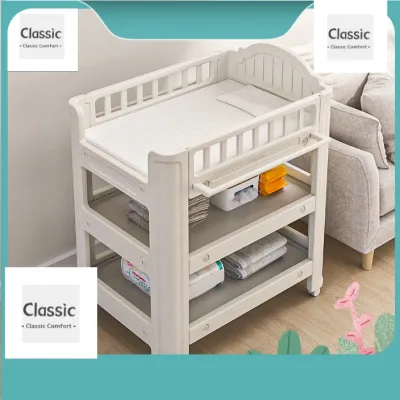
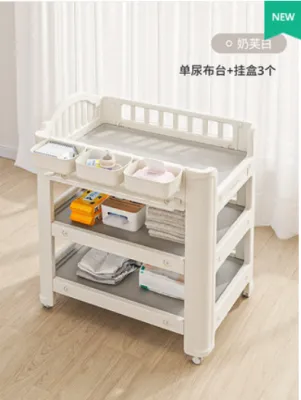
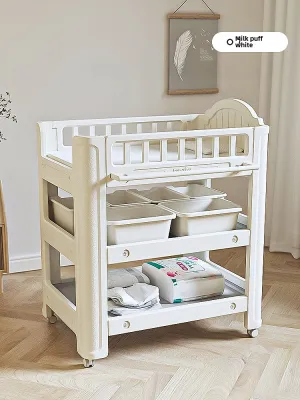
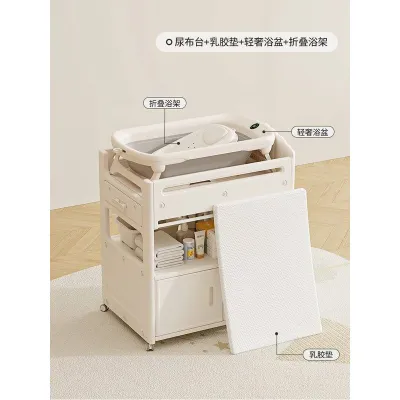
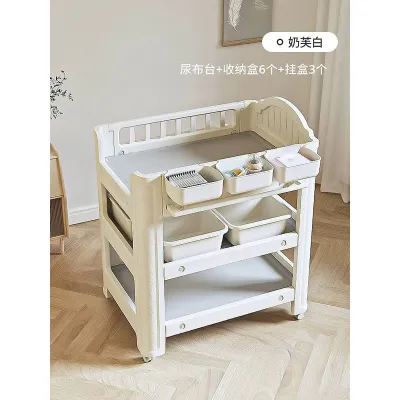
Prices are valid at publication and may change. Please refer to the product page for the latest price.
Wall anchoring is another critical spatial consideration. Many freestanding changing tables and dressers require secure attachment to the wall to prevent accidental tipping. In Singapore, most residential walls are made of solid concrete or brick, which requires specific masonry drill bits and wall plugs rather than standard drywall anchors. Identify the wall material in your chosen spot beforehand. Ensure the area is free of hidden electrical conduits or water pipes so you can safely install the anti-tip hardware provided by the manufacturer.
Matching Storage Configurations to Your Daily Care Routine
Diapering requires a constant supply of diapers, wipes, creams, sanitizers, and change clothes. How you organize these items dictates how smoothly each change goes. When evaluating storage configurations, consider the trade-offs between open shelving and closed drawers. Open shelves allow you to grab a fresh diaper or a new pack of wipes with a single hand while keeping your other hand securely on your baby. However, open shelves expose your supplies to dust and can look cluttered if not meticulously organized.

Closed drawers, on the other hand, keep your nursery looking tidy and protect garments and linens from dust. The trade-off is that opening a drawer requires an extra physical step, which can be challenging when you are managing a squirming infant. Many caregivers find a hybrid approach works best: keeping immediate essentials like wipes and creams on the top surface or an easily accessible side caddy, while storing bulk diapers, extra swaddles, and seasonal clothing in the lower drawers or shelves.
Ergonomics play a massive role in this daily routine. Diaper changes happen multiple times a day and night, putting significant strain on your back and shoulders. The height of the changing surface should align comfortably with your waistline so you do not have to hunch over. When planning your storage, place the most frequently used items within your immediate reach zone—ideally between your waist and chest height. You should never have to turn your back on your baby, step away from the table, or bend down deeply to retrieve a basic diapering necessity.
Evaluating BabyViva Design Types for Your Needs
BabyViva offers several structural designs to accommodate different family needs and living situations. Rather than focusing solely on a specific model name, it is highly beneficial to evaluate these units by their functional category. This allows you to match your unique household constraints—such as room size, multi-use requirements, and long-term utility—with the design type that offers the most practical advantages.
Compact and Foldable Options for Small Rooms
For families living in compact apartments or those who need a secondary changing station in a living room, a foldable changing table offers excellent spatial flexibility. These units typically feature a lightweight metal or plastic frame that can be collapsed and stored against a wall or behind a door when not in use. When evaluating these models, pay close attention to the stability and weight distribution of the frame. A wider base generally provides better resistance against tipping, but it also occupies a slightly larger footprint when deployed.
Examine the folding mechanism itself. It should operate smoothly but must feature a robust, manual locking system that prevents the frame from accidentally collapsing while the baby is on the platform. Storage on these compact units is usually limited to fabric side pockets or a single lower fabric shelf. Ensure these compartments are sturdy enough to hold your daily essentials without sagging or interfering with the folding action. Always verify that the fabric elements are easy to wipe clean, as diapering areas are naturally prone to spills and messes.
Dresser-Style Units for Long-Term Storage
If you have a larger nursery and want a piece of furniture that grows with your child, a dresser-style changing table is a highly practical investment. These units combine a multi-drawer chest with a flat top surface designed to hold a changing pad. The primary advantage of this style is longevity; once your child outgrows diapers, you can simply remove the changing topper or pad, and the unit transitions seamlessly into a standard bedroom dresser.
When inspecting a dresser-style unit, measure the top surface carefully. It must be wide and deep enough to accommodate a standard contoured changing pad without any overhang. Check the quality of the drawer glides. They should slide smoothly and quietly so you do not wake a sleeping baby, and they must feature safety stops to prevent the drawers from being pulled completely out of the frame. Additionally, test the weight distribution by opening the top drawers; a well-designed dresser should remain perfectly stable even when drawers are extended, though wall anchoring remains mandatory for safety.
Integrated Bath and Changing Stations
A combined bath and changing station is a highly specialized option designed to streamline the transition from bath time to dressing. These units typically feature a changing pad that flips back or slides over to reveal a built-in plastic baby bathtub underneath. This design is incredibly convenient for parents who want to avoid bending over a standard household bathtub, which can cause significant back strain.
Because these stations are often moved between the nursery and the bathroom, mobility is a key feature. Look for sturdy caster wheels that allow the unit to glide easily over both hard floors and carpets. Crucially, ensure that all wheels feature reliable, independent locks that can be securely engaged before you place your baby on the unit. You must also evaluate the drainage system. A flexible drain hose is essential for emptying the bath basin directly into a floor drain, shower tray, or bucket, eliminating the need to lift and carry a heavy, water-filled tub. Ensure the transition mechanism between the bath and the changing pad is smooth, secure, and can be locked firmly into place.
Essential Safety and Specification Checks Before Buying
Regardless of the design type you choose, safety must be your absolute priority. Before making a final purchase, consult the manufacturer’s official documentation, product labels, or user manuals to verify key specifications. First, locate the maximum weight limit and the recommended age or developmental stage for the specific model. Never rely on general assumptions; different frames and materials have distinct structural capacities.
Next, verify the safety strap system. A secure changing table should feature a built-in safety strap with a reliable buckle to help keep your baby positioned in the center of the pad. However, remember that a safety strap is never a substitute for active parental supervision; you must keep at least one hand on your baby at all times. Check that the changing surface has raised protective barriers on all sides—ideally at least five centimeters high—to prevent the baby from rolling near the edges.
Finally, thoroughly review the anti-tip wall anchoring hardware included in the packaging. The manufacturer’s instructions will outline how to secure the unit to your specific wall type. If your home has concrete walls, you will need to purchase appropriate masonry anchors and screws if they are not provided in the box. Ensuring the unit is physically anchored to the wall structure is the single most effective way to prevent catastrophic tip-over accidents as your baby grows more active and begins to pull themselves up on the furniture.
Frequently Asked Questions (FAQ)
How do I verify the weight limit of a BabyViva changing table?
To find the exact weight capacity, look for the physical warning label permanently affixed to the frame or underside of the changing table. You can also consult the official instruction manual or the product specification sheet provided on the manufacturer’s website. This weight limit represents the maximum combined load of your baby, the changing pad, and any heavy items stored directly in the upper compartments. Keep in mind that developmental milestones are often more critical than weight; once your baby begins to roll over, sit up, or pull themselves up, you should transition to changing them on a secure floor mat to prevent falls.
Can a changing table dresser be repurposed after the diaper years?
Yes, dresser-style changing tables are specifically designed for long-term use. To repurpose the unit, carefully unscrew the changing topper or safety rails from the back of the dresser, taking care not to scratch the wood or laminate finish. Store the topper, safety straps, and all associated hardware in a dry, labeled container if you plan to use them for future children. Even after converting the unit into a standard bedroom dresser, you must keep the anti-tip wall anchors securely installed, as growing toddlers may still attempt to climb the drawers.
What mattress thickness is safe for the changing pad?
When selecting a changing pad, measure the depth of the changing table’s recessed top area. The pad should be thick enough to provide comfortable cushioning—typically around 2.5 to 5 centimeters—but it must not be so thick that it elevates your baby above the protective side barriers of the table. Avoid adding extra towels, blankets, or secondary mattresses underneath the pad, as these can create an unstable surface and reduce the effective height of the safety rails. Always thread the table’s safety strap through the pad’s designated slots and secure it snugly around your baby’s midsection during use.

Community discussion
Share your experience or ask a question. Comments are reviewed before publication.