
Choosing the right baby spoon depends entirely on matching the utensil’s material, shape, and handle design to your baby’s specific developmental weaning stage. Rather than purchasing a single set of spoons to last throughout infancy, parents find the most success by observing their baby’s physical milestones and introducing specialized utensils that support their growing motor skills. The transition from drinking milk to swallowing solids requires a completely new set of oral motor movements, making the physical design of the spoon a critical factor in a successful weaning journey.
Before introducing any spoon, caregivers must look for clear, observable signs of developmental readiness for solid foods. These milestones typically include the ability to sit upright with minimal support, maintaining excellent head and neck control, and showing a keen interest in family meals by reaching for food. Another crucial indicator is the gradual disappearance of the tongue-thrust reflex, which naturally pushes solid objects out of the mouth to prevent choking. Introducing a spoon before these milestones are met can lead to frustration and feeding aversion, so it is always best to monitor these physical cues closely.
As your baby transitions from parent-fed purees to independent self-feeding, their developmental milestones will dictate the type of spoon they require. In the early weeks, the process is entirely cooperative, with the parent controlling the utensil to introduce basic tastes and textures. Over time, as the baby develops hand-eye coordination and a stronger grip, they will naturally want to grasp the spoon themselves. Recognizing these shifts allows you to transition from long-handled parent spoons to short, ergonomic self-feeding utensils that match their evolving physical capabilities.
Products mentioned in this guide
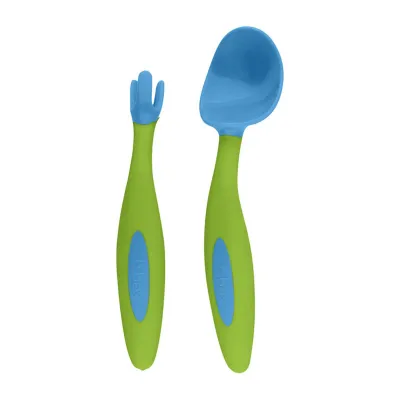
Prices are valid at publication and may change. Please refer to the product page for the latest price.
Matching Spoon Features to Your Baby's Weaning Stages
Selecting the ideal spoon requires an understanding of how utensil geometry interacts with a baby’s developing mouth and hands. The journey begins with very shallow, soft spoon bowls designed to hold tiny amounts of smooth puree, which are easy for a young infant to clear with their upper lip. As the baby learns to swallow more complex textures, the spoon bowl should transition to a deeper, slightly wider shape that can accommodate thicker purees, mashed foods, and small, soft chunks. Angled or curved spoon heads also become highly beneficial during this progression, as they reduce the wrist rotation required for a baby to guide food successfully into their mouth.
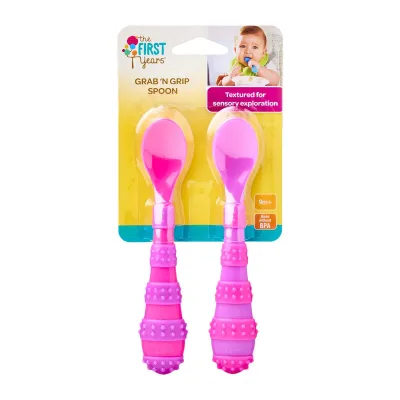
Handle design is equally critical and must be evaluated based on who is holding the utensil. For parent-led feeding, a long, slender handle is essential for comfortably reaching into deep baby food jars and maintaining precise control over the spoon’s movement. Conversely, when a baby begins to explore self-feeding, these long handles become a hindrance, often causing the spoon to wobble or poke the back of the throat. Self-feeding spoons require short, chunky, and textured handles that fit securely within a baby’s small palm, allowing them to practice their grip without losing control of the utensil.
Sensory features can also play a supportive role in encouraging food acceptance, provided they are evaluated carefully. Some spoons feature textured surfaces on the bowl or handle to stimulate oral awareness and soothe sensitive gums, while others incorporate temperature-responsive materials that change color when food is warm. When considering these features, caregivers should verify the manufacturer’s instructions regarding heat limits and sterilization methods to ensure the sensory elements remain functional and intact. Ultimately, these features should serve as helpful tools rather than substitutes for active caregiver supervision and temperature checking.
Stage 1: First Tastes and Purees (Around 6 Months)
During the initial stage of weaning, which typically begins around six months of age, the primary goal is to introduce smooth purees and single-ingredient tastes. For this phase, the ideal spoon features a highly flexible, soft, and shallow bowl made from gentle materials like food-grade silicone. A shallow bowl ensures that the baby can easily clear the entire portion of food with their tongue and lips, preventing frustration and minimizing mess. The narrow width of the spoon head is also crucial, as it must comfortably fit inside a small, developing mouth without triggering a gag reflex or pressing against sensitive, teething gums.
For parents, managing these first feedings requires a utensil designed for comfort and control. Spoons with long, ergonomically curved handles allow caregivers to maintain a relaxed grip while guiding food at a natural angle. These extended handles are also highly practical for reaching the bottom of tall jars or storage containers without getting food on your fingers. When feeding your baby, always allow them to open their mouth voluntarily before inserting the spoon, guiding the food gently onto the middle of the tongue rather than scraping it against the upper palate.
Hygiene and ease of cleaning are paramount during this initial introduction to solid foods, as an infant’s immune system is still developing. Spoons used in this stage should be highly resistant to staining and capable of withstanding frequent sterilization. In warm and humid climates, such as Singapore, it is especially important to choose utensils that dry quickly and do not harbor moisture. Caregivers should inspect the spoons before every use for any signs of wear, discoloration, or tearing, and follow the manufacturer’s specific guidelines for washing, whether by hand or in a dishwasher.
Stage 2: Self-Feeding and Exploration (7 to 9 Months)
As babies reach seven to nine months of age, they enter a phase of intense exploration and desire for independence. This is the stage where self-feeding utensils should be introduced to support their developing motor skills. Spoons designed for this phase feature short, chunky, and highly ergonomic handles that are easy for a baby to grasp using a palmar grip, where they wrap their entire hand around the handle. Textured grips, ridges, or non-slip materials on the handle help prevent the spoon from slipping out of wet, food-covered hands, boosting the baby’s confidence as they practice.
To make the transition to self-feeding smoother, many stage 2 spoons incorporate angled or curved heads. Because infants at this stage have not yet developed the wrist rotation necessary to keep a straight spoon level, an angled head helps guide the food directly into their mouth even when their wrist remains rigid. Additionally, some innovative designs feature flat, dual-sided heads or textured channels that hold purees through surface tension, allowing the baby to get food into their mouth regardless of which way they hold or dip the utensil.
Safety features are incredibly important during this period of self-directed exploration. Look for spoons that feature built-in choke guards, which are wide collars or barriers located between the spoon bowl and the handle. These guards physically prevent the baby from inserting the spoon too far into their mouth, reducing the risk of gagging or injury. Furthermore, spoons with integrated rests keep the spoon head elevated off the highchair tray when laid down, helping to maintain hygiene and keep the feeding area slightly cleaner.
Stage 3: Independent Eating and Skill Building (10 Months and Beyond)
By ten months and beyond, many babies have developed a more refined pincer grasp, using their thumb and index finger to pick up objects. This milestone signals readiness for stage 3 spoons, which feature slightly longer, slimmer handles that mimic adult utensils while remaining sized appropriately for a toddler’s hands. The spoon bowls in this stage are typically deeper and wider, designed to hold thicker textures, mashed vegetables, and small, soft chunks of food that require more coordination to scoop and balance.
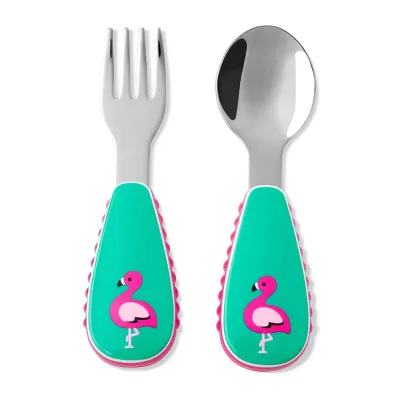
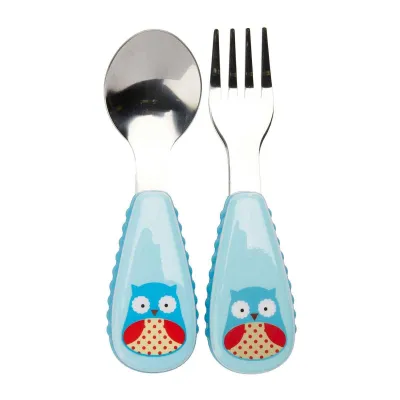
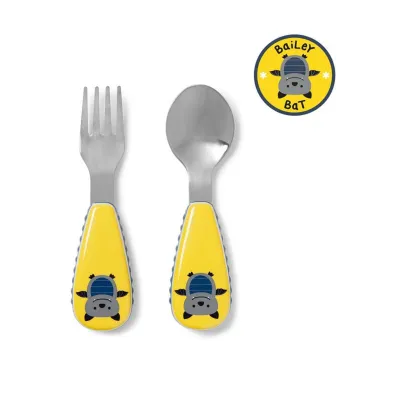
As your child’s coordination improves, they will begin to apply more force when scooping food from their bowl. To accommodate this, stage 3 utensils often transition from highly flexible silicone to firmer materials, such as food-grade plastic, bamboo, or stainless steel with rounded, baby-safe edges. These firmer materials provide the structural stability needed to cut through soft foods and scoop denser textures successfully. However, caregivers must continue to supervise meals closely to ensure the child does not run or play while holding these firmer utensils.
Durability becomes a key factor in this stage, as toddlers frequently drop, throw, or bite their utensils during mealtime. When selecting stage 3 spoons, look for robust construction that can withstand repeated impacts and rigorous cleaning without cracking or chipping. Inspect the utensils regularly for any sharp edges or loose parts, especially if they are made of multiple materials joined together. Transitioning to these more advanced utensils helps build the confidence and physical coordination your child will need as they eventually move toward standard family tableware.
Evaluating Materials, Safety, and Ergonomic Design
When evaluating baby spoons, comparing the physical properties of common materials is essential for making a safe and practical choice. Food-grade silicone is highly favored for early weaning due to its soft, flexible texture, which is exceptionally gentle on sensitive gums and emerging teeth. High-quality plastic spoons are lightweight, highly durable, and often very affordable, though they can be prone to staining from bright foods like carrots or pumpkins. Bamboo and wood offer a natural, aesthetically pleasing alternative, but they require careful hand-washing and cannot be soaked or sterilized in high-heat appliances without risking damage. Stainless steel is incredibly durable and hygienic, making it excellent for older toddlers, but it should only be introduced once a child has developed precise control to avoid accidental mouth injury.

Safety certifications and material labels must always be verified on the product packaging or the manufacturer’s official specifications before purchase. Look for clear indications that the materials are food-grade and free from potentially harmful substances such as BPA, phthalates, lead, and PVC. Because safety standards and certifications can vary globally, caregivers should check for recognized regulatory compliance marks relevant to their region. Never rely solely on a product’s marketing name or attractive design; instead, take the time to read the fine print and verify that the age rating matches your baby’s current developmental stage.
Another critical design aspect to evaluate is the physical construction of the spoon, specifically looking for seamless, single-piece designs. Utensils that are molded from a single piece of material have no joints, seams, or crevices where food particles, saliva, and moisture can become trapped. In warm, humid environments, these hidden crevices can quickly become breeding grounds for bacteria and mold, which are difficult to clean out completely. If you choose a multi-material spoon, such as one with a wooden handle and a silicone head, ensure the parts fit together tightly and can be easily separated for thorough cleaning and drying according to the manufacturer’s instructions.
Building Your Shortlist: Shopping Criteria and Practical Tips
When you are ready to purchase, building a targeted shortlist based on your baby’s immediate developmental needs is far more practical than buying large, multi-stage sets. While bulk packages may seem convenient, babies progress through weaning stages at highly individual rates, and some utensils in a large set may go completely unused. Focus your budget on purchasing two or three high-quality spoons that perfectly match your baby’s current stage, allowing you to observe what works best for their unique grip and mouth shape before investing in the next phase.
Before finalizing your purchase, take the time to research retail options, check return policies, and read verified user reviews. Look for feedback from other parents that specifically addresses long-term durability, ease of cleaning, and how well the spoons hold up to daily sterilization. If shopping on local online marketplaces or visiting specialty baby boutiques in Singapore, compare prices in S$ to ensure you are getting fair value. Keep in mind that a slightly higher initial investment in a durable, well-designed spoon can save money over time by eliminating the need for frequent replacements.
Additionally, evaluate multi-pack value carefully by checking if the included spoons offer genuine utility for your current daily routine. Having a few identical spoons of the same stage is highly beneficial for managing multiple meals throughout the day without constant washing. However, avoid buying ahead into advanced stages unless you are certain of the material safety and design suitability. By focusing on immediate developmental readiness and verifying product specifications, you can confidently select utensils that make the weaning journey a positive, developmental success for both you and your baby.
Frequently Asked Questions (FAQ)
How many baby spoons should I buy for each weaning stage?
For most families, having a rotation of three to five spoons per weaning stage is highly practical. This quantity allows you to manage multiple daily meals and snacks without the pressure of washing a single utensil immediately after every use. It also ensures you have spare spoons available to pack for daycare, travel, or visits to family members. Keeping one or two backup spoons in your diaper bag is especially useful for handling unexpected drops on public floors when you are away from home.
Can I use the same baby spoon for both feeding and teething?
While some soft silicone spoons are designed with textured handles that can double as teething relief, standard feeding spoons should not be used as dedicated teething toys. Feeding spoons are engineered for transferring food and may not have the structural reinforcement required to withstand prolonged, intense chewing from a teething infant. Over time, constant biting can damage the spoon’s material, leading to tears or small pieces breaking off, which poses a choking hazard. Always check the manufacturer’s guidelines to verify if a spoon is explicitly rated and safe for teething use, and supervise your baby closely during any contact.
When should I transition from a baby spoon to a toddler spoon?
The transition from a baby spoon to a toddler utensil should be guided by your child’s observable motor skills and feeding behaviors rather than a strict age limit. Signs of readiness include improved hand-eye coordination, the ability to successfully scoop and balance varied food textures, and a transition from a palmar grasp to a more refined pincer grasp. If you notice your child struggling to scoop larger portions of food with their small baby spoon, or if they consistently show interest in using adult cutlery, it is likely time to introduce a slightly larger, firmer toddler spoon.

Community discussion
Share your experience or ask a question. Comments are reviewed before publication.