
Starting your baby’s weaning journey is an exciting milestone, but choosing the right feeding tools can feel overwhelming. The debate between silicone and plastic baby spoons is common, but there is no single, universal winner. Instead, the best choice depends on your baby’s current developmental stage, their feeding style, and your daily cleaning routine. While silicone offers unmatched softness for tender, teething gums during early parent-led feeding, plastic provides the rigid structure and lightweight handling necessary for older babies learning to scoop independently. By understanding the physical properties, safety checks, and functional trade-offs of both materials, you can build a versatile weaning toolkit that supports your baby’s oral development.
Matching Spoon Materials to Weaning Stages
Weaning is a gradual developmental progression, and your baby’s spoon needs will change as their motor skills and oral capabilities mature. During early weaning, typically around six months of age, the primary goal is introducing smooth purees. At this stage, parent-led feeding is standard, and babies are still adapting to the sensation of a solid object in their mouths. Spoons with shallow bowls and soft, flexible tips are highly beneficial here. A shallow bowl ensures your baby can easily clear food using their upper lip, while a soft tip protects sensitive, toothless gums from accidental bumps.
As your baby transitions to self-feeding, their physical interaction with the spoon changes. They will begin grasping the utensil, banging it on the high chair tray, and attempting to guide it to their mouth. During this active phase, the focus shifts toward spoons with easy-grip, ergonomic handles and a balanced weight that fits comfortably in tiny hands. The spoon must also be durable enough to withstand frequent drops onto hard kitchen floors and aggressive biting from emerging teeth.
Products mentioned in this guide
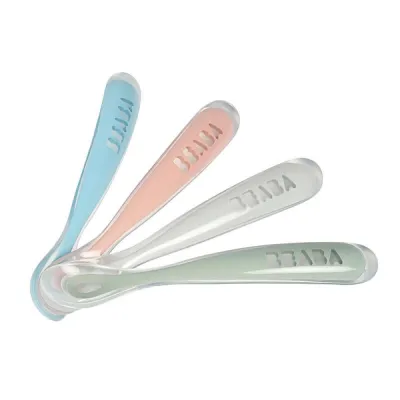
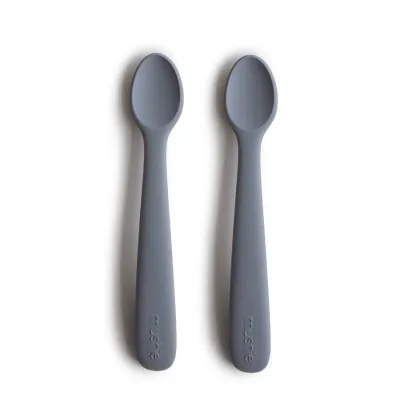
![[Set of 2pcs] Baby Silicone Spoon Feeding Soft Flexible Self Feed Training by 8miles](https://img.lazcdn.com/g/p/ea8a0e0a13fbf3bfc04c731989385803.jpg_400x400q80.jpg_.webp)
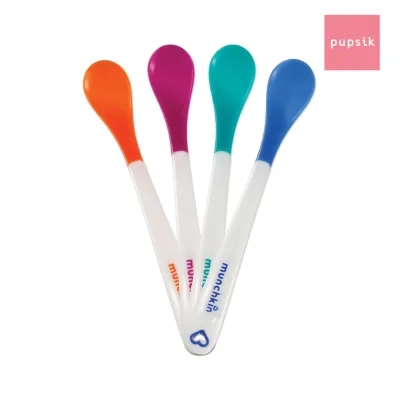
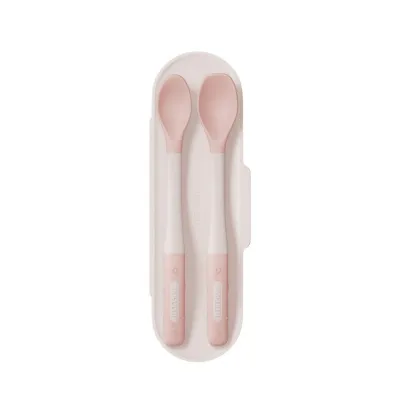
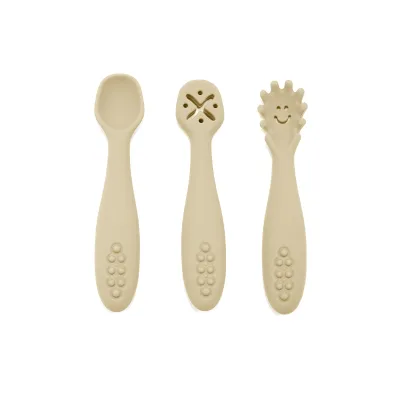
Prices are valid at publication and may change. Please refer to the product page for the latest price.
Finally, transitioning to advanced solids demands a sturdier edge. A spoon that bends too easily under the weight of mashed sweet potato or thick oatmeal can frustrate a toddler trying to master the scooping motion. At this stage, a more rigid utensil becomes essential to help them successfully navigate their plate and build confidence in their independent eating skills.
Evaluating Silicone Baby Spoons
Silicone has become a highly popular material for infant feeding products due to its unique physical properties. The primary advantage of silicone baby spoons is their exceptional softness and flexibility. For a baby accustomed to the soft texture of a breast or bottle nipple, transitioning to a hard utensil can be a jarring sensory experience. Silicone spoons provide a gentle, cushioning transition. They bend easily, allowing you to scrape every last bit of puree from a bowl, and they double as a soothing teething surface that babies can safely bite to relieve gum discomfort during meals.

However, because silicone is a synthetic polymer, its performance and safety depend heavily on proper care and quality standards. When evaluating silicone spoons, it is crucial to check the manufacturer’s labels for specific heat resistance limits. While high-quality food-grade silicone can typically withstand high temperatures, some spoons feature internal plastic or metal stiffeners to give the handle structure. These composite designs may have different temperature tolerances than pure silicone. Always verify whether the product is rated safe for boiling, steam sterilizing, microwaving, or high-heat dishwasher cycles before exposing it to these sanitizing methods.
Parents should also be aware of several practical trade-offs associated with silicone. Due to its porous nature, silicone is highly susceptible to staining from strong food pigments, such as those found in carrots, pumpkins, and tomatoes. Additionally, silicone naturally carries a slight static charge, which tends to attract dust, lint, and pet hair during storage. In humid environments, silicone utensils must be dried thoroughly after washing to prevent a soapy residue or musty odor from clinging to the surface, as the material can absorb scents from highly fragranced dish soaps.
Evaluating Plastic Baby Spoons
Plastic baby spoons offer a lightweight, highly functional, and cost-effective option for families. The defining advantage of plastic is its rigid structure. Unlike silicone, which flexes under pressure, a plastic spoon maintains its shape. This rigidity is incredibly helpful when your baby begins practicing self-feeding. It allows them to push the spoon against the side of a bowl to scoop up food, and it provides the leverage needed to cut through soft-cooked vegetables or mash small pieces of fruit directly on the plate.
When choosing plastic spoons, safety verification is the absolute priority. Because plastics are formulated from various chemical compounds, you must carefully inspect the product packaging for explicit safety labels. Look for clear indications that the spoons are food-grade and free from potentially harmful substances, specifically verifying BPA-free, PVC-free, and phthalate-free claims. Avoid any plastic feeding utensils that lack clear manufacturing details or safety certifications, as lower-quality plastics may leach chemicals when exposed to warm foods or acidic ingredients.
Another critical consideration is how plastic responds to wear and tear over time. While plastic is highly durable against drops, it is susceptible to physical damage from your baby’s sharp primary teeth. Aggressive chewing can create rough edges, deep scratches, or micro-cracks along the bowl of the spoon. These damaged areas not only pose a risk of scratching your baby’s delicate lips and gums, but they also create microscopic crevices where food particles and bacteria can hide, even after thorough washing. Unlike silicone, which tends to bounce back from pressure, plastic will permanently retain these bite marks and structural compromises.
Silicone vs. Plastic: Side-by-Side Feature Comparison
To help you weigh the practical differences between these two materials, the following table compares their key performance characteristics across essential daily usage dimensions.
| Feature | Silicone Baby Spoons | Plastic Baby Spoons |
|---|---|---|
| Softness & Flexibility | Extremely soft; bends easily to protect sensitive gums | Rigid and firm; maintains shape under pressure |
| Grip & Handling | Naturally slip-resistant; often thicker for easy grasping | Lightweight; smooth surface that is easy to hold |
| Durability | Highly resistant to cracking; prone to staining and dust | Resistant to staining; prone to scratches and bite marks |
| Cleaning Effort | Can absorb food odors and soap scents; attracts lint | Easy to rinse; dishwasher-safe but prone to micro-scratches |
| Best Weaning Stage | Early weaning, parent-led feeding, and active teething | Self-feeding, scooping thicker solids, and travel |
When using this comparison, treat these traits as general material tendencies rather than absolute rules. Manufacturers frequently combine materials—such as designing a spoon with a rigid plastic handle and a soft silicone tip—to capture the benefits of both. Always read the specific product specifications, age recommendations, and care instructions printed on the packaging to ensure the utensil aligns with your baby’s current developmental needs and your household cleaning methods.
Making the Final Decision: Which Spoon Fits Your Needs?
Deciding between silicone and plastic baby spoons does not require choosing one exclusively. Many families find a mixed approach is the most practical solution. You can start with silicone spoons during the first few months of introducing purees to protect sensitive gums and manage the tongue-thrust reflex. As your baby grows, develops a stronger grip, and begins practicing self-feeding, you can introduce plastic spoons to provide the structural support needed to scoop food independently.
If you prefer to stick to one material, let your baby’s behavior and your lifestyle guide your choice. Opt for silicone if your baby is highly sensitive to textures, is actively teething and prone to biting down hard on utensils, or if you primarily practice parent-led feeding with smooth purees. On the other hand, select plastic if your baby is an eager self-feeder who becomes frustrated when a flexible spoon bends away from their food, or if you need a lightweight, highly portable option that is easy to toss into a diaper bag for meals on the go.
Regardless of which material you lean toward, always prioritize safety and quality checks before making a purchase. If a spoon lacks clear safety labeling, shows signs of poor manufacturing (such as rough seams or chemical odors), or if your baby exhibits a strong sensory aversion to the texture of the material, do not hesitate to set it aside. Every baby is unique, and finding the right tool may involve a small amount of trial and error to see which shape, weight, and texture your little one prefers.
Cleaning, Maintenance, and Safety Inspections
Proper maintenance is essential to ensure your baby’s spoons remain hygienic and safe for daily use. Always consult the manufacturer’s instructions to determine whether a spoon is dishwasher-safe or requires handwashing. If using a dishwasher, place baby utensils in the top rack to keep them away from the heating element, which can warp plastic or degrade silicone over time. For handwashing, use a mild, unscented dish soap to prevent silicone from absorbing artificial fragrances, and avoid abrasive scrubbing pads that can create micro-scratches on plastic surfaces.
Regular safety inspections are a vital part of preventing choking hazards and bacterial contamination. Before every meal, perform a quick visual and tactile check of each spoon. Run your fingers along the edges and the bowl to feel for rough spots, deep bite marks, peeling material, or structural cracks. Pay close attention to the joint where different materials meet, such as where a silicone tip attaches to a plastic handle, as these seams can loosen or trap moisture over time.
Establish clear stop-use conditions for your baby’s utensils. If you observe any peeling, deep scratches that cannot be thoroughly cleaned, structural cracks, or if a composite spoon’s tip begins to separate from the handle, discard the spoon immediately. Replacing damaged utensils promptly ensures that mealtime remains a safe, healthy, and positive step in your baby’s developmental journey.
Frequently Asked Questions (FAQ)
Can I use regular household spoons for weaning?
It is highly recommended to avoid using standard adult metal spoons for early weaning. Metal is a highly rigid, unyielding material that can easily bruise or injure your baby’s delicate, developing gums and emerging teeth if they bite down suddenly. Furthermore, standard household spoons typically have bowls that are too deep and wide for an infant’s small mouth, making it difficult for them to clear the food properly and increasing the risk of gagging. The long, heavy handles of adult spoons also present a safety hazard if a baby attempts to grab the utensil and accidentally pokes their throat.
How often should I replace my baby's spoons?
Rather than relying on a strict calendar timeline, you should replace your baby’s spoons based on observable signs of wear and tear. Inspect the utensils regularly for structural damage, such as deep bite marks, rough edges, or peeling surfaces that can harbor harmful bacteria or irritate your baby’s mouth. For plastic spoons, look for cloudiness, discoloration, or micro-cracks that indicate the material is breaking down. For silicone spoons, check for persistent stickiness, tearing, or a strong, unremovable odor. If any of these signs are present, or if a multi-material spoon begins to separate at the seams, it is time to replace the utensil.
Community discussion
Share your experience or ask a question. Comments are reviewed before publication.