
Selecting the right yoghurt melts for your baby in Singapore requires looking past the vibrant, friendly packaging and diving deep into the ingredient lists and nutritional panels. While these freeze-dried treats are highly popular for their convenience and ability to help infants practice their fine motor skills, commercial options vary wildly in quality. Some are packed with added sugars, artificial additives, and thickeners, while others offer a cleaner profile made primarily of real cultured dairy and fruit purees.
To make an informed choice, caregivers must understand how to evaluate nutritional baselines, identify hidden sweeteners, and navigate the unique storage challenges posed by Singapore’s humid climate. This guide provides a comprehensive framework to help you assess the yoghurt melts available in local supermarkets and online marketplaces, ensuring you select a snack that supports your baby’s developmental stage and nutritional needs.
Key Nutritional Standards for Baby Yoghurt Melts
When evaluating yoghurt melts, the primary goal is to ensure the snack provides genuine nutritional value rather than empty calories. Because these snacks are made from dehydrated yoghurt, they should ideally retain some of the beneficial components of fresh dairy, specifically calcium and protein.
Products mentioned in this guide
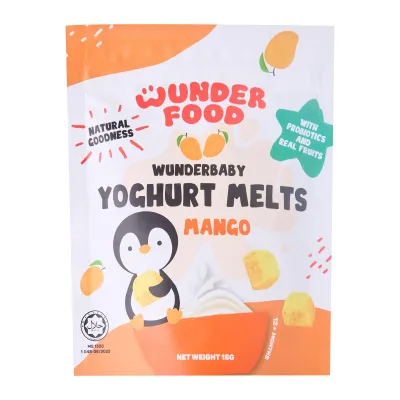
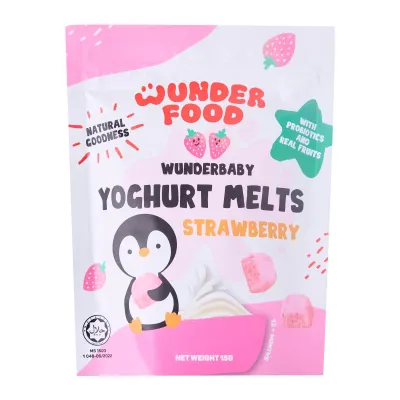
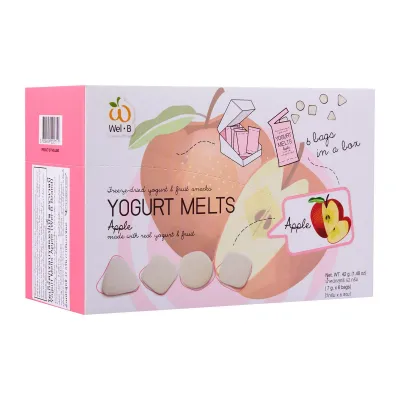
Prices are valid at publication and may change. Please refer to the product page for the latest price.
Calcium is essential for your baby’s rapidly developing bones and teeth, while protein supports muscle growth and cellular repair. When reading the Nutrition Information Panel (NIP) on the back of the packaging, look for products that list measurable amounts of calcium and protein per serving. If these values are negligible or missing entirely, it is a strong indicator that the product contains very little actual yoghurt and is instead formulated primarily with starches, gelatin, and sugar.
Understanding the sugar content on the label is equally critical. The “Sugars” line on a nutrition panel displays the total sugar content, which includes both naturally occurring milk sugars (lactose) and any added sweeteners. Lactose is a natural component of yoghurt and is accompanied by the beneficial proteins and fats found in dairy. Added sugars, however, offer no nutritional benefit and can accustom your baby’s palate to excessively sweet tastes early in life. To distinguish between the two, you must cross-reference the sugar grams on the nutrition panel with the ingredient list to ensure no extra sugars have been introduced.
Many commercial yoghurt melts also feature marketing claims regarding added probiotics or vitamin D. Probiotics are live microorganisms that can support your baby’s gut health and digestive system, while vitamin D aids in calcium absorption. To verify these claims, look at the ingredient list for specific, scientifically documented probiotic strains, such as Bifidobacterium lactis or Lactobacillus acidophilus. Keep in mind that the freeze-drying process can sometimes reduce the viability of these active cultures. Therefore, while probiotics are a beneficial addition, they should be viewed as a minor dietary bonus rather than a primary source of gut support for your infant.
Ingredient Red Flags and Label Reading Guide
Navigating the baby food aisle requires a critical eye, as marketing terms on the front of the box can often be misleading. Developing a systematic approach to reading ingredient labels is the most effective way to protect your baby from unnecessary additives and hidden sugars.

One of the most common red flags in commercial baby snacks is the presence of hidden sugars. Manufacturers frequently use alternative names to make added sugars seem healthier or less obvious. Look out for ingredients such as fruit juice concentrate, apple juice concentrate, organic cane sugar, brown rice syrup, tapioca syrup, maltodextrin, and anhydrous dextrose. Even if a package proudly claims “no added cane sugar,” the inclusion of fruit juice concentrates means the product has been sweetened with highly concentrated free sugars, which lack the beneficial fiber of whole fruit and can contribute to tooth decay.
In addition to sweeteners, you should carefully evaluate the presence of artificial additives. Young, developing digestive and immune systems do not require synthetic food dyes, artificial flavorings, or chemical preservatives. Look for products that use natural fruit purees for color and flavor rather than artificial additives like Allura Red, Tartrazine, or synthetic “berry flavor.” A high-quality yoghurt melt should have a short, recognizable ingredient list where real yoghurt and fruit are the primary components.
Allergen management is another vital aspect of label reading. Because yoghurt melts are dairy-based, they are inherently unsuitable for babies with a diagnosed cow’s milk protein allergy (CMPA) or severe lactose intolerance. Always check the allergen warning section for cross-contamination statements, especially if your baby has sensitivities to soy, gluten, or tree nuts, as many freeze-dried snacks are processed on shared production lines. Furthermore, be cautious with terms like “natural” or “organic.” While “certified organic” indicates that the ingredients were grown without synthetic pesticides or genetically modified organisms (GMOs), it does not automatically mean the product is low in sugar or nutritionally superior. An organic yoghurt melt can still contain high amounts of organic cane sugar or organic juice concentrates.
Evaluating Yoghurt Melt Brands Available in Singapore
When shopping in Singapore, you will encounter a wide variety of yoghurt melt options, ranging from mainstream commercial brands found in major supermarkets to premium, imported organic brands available at specialty baby boutiques and online marketplaces. Understanding how to compare these options will help you build a safe and budget-friendly snack shortlist.
Mainstream commercial brands often focus on affordability and shelf stability. To keep production costs low, these formulations frequently rely on skimmed milk powder rather than whole milk, and they may use significant amounts of starches (such as tapioca starch or corn starch) as binders to help the melts hold their shape. They also tend to have higher sugar content due to added sweeteners. In contrast, premium or imported organic brands generally prioritize whole food ingredients. These options are more likely to use whole milk yoghurt, real fruit purees, and minimal binders, resulting in a clean nutritional profile but often at a higher price point.
When comparing formulations, pay close attention to the milk source and the sweetener hierarchy. Whole milk is generally preferred for babies under two years of age, as the dietary fats are crucial for rapid brain development and nervous system growth. Check the ingredient list to see where the milk or yoghurt sits; it should ideally be the very first ingredient. Because ingredients are listed in descending order of weight, a high-quality melt will list yoghurt or whole milk first, followed by real fruit purees, with starches and natural flavorings near the end. If a sweetener or starch appears before the dairy component, the product is of lower nutritional quality.
To build a personalized shortlist for your family, balance your baby’s specific dietary needs with your household budget. In Singapore, premium organic imported melts can range from S$6 to S$10 per packet, while mainstream options may cost between S$4 and S$6. If your baby is dairy-sensitive, you might also look for plant-based alternatives, such as melts made from coconut milk yoghurt, though you must verify that these options still provide adequate calcium and protein.
Finally, always make it a habit to verify the physical packaging before making a purchase. Manufacturers frequently update their formulations, sourcing, and recipes without changing the front-of-pack design. A brand of yoghurt melts that was free from added sugars last year may now include fruit juice concentrate as a binder or sweetener. Whether shopping in a physical store or ordering through an online marketplace, double-check the printed ingredient list on the actual box you receive to ensure it still meets your standards.
Safe Feeding Practices and Choking Hazards
While yoghurt melts are designed to dissolve quickly in a baby’s mouth, they are still classified as solid foods and require careful safety considerations. Understanding your baby’s developmental readiness and practicing safe feeding habits are essential to minimize the risk of choking.
Before introducing any freeze-dried snacks, your baby must display clear signs of developmental readiness. These milestones typically include the ability to sit completely upright unassisted in a highchair, maintain excellent head and neck control, and demonstrate the “pincer grasp”—the ability to pick up small objects between the thumb and index finger. If your baby is still using their entire palm to scoop up food or struggles to sit upright, they are not yet ready for small, individual finger foods like yoghurt melts.
Active caregiver supervision is mandatory during every feeding session. Never leave your baby unattended while they are eating, and ensure they are seated upright rather than reclining or crawling. A unique environmental factor to consider in Singapore is the high relative humidity, which often exceeds 80%. Freeze-dried yoghurt melts are highly hygroscopic, meaning they rapidly absorb moisture from the surrounding air. When left out in a snack bowl or snack cup for even a few minutes, the melts can quickly lose their crisp, airy texture and become sticky, chewy, or rubbery. Instead of dissolving instantly in your baby’s saliva, a humidified melt can stick to the roof of the mouth or the throat, presenting a severe choking hazard.
To prevent this, practice strict storage habits. Always keep the melts in their original foil packaging, sealed tightly with a bag clip, or transfer them to a high-quality, airtight container immediately after opening. Only dispense a few melts at a time, leaving the rest sealed away from the humid air. Store the container in a cool, dry pantry or even in the refrigerator to preserve the dry, melt-in-the-mouth texture. If you notice that the melts have become soft, sticky, or clumped together, do not feed them to your baby. Discard them immediately or consume them yourself to ensure your baby’s safety.
Frequently Asked Questions (FAQ)
At what age can babies safely eat yoghurt melts?
Most babies are developmentally ready to try yoghurt melts around 8 months of age, provided they have met key physical milestones. Your baby must be able to sit upright without support, hold their head steady, and successfully pick up small pieces of food using their thumb and forefinger. Because every child develops at their own pace, it is highly recommended to consult your paediatrician or a qualified healthcare professional before introducing freeze-dried snacks to your baby’s diet to ensure they are ready for this specific texture.
Can yoghurt melts replace regular milk or fresh yoghurt?
No, yoghurt melts cannot replace regular breast milk, infant formula, or fresh yoghurt in your baby’s diet. Freeze-dried melts are highly processed, dehydrated snacks that have had almost all of their water content removed. Consequently, they lack the hydration, volume, and nutrient density of fresh, unsweetened whole-milk yoghurt. Fresh yoghurt also contains active, live cultures that are much more viable than those found in processed snacks. Yoghurt melts should be treated strictly as an occasional, convenient finger food rather than a primary source of dairy or nutrition.

Community discussion
Share your experience or ask a question. Comments are reviewed before publication.