
Finding the right waterproof bed mat for your baby’s changing table is a balancing act between quick cleanup and infant comfort. The ideal mat must offer complete liquid resistance to protect your furniture, fit the exact dimensions of your changing surface to prevent sliding, and match your daily maintenance routine. While some parents prefer synthetic, wipe-clean surfaces for instant cleanups, others opt for fabric-topped mats that provide a warmer, softer feel against a baby’s skin.
Ultimately, the best choice depends on your specific changing table setup, your local climate, and how much time you want to spend laundering covers. In warm, humid environments like Singapore, managing moisture and preventing mold growth are just as important as ensuring a soft surface for your little one. By focusing on precise measurements, material safety, and secure anchoring features, you can select a mat that keeps diaper changes safe, hygienic, and stress-free.
Quick Answer: Defining the Ideal Changing Table Mat
To find the perfect waterproof bed mat, you must prioritize three core elements: absolute liquid protection, a secure fit that matches your changing table’s dimensions, and a surface that is easy to sanitize. A high-quality mat acts as a reliable barrier, preventing urine and blowouts from seeping into the underlying wooden or metal furniture. Because changing tables come in various shapes—including traditional wooden dressers, compact folding frames, and cot-top changers—the mat must align perfectly with the boundaries of your specific setup to avoid dangerous shifting.
Products mentioned in this guide
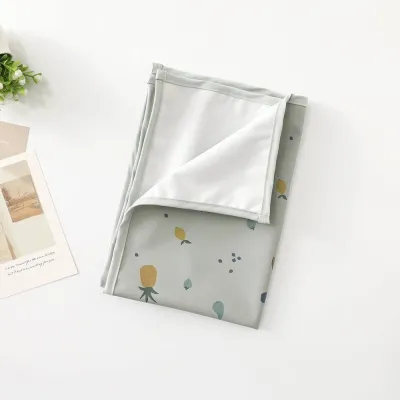
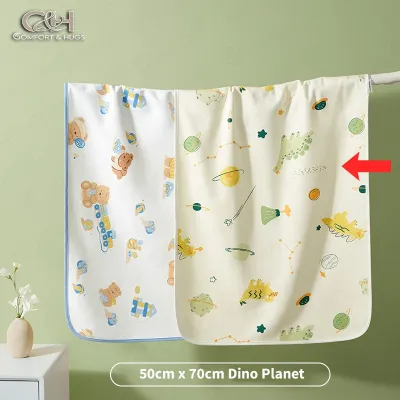
Prices are valid at publication and may change. Please refer to the product page for the latest price.
Caregivers generally choose between two primary designs, each presenting a distinct trade-off. Fully synthetic, non-porous mats allow you to wipe away messes in seconds with a simple sanitizing spray, making them highly efficient for high-frequency changes. On the other hand, fabric-topped mats or those with removable quilted covers offer superior warmth and comfort, preventing the cold-shock reaction that often makes babies fussy during nighttime changes. Your decision should balance this need for immediate physical comfort against the realistic amount of laundry you can manage each week.
Step 1: Measure Your Changing Table for a Secure Fit
Before browsing online marketplaces or visiting local nursery boutiques, you must obtain the exact physical dimensions of your changing table’s top surface. Use a firm measuring tape to record the length, width, and inner depth of the changing area. If your table features raised wooden barriers or a protective lip, measure the height of these edges as well. Having these precise numbers on hand prevents the common mistake of purchasing a mat that is slightly too large, which causes the edges to bunch up and create an unstable, uneven surface for your baby.

An ill-fitting mat introduces significant safety hazards and maintenance headaches. If a mat is too small, it leaves wide gaps along the sides where liquids can easily pool, bypassing the waterproof barrier and permanently damaging the wood or MDF of your changing table. Conversely, an overhanging mat can easily catch on your clothing as you move around the nursery, potentially pulling the mat—and your baby—out of position. A snug, flush fit ensures that the non-slip backing of the mat remains in direct, continuous contact with the table surface.
When shopping, you will encounter two main structural designs: standard flat pads and contoured mats. Flat pads are highly versatile and can easily transition to floor use or travel, but they require a perfectly flat, bordered changing surface to remain secure. Contoured mats feature raised sides—often in a two-sided or four-sided wedge design—that help keep your baby centered on the pad. If you choose a contoured model, verify that the height of the contours does not exceed the safety rails of your changing table, and always cross-reference the mat’s specifications with your table manufacturer’s guidelines.
Step 2: Compare Waterproof Materials and Surface Textures
The material composition of your changing mat dictates both how comfortable your baby will be during diaper changes and how much effort you will spend cleaning up afterward. Nursery mats generally fall into two categories: fully synthetic, non-porous surfaces and fabric-topped multi-layer systems. Because your baby’s delicate skin will make direct contact with this surface multiple times a day, understanding the physical properties of these materials is essential for maintaining skin health and preventing irritation.
Surface texture also plays a subtle but important role in the overall diaper-changing experience. A textured synthetic surface can prevent a wet baby from sliding around, but it can also trap tiny particles of dirt and require more vigorous scrubbing. Smooth surfaces are incredibly easy to wipe clean in a single motion, though they can feel slick when wet. Evaluating these material characteristics side-by-side allows you to choose a product that aligns with your household’s cleaning standards and your baby’s sensory preferences.
Wipe-Clean Synthetic Surfaces (PU, PVC, TPU)
Fully synthetic mats made from Polyurethane (PU), Polyvinyl Chloride (PVC), or Thermoplastic Polyurethane (TPU) are the gold standard for quick maintenance. When a diaper change gets messy, these non-porous materials allow you to spray a baby-safe disinfectant and wipe the surface completely clean in seconds. This instant sanitization is incredibly valuable during the newborn stage when diaper changes occur up to a dozen times a day, saving you from running constant laundry cycles.
However, synthetic materials have a few distinct characteristics that require careful consideration. In air-conditioned rooms, these surfaces can feel quite cold to the touch, which might startle a sleeping baby and cause fussiness during late-night changes. Additionally, because PVC can sometimes contain chemical plasticizers like phthalates to make it flexible, you must carefully verify that any synthetic mat you purchase is explicitly labeled as free from harmful chemicals, heavy metals, and phthalates.
Durability is another factor to watch when evaluating synthetic options. Constant wiping, exposure to acidic baby messes, and contact with sharp objects like fingernails or diaper-bag velcro can cause lower-quality plastics to crack or peel over time. Look for high-density TPU or medical-grade PU coatings, which offer excellent resistance to scratching and cracking, ensuring the waterproof barrier remains intact throughout your baby’s diaper-wearing years.
Fabric-Topped Mats with Waterproof Layers
Fabric-topped waterproof mats offer a cozy, cushioned alternative that prioritizes your baby’s immediate comfort. These mats typically feature a soft upper layer made of organic cotton, bamboo rayon, or polyester fleece, backed by a hidden, laminated waterproof membrane underneath. The soft texture eliminates the cold-surface shock associated with synthetic mats, creating a much more soothing environment for your baby during diaper changes.
While fabric-topped options excel in comfort, they demand a more intensive cleaning routine. When a spill or leak occurs, the fabric top absorbs the liquid, meaning you cannot simply wipe it clean; the entire mat or its removable cover must be placed in the washing machine. For busy parents, this means you will need to purchase multiple backup covers or mats to ensure you always have a clean, dry surface available while the dirty ones are in the wash.
Furthermore, you must pay close attention to the construction quality of fabric-topped mats. If the stitching around the seams, zippers, or quilting is poorly executed, moisture can seep through the needle holes and reach the inner foam padding. Once liquid penetrates the inner core, it becomes incredibly difficult to dry completely, especially in humid climates like Singapore, creating a high risk for mold, mildew, and unpleasant odors that can compromise nursery hygiene.
Step 3: Evaluate Safety, Contours, and Non-Slip Features
Safety should always be your primary concern when selecting any nursery accessory, and changing table mats are no exception. Contoured mats, which feature raised outer edges, are highly popular because they physically encourage your baby to remain in the center of the pad. These raised sides are particularly helpful as your baby grows and begins to wiggle, roll, or stretch during changes. However, contoured edges are not a substitute for structural safety rails on your changing table; they simply provide a gentle physical guide to keep your baby centered.
A non-slip base is another critical safety feature that prevents the entire mat from sliding across the smooth surface of your changing table. When you are reaching for wipes, diapers, or a change of clothes, any sudden movement from your baby can cause a slick mat to shift dangerously. Look for mats that feature a textured, rubberized, or silicone-dotted underside that grips the wooden or painted surface of your furniture. Before placing your baby on the mat, always give it a firm push to verify that it remains firmly anchored in place.
Many high-quality changing mats come equipped with integrated safety straps designed to buckle across your baby’s torso, as well as anchor straps that screw directly into the back of your changing table. When shopping, check if the mat’s safety straps are adjustable and easy to buckle with one hand, as you will always need to keep your other hand on your baby. Verify that the anchor straps are compatible with your specific changing table model to ensure a secure, permanent connection between the pad and the furniture.
Despite all of these built-in safety features—including contours, non-slip backings, and safety straps—you must remember that no product can replace active, hands-on caregiver supervision. Babies can develop new physical skills, like rolling over, completely unexpected. Never leave your baby unattended on a changing table, even for a split second, and always keep all necessary diapering supplies within arm’s reach before you begin the changing process.
Step 4: Plan for Cleaning, Durability, and Daily Use
When choosing between different waterproof mats, think realistically about how much time you can dedicate to daily maintenance. A fully synthetic, wipe-clean mat requires minimal effort, allowing you to sanitize the surface with a quick spray and wipe between uses. This is highly convenient for busy households, but it does mean you may occasionally need to lay down a small, washable cloth or prefold diaper under your baby’s head and shoulders to provide a bit of warmth and absorb minor drool or spit-up.
If you opt for a fabric-topped mat or a model with a removable fabric cover, you must carefully read the manufacturer’s care labels before washing. Many waterproof membranes, such as polyurethane laminates (PUL), are highly sensitive to high temperatures. Washing these items in extremely hot water or drying them on high heat settings in a clothes dryer can cause the waterproof backing to melt, crack, or delaminate from the fabric. To preserve the integrity of the waterproof barrier, plan to wash these covers in cool or warm water and line-dry them whenever possible.
Over months of continuous use, you should regularly inspect your changing mat for any signs of wear and tear. Check the seams and corners for peeling, cracking, or loose threads where moisture could find its way into the inner cushioning. If your mat has a zipper, inspect the surrounding fabric for signs of mold or mildew, which can thrive in damp, dark crevices. If you notice any cracking in a synthetic surface or a persistent musty smell coming from the inner foam, it is time to replace the mat immediately to protect your baby’s health.
To make daily life easier, consider a practical rotation system. If you prefer fabric-topped mats, placing a thin, flat waterproof liner on top of your main changing pad can save you from washing the entire cover every time a minor leak occurs. These smaller liners are inexpensive, wash easily, and dry quickly, keeping your main changing table setup intact.
Final Checklist: Building Your Shortlist for Online Retailers
When you are ready to purchase a waterproof bed mat from an online marketplace or nursery retailer, having a structured checklist will help you filter out low-quality options. Start by filtering products strictly by your changing table’s measurements, eliminating any mats that are too long, too wide, or lack a compatible shape. Once you have narrowed down the size, look closely at the product descriptions to confirm the presence of a non-slip backing and secure anchoring straps that match your furniture setup.
Next, dive deep into the user reviews, paying close attention to feedback from parents who have used the mat for several months. Search the reviews for keywords like “peeling,” “leaking,” “cracking,” or “mold” to identify potential durability issues that might not be apparent from the official product photos. Be skeptical of reviews that claim a mat is completely indestructible, and instead look for honest feedback regarding how well the waterproof barrier holds up after multiple machine washes or daily sanitizing wipes.
Before finalizing your purchase, verify the retailer’s return policy, especially if you are buying a contoured mat. Even with careful measuring, slight variations in manufacturing can sometimes result in a tight fit, so having the option to exchange or return an unused mat is highly beneficial. Finally, look for independent material certifications, such as OEKO-TEX Standard 100, on the product packaging or official brand website. These certifications provide peace of mind that the materials touching your baby’s skin have been tested for harmful substances.
Frequently Asked Questions (FAQ)
Can I use a regular waterproof crib mattress protector on a changing table?
While a regular waterproof crib mattress protector is excellent for protecting a baby’s bed, it is generally not suitable or safe for use on a changing table. Crib protectors are designed to fit much larger, standard-sized crib mattresses and lack the specific dimensions, contoured edges, and non-slip backing required for a changing table. Attempting to fold or bunch up a large crib protector on a changing surface creates uneven padding and loose fabric, which can easily slide around and pose a safety hazard for your baby.
If you need a temporary or highly portable solution, you can use a small, flat, travel-sized waterproof changing pad liner. These smaller liners are designed specifically for diaper changes, featuring a compact size that fits neatly within the boundaries of a changing table. However, you should only use a flat liner if your changing table has secure, built-in safety rails and you maintain constant, hands-on contact with your baby throughout the entire diaper change.
How do I remove stains from a fabric-topped waterproof changing mat?
To remove stubborn stains from a fabric-topped changing mat without damaging its waterproof membrane, always start by consulting the manufacturer’s care label. For organic cotton or bamboo surfaces, pre-treat the stain as soon as possible using a gentle, baby-safe liquid detergent or a mixture of baking soda and water. Avoid using harsh chemical bleach, fabric softeners, or heavy stain removers, as these strong chemicals can rapidly degrade the underlying waterproof laminate and cause it to peel or leak.
After pre-treating, wash the cover or mat on a gentle cycle with cool or warm water. To dry, air-drying is the safest method to preserve the waterproof backing, especially in warm climates where outdoor line-drying is highly efficient. If you must use a clothes dryer, select the lowest heat or air-fluff setting to prevent the heat from melting or warping the delicate waterproof layer. Ensure the mat is completely dry before placing it back on the changing table to prevent mold growth.

Community discussion
Share your experience or ask a question. Comments are reviewed before publication.