
When shopping for salmon floss for your baby, the product label is your most reliable tool for ensuring safety, nutritional value, and age-appropriateness. You should look for an explicit infant age recommendation, a clean ingredient list with salmon as the primary component, zero added salt or sugars, and clear safety declarations regarding bone removal and heavy metal testing. Because babies have delicate digestive systems and developing kidneys, commercial fish floss designed for adults is rarely suitable. By learning how to decode nutritional panels and ingredient lists, you can confidently select a high-quality product that supports your baby’s transition to solid foods.
Why Adult Salmon Floss Is Not Suitable for Babies
Adult salmon floss is a staple in many households, often enjoyed over rice or porridge. However, these standard formulations are heavily seasoned to appeal to mature palates. They typically contain high levels of sodium, soy sauce, sugar, and flavor enhancers that are entirely inappropriate for an infant’s developing digestive tract.
The texture of adult fish floss also poses a challenge. It is often processed into longer, coarser fibers that require significant chewing. For a baby who is just learning to swallow solids, these dry, fibrous textures can easily lead to gagging or choking. Baby-specific formulations, by contrast, are finely milled or powdered to dissolve easily when mixed with warm porridge or puree.
Products mentioned in this guide
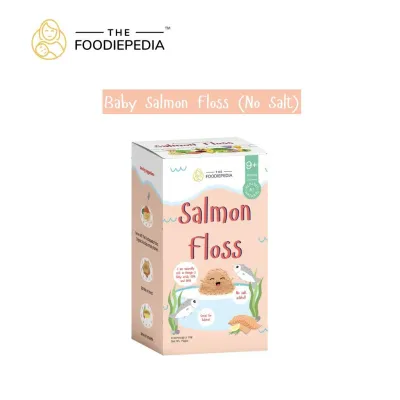
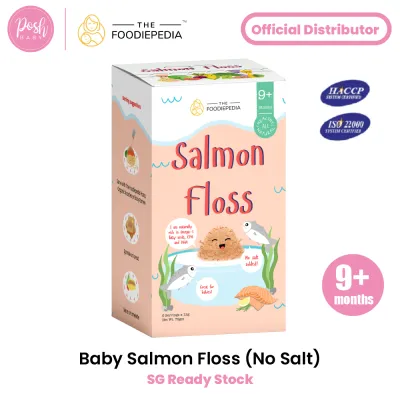
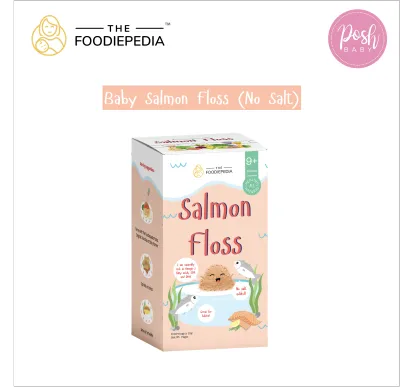
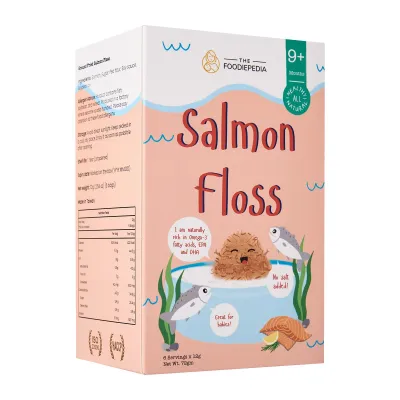
![[Bundle of 2] The Foodiepedia Kids Salmon Floss (with Seaweed)](https://img.lazcdn.com/g/p/954851bd2eeb33748f9f5cbe661266d4.png_400x400q80.png_.webp)
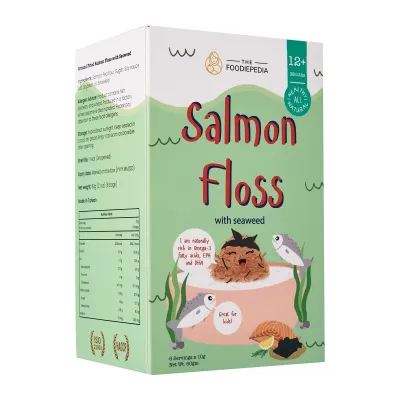
Prices are valid at publication and may change. Please refer to the product page for the latest price.
When browsing the shelves of local supermarkets or online marketplaces, your first step must be verifying the manufacturer’s recommended age stage. Look for clear labeling such as “suitable for infants from 7 months onwards” or “designed for stage 2 weaning.” If a package lacks a specific age recommendation, it is safest to assume the product was formulated for older children or adults.
Do not let vague marketing buzzwords influence your decision. Terms like “all-natural,” “premium quality,” or “artisanal” are frequently used to create a health halo around a product. These descriptors are not legally regulated for baby food and do not guarantee that the floss is free from added salt, preservatives, or hidden allergens. Only the ingredient list and nutritional panel provide the objective facts you need.
Essential Nutritional Markers to Check on the Label
The nutritional information panel is where you verify whether the salmon floss delivers genuine dietary value. Salmon is naturally rich in high-quality protein and omega-3 fatty acids, particularly docosahexaenoic acid (DHA). When reviewing the label, check that these nutrients are derived naturally from the fish itself. Some products may list added synthetic DHA or cheaper vegetable oil blends to boost their nutritional profile; pure, high-quality salmon floss should rely solely on the natural oils of the fish.

Sodium content requires your closest attention. A baby’s kidneys are still maturing and cannot efficiently process large amounts of salt. Compare the sodium values across different brands by looking at the “per 100g” column rather than the serving size, as serving sizes can vary significantly between manufacturers. Look for products that explicitly state “no added salt” or “zero sodium” on the ingredient list, ensuring the only sodium present is the trace amount naturally occurring in the fish.
Iron and calcium are also important markers to evaluate. While salmon naturally contains small amounts of these minerals, some baby food brands fortify their products to enhance their nutritional appeal. If you choose a fortified product, verify that the added minerals are suitable for infants. Keep in mind that the absorption of these minerals can be influenced by other ingredients; for instance, excessive calcium fortification can sometimes interfere with iron absorption, so a balanced, unfortified whole-food approach is often preferred by pediatric nutritionists.
Finally, assess the caloric density of the floss. A serving of salmon floss should provide concentrated, nutrient-dense calories from protein and healthy fats. If the nutritional panel reveals a low protein content relative to the total weight, or if the carbohydrate count is unexpectedly high, the product likely contains a high proportion of fillers. This dilutes the nutritional value, meaning your baby receives empty calories rather than the essential fatty acids they need.
Ingredient Red Flags and Hidden Additives to Avoid
Reading the ingredient list is a straightforward exercise in elimination. The shorter the list, the better the product is for your baby. Your primary goal is to identify and avoid hidden additives that serve no nutritional purpose and may even harm your baby’s developing palate and digestive system.
Added sugars and sweeteners are commonly used in adult fish floss to mask the strong, oily flavor of salmon. On baby food labels, these sugars can hide under various names, including maltodextrin, high-fructose corn syrup, brown sugar, or fruit juice concentrates. Introducing sweet-tasting savory foods early on can condition your baby to reject plain, unsweetened foods, making it harder to establish healthy eating habits later.
Artificial preservatives and synthetic colors are another major red flag. Because salmon floss is a dehydrated, low-moisture product, it naturally has a long shelf life when packaged correctly. There is absolutely no need for chemical preservatives like sodium benzoate or artificial coloring agents to make the product look more appealing. If you spot any chemical names or artificial color codes on the label, put the product back.
Flavor enhancers are frequently added to commercial foods to boost taste, but they have no place in infant nutrition. Look out for monosodium glutamate (MSG), disodium inosinate, disodium guanylate, and even concentrated yeast extracts. These ingredients can overstimulate your baby’s taste buds, making natural, unseasoned vegetables and grains seem unappealing by comparison.
You must also watch out for fillers and extenders. Ingredients on a label are listed in descending order of weight. The very first ingredient must be salmon. If you see soy protein isolate, wheat flour, pea starch, or cassava flour listed before or immediately after the fish, the manufacturer is using cheap fillers to bulk up the product. This reduces the actual fish content, meaning you are paying a premium price for starch rather than pure salmon.
Evaluating Safety, Sourcing, and Processing Claims
Beyond nutrition, physical safety and sourcing integrity are paramount when selecting seafood for an infant. The label should provide clear assurances regarding how the fish was processed and where it was sourced.
The risk of choking is a primary concern with any fish product. Look for explicit manufacturing guarantees on the packaging, such as “triple-screened for bones” or “certified bone-free.” Specialized processing methods that finely mince and sift the fish help ensure that microscopic pin-bones, which are easily missed in standard adult processing, are completely removed.
Heavy metal contamination, particularly mercury and lead, is a valid concern with predatory fish like salmon. Reputable baby food brands often conduct rigorous third-party testing on their raw ingredients. Look for labels that display quality assurance seals or explicitly state that the batch has been screened for heavy metals and environmental contaminants. Some brands even provide a QR code on the packaging that links directly to the laboratory test results for that specific batch.
Sourcing origins tell you a lot about the quality of the fish. The label should specify whether the salmon is wild-caught or sustainably farmed. If farmed, look for certifications such as the Aquaculture Stewardship Council (ASC) or Best Aquaculture Practices (BAP), which indicate responsible farming methods. For wild-caught salmon, look for the Marine Stewardship Council (MSC) blue fish label. These certifications help verify that the fish was sourced from clean, regulated waters.
Allergen warnings are critical, especially during the early stages of weaning. Even if the ingredient list contains only salmon, the product may have been processed in a facility that handles other common allergens. Check the bottom of the label for statements like “manufactured in a facility that also processes soy, wheat, milk, or shellfish.” If your baby has a known sensitivity or a family history of severe allergies, choosing a product made in a dedicated allergen-free facility is highly recommended.
Reading Packaging and Storage Instructions for Home Safety
The way salmon floss is packaged and stored plays a critical role in maintaining its safety and nutritional quality. In warm, humid climates like Singapore, dry foods are highly susceptible to moisture absorption, which can rapidly lead to mold growth and bacterial contamination.
Examine the packaging material before purchasing. High-quality baby salmon floss is typically housed in thick, multi-layered foil pouches, glass jars, or tin cans that provide an airtight moisture barrier. Avoid products packaged in thin, single-layer plastic bags that can easily puncture or allow humidity to seep through over time.
Resealable features are essential for maintaining freshness after opening. Look for robust zip-lock seals on pouches or secure, threaded lids on glass jars. Some premium brands offer individual single-use portion packs inside a larger container. While this may generate more packaging waste, it is highly hygienic and ensures that the remaining floss stays completely dry and fresh until the moment it is consumed.
Always read the storage instructions carefully. Some commercial salmon flosses are shelf-stable at room temperature until opened, while others require immediate refrigeration. The label will also indicate how quickly the product must be consumed after opening—often within two to four weeks. Never rely on the printed expiration date once the seal is broken, as that date only applies to unopened packaging.
Your In-Store Label-Checking Checklist
To make your shopping trips more efficient, establish a quick, systematic routine for scanning salmon floss labels. This step-by-step checklist will help you filter out unsuitable options in seconds, whether you are browsing the aisles of a local supermarket or scrolling through an online marketplace.
First, perform a front-of-pack scan. Look for an explicit age recommendation suitable for your baby’s current developmental stage. If the packaging does not clearly state it is made for babies or infants, turn it over immediately to inspect the back.
Second, flip the package and read the ingredient list. Verify that salmon is the very first ingredient listed. Scan the remaining ingredients for red flags: if you see salt, sugar, soy sauce, MSG, or vegetable oils in the top three ingredients, put the product back on the shelf.
Third, check the nutritional panel. Look at the sodium content per serving and per 100g. Compare this with a competing brand; the ideal choice should have the lowest possible sodium level, preferably zero added salt.
Finally, look for safety and sourcing certifications. Verify that the label mentions bone-free processing and heavy metal screening. If the packaging lacks clear allergen warnings or storage instructions, or if the ingredient list is cluttered with chemical names you do not recognize, choose an alternative brand that prioritizes transparency.
Frequently Asked Questions (FAQ)
Can I give my baby regular adult salmon floss if it has low sodium?
Even if an adult salmon floss claims to be low in sodium, it is generally not suitable for babies. Low sodium does not guarantee the absence of other adult-oriented ingredients, such as white pepper, soy sauce, artificial preservatives, or flavor enhancers like MSG. Furthermore, adult fish floss is processed to a much coarser texture, which presents a significant choking hazard for infants. Baby-specific salmon floss undergoes specialized processing to ensure a fine, easily dissolvable texture and is strictly screened to eliminate microscopic pin-bones that could easily pass through adult-grade manufacturing lines.
How should I introduce salmon floss to my baby for the first time?
When introducing salmon floss to your baby, start with a very small amount—about a quarter of a teaspoon—to monitor for any adverse reactions. Mix the floss into a familiar, single-ingredient food that your baby has already successfully tolerated, such as plain rice porridge or a mild vegetable puree. This makes it easier to identify the source of any potential allergic reaction. Because fish is a common allergen, it is best to introduce it during a morning feed so you can observe your baby throughout the day. Always consult your pediatrician or a qualified healthcare professional regarding the appropriate age and portion sizes for introducing concentrated fish proteins to your baby’s diet.
Does salmon floss need to be refrigerated after opening?
Storage requirements vary significantly depending on the brand’s specific manufacturing process and moisture content, so you must always consult the product label for the definitive instructions. Some dry, highly dehydrated flosses can be safely stored in a cool, dry pantry in an airtight container, while others require immediate refrigeration after the seal is broken. Regardless of the storage method, always protect the floss from moisture exposure. If you notice any clumping, changes in color, an off-smell, or signs of mold, discard the product immediately to ensure your baby’s safety.

Community discussion
Share your experience or ask a question. Comments are reviewed before publication.