
Securing your home as your baby starts crawling and exploring is a critical milestone for every parent. In Singapore’s modern apartments, where sleek built-in cabinetry is a standard design feature, magnetic child locks offer an excellent balance of safety and home aesthetics. Unlike highly visible plastic latches, these locks install entirely inside the cabinet, keeping the exterior clean while preventing curious hands from accessing potentially dangerous items. Choosing the right brand involves evaluating magnet strength, adhesive quality, and cabinet compatibility to ensure the system remains secure over time.
Understanding Magnetic Cabinet Locks for Baby-Proofing
A magnetic child lock consists of a spring-loaded latch installed inside the cabinet door or drawer and a catch plate mounted on the frame. The latch remains locked until a powerful magnetic key is placed on the outside of the door, pulling the internal mechanism down to release it. This hidden design is highly favored in Singaporean homes because it preserves the minimalist look of modern kitchens and living rooms.
Traditional strap locks or sliding bar locks are highly visible, which can disrupt your home’s interior design. They are also prone to being figured out by older toddlers who observe adults operating them. Magnetic locks, being completely concealed, do not tempt children to pull or play with them because there is no visible mechanism to interact with. However, they do require you to keep track of a magnetic key, whereas strap locks can be opened directly by hand.
Products mentioned in this guide
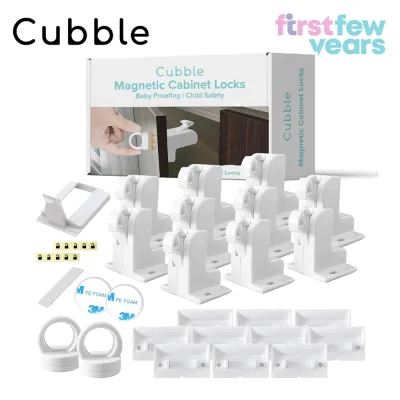
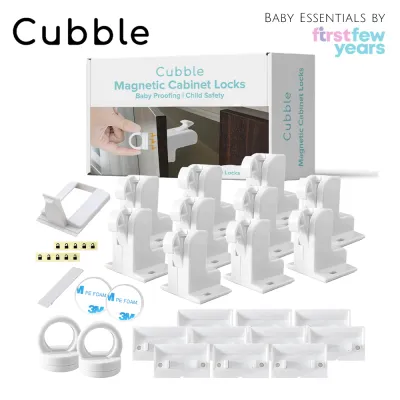
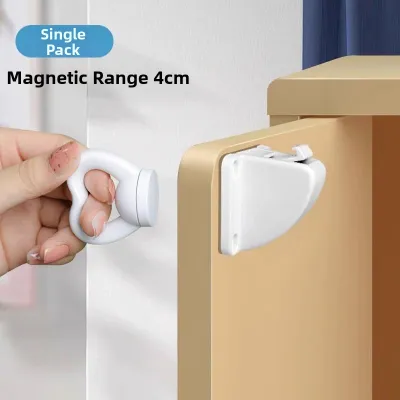
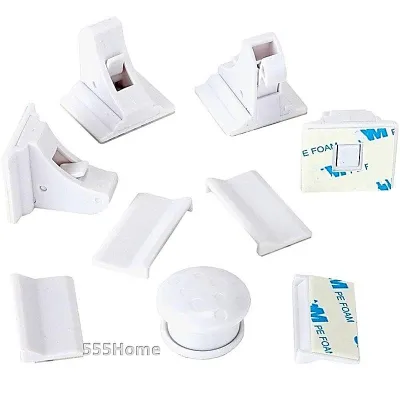
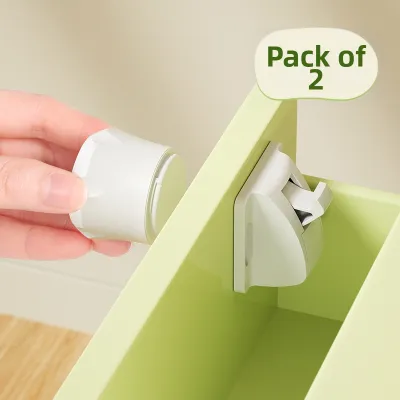
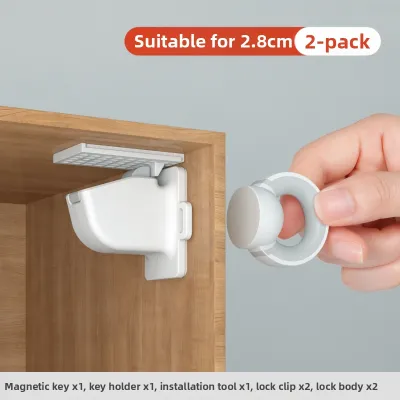
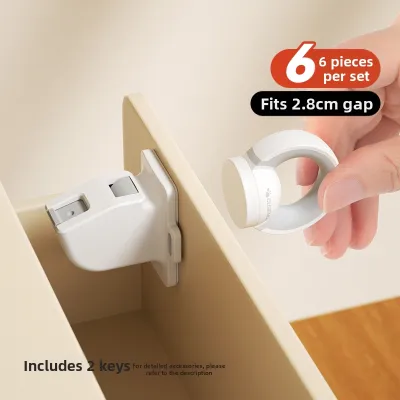
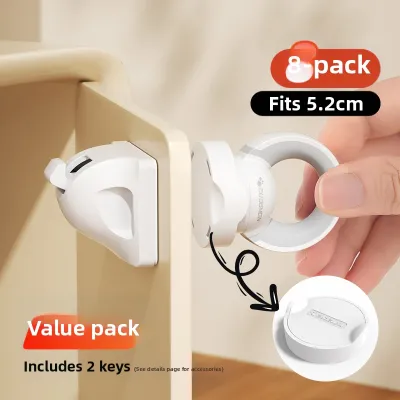
Prices are valid at publication and may change. Please refer to the product page for the latest price.
It is essential to assess your child’s developmental stage when choosing safety devices. Magnetic locks are highly effective for infants and toddlers who lack the coordination to use a key or the physical force to pull the adhesive from the cabinet. However, as children grow older and stronger, they may apply enough body weight to force a cabinet open if the adhesive or latch is weak. Caregivers should regularly supervise children and recognize that no lock is a substitute for active supervision.
Core Criteria for Evaluating Child Lock Brands
When comparing brands, look closely at the manufacturer’s specifications regarding the maximum wood thickness the magnet can penetrate. High-quality brands specify a maximum door thickness, often up to 35mm or more. If your cabinet doors are exceptionally thick, a standard magnet will not have enough holding force to pull the internal latch down, rendering the lock useless.

Evaluate how the magnetic key operates and how many keys are included in a pack. Some brands offer keys with convenient storage docks that can be adhesive-mounted high on a wall or refrigerator, out of reach of children. Additionally, look for locks that feature a “disarm” or “dual-mode” switch. This allows you to temporarily disable the locking mechanism when the children are asleep or away, giving you free access to your cabinets without needing the key every time.
Because these locks are installed inside cabinets where food, baby bottles, and utensils are stored, material safety is paramount. Check product labels to verify that the plastics used are non-toxic, BPA-free, and phthalate-free. Since toddlers often put their hands on cabinet edges, ensuring no harmful chemical off-gassing occurs inside closed storage spaces is a key step in maintaining a healthy home environment.
The strength of the lock is only as good as the adhesive holding it to the cabinet. Reputable brands typically partner with established adhesive manufacturers to ensure a strong bond. Look for brands that specify the type of adhesive used and provide clear instructions on load-bearing limits. Some premium options also include small screws for optional mechanical mounting, which provides the ultimate security if you do not mind drilling into your cabinet interiors.
Additionally, check if the brand provides clear safety certifications on their packaging. While safety standards are dynamic and subject to change, verifying that a product complies with international child safety guidelines gives you an extra layer of reassurance. Always cross-reference these claims with the manufacturer’s official documentation to ensure they are current and valid.
Matching Lock Specifications to Cabinet Materials
Most built-in cabinets in Singaporean homes are made of medium-density fibreboard (MDF), plywood, or solid wood with laminate finishes. Standard magnetic locks work exceptionally well on these materials, but you must measure the door thickness and check the hinge clearance. Ensure there is enough flat surface area on the inside frame to mount the catch plate securely without interfering with the soft-close hinges.
If you have display cabinets with glass doors or metal-framed storage units, standard wood screws are not an option. You must rely entirely on high-performance adhesives. Look for brands that explicitly state compatibility with non-porous surfaces like glass and metal. These adhesives often require a different preparation process to ensure they do not slide or peel off under tension.
Drawers present a unique challenge because the vertical clearance is often tight. When baby-proofing drawers, verify if the lock design allows for top-mounting or side-mounting. The magnet size must also be compact enough to fit within the drawer slide clearance. Some brands offer specialized drawer latches that are slightly lower in profile to prevent jamming.
Never attempt to install adhesive-based magnetic locks on porous, uneven, rough, or freshly painted surfaces. The adhesive requires a completely flat, smooth surface to achieve full contact. On freshly painted cabinets, wait at least several weeks for the paint to fully cure before applying adhesive, as the solvents escaping from curing paint will degrade the bond, causing the lock to fail when pulled.
Furthermore, consider the climate in Singapore. High humidity can affect how adhesives bond to certain materials over time. If you are installing locks in a kitchen that experiences high heat and steam from cooking, look for brands that offer moisture-resistant adhesives or consider using the mechanical screw-in option to prevent the lock from detaching unexpectedly.
Purchasing Channels and Authenticity Verification
In Singapore, parents have several options for sourcing baby-proofing supplies. Official brand websites and established physical mother-and-baby retail stores are the safest options, as they source directly from authorized distributors. General e-commerce platforms and online marketplaces also offer a wide selection, but buyers must exercise caution to avoid counterfeit products.
When shopping online, look for “official store” badges or verified seller statuses. Genuine packaging should feature clear brand labeling, batch numbers, safety certifications, and comprehensive installation instructions. Avoid products that arrive in plain plastic bags with no branding or documentation, as these are often low-quality replicas that use weak magnets and substandard adhesives.
Reputable brands often provide a warranty or a satisfaction guarantee on their adhesive and magnetic components. Check if the seller offers replacement adhesive pads or spare keys. A brand that stands by its product will have clear customer service channels to help you if a latch fails prematurely.
Be wary of unusually low-priced lock sets. While a cheap pack of locks might seem like a bargain, they often use low-grade magnets that lose their strength quickly or fail to penetrate standard cabinet thicknesses. Substandard plastics can also become brittle and snap under pressure, creating a choking hazard or leaving dangerous items accessible to your child.
Before making a purchase, it is also wise to check for any recent product recalls or safety alerts. You can do this by visiting official consumer safety portals or the manufacturer’s website. Ensuring that the specific batch or model you are buying has not been flagged for defects is a crucial step in protecting your family.
Installation Checks and Ongoing Maintenance
Proper installation is critical for adhesive performance. Begin by thoroughly cleaning the mounting area with rubbing alcohol to remove grease, dust, and oil. Allow the surface to dry completely. Once you apply the adhesive lock, press firmly for at least 30 seconds to activate the pressure-sensitive tape. Crucially, allow the adhesive to cure for at least 24 hours before testing the lock or allowing your child to pull on the cabinet.
Precise alignment between the latch and the catch plate is essential for smooth operation. Many quality brands include an installation cradle or template that helps you align the two parts perfectly before peeling off the adhesive backing. Once installed, test the magnetic key from multiple angles to ensure it retracts the latch fully and smoothly without catching.
Baby-proofing is not a set-and-forget task. Every few weeks, conduct a quick check of all installed locks. Test the spring tension of the latches to ensure they do not stick in the open position. Inspect the adhesive edges for any signs of peeling or lifting, especially in high-humidity areas like kitchens and bathrooms where moisture can weaken the bond over time.
You must establish clear stop conditions for your safety devices. If you notice a latch slipping, a magnet failing to retract the mechanism fully, or the adhesive starting to peel even slightly, stop using the lock immediately. Replace the adhesive pad with a fresh, high-quality replacement or replace the entire lock unit to ensure your child remains protected.
If you are unsure about the installation process or if your cabinets have an unusual layout, do not hesitate to consult a professional baby-proofing service. Many experts can assess your home and install the locks securely, ensuring they function exactly as intended without damaging your cabinetry.
Frequently Asked Questions (FAQ)
Can magnetic child locks be transferred to new cabinets?
The mechanical components of magnetic child locks—the plastic latches, catch plates, and magnetic keys—are highly durable and can easily be reused on new cabinets. However, the adhesive pads themselves are single-use. When moving the locks to a new location, you must completely peel off the old adhesive, clean any residue from the lock body, and apply fresh, heavy-duty double-sided tape recommended by the manufacturer. Be cautious during removal, as pulling too hard can damage cabinet laminates or paint finishes; using a hairdryer to gently warm the adhesive can make removal safer and easier.
What should I do if I lose the magnetic key?
If you lose your magnetic key, do not panic or attempt to pry the cabinets open, as this can damage your cabinetry. Most reputable baby safety brands sell spare magnetic keys separately, so it is wise to purchase a multi-pack initially and store a backup key in a secure, high location like the top of the refrigerator. Avoid using strong industrial or household magnets as substitutes, as they may not have the correct magnetic field shape to safely operate the internal spring mechanism and could permanently damage or demagnetize the lock.
Are magnetic locks safe for cabinets storing heavy items?
Magnetic child locks are designed to prevent children from opening doors and accessing cabinet contents, but they do not reinforce the structural integrity of your furniture. If a cabinet contains heavy items, such as cast-iron cookware or heavy appliances, the lock will keep the door shut, but it cannot prevent the entire cabinet or shelving unit from tipping over if a child climbs on it. For heavy furniture and appliances, always use dedicated anti-tip wall straps in addition to cabinet locks to ensure comprehensive safety in your home.

Community discussion
Share your experience or ask a question. Comments are reviewed before publication.