
Finding a reliable child lock brand for your cabinets in Singapore requires balancing your child’s developmental stage with your home’s specific cabinetry and climate. In Singapore’s humid environment, standard adhesives can degrade quickly, making the choice of lock type and brand reputation for material quality critical. To secure your kitchen and living room cabinets effectively, you must evaluate how different locking mechanisms interact with your daily routines and furniture designs.
Quick Guide to Choosing Cabinet Child Locks
Reliability in child locks is defined by a mechanism’s ability to withstand a toddler’s persistent pulling forces and the wear of repetitive daily adult use. As children grow, their physical strength and problem-solving skills increase, meaning a lock that worked at eight months might fail at two years. A truly reliable brand provides consistent resistance without jamming or degrading over months of constant operation.
Before purchasing any child lock system, parents must match the lock’s physical design to their specific cabinet handles, drawer configurations, and door styles. It is also essential to inspect the product packaging for recognized safety standard labels, such as European (EN) or American (ASTM) compliance indicators, and to verify that the manufacturer provides clear, detailed installation instructions. Taking these initial steps ensures you do not waste resources on locks that are easily bypassed or incompatible with your home layout.
Products mentioned in this guide
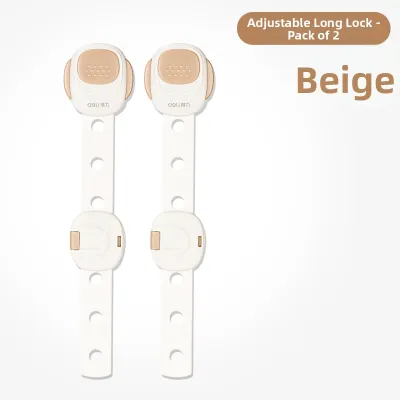
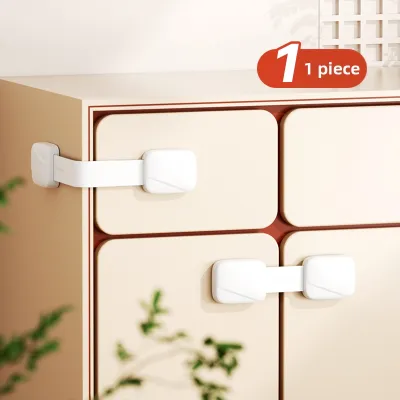
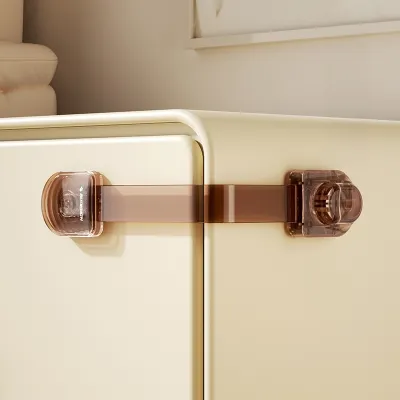
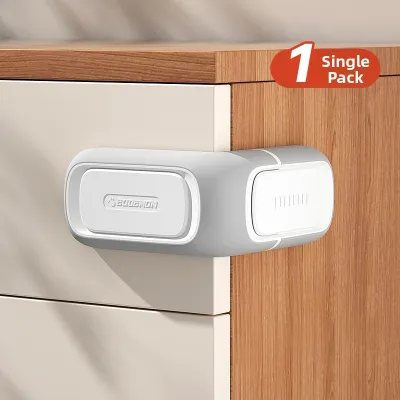
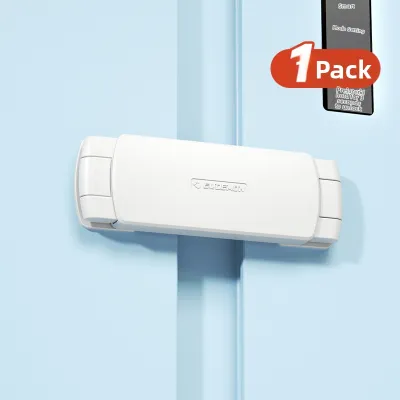
Prices are valid at publication and may change. Please refer to the product page for the latest price.
Understanding Child Lock Mechanisms for Cabinets
Selecting the right child lock requires a clear understanding of how different locking technologies operate. The three primary categories available on the market are magnetic systems, adhesive latch or strap locks, and sliding door or knob locks. Each system relies on a distinct physical principle to restrict access, and each presents unique trade-offs between adult convenience, aesthetic impact, and long-term durability.

Magnetic Lock Systems
Magnetic lock systems are installed entirely inside the cabinet or drawer, keeping them completely hidden from view. The system consists of an internal spring-loaded latch and a catch plate mounted to the cabinet frame. To open the door, you must place a specialized magnetic key on the outside of the cabinet door directly opposite the internal latch, which pulls the mechanism down and releases the lock.
While magnetic locks preserve the aesthetic appeal of your cabinetry and prevent children from seeing a tempting device to pull on, they require highly precise alignment during installation. Even a minor misalignment of a few millimeters can prevent the latch from catching or releasing properly. Additionally, because the system relies on an external key, losing the magnetic key can temporarily lock you out of your own cabinets. It is highly recommended to store spare keys on high metallic surfaces, such as the side of your refrigerator, well out of reach of children.
Adhesive Latch and Strap Locks
Adhesive latch and strap locks are mounted on the exterior of cabinets and appliances, utilizing flexible plastic or fabric straps secured by heavy-duty adhesive pads. These locks are highly versatile, allowing them to bend around corners, secure curved surfaces, and bridge gaps between double doors or drawers. To open them, an adult must perform a dual-action maneuver, such as squeezing two buttons simultaneously while pulling the strap away.
The primary vulnerability of these locks is their reliance on adhesive bonds, which can degrade over time when exposed to Singapore’s high ambient humidity and warmth. If the adhesive backing is of low quality, a determined toddler can eventually peel the mount off the cabinet surface. Furthermore, because these locks are fully visible on the exterior of your furniture, they can disrupt your home decor and may leave a stubborn, sticky residue or cause minor surface damage when they are eventually removed.
Sliding Door and Knob Locks
Sliding door and knob locks are mechanical barriers designed for specific hardware configurations. For sliding cabinet doors or glass panels, track locks or sliding locks clamp onto the frame or track, physically blocking the door from sliding open. For cabinets with double round knobs or D-shaped handles, U-shaped sliding locks loop through both handles and secure with a ratcheting mechanism that requires a squeeze-and-turn motion to release.
These locks are highly reliable because they do not rely on adhesives or internal hardware installation, making them excellent options for rental properties where permanent modifications are restricted. However, their utility is strictly limited to compatible hardware styles. If your cabinets have flat panel doors without handles, or if they use modern recessed pulls, sliding door and knob locks cannot be applied. Parents must carefully measure the distance between their cabinet handles to ensure the sliding lock’s loop is long enough to span the gap.
How to Evaluate Child Lock Brands for Safety and Durability
When shopping for child locks on online marketplaces or at local baby specialty stores, evaluating the build quality of different brands is essential to ensure long-term safety.
First, examine the material composition of the locks. High-quality brands typically use robust, non-toxic materials such as BPA-free ABS plastic, which resists cracking under sudden impacts or heavy pulling. Flexible straps should be made of high-tensile materials like heavy-duty TPE (thermoplastic elastomer) or reinforced nylon that will not stretch, fray, or snap when repeatedly tugged by a growing child.
Second, scrutinize the adhesive quality. Reliable brands often partner with established adhesive manufacturers or clearly state that they use high-bond acrylic tapes (such as genuine 3M backing). Look for brands that offer replaceable adhesive pads in the package or sell them separately. This feature is highly valuable in Singapore’s climate, as it allows you to re-secure a loose lock without having to purchase an entirely new unit.
Third, check the product packaging and manufacturer documentation for compliance with international safety standards. While child locks are not always subject to mandatory local certifications, reputable brands often voluntarily test their products against standards such as the European EN 16948 (which specifies safety requirements and test methods for locking devices fitted to cupboards and drawers) or ASTM standards. A brand that openly references these testing protocols demonstrates a higher commitment to safety and quality control.
Finally, leverage user reviews to identify potential real-world failure points. When browsing feedback on ecommerce platforms, filter for reviews that mention long-term use rather than immediate impressions. Pay close attention to reports of adhesive failure within the first few months, plastic components becoming brittle, or internal spring mechanisms jamming. A pattern of reviews indicating that the lock became stuck in the closed position or failed to latch automatically suggests poor manufacturing tolerances.
Matching Child Locks to Your Cabinet and Drawer Types
Your home’s cabinetry design is the single most important factor in determining which child lock style will perform reliably. Different handle shapes, door configurations, and materials require specific locking solutions to prevent bypass or damage.
For cabinets with traditional D-handles or prominent round knobs, exterior sliding U-locks or cord locks are highly effective and easy to install. However, if your kitchen features modern cup handles or recessed edge pulls, these mechanical loop locks have nothing to grip onto. In such cases, internal magnetic locks or exterior adhesive strap locks are the only viable options.
Frameless cabinets—common in contemporary Singapore kitchen designs—present another challenge. Because there is no face frame to attach an internal latch to, standard internal latches may not have a secure mounting point. For these sleek, flush-fitting cabinets, magnetic locks with specialized installation templates or side-mounted adhesive latches are preferred. If you are securing glass-fronted display cabinets, avoid any lock that requires drilling; instead, opt for high-quality adhesive glass locks or sliding track locks that clamp onto the metal frame.
Appliances with curved surfaces or high heat output, such as ovens, microwaves, and refrigerators, require specialized heat-resistant adhesive strap locks. Standard plastic locks can warp or lose their adhesive bond when exposed to the heat radiating from an oven door.
Before finalizing your purchase, measure the clearance gap between your cabinet doors and drawers. If a drawer can be pulled open even slightly (more than 2 centimeters) before the lock catches, a child’s small fingers can easily get pinched in the gap. Ensure the lock mechanism holds the door completely flush or allows only minimal movement. Additionally, assess the hinge tension of your cabinet doors; heavy self-closing hinges can exert significant outward force when pulled, requiring a lock with a higher load-bearing capacity to prevent the latch from snapping.
Installation Best Practices and Ongoing Safety Checks
Even the most reliable child lock brand will fail if it is installed incorrectly. Proper installation is particularly crucial for adhesive-based locks, which require specific conditions to form a permanent bond.
Begin by thoroughly preparing the cabinet surface. Clean the exact area where the adhesive pad or internal latch will be mounted using isopropyl alcohol or a mild, residue-free degreaser. Avoid using standard household glass cleaners or multi-surface sprays, as these often leave behind a thin, invisible film of silicone or oils that prevents the adhesive from bonding fully. Ensure the surface is completely dry and free of dust, grease, or moisture before proceeding.
When applying the adhesive lock, press and hold the mounting pad firmly against the surface for at least 30 seconds. This pressure-sensitive adhesive requires physical force to activate the bond. Once applied, do not test, pull, or use the lock immediately. Most high-bond adhesives require a curing time of at least 24 hours to reach their maximum strength. Keep the cabinet doors open or unlocked during this curing period to prevent any accidental tension on the fresh adhesive.
Establish a routine to inspect all child locks in your home at least once a month. Check for early signs of wear, such as hairline cracks in the plastic, loose hinges on strap locks, or adhesive pads that are beginning to peel at the edges. Test the resistance of each lock by giving it a firm tug to simulate a toddler’s pull. If you notice any degradation in the mechanism or adhesive, stop using the lock immediately and replace it. When it is time to remove adhesive locks, follow the manufacturer’s instructions carefully—typically involving heating the adhesive gently with a hair dryer to soften the bond before slowly peeling it away to avoid damaging your cabinet finish.
Frequently Asked Questions (FAQ)
Can I use adhesive child locks on painted or laminated cabinet surfaces?
Adhesive child locks can be used on painted or laminated surfaces, but there is a risk of damage upon removal. High-strength adhesives can pull away loose paint or delaminate cheap veneer if removed too quickly. To minimize this risk, always test a small, inconspicuous area of the cabinet first. If the surface is fragile, consider using mechanical locks that clamp onto handles, or prepare to use a heat source like a hair dryer to carefully soften the adhesive when removing the lock.
What should I do if the magnetic key for my cabinet lock stops working?
If a magnetic key fails to open a cabinet, first check the internal latch area for any accumulated dust, grease, or debris that might be jamming the spring mechanism. You can also verify if the magnet inside the key has weakened by testing it against another magnetic surface. To prevent lockouts, always keep a spare magnetic key stored in a secure, high location that is completely inaccessible to children. If the internal latch remains jammed despite cleaning, the unit must be replaced.
Community discussion
Share your experience or ask a question. Comments are reviewed before publication.