
Introducing solid foods to your baby is an exciting milestone, but preparing meals that are safe and easy for tiny mouths to manage requires constant attention. During the weaning phase, food must be cut into precise, age-appropriate sizes to prevent choking and encourage self-feeding. While a knife and cutting board work well at home, they are highly impractical when dining out at local food courts or traveling. This is where baby food scissors become an indispensable tool for parents. Designed specifically for portioning soft meats, noodles, vegetables, and fruits directly in the serving bowl, these compact tools streamline mealtime preparation.
However, choosing the right pair involves more than just finding a sharp edge. To make a safe and practical choice, caregivers must evaluate key design elements, including blade materials, safety mechanisms, ergonomic handles, and ease of sanitization. This guide provides a comprehensive framework to help you select the ideal food scissors that fit your family’s daily feeding routine and keep your little one safe.
Essential Safety Features to Check First
Safety is the absolute priority when selecting any product for infant feeding. Because baby food scissors are often used at the dining table with an active, curious infant nearby, the physical design of the blades must minimize the risk of accidental injury.
Products mentioned in this guide
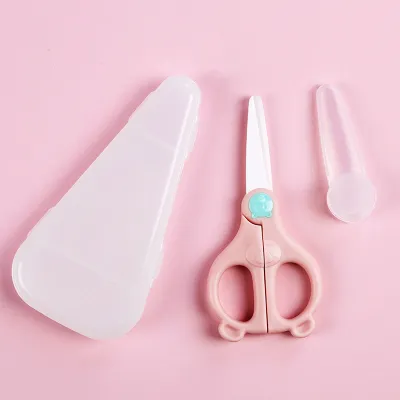
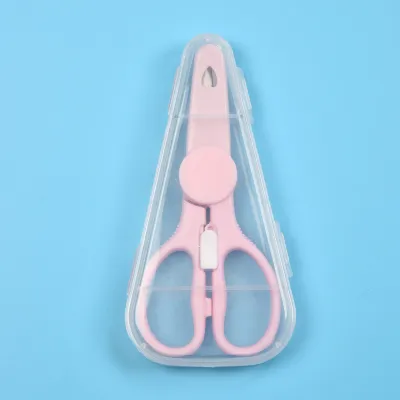
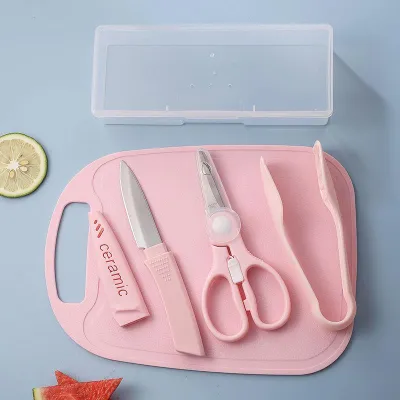
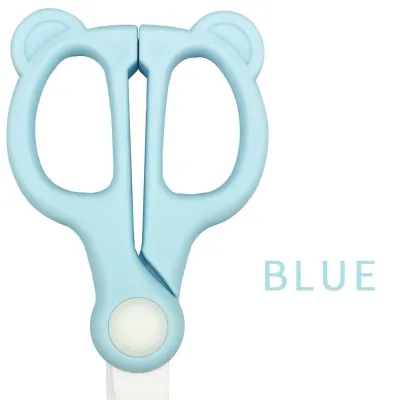
![[CHEAPEST] Baby Little Bear Ceramic Food Scissors / Stainless Steel Food Scissors High Quality with Travel Case Cover Safety Lock [Baebear.sg]](https://img.lazcdn.com/g/p/4b8b926562243d8539977af6f76205f8.jpg_400x400q80.jpg_.webp)
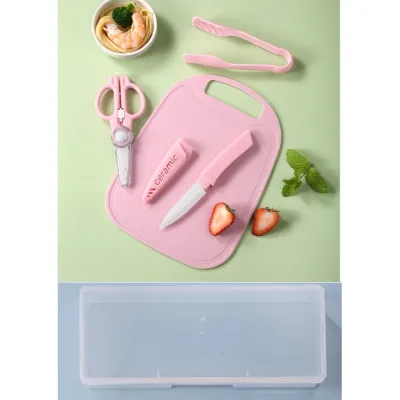
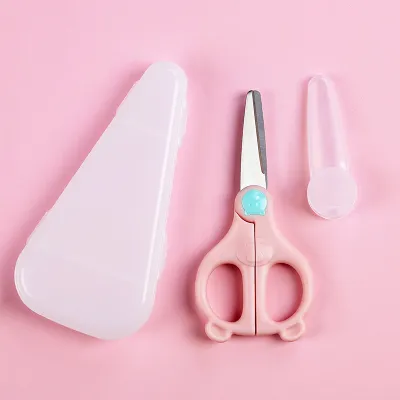
Prices are valid at publication and may change. Please refer to the product page for the latest price.
First, examine the blade tip design. Standard household scissors feature pointed tips that can easily puncture skin or scratch surfaces if your baby makes a sudden movement. Dedicated baby food scissors should always feature rounded, blunt tips. This rounded profile ensures that even if the scissors slip or if your child reaches out unexpectedly during mealtime, the risk of a sharp puncture injury is significantly reduced.
Second, evaluate the protective cover or sheath. A high-quality pair of scissors must come with a dedicated cover that fits securely over the blades. This cover is essential for safe storage in kitchen drawers and, more importantly, for transport in a diaper bag. Look for sheaths that feature a physical locking mechanism, such as a snap-lock or a child-resistant latch, which prevents the cover from sliding off accidentally.
Additionally, check the sheath for ventilation holes. In warm, humid climates, storing damp blades inside a completely sealed plastic cover creates a breeding ground for bacteria and mold. Ventilation slots allow residual moisture to evaporate, keeping the blades hygienic between uses.
Finally, consider physical barriers or blade exposure guards. Some advanced designs incorporate a plastic guard that sits over the pivot point or partially covers the outer edges of the blades. This barrier prevents fingers from sliding down toward the cutting edge while you are actively snipping food. When evaluating options, test how securely these guards are attached; they should not wobble or detach easily during normal operation, as loose parts can become choking hazards.
Blade Material and Design for Different Foods
The efficiency of baby food scissors depends heavily on the blade material and the edge profile. Different weaning foods—ranging from slippery noodles to fibrous meats—require specific cutting dynamics.

Ceramic blades are highly popular for baby food preparation. Made from zirconium dioxide, these blades are chemically inert, meaning they will not transfer a metallic taste to delicate fruits or vegetables, nor will they cause browning on freshly cut apples or pears. Ceramic is naturally rust-proof, which is a major advantage for tools that undergo frequent washing. However, ceramic has distinct physical limitations. It is highly brittle compared to metal. If you accidentally drop ceramic scissors onto a hard tiled kitchen floor, the blades are highly likely to chip or shatter. Furthermore, ceramic blades are not designed to cut through hard materials like bones, frozen foods, or dense crusts; attempting to do so can ruin the cutting edge.
Stainless steel blades offer unmatched durability and impact resistance. They can withstand accidental drops on hard surfaces and retain their sharpness over a long period of use. When choosing stainless steel, it is vital to verify that the manufacturer uses food-grade alloys, such as 304 or 316 stainless steel, which offer superior resistance to corrosion from acidic foods like tomatoes or citrus fruits. While stainless steel is highly durable, it does require diligent drying to prevent rust spots from forming over time, especially around the pivot screw.
Beyond the material, pay close attention to the edge profile. Straight-edge blades are excellent for making clean, swift cuts through soft cooked vegetables, tofu, and steamed fish. However, they can struggle with slippery items. For foods like noodles, grapes, pasta, or skin-on fruits, serrated blades are highly effective. The tiny teeth along a serrated edge grip the food surface, preventing it from sliding out of the blades as you close them. This ensures precise, effortless cutting without squishing the food into an unappealing paste.
Ergonomics and Practicality for Daily Use
Preparing meals for a weaning infant is a repetitive task that can quickly cause hand fatigue if the tool is poorly designed. Ergonomics and portability are key factors that determine whether you will actually enjoy using the scissors daily.
Start by assessing the handle grip materials. Avoid hard, smooth plastics that become incredibly slippery when wet or coated in food oils. Instead, look for handles lined with textured silicone or thermoplastic rubber (TPR). These materials provide a secure, non-slip grip, allowing you to maintain precise control even if your hands are messy from feeding your baby. The finger loops should also be sufficiently sized; loops that are too small can pinch your fingers, while overly large loops reduce your leverage and control.
Another excellent ergonomic feature is a spring-loaded or assisted-opening mechanism. These designs use an internal spring to automatically push the handles back open after each cut. This significantly reduces the muscular effort required from your hand, making it much easier to quickly snip a bowl of noodles or vegetables into tiny pieces. If you choose a spring-loaded model, ensure it includes a secure manual lock that keeps the handles closed when not in use, preventing the blades from springing open unexpectedly in your drawer or bag.
For parents who frequently dine out, portability is essential. Compact, lightweight designs are ideal for packing into diaper bags. Some models feature foldable handles that tuck away to minimize space. When evaluating foldable scissors, check the hinge stability. The folding joints must lock tightly into place during use so the scissors do not collapse or wobble while you are cutting food.
Cleaning and Maintenance Requirements
Maintaining strict hygiene is critical during the weaning phase, as an infant’s digestive and immune systems are still developing. Food particles, moisture, and oils can easily become trapped in the tight spaces of scissors, leading to bacterial growth.
The most effective design for hygiene is a detachable blade mechanism. These scissors are engineered to separate into two completely independent pieces when opened past a certain angle. This allows you to thoroughly clean and sanitize the pivot point, screw, and inner blade surfaces where food debris typically accumulates. If the blades do not detach, you must spend extra time scrubbing the hinge area with a small brush to ensure no residue remains.
Always check the manufacturer’s cleaning instructions before purchase. While some scissors are labeled as dishwasher safe, high-temperature dishwasher cycles can degrade certain plastic handles, weaken spring mechanisms, or strip protective coatings from stainless steel blades over time. If hand-washing is recommended, use mild dish soap and warm water.
Proper drying protocols are essential to prolong the lifespan of your baby food scissors. After washing, dry the blades immediately with a clean, lint-free cloth. Never put the scissors back into their protective sheath while they are still damp, as trapped moisture can cause stainless steel to rust and encourage mold growth inside the cover. Instead, leave the scissors open in a well-ventilated dish rack to air-dry completely before storing them away.
How to Evaluate Options When Shopping
With numerous options available on online marketplaces and in baby specialty stores, evaluating products systematically ensures you invest in a safe, durable tool.
Begin by reading the manufacturer labels and product specifications carefully. Look for explicit declarations of food-contact safety, such as BPA-free plastics and food-grade metals or ceramics. Avoid products that lack clear material disclosures or fail to specify the type of stainless steel used.
When shopping in person, inspect the build quality for common red flags. Gently wiggle the handles to check for loose pivot joints; any lateral play between the blades will cause food to fold rather than cut, and it indicates poor manufacturing that will worsen over time. Avoid scissors that do not include a protective cover, as carrying unprotected blades is a safety hazard.
When shopping online, set a realistic budget. High-quality, durable baby food scissors typically range from S$10 to S$30. While cheaper options exist, they often use inferior metals that rust quickly or dull after a few uses. Cross-reference user reviews to gauge real-world performance. Look specifically for feedback regarding how long the blades remain sharp, whether the detachable hinge remains secure after repeated separation, and if other parents have experienced issues with rust or broken plastic handles.
Frequently Asked Questions (FAQ)
Can I use regular kitchen scissors instead of dedicated baby food scissors?
Using standard kitchen shears for baby food preparation is generally not recommended due to significant hygiene and safety risks. Regular kitchen scissors are often used to cut raw meats, packaging, or household items, creating a high risk of bacterial cross-contamination that can lead to foodborne illness in infants. Furthermore, standard shears are typically much larger, heavier, and lack the rounded safety tips found on dedicated baby models, making them difficult to maneuver safely in a small baby bowl or near an active child. They also rarely come with protective travel sheaths, making them impractical and unsafe to carry in a diaper bag when dining out. Dedicated baby food scissors are sized perfectly for small portions, easy to sanitize, and designed with safety features specifically tailored for infant meal prep.
At what age should I stop using baby food scissors?
You can typically transition away from using baby food scissors when your child has developed a mature chewing pattern and can safely manage larger food textures, which usually occurs between 18 to 24 months of age. At the start of weaning (around 6 months), food must be finely pureed or mashed. As your baby progresses to finger foods and table foods, scissors are invaluable for cutting items into small, bite-sized pieces (roughly the size of a chickpea) to prevent choking. Once your toddler can efficiently chew soft meats, whole grains, and raw fruits without difficulty, and has begun mastering the use of their own toddler-safe fork and spoon, you can gradually stop pre-cutting their meals. Always observe your child’s eating habits and consult your pediatrician if you have concerns about their oral-motor development or chewing readiness.

Community discussion
Share your experience or ask a question. Comments are reviewed before publication.