
To successfully transition your toddler to independent bathroom habits, choosing the right standing tower is a critical step. Unlike standard step stools, a dedicated standing tower provides an enclosed platform that helps young children reach the sink or toilet safely. However, the bathroom presents unique challenges—such as wet tiled floors, high humidity, and tight spatial layouts—that do not exist in other parts of the home. To find a model that supports your potty training journey, you must evaluate specific features ranging from slip-resistant bases to water-resistant materials and adjustable heights. By focusing on these practical design elements, you can create a secure environment that encourages your child’s confidence and self-reliance.
Essential Safety and Stability Features for the Bathroom
The primary consideration when introducing any elevated platform into a bathroom is structural stability. Bathroom floors, particularly those made of ceramic or porcelain tiles common in Singapore homes, become exceptionally slick when exposed to water splashes, steam, or spilled soap. To mitigate the risk of the tower sliding during use, look for models equipped with robust, non-slip rubberized feet or specialized suction pads on the base. These grips must remain effective even when the floor is damp, providing a firm anchor that prevents the tower from shifting when your toddler climbs aboard.
Beyond the base, the design of the steps and the platform itself requires close inspection. Toddlers often have damp feet or wear slippery socks, making textured or high-traction step surfaces essential. Look for steps with molded ridges, non-slip grip tape, or textured patterns that provide reliable traction. Additionally, the guardrails must be positioned at an appropriate height relative to your child’s torso. High, sturdy guardrails on all four sides prevent lateral falls when your toddler shifts their weight, leans over the sink to reach the tap, or turns around to face the toilet.
Products mentioned in this guide
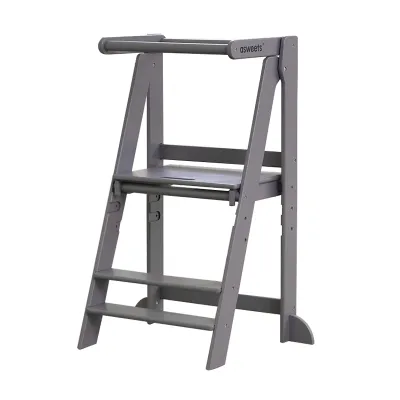
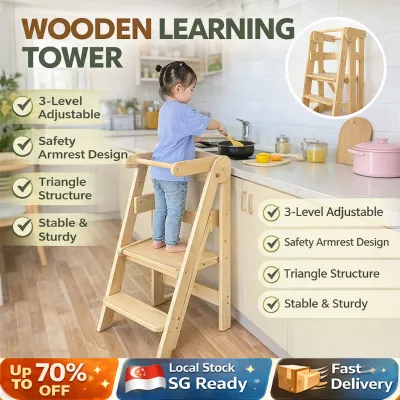
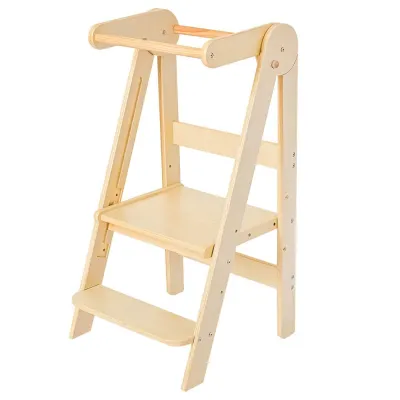
![[SG SELLER] Montessori Kids Toddler Tower Kitchen Step Stool with Adjustable Height Learning Helper Natural Wood](https://img.lazcdn.com/g/p/e68c836cb54151e70b4ac5efdb66e055.jpg_400x400q80.jpg_.webp)
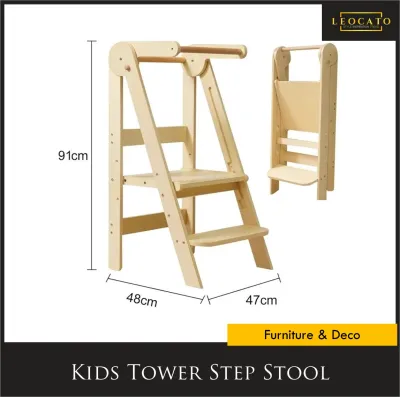
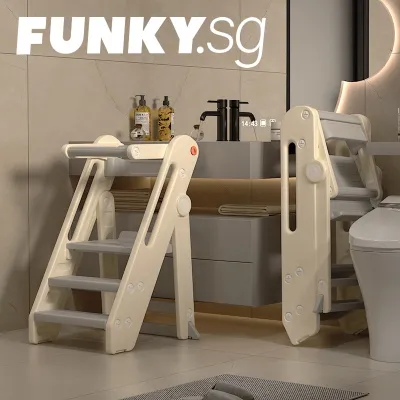
Prices are valid at publication and may change. Please refer to the product page for the latest price.
Weight distribution and the tower’s center of gravity play a decisive role in preventing tipping accidents. A well-designed standing tower features a wide, flared base that distributes the child’s weight evenly across the floor. When reviewing product specifications, always check the manufacturer’s stated maximum weight capacity to ensure it accommodates your child’s current weight with room to grow. Avoid lightweight models with narrow bases, as they are more susceptible to tipping if a toddler leans heavily over the front or side rails.
Caregiver supervision remains the most critical safety factor, regardless of the tower’s built-in safety features. You should always remain within arm’s reach of your toddler while they are using the tower, especially during the early stages of potty training when they are still developing their balance. Regularly inspect the tower’s joints, screws, and safety latches to ensure nothing has loosened over time due to frequent movement or climbing. If you notice any wobbling, structural cracks, or worn-out non-slip pads, discontinue use immediately until the issue is resolved.
Material Durability and Water Resistance
The bathroom is a demanding environment for any piece of furniture due to constant exposure to moisture, steam, and direct water splashes. When selecting a standing tower, you must choose materials that can withstand these conditions without degrading, warping, or harboring mold. The two primary material options available on the market are wood and molded plastic, each presenting distinct trade-offs in terms of durability, maintenance, and aesthetics.

Wooden standing towers are highly valued for their sturdy weight, structural integrity, and classic aesthetic appeal. However, natural wood is inherently porous and susceptible to water damage if not properly treated. If you prefer a wooden model, verify that the manufacturer has applied a high-quality, non-toxic, waterproof sealant or polyurethane coating. This protective layer prevents water from penetrating the wood fibers, which can lead to swelling, warping, splintering, or the growth of black mold in humid climates.
Molded plastic standing towers offer an inherently water-resistant alternative that is exceptionally well-suited for wet bathroom environments. Plastic models do not warp, rot, or rust, and they are generally much lighter than their wooden counterparts, making them easier to move around the bathroom. However, because they are lightweight, you must carefully verify that the plastic tower features a wide, stable base and robust non-slip grips to compensate for the lack of heavy material weight.
Hygiene and ease of cleaning are paramount during potty training, as accidental spills and splashes are inevitable. Look for a tower with smooth, rounded edges and a crevice-free design that prevents dirty water, soap scum, and bacteria from accumulating in tight joints or corners. The surfaces should be resilient enough to withstand frequent wiping with standard, non-abrasive household disinfectants or mild soapy water without the finish peeling, fading, or degrading over time.
Metal hardware, such as screws, hinges, and adjustment pins, is another critical area to examine for long-term durability. In a humid bathroom, low-quality metal components can quickly rust, compromising the structural integrity of the tower and making adjustments difficult. Ensure the manufacturer specifies the use of rust-resistant hardware, such as stainless steel or powder-coated metal, to guarantee the tower remains safe and functional throughout its lifespan.
Adjustability and Space Constraints in Small Bathrooms
Bathroom layouts vary significantly, and many homes, particularly apartments and HDB flats, feature compact bathrooms where floor space is limited. Before purchasing a standing tower, it is essential to measure the available clearance around your sink, toilet, and bathroom entryway. A tower with a massive footprint may offer excellent stability, but it can quickly become an obstacle that blocks doors, cabinets, or access to the shower, creating a tripping hazard for the rest of the household.
To ensure a proper fit, measure the distance from the front of your bathroom sink or toilet to the nearest wall or fixture. Compare these measurements against the physical footprint dimensions provided by the manufacturer. Keep in mind that you need enough clearance to walk around the tower safely, and the bathroom door must be able to open and close fully without striking the frame of the tower.
Height adjustability is a highly desirable feature that extends the usable lifespan of the standing tower as your child grows. Toddlers develop rapidly, and a platform height that is perfect at eighteen months may leave a three-year-old standing too high, raising their center of gravity and increasing the risk of falls. Look for models that offer multiple platform height settings, allowing you to lower the standing surface as your child grows taller.
Evaluate the mechanism used to adjust the platform height. Some towers utilize a tool-free slotting system that allows you to slide the platform into different grooves quickly, which is highly convenient if multiple children of different ages share the tower. Other models require you to unscrew and reposition the platform using tools, which takes more time but often provides a more rigid, rattle-free connection. Whichever system you choose, verify that the locking mechanism is secure and cannot be dislodged by a child’s active movements.
For exceptionally tight spaces, a foldable standing tower is often the most practical solution. These models feature hinges that allow the tower to collapse into a flat profile, which can be easily stored behind a door, inside a utility closet, or against a wall when not in use. If opting for a folding design, carefully inspect the safety locks that keep the tower open. The folding mechanism must lock securely into place with a secondary safety latch to prevent the tower from accidentally collapsing while your child is standing on it.
Creating Your Potty Training Tower Shortlist
With a clear understanding of safety, materials, and spatial requirements, you can begin compiling a shortlist of potential standing towers. To make an informed decision, start by cross-checking the technical specifications of each model against your child’s current physical measurements. Look up the manufacturer’s recommended age range, minimum height requirements, and maximum weight limits in the official product documentation rather than relying on generic retail descriptions.
Next, download and review the user manuals or assembly instructions for the shortlisted models, which are often available on the manufacturer’s website or online marketplaces. Assess the complexity of the assembly process, the number of parts involved, and whether specialized tools are required. A tower that is overly complicated to assemble or has poorly written instructions can lead to errors that compromise the structural safety of the finished product.
Investigate the manufacturer’s warranty coverage and customer support policies. A reputable brand should offer a clear warranty that covers structural defects, hardware failures, or premature degradation of the water-resistant finish under normal household use. Be cautious of products sold without clear warranty terms or from brands that do not provide accessible customer service channels for replacement parts.
Finally, compare the overall value of the shortlisted models based on their feature completeness, durability expectations, and price in S$. While it may be tempting to opt for the least expensive model, investing slightly more in a tower with superior water resistance, robust non-slip feet, and reliable height adjustability can save you money in the long run by avoiding the need for a premature replacement. Avoid paying extra for unnecessary novelty add-ons, such as built-in toys or drawing boards, which add bulk and are difficult to keep clean in a bathroom environment.
Frequently Asked Questions (FAQ)
Can I use a standard kitchen learning tower for potty training?
While it is physically possible to relocate a kitchen learning tower to the bathroom, you must exercise caution and verify several factors before doing so. Kitchen towers are often designed for dry environments and may feature heavy, solid wood construction with minimal water resistance, making them prone to warping or mold when exposed to bathroom humidity and splashes. Additionally, kitchen towers typically have larger footprints that may block narrow bathroom pathways, and their bases may lack the specialized rubberized grips required to prevent sliding on wet bathroom tiles. If you plan to use a single tower in both rooms, ensure it meets all bathroom safety criteria, including water-resistant coatings and non-slip feet, and verify that it is light enough to move safely without straining yourself.
At what age or height should a toddler start using a standing tower in the bathroom?
A toddler’s readiness to use a standing tower depends more on their physical development and motor skills than their chronological age. Generally, a child is ready when they can stand completely unassisted with excellent balance, climb low steps confidently, and follow basic safety instructions from a caregiver. Before introducing a tower, always consult the manufacturer’s product manual to verify the specific minimum age, height, and weight thresholds designed for that model. Introducing a tower too early, before your child has developed the core strength and coordination to stand safely on an elevated platform, increases the risk of falls and injuries, even under direct adult supervision.

Community discussion
Share your experience or ask a question. Comments are reviewed before publication.