
Selecting a portable thick baby play mat for outdoor activities requires balancing adequate cushioning with practical portability. In Singapore, where families frequently transition between air-conditioned indoor spaces, public transport networks, and humid outdoor parks, finding the right balance is essential for a seamless outing. A mat that is too thin may fail to protect a tumbling infant from hard ground, while an excessively bulky mat can turn a simple trip to the park into a logistical challenge.
Rather than searching for a single universally perfect product, the key is to evaluate how different design features align with your typical transit methods and outdoor destinations. Whether you are navigating the paved paths of the Singapore Botanic Gardens or setting up a play area on the sandy shores of East Coast Park, the right mat should support your baby’s developmental milestones while remaining easy to pack, carry, and clean. This guide outlines the essential criteria, material considerations, and safety checks needed to build a practical shortlist of portable thick play mats.
Defining "Thick" and "Portable" for Outdoor Needs
To choose the right mat, it is first necessary to define what “thick” and “portable” mean in an outdoor context. Many parents assume that a visually thick mat automatically offers the best protection. However, visual thickness can be misleading. A mat that appears thick but is made of low-density foam may compress completely under a baby’s weight, offering very little actual impact absorption when placed on hard concrete or packed earth.
Products mentioned in this guide
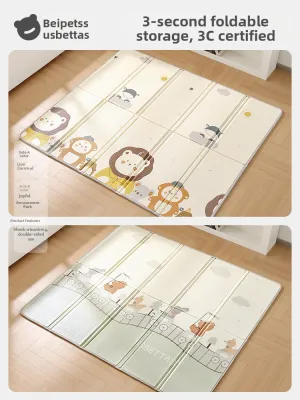
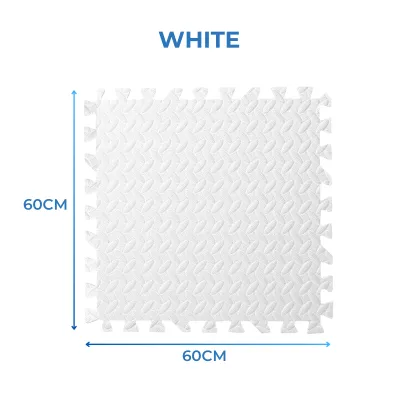
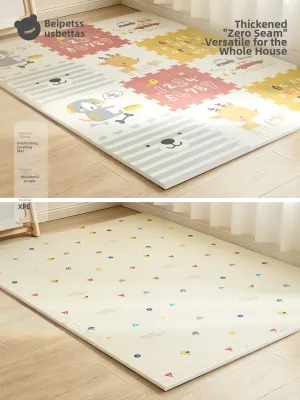
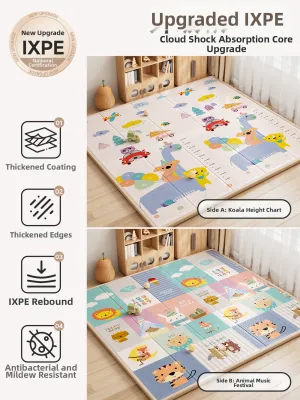
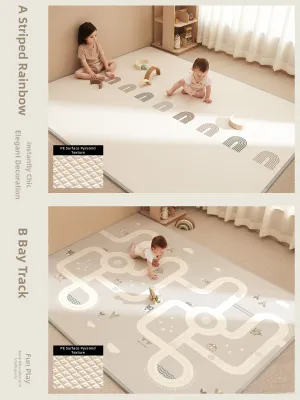
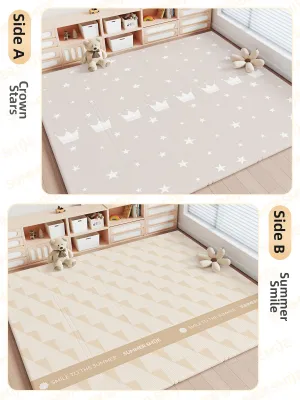
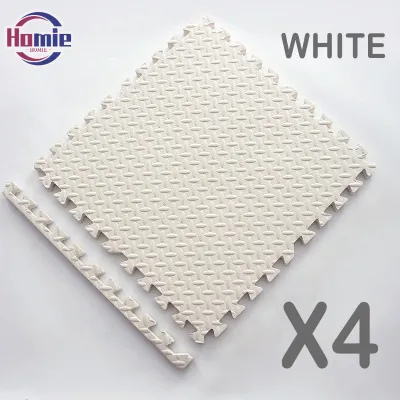
Prices are valid at publication and may change. Please refer to the product page for the latest price.
When evaluating options, look for manufacturer specifications regarding foam density rather than relying solely on visual measurements. High-density materials, such as cross-linked polyethylene (XPE) or high-density polyurethane (PU), provide excellent shock absorption even at lower physical profiles. This ensures that a baby practicing tummy time or learning to sit up remains protected from hard falls.
Portability is equally multi-dimensional and must be assessed based on your primary mode of transportation. For families relying on public transport, such as buses or the MRT, a portable mat must be lightweight and compact enough to be carried alongside a stroller, diaper bag, and other baby essentials. If a mat is too wide or heavy, it can quickly become a major inconvenience during peak travel hours.
For those using strollers, check if the folded dimensions of the mat allow it to slide into the undercarriage storage basket or hang securely from stroller hooks without tipping the stroller backward. Conversely, families who travel primarily by car or private hire vehicles have more flexibility regarding weight but must still consider how much trunk space the folded mat occupies alongside a folded stroller and groceries.
Ground conditions at your destination also dictate the minimum cushioning requirements for your baby’s safety. When setting up on soft, well-maintained grass, a slightly thinner, highly flexible mat may suffice, as the ground itself provides a natural layer of cushioning. However, public park lawns can hide hidden hazards such as dry twigs, sharp pebbles, or uneven soil patches that can cause discomfort or minor injuries.
On hard, paved surfaces like park pavilions or wooden boardwalks, a thicker, high-density mat is essential to mimic the supportive environment of an indoor play area. Sandy environments present a different challenge; sand provides natural cushioning but creates an unstable surface, meaning the mat must offer enough structural rigidity to help a crawling baby maintain balance without sinking or sliding.
Key Features to Evaluate in Portable Play Mats
When comparing different portable play mats, several design and structural elements directly influence daily usability. The folding mechanism is one of the most critical features to evaluate. Most portable mats utilize either an accordion-fold (panel-folding) design or a roll-up design.

Accordion-fold mats are highly popular for outdoor use because they fold along pre-creased lines into a flat, rectangular shape. This flat profile makes them exceptionally easy to stack in a car trunk, slide into narrow storage gaps, or carry flat against the body. However, the creases in accordion mats can act as channels that collect dirt, sand, and spilled liquids, requiring careful cleaning after outdoor use.
Roll-up mats, on the other hand, offer a completely seamless surface with no creases to trap debris, but they tend to have a larger storage footprint and can be awkward to carry unless secured with straps. Additionally, some roll-up mats retain a curved memory at the edges when first unrolled, which can create a tripping hazard for early walkers.
Integrated carrying solutions are another vital consideration for parents managing multiple bags. A high-quality portable mat should feature robust carrying accessories that keep the mat tightly secured during transit. Look for mats that include reinforced sewn-in handles, adjustable shoulder straps, or a dedicated travel bag.
A dedicated travel bag is particularly beneficial for outdoor excursions, as it completely encloses the mat, protecting the clean, baby-facing surface from dust, pollen, and moisture during transport. If a mat does not come with a bag, ensure that any included straps are durable and easy to fasten, as loose straps can slip off during a busy commute.
Surface water resistance and wipe-clean capabilities are non-negotiable for any mat used outdoors. Outdoor environments expose play mats to damp grass, morning dew, spilled formula, and muddy footprints. Parents should verify that the mat’s outer surface is completely non-porous and water-resistant.
High-quality outer coatings allow liquids to bead on the surface rather than soaking into the inner foam core, where dampness can lead to mold and unpleasant odors. A truly wipe-clean surface can be restored to hygiene in seconds using a simple baby wipe or a damp cloth, allowing the play session to continue without interruption.
Material and Safety Checks for Outdoor Environments
Using a play mat outdoors exposes it to environmental stressors that are rarely encountered indoors. Consequently, parents must perform specific material and safety checks to ensure the mat remains safe for their baby. First, verify the manufacturer’s guidelines regarding UV resistance and waterproofing.
Singapore’s tropical climate features intense sunlight, which can accelerate the degradation of certain synthetic foams. Over time, prolonged exposure to ultraviolet rays can cause non-UV-stabilized materials to fade, crack, or become brittle, compromising both safety and durability. Waterproofing is equally critical, not just for managing surface spills, but for preventing ground moisture from seeping upward through the bottom of the mat.
If moisture penetrates the inner foam layers, it can create a breeding ground for mold and bacteria that are difficult to eradicate. Another important factor is the performance of non-slip textures on outdoor surfaces. Many premium indoor play mats feature intricate textured patterns on the underside designed to grip smooth indoor flooring like tiles or laminate.
However, these patterns are rarely optimized for outdoor surfaces such as dry grass, loose soil, or sand. On these uneven surfaces, a mat can easily slide or bunch up when a baby attempts to crawl, roll, or stand. Before letting your baby play, place the mat on the ground and test its stability by applying lateral pressure. If the mat slides easily, consider anchoring the corners with heavy diaper bags or choosing a location with flatter, more stable ground.
Heat retention is a critical safety concern in hot, sunny climates. Synthetic materials like polyurethane and polyethylene can absorb and retain heat rapidly when exposed to direct sunlight. A mat left under the sun can quickly reach surface temperatures that can cause discomfort or even mild burns on a baby’s sensitive skin.
To mitigate this risk, always position the play mat in a fully shaded area, such as under a mature tree, a park pavilion, or a portable UV-blocking shelter. Even when set up in the shade, always perform a manual temperature check by pressing the back of your hand firmly against the mat’s surface for several seconds before placing your baby down. If the surface feels warm, allow it to cool down or move it to a cooler spot.
Building Your Shortlist: Matching Mats to Outdoor Scenarios
To build a practical shortlist, parents should align the features of different mats with their most frequent outdoor activities. If your outdoor routine consists primarily of short, spontaneous visits to local neighborhood parks or casual picnics, prioritize rapid deployment and lightweight designs.
For these scenarios, a lightweight accordion-folding mat weighing under two kilograms is highly efficient. It can be unfolded in seconds with one hand while holding your baby, and quickly folded back up when it is time to leave. The primary focus here is minimizing transit friction so that getting out of the house feels effortless.
For families who enjoy extended outdoor adventures, such as weekend camping trips, beach days, or frequent travel, the selection criteria should shift toward durability and compact storage. In these situations, the mat will likely encounter rougher terrain, including gravel, dry twigs, and abrasive sand. Look for mats with reinforced, scratch-resistant outer layers that can withstand friction without tearing.
Compact storage dimensions are also crucial when packing a vehicle with camping gear, coolers, and luggage. A highly compressible or tightly rolling mat that fits into a compact travel sleeve will help maximize your available packing space.
Finally, consider whether purchasing a dedicated outdoor mat is strictly necessary, or if you can temporarily repurpose an existing indoor mat. High-quality indoor thick play mats represent a significant investment, and many parents hesitate to expose them to the outdoor elements.
If you choose to use an indoor mat outside, you can protect it by placing a heavy-duty, waterproof groundsheet or camping tarp underneath. This protective barrier prevents the underside of your indoor mat from coming into contact with damp grass, dirt, and sharp objects. However, keep in mind that indoor mats are often bulkier and heavier than dedicated portable models, making this workaround best suited for backyard play or destinations where you can park very close to your setup area.
Frequently Asked Questions (FAQ)
Can I use an indoor thick play mat outdoors?
Yes, you can use an indoor thick play mat outdoors, but doing so requires careful preparation to prevent permanent damage. Indoor mats are typically not designed to withstand the abrasive surfaces, moisture, and UV exposure found outdoors. Placing an indoor mat directly on grass or dirt can lead to punctures from sharp twigs, staining from soil, and moisture absorption that can cause mold.
To use an indoor mat safely, always place a durable, waterproof groundsheet or tarp underneath it to act as a protective barrier. Additionally, ensure the setup area is fully shaded to protect the mat’s materials from UV degradation and to prevent the surface from overheating.
How do I clean a portable play mat after outdoor use?
Proper cleaning is essential to maintain hygiene and extend the lifespan of your portable play mat. Before packing the mat to go home, give it a vigorous shake to remove loose dirt, sand, and dry grass. Use a damp cloth or a gentle baby wipe to clean off any immediate spills, mud, or sticky residue.
Once home, clean the mat thoroughly according to the manufacturer’s care label, using a mild, baby-safe soap and warm water. Avoid harsh chemical cleaners or abrasive scrubbing pads, which can damage the water-resistant outer coating. Finally, ensure the mat is completely air-dried in a well-ventilated, shaded area before folding and storing it, as trapping even a small amount of moisture can lead to mold growth.

Community discussion
Share your experience or ask a question. Comments are reviewed before publication.