
Selecting a travel-friendly foldable playmat requires looking beyond basic aesthetic designs to evaluate how a mat fits into your daily transit routine. The ideal level of portability depends entirely on how you plan to transport the mat, as a design that slides effortlessly into a car boot might prove far too bulky for a crowded public bus. By comparing structural folding styles, material weights, and carrying accessories, you can find a playmat that offers both a comfortable play surface for your child and hassle-free transport for yourself.
To make an informed decision, parents must balance the physical dimensions of the folded mat against their primary modes of travel. A lightweight foam mat might be easy to lift but take up significant physical space, whereas a dense, multi-panel mat might fold into a compact square but feel heavy after a short walk. Evaluating these trade-offs before purchasing ensures your playmat remains a practical travel companion rather than a storage burden.
Key Portability Metrics to Check Before You Buy
Before purchasing a foldable playmat, you must verify the manufacturer’s listed specifications to understand its true footprint. Do not rely solely on marketing terms like “ultra-lightweight” or “compact,” as these descriptions are highly subjective. Instead, look for exact physical measurements and material details in the product documentation.
Products mentioned in this guide
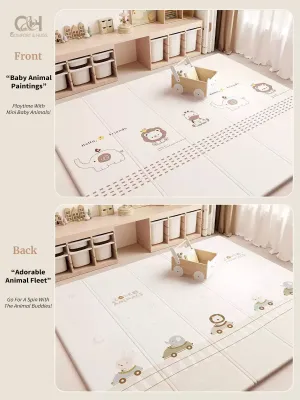
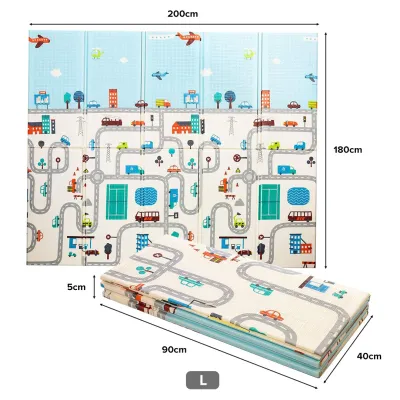
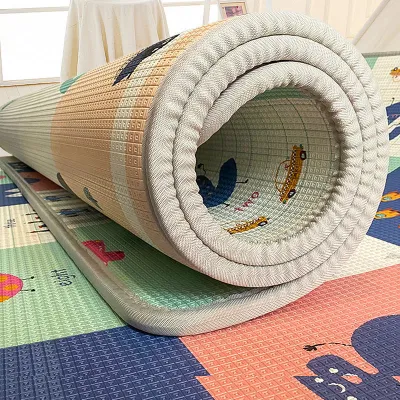
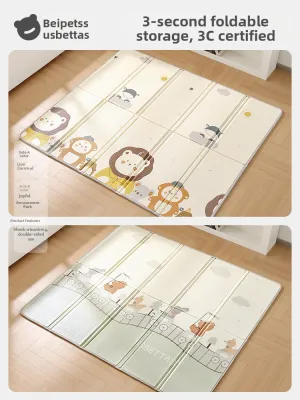
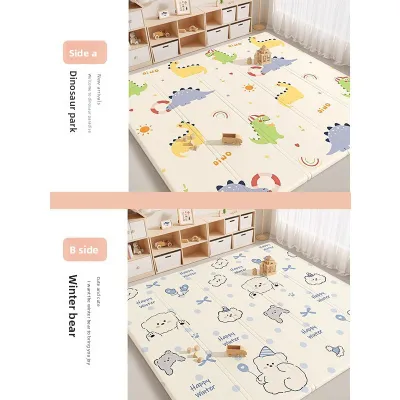
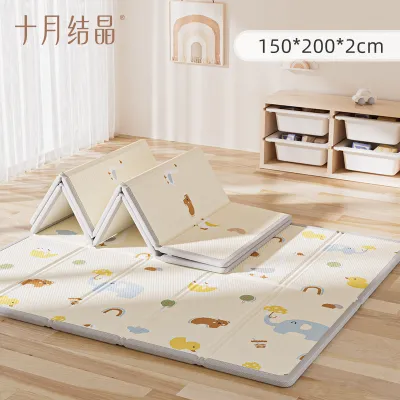
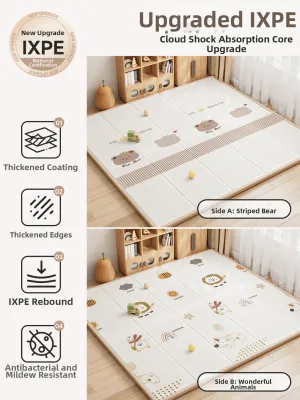
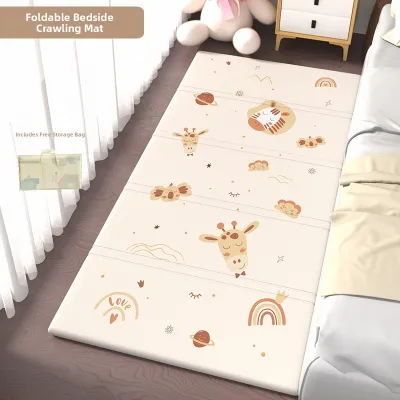
Prices are valid at publication and may change. Please refer to the product page for the latest price.
First, examine the folded dimensions rather than the fully expanded size. Measure the length, width, and depth of the mat when it is completely folded up. Compare these numbers directly against the storage spaces you use most frequently, such as the under-seat basket of your stroller, the narrow footwells of your vehicle, or the specific shelf in your home storage closet. A mat that is even a few centimeters too wide can prevent a stroller basket from closing or block access to other essential baby gear.
Second, evaluate the total weight of the playmat package. The base weight of the mat itself is only one part of the equation; you must also consider the weight of any included carrying cases, straps, or protective covers. While a heavier polyurethane (PU) leather mat might offer excellent cushioning, carrying a five-kilogram mat alongside a diaper bag and a stroller can quickly become exhausting. For frequent travel, look for lightweight cross-linked polyethylene (XPE) foam options, which typically weigh significantly less while still providing adequate impact absorption.
Finally, inspect the carrying accessories provided with the mat. Check whether the product includes built-in fabric handles, detachable shoulder straps, or a dedicated storage bag. A well-designed carrying bag not only makes transport easier but also protects the playmat from dirt, moisture, and physical damage during transit. If a mat does not include these accessories, you will need to factor in the additional cost and effort of sourcing a compatible carry strap or bag.
Matching Playmat Portability to Your Travel Style
Your daily transit habits should dictate the portability profile of the playmat you choose. Parents who rely on public transport have vastly different gear requirements than those who travel primarily by private car.

If you frequently navigate public transit systems, such as buses or the MRT, space and quick maneuvering are your top priorities. In these crowded environments, a compact, multi-fold design is highly advantageous. Look for a playmat that folds down into a small, flat block that can slide easily into a standard stroller basket or hang securely from stroller organizers. This keeps your hands free to manage your child and navigate ticket gates without blocking walkways for other commuters.
For those who travel primarily by car and enjoy outdoor trips to parks or beaches, a larger accordion-fold mat is often the most practical choice. Because car boots offer more generous storage space, the slightly bulkier folded size of an accordion mat is rarely an issue. The primary benefit here is speed; these mats can be unfolded and packed away in seconds, allowing you to set up a clean play area on the grass almost instantly. Look for models that feature a robust, adjustable shoulder strap so you can comfortably carry the mat from the car park to your picnic spot.
If your routine involves carrying the playmat by hand over long distances, pay close attention to the ergonomics of the handles and straps. Carrying a playmat while pushing a stroller requires excellent weight distribution. Verify that the carrying handles feature reinforced stitching and a comfortable grip that will not cut into your hands. If you prefer a shoulder strap, ensure it is wide enough to distribute the weight evenly across your shoulder, reducing muscle strain during longer walks.
Comparing Foldable Designs and Their Carrying Trade-offs
Different folding mechanisms offer distinct advantages and drawbacks regarding packing efficiency, setup speed, and overall portability. Understanding these structural differences will help you select the right design for your needs.
Accordion-fold, or Z-fold, mats are highly popular for their rapid deployment. These mats consist of multiple panels connected by alternating creases, allowing them to collapse quickly like an accordion. The main advantage is convenience; you can unfold the entire mat with a single motion. However, accordion mats tend to be bulkier when folded because the creases do not allow the panels to compress completely flat. When evaluating these designs, check if the folded block can stand upright on its own, which makes it much easier to store in tight corners or next to entryway furniture.
Multi-panel, or book-fold, mats typically feature thicker, high-density foam panels encased in a durable outer cover, such as PU leather. These mats fold over themselves like a book, resulting in a highly compact, flat footprint that is exceptionally easy to stack or slide into narrow spaces. The trade-off is weight and setup time. Because the materials are denser and the hinges are thicker, these mats are generally heavier and require a bit more effort to fold correctly. You must verify the flexibility of the hinges; stiff hinges can make the folding process frustrating, especially if you are trying to pack up quickly.
When comparing true foldable playmats to roll-up alternatives, foldable designs consistently offer superior portability. Roll-up mats must be secured with straps to prevent them from unrolling, and they retain a long, cylindrical shape that is awkward to carry on public transport or fit into compact car boots. Furthermore, roll-up mats often retain a curled edge when laid out, creating a tripping hazard for toddlers. Foldable mats, by contrast, lay flat immediately upon unfolding and pack away into neat, structured blocks that stack perfectly with other luggage.
Pre-Purchase and In-Store Verification Checklist
To ensure your chosen foldable playmat fits seamlessly into your lifestyle, perform a few practical checks before finalizing your purchase. If you are shopping in a physical store, take the opportunity to test the mat’s physical features firsthand.
- Verify Dimensions: Do not rely on visual estimates. Bring a measuring tape to the store, or carefully measure your stroller basket and car boot at home. Compare these real-world measurements directly against the folded dimensions of the playmat to guarantee a perfect fit.
- Test the Straps: If the mat includes a carrying strap, sling it over your shoulder to test the comfort. Ensure the strap material is soft yet durable, and check that the width is sufficient to prevent it from digging into your shoulder when the mat's full weight is applied.
- Examine the Stitching: Inspect the connection points where the handles or straps attach to the mat or carrying bag. Look for reinforced cross-stitching, which indicates the accessory can handle the stress of frequent travel without tearing.
- Check Hinge Flexibility: Fold and unfold the mat several times in the store. Note whether the hinges move smoothly or if they feel stiff and resistant. Stiff hinges can make packing up a struggle, particularly when you are managing a tired child.
- Listen for Noise: Pay attention to any loud crinkling or squeaking noises made by the cover material or internal foam during folding. A noisy mat can be highly disruptive if you need to pack it up quietly while your baby is sleeping nearby.
- Assess Surface Lay-Flat: Unfold the mat completely on the floor and check if it lies perfectly flat. Any raised creases or curling edges can cause trips and falls, so the mat must settle quickly without requiring heavy weights to hold it down.
Frequently Asked Questions (FAQ)
Can I take a foldable playmat as carry-on luggage on a flight?
Whether you can bring a foldable playmat into the aircraft cabin depends entirely on the mat’s folded dimensions and the specific baggage limits of your airline. Most standard airline cabin baggage allowances restrict bags to approximately 56 x 36 x 23 cm. While some ultra-compact, fabric-based travel mats may fit within these limits, typical foam or PU leather foldable playmats are too wide or long when folded. You must measure your folded mat and compare it directly to your airline’s cabin baggage guidelines; if it exceeds the limits, you will need to check it in as oversized baggage, preferably inside a padded travel bag to prevent damage.
Do foldable playmats come with waterproof carrying bags?
Inclusion of a waterproof carrying bag varies significantly by brand and product model. Many lightweight travel mats include a basic fabric storage bag, but these are not always fully waterproof or water-resistant. You must carefully read the product specifications and packaging labels to verify if the bag offers water protection. A waterproof carrying bag is highly beneficial for outdoor use, as it protects the clean play surface from damp grass, wet ground, or sudden rain showers during transport, and prevents any moisture on the mat from leaking onto your other belongings after outdoor play.
Community discussion
Share your experience or ask a question. Comments are reviewed before publication.