
To find a legally compliant portable child car seat in Singapore, parents must look beyond brand names and focus on verified international safety certifications. Under Singapore’s traffic regulations, any child restraint system—including highly portable, travel-friendly, or foldable models—must meet strict, recognized safety standards to be legally used on the road. Rather than relying on marketing claims, compliance is verified through physical certification labels permanently affixed to the seat, such as the United Nations Economic Commission for Europe (UN ECE) standards. This guide outlines how to navigate Singapore’s legal requirements, identify genuine safety labels, and verify that a portable car seat is both legally compliant and structurally safe for your child.
Understanding Singapore's Child Restraint Laws
Singapore’s Road Traffic Act mandates strict rules regarding child passenger safety to minimize the risk of injury during transit. According to the law, any passenger under the height of 1.35 metres, regardless of age, must be properly secured using an approved child restraint appropriate for their height and weight, or a booster seat paired with a standard seatbelt. Failing to comply with these regulations is a legal offense that can result in composition fines and demerit points for the driver, reflecting the seriousness with which the authorities view child passenger safety.
A common misconception among parents is that “portable,” “travel,” or “foldable” car seats are subject to different, more relaxed rules due to their compact nature. In reality, the law makes no distinction between a heavy, permanent car seat and a lightweight, travel-friendly alternative. If a device is intended to restrain a child in a motor vehicle, it must meet the exact same baseline safety criteria and carry the same recognized certifications as any standard car seat. There are no legal loopholes for products marketed as “travel vests” or “foldable booster cushions” if they do not possess the required official certifications.
Products mentioned in this guide
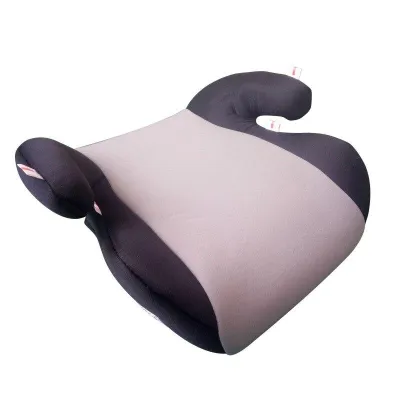
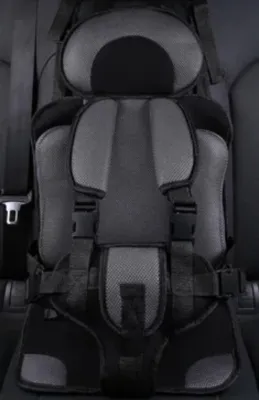
![[SG] Foldable Child Safety Car Booster Seat Compact Travel Portable Baby Seat Blue Pink For 3-13 yrs](https://img.lazcdn.com/g/p/e4b0a56c751e7aef08c3a5f6c2dbb9e1.jpg_400x400q80.jpg_.webp)
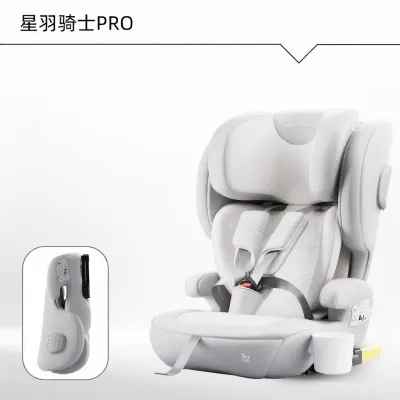
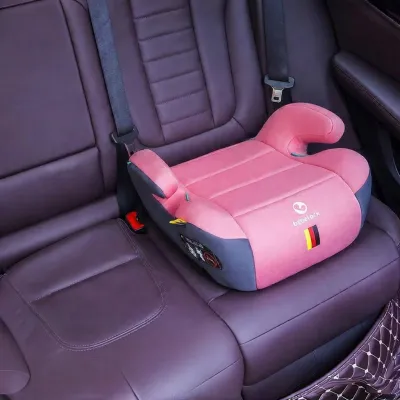
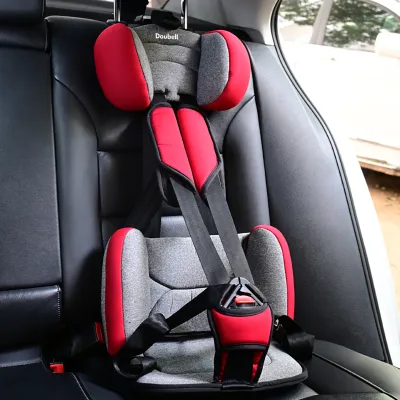
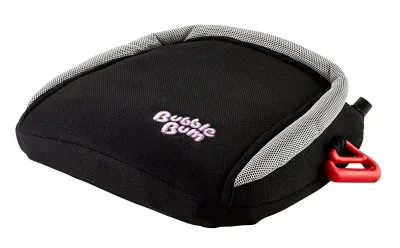
Prices are valid at publication and may change. Please refer to the product page for the latest price.
Because traffic regulations and approved standards can be updated to reflect new safety research, parents must verify current rules via official transport authority channels. The Land Transport Authority (LTA) and the Traffic Police are the definitive sources for Singapore’s road safety laws. Checking their official portals ensures that your chosen portable car seat aligns with the most up-to-date legal frameworks, protecting both your child and your legal standing as a driver.
Key Safety Certifications to Look For
When evaluating a portable child car seat, the most reliable indicator of legal compliance is the presence of a recognized international safety certification label. Singapore’s regulations accept several major international standards, with the United Nations Economic Commission for Europe (UN ECE) standards being the most prevalent in the local market. Specifically, seats certified under UN ECE R44/04 or the newer, more stringent UN ECE R129 (commonly known as i-Size) are widely accepted. Other recognized standards include the Federal Motor Vehicle Safety Standard 213 (FMVSS 213) from the United States, the Australian/New Zealand Standard 1754 (AS/NZS 1754), and the British Standard 3254 (BS 3254).

To verify these certifications, you must locate the physical label permanently attached to the car seat. For UN ECE certified seats, this is typically a highly visible orange label. A valid label must display specific, structured information: the standard version (such as ECE R44/04 or R129), the category of application (such as “Universal” or “Semi-Universal”), the weight or height range for which the seat is approved, and a circle containing the letter “E” followed by a number. This number represents the country that granted the safety approval (for example, “E1” for Germany or “E4” for the Netherlands). Below this, a unique approval number must be clearly printed.
Parents must remain vigilant and avoid relying solely on brand marketing claims, e-commerce product descriptions, or the visual aesthetics of a seat. Many unapproved, counterfeit, or substandard seats are sold online with vague assertions of being “safety tested” or “crash approved.” However, without a physical, traceable certification label permanently affixed to the product shell or fabric, these claims are legally meaningless. A genuine safety label is a legal requirement, and its absence is an immediate red flag that the seat does not comply with Singapore law.
Evaluating Portable Car Seat Designs for Compliance and Safety
Portable car seats achieve their compact, travel-friendly designs by utilizing foldable frames, lightweight materials, and alternative restraint configurations. While these features offer immense convenience for families on the go, they introduce inherent structural trade-offs. Traditional car seats feature rigid, heavy plastic or steel-reinforced shells designed to absorb and redirect crash forces away from the child. Portable designs, by contrast, must balance energy absorption with the ability to fold or collapse into a compact shape. This means that the structural integrity of a portable seat relies heavily on the quality of its joints, hinges, and locking mechanisms.
Because of these unique design characteristics, strictly following the manufacturer’s specific installation, folding, and usage instructions is critical. A portable seat that is not fully locked into its open position, or one where the vehicle’s seatbelt is routed incorrectly, cannot perform its protective function during a collision. Parents must carefully read the instruction manual to understand the precise routing paths for the seatbelt and how to secure the seat tightly against the vehicle’s seat. Even a minor error in installation can render a certified seat ineffective.
To ensure ongoing safety, perform a series of physical checks on the seat before every single use. Inspect the harness straps to ensure they are not twisted, frayed, or worn, and verify that the buckle clicks securely into place without any resistance or debris. Examine the folding joints and locking pins to confirm they are fully engaged and rigid, with no play or wobbling in the frame. If any part of the seat appears compromised, loose, or damaged, discontinue use immediately and contact the manufacturer.
How to Verify Brand Compliance Before Purchasing
Navigating the market for a portable child car seat requires a systematic approach to verify compliance before spending any money. If you are shopping in a physical retail store in Singapore, take the opportunity to thoroughly inspect the product. Ask the sales staff to show you the physical certification label on the display model or the boxed item. Check that the label is securely stitched or glued to the seat, and verify that the print is clear and legible. Additionally, ensure that the product comes with a complete, printed manufacturer’s instruction manual in English, which is a legal requirement for certified safety devices.
When purchasing from online marketplaces or e-commerce platforms, the verification process requires extra diligence. Because you cannot physically inspect the product before it arrives, you must rely on verifying the seller’s credentials. Look for authorized brand stores or reputable local retailers with established physical presences. Request that the seller provide high-resolution photographs of the actual certification label on the product, showing the approval number and standard details. Avoid purchasing from unverified third-party sellers or listings that ship directly from overseas without local representation, as these products may not have undergone local safety and compliance checks.
If you encounter conflicting product details, missing certification labels, or if the seller is unable or unwilling to provide the manufacturer’s manual, do not proceed with the purchase. It is far safer to walk away from a transaction than to risk using a non-compliant or counterfeit seat that could fail to protect your child in an emergency.
Transitioning and Upgrading: When a Portable Seat Is No Longer Suitable
Portable car seats are highly specialized safety devices, often designed with narrower weight and height limits than standard, full-sized car seats. To maintain legal compliance and ensure your child’s safety, you must continuously monitor their physical growth against the specific limits printed on the seat’s certification label. These limits are absolute safety thresholds; once your child reaches either the maximum weight or the maximum height specified by the manufacturer, the seat is no longer legally compliant or safe for their use.
In addition to tracking numerical limits, parents must watch for physical signs that the seat no longer fits correctly. For forward-facing portable seats, the harness straps must originate at or slightly above the child’s shoulders; if the straps start below the shoulders, the seat has been outgrown. Furthermore, if the top of your child’s ears or head exceeds the top of the seat’s protective shell or headrest, the seat can no longer provide adequate head and neck protection during an impact.
When these physical or numerical limits are reached, the portable seat must be retired immediately. Parents should transition their child to a standard, full-sized car seat or a compliant booster seat that matches their new physical dimensions. While portable seats are excellent for travel and short trips, they are not intended to replace the robust protection of a dedicated, full-sized restraint system as your child grows.
Frequently Asked Questions (FAQ)
Can I use a portable car seat in a taxi or private hire car in Singapore?
Under Singapore’s Road Traffic Act, public taxis are legally exempt from the child restraint requirement, allowing children to travel in the rear seat using only the vehicle’s seatbelt. However, private hire cars (such as those booked via ride-hailing applications) are not exempt; they are legally classified as private passenger vehicles, meaning any child under 1.35 metres must be secured in an approved child restraint. Despite the legal exemption for public taxis, safety experts strongly recommend using a compliant portable car seat in both taxis and private hire cars. The physics of a traffic collision remain identical regardless of the vehicle’s legal classification, and a portable seat provides the necessary protection to keep your child safe during every journey.
Are second-hand portable car seats legally compliant and safe to use?
While purchasing a second-hand portable car seat may seem like a cost-effective option, it introduces significant safety risks that can compromise legal compliance. It is virtually impossible to verify a used seat’s complete history, including whether it has been involved in a collision, subjected to structural fatigue, or stored in conditions that degrade the plastic and fabric. Portable seats, with their folding joints and lightweight frames, are particularly susceptible to hidden wear and tear that may not be visible to the naked eye. Additionally, second-hand seats may have expired certifications, missing manufacturer labels, or outdated safety standards. A second-hand seat must be rejected if it lacks original labels, shows signs of wear, or has an unknown history.

Community discussion
Share your experience or ask a question. Comments are reviewed before publication.