
Finding the right daily diaper for your baby in Singapore’s warm, humid climate involves balancing reliable performance, skin comfort, and household budget. While established household names like Huggies and Pampers have long dominated the market with extensive product lines, alternative options like Homie diapers have emerged as practical choices for parents seeking reliable daily alternatives. There is no single diaper that works perfectly for every infant, as the ideal choice depends entirely on your baby’s unique body shape, skin sensitivity, and developmental stage. By understanding how to evaluate physical design features, verify packaging specifications, and calculate the true cost per unit, you can confidently choose a diaper that keeps your baby dry and comfortable throughout the day.
Key Factors to Evaluate for Daily Diaper Performance
Daily diapering requires a product that can keep up with a baby’s routine, which changes rapidly from the sedentary newborn stage to the highly active toddler years. For daytime use, the primary requirements are reliable absorbency, high breathability, and physical flexibility. Because Singapore’s humidity can trap moisture close to the skin, a diaper with poor breathability can quickly lead to discomfort or heat rash.
A baby’s age, weight, and mobility level dictate which diaper features are most critical. For instance, a newborn who spends most of the day lying down requires a diaper with a pocketed waistband to contain runny stools. Conversely, a crawling or walking toddler needs highly flexible side panels and secure fastening tabs that stretch without tearing or restricting movement.
Products mentioned in this guide
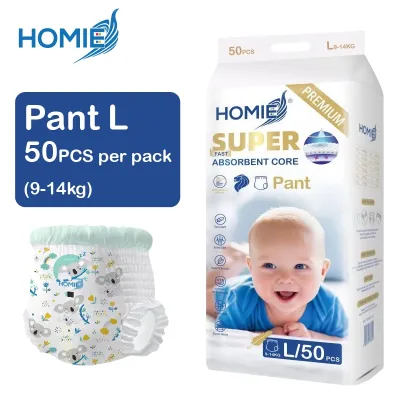
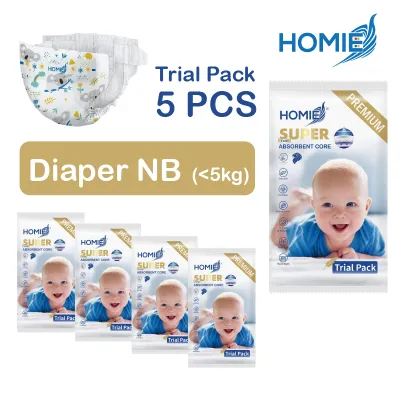
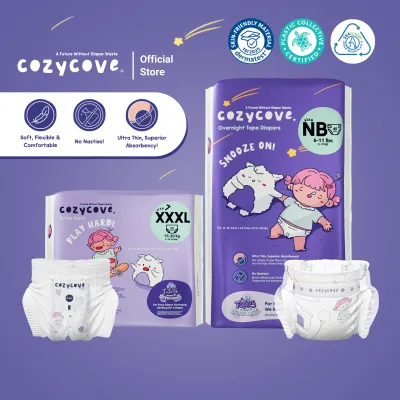
Prices are valid at publication and may change. Please refer to the product page for the latest price.
When comparing Homie, Huggies, and Pampers, it is essential to look beyond the brand name and examine the specific product tier. Most major brands offer multiple lines, ranging from basic, budget-friendly options to premium, organic, or ultra-thin variants. A basic line from one brand may lack the advanced elastic waistbands or premium softness found in another brand’s mid-tier or premium line, making direct brand-to-brand comparisons accurate only when comparing equivalent tiers.
Checking Absorbency and Leak Protection Claims
Absorbency is the cornerstone of any diaper’s performance, but parents should evaluate these claims through observable design elements rather than marketing slogans. When examining a diaper package, look for specifications regarding the absorbent core construction. Many modern diapers utilize Superabsorbent Polymer (SAP) technology, which locks moisture away from the skin. Check the packaging for mentions of multi-channel distribution systems, which help spread liquid evenly across the core to prevent sagging and clumping.

Leak protection relies heavily on physical barriers. Inspect the diaper for double-layered elastic leg cuffs, often referred to as leak guards. These cuffs should stand upright when the diaper is opened and fit snugly around the baby’s thighs without leaving deep red marks. Additionally, a wetness indicator—a color-changing strip on the outside of the diaper—is a highly practical feature for daily use, allowing caregivers to monitor wetness without opening the diaper.
To ensure the absorbent core is positioned correctly, always verify the recommended weight range printed on the packaging. Diaper sizes overlap significantly, and a baby near the upper limit of a size range may experience leaks because the absorbent core is no longer sufficient for their increased output.
Before purchasing a large quantity of any new brand, such as Homie, Huggies, or Pampers, conduct a safe, daytime trial. Put the diaper on your baby during a period of active play when you can monitor them closely. Check the diaper every two hours to observe how quickly the wetness indicator changes and whether the outer cover feels damp to the touch, which can indicate poor moisture retention.
Evaluating Fit, Comfort, and Skin Sensitivity
A diaper’s fit directly impacts both leak prevention and skin health. When evaluating the physical design of Homie, Huggies, or Pampers, pay close attention to the waistband elasticity. A high-quality waistband should stretch easily to accommodate a baby’s expanding belly after feeding, yet contract gently to prevent gaps at the back. Run your fingers along the fastening tabs to ensure they are rounded and soft, as sharp or stiff plastic edges can chafe a baby’s delicate skin during movement.
Skin sensitivity is a major concern for many families, particularly in tropical climates where sweat and friction can exacerbate irritation. Carefully review the ingredient and material lists on the diaper packaging. Look for diapers that explicitly state they are free from added fragrances, elemental chlorine, and parabens. Some premium lines include hypoallergenic lotions or natural fibers, while others focus on a completely plain, chemical-free inner sheet.
Before putting a diaper on your baby, perform a visual and tactile inspection of the inner lining. Gently rub your fingers across the top sheet to assess its softness. A high-quality inner lining should feel cloth-like rather than papery. Look for a textured or embossed pattern on the inner sheet, which helps minimize direct contact between the baby’s skin and wetness, promoting better airflow and reducing the risk of diaper rash.
Comparing Cost per Diaper and Pack Value
While performance is critical, daily diapering is a long-term household expense that requires careful budgeting. Comparing the price of a pack of Homie diapers to a pack of Huggies or Pampers can be misleading because pack counts vary widely by brand, size, and product tier. To find the true value, always calculate the cost per individual diaper.
You can easily calculate this using a simple formula: divide the total price of the pack in S$ by the number of diapers inside.
Cost per Diaper = Total Pack Price (S$) / Number of Diapers in Pack
Use this unit price to compare different brands and packaging sizes. Often, bulk boxes offer a lower cost per diaper than smaller convenience packs, but this is not always the case during promotional events.
When shopping on online marketplaces or brand official stores, remember to factor in additional costs such as shipping fees or minimum spend thresholds required for free delivery. A slightly cheaper diaper pack may end up costing more overall if you have to pay high shipping fees.
Additionally, when purchasing diapers in bulk to save money, always check the manufacturing or expiration dates printed on the packaging. Diapers do not expire quickly, but storing them for extended periods in Singapore’s humid environment can degrade the adhesive tapes and elastic components, reducing their effectiveness over time.
Decision Framework: Choosing the Right Diaper for Your Baby
Selecting the right diaper involves matching your baby’s current physical needs with the specific design strengths of each brand. Use the following framework to guide your decision based on your daily observations.
Choose a premium line of Huggies or Pampers if your baby has highly sensitive skin that reacts quickly to moisture, and you require a diaper with verified fragrance-free, hypoallergenic materials and a proven textured inner liner that keeps wetness away from the skin.
Choose Homie diapers or a highly flexible alternative line if you are looking for a cost-effective option for frequent daytime changes, especially if your baby is in a highly active, crawling stage where a lightweight design and flexible side panels are essential for unrestricted movement.
Choose a specific overnight or high-absorbency variant from any of these brands if your baby is sleeping through the night and you require a reinforced absorbent core that can handle multiple hours of wetness without leaking.
Verify first with a pediatrician or dermatologist if your baby has an active, severe diaper rash or a diagnosed medical skin condition. In these cases, professional medical advice should guide your choice of materials and skincare routines before you switch diaper brands.
Frequently Asked Questions (FAQ)
How do I know if it is time to size up my baby's diaper?
There are several physical indicators that a diaper is too small for your baby. Look for red marks or indentations around your baby’s thighs or waist, which suggest the elastics are too tight. If you experience frequent leaks or blowouts, or if the waistband sits significantly below your baby’s belly button, it is time to transition to the next size. Always cross-reference these physical signs with the weight guidelines printed on the packaging, keeping in mind that a baby’s unique body shape may require sizing up even if they are within the recommended weight range.
Can I mix different diaper brands for day and night use?
Yes, mixing diaper brands is a highly practical and cost-effective strategy for many families. You can use a lighter, highly breathable, and more economical diaper for daytime use when changes are frequent, typically every two to three hours. For nighttime, you can switch to a premium, high-absorbency diaper designed specifically for extended wear. When choosing a diaper for overnight use, check the packaging for specific heavy-wetness or overnight claims to ensure it can maintain dryness throughout the night.

Community discussion
Share your experience or ask a question. Comments are reviewed before publication.