
Selecting the right feeding equipment is a significant decision for parents navigating the early stages of parenthood. As infants grow and their milk intake increases, transitioning to larger bottle capacities, such as the 330ml size, becomes a practical necessity. In Singapore’s premium baby care market, the Hegen 330ml bottle stands out alongside other high-end alternatives, prompting caregivers to evaluate whether its unique design justifies the investment. This comparison explores how different premium bottles perform across essential categories, focusing on material safety, structural design, and daily usability.
Evaluating premium baby bottles requires looking beyond brand popularity to examine the physical properties of materials and the mechanics of feeding. A bottle is not merely a container; it is an active tool in your daily routine that affects feeding comfort, cleaning efficiency, and long-term durability. By comparing these options systematically, caregivers can make an informed choice that aligns with their household’s specific needs and their baby’s developmental stage.
There is no single universal winner when it comes to premium baby bottles. The most suitable bottle for your household depends on your baby’s specific latch preference, your preferred cleaning and sterilization routine, and your material priorities. While one family may value the drop-resistant convenience of advanced plastics, another may prioritize the traditional purity of borosilicate glass or the soft texture of medical-grade silicone.
Products mentioned in this guide
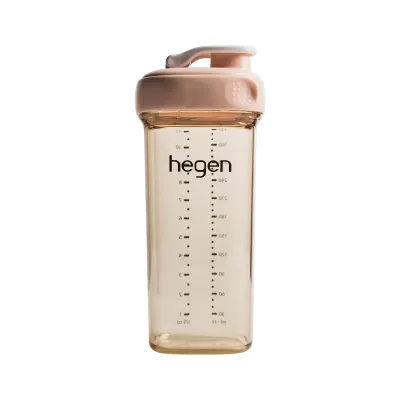
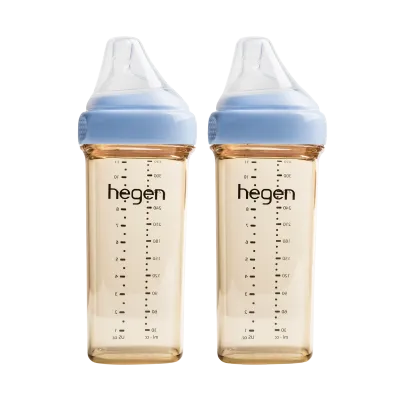
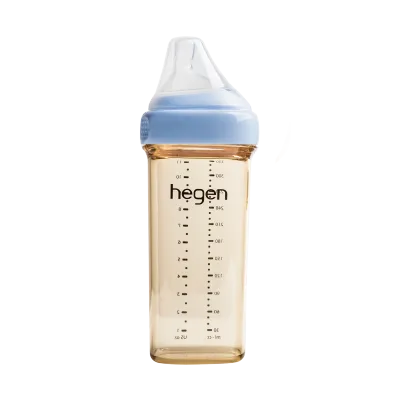
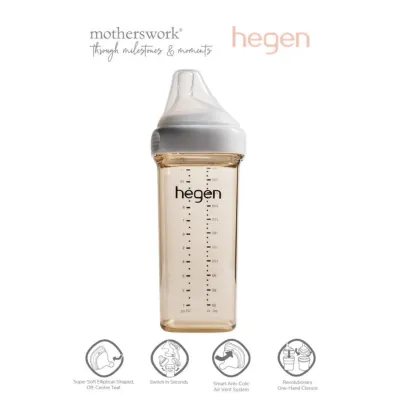
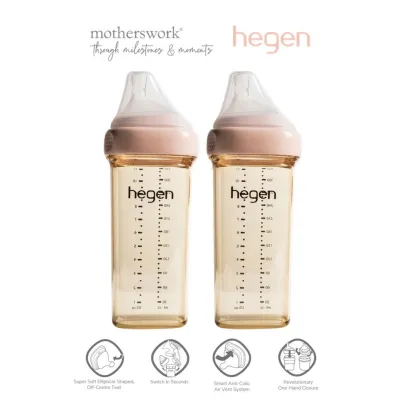
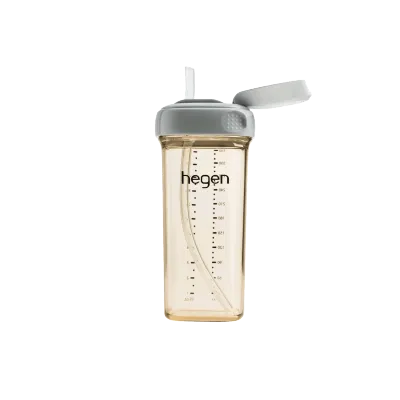
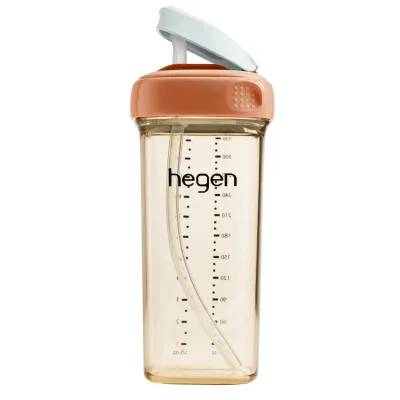
Prices are valid at publication and may change. Please refer to the product page for the latest price.
This guide provides a detailed, objective breakdown of how the Hegen 330ml bottle compares to other premium alternatives available in the market. By analyzing material compositions, functional shapes, venting mechanisms, and practical maintenance requirements, we aim to help you identify the optimal feeding system for your child’s growth journey.
Material Composition: PPSU, Glass, and Silicone Trade-offs
The choice of bottle material directly impacts its lifespan, weight, and how it responds to daily sterilization. Hegen bottles are primarily constructed from Polyphenylsulfone (PPSU), an advanced medical-grade plastic known for its distinct honey-colored tint. PPSU combines the lightweight, shatterproof benefits of plastic with high heat resistance, making it highly durable under frequent sterilization cycles. It does not absorb odors or stains easily, which is a common drawback of standard polypropylene (PP) bottles.
In contrast, many premium alternative brands offer bottles made from borosilicate glass. Glass is highly favored by parents who prefer a completely inert material that is naturally free from synthetic chemicals. Borosilicate glass can withstand rapid temperature changes, allowing caregivers to transfer a bottle from the refrigerator to a warm bath without risk of cracking. However, glass bottles are significantly heavier, making them more challenging for older infants to hold independently, and they carry an inherent risk of breaking if dropped on hard kitchen tiles.
Another prominent material in the premium segment is medical-grade silicone. Silicone bottles are soft, squeezable, and mimic the natural feel of skin, which some caregivers find helpful when transitioning a baby from breast to bottle. Silicone is highly heat-resistant and durable, but its flexible structure can sometimes make it easier to tip over on flat surfaces, and the material can attract lint or dust more readily than rigid plastics or glass.
When selecting a material, caregivers must carefully check manufacturer labels for specific temperature limits and approved sterilization methods. While PPSU and borosilicate glass generally tolerate steam, boiling water, and UV sterilization, certain silicone components or plastic collars may have lower temperature thresholds. Exceeding these limits can accelerate the degradation of the material, compromising the structural integrity of the bottle over time.
Replacement timelines also vary significantly by material. While glass bottles can theoretically last indefinitely unless chipped or cracked, manufacturers typically recommend replacing plastic and silicone bottles every six to twelve months, depending on the frequency of use and sterilization. Regularly inspecting the bottles for micro-scratches, cloudiness, or changes in texture is essential to ensure ongoing feeding safety.
Functional Design: Shape, Nipple Placement, and Cleaning
The physical shape of a baby bottle influences both how easily a caregiver can prepare a feed and how comfortably an infant can feed. The Hegen 330ml bottle features a distinctive square-round shape, which is designed to prevent the bottle from rolling away if tipped over. This square profile also allows the bottles to be nested or stacked neatly, optimizing storage space in compact Singaporean kitchens where countertop real estate is often limited.

Traditional premium bottles typically utilize a classic round shape. While round bottles are highly ergonomic to hold from various angles, they lack the stackable efficiency of square designs. Additionally, the neck width of a bottle plays a crucial role in daily maintenance. Wide-neck designs, found in both Hegen and several premium competitors, make it significantly easier to scoop formula powder without spills and allow direct hand-brush access for thorough cleaning. Narrow-neck bottles, while easier for small hands to grip, require specialized brushes and extra care to ensure no residue remains in the lower corners.
Nipple placement is another critical design differentiator. Hegen utilizes an off-center, elongated nipple designed to mimic the natural angle of a mother’s breast. This off-center placement allows the baby to feed in an upright position, reducing the need to tilt the bottle excessively and minimizing the risk of milk backflow into the middle ear. Traditional premium bottles usually feature a centrally located nipple, which requires a more pronounced tilt as the bottle empties but offers a familiar, symmetrical latch that many babies accept readily.
Caregivers should closely observe their baby’s latch and overall comfort during feeds. A baby’s oral anatomy and sucking reflex are highly individual; some infants thrive with the asymmetrical latch of an off-center nipple, while others prefer the uniform compression of a centered, wide-base nipple. Signs of an improper latch include excessive air swallowing, milk leaking from the corners of the mouth, or frequent clicking sounds during feeding. If your baby experiences persistent feeding difficulties, excessive gas, or discomfort, stop using the bottle and consult a qualified healthcare professional or lactation consultant.
Hegen 330ml vs. Other Premium Brands: A Feature Breakdown
One of the most unique mechanical features of the Hegen system is its patented press-to-close, twist-to-open closure mechanism. Unlike traditional bottles that require screwing a collar onto the bottle threads, Hegen allows caregivers to press the teat and collar directly onto the bottle to seal it, and twist it off with a simple turn. This design minimizes the risk of cross-threading and spills, which can be particularly helpful during late-night feedings when coordination is low.
In comparison, most other premium brands rely on traditional screw-thread collars. While screw threads are highly secure and universally understood, they can occasionally leak if not aligned perfectly or if the threads become worn over time. However, screw-top systems often allow for greater compatibility with third-party breast pumps and accessories, whereas Hegen users typically need to purchase brand-specific adapters to connect the bottles directly to non-Hegen breast pumps.
Venting systems designed to reduce colic and gas also vary widely across premium brands. Hegen integrates an anti-colic vent directly into the silicone nipple, eliminating the need for extra internal parts. This simplified design reduces the number of components to wash and assemble. Other premium brands may utilize complex internal venting tubes or multi-piece valve systems. While these multi-part systems are highly regarded for their air-diversion efficiency, they require meticulous cleaning with specialized micro-brushes to prevent milk residue buildup.
To help you compare these features systematically, the following matrix outlines key checkpoints for Hegen and other common premium bottle categories:
| Feature Checkpoint | Hegen 330ml Bottle | Premium Glass Alternatives | Premium Silicone Alternatives |
|---|---|---|---|
| Primary Material | PPSU (Polyphenylsulfone) | Borosilicate Glass | Medical-Grade Silicone |
| Closure Mechanism | Press-to-close, twist-to-open | Traditional screw-thread | Traditional screw-thread |
| Nipple Alignment | Off-center (asymmetrical) | Centered (symmetrical) | Centered (symmetrical) |
| Venting System | Integrated nipple vent | Internal tube or collar valve | Integrated base or nipple vent |
| Dishwasher Safety | Top rack only (verify temperature) | Yes (highly heat-resistant) | Yes (verify collar material) |
| Storage Efficiency | High (stackable, square shape) | Moderate (round, non-stackable) | Moderate (round, non-stackable) |
When evaluating these options, consider how each feature aligns with your daily workflow. A bottle with fewer parts may save valuable time during washing, while a bottle with a highly specialized venting system might be necessary if your baby is particularly prone to gas or reflux.
Decision Framework: Which Premium Bottle Fits Your Needs?
Choosing the right premium bottle involves balancing your baby’s feeding preferences with your household’s operational habits. The Hegen 330ml bottle is highly suitable for families who prioritize space-saving storage, quick assembly, and a wide-neck design that simplifies manual cleaning. Its lightweight PPSU construction makes it an excellent choice for active families who travel frequently or need a durable, drop-resistant bottle for daycare.
On the other hand, traditional premium glass or round PPSU bottles may be more appropriate if your baby has already established a strong preference for a centered nipple shape. If you already own a comprehensive ecosystem of breast pumps and accessories from another brand, choosing compatible screw-top bottles can reduce the need for extra adapters and streamline your milk expression routine.
Before finalizing your purchase, it is crucial to verify that your existing sterilization and warming equipment is fully compatible with the bottles you select. The 330ml capacity is taller than standard 150ml or 240ml bottles, meaning it may not fit inside some compact UV sterilizers, steam sterilizers, or portable bottle warmers. Measure the internal height of your sterilizer and compare it against the manufacturer’s bottle dimensions to avoid compatibility issues.
Additionally, always verify the recommended age, development stage, and weight range from the specific product documentation before introducing a 330ml bottle. Larger bottles typically come packaged with faster-flowing nipples, which may overwhelm younger infants. Ultimately, the best approach is to start with a small quantity of your preferred bottle type to observe how your baby responds. Avoid buying large multi-packs of a single brand before your baby has demonstrated a comfortable, consistent latch.
Frequently Asked Questions (FAQ)
Can I mix different premium bottle brands for the same baby?
Mixing different bottle brands within a single feeding routine is entirely possible, but it requires careful observation of your baby’s response. Different brands calibrate their nipple flow rates differently; a medium flow nipple from one manufacturer may flow significantly faster or slower than a medium flow nipple from another. This variation can sometimes cause flow confusion, leading to frustration or air swallowing during feeds.
Additionally, babies develop specific muscle memories based on the shape and flexibility of the nipple they use most frequently. Switching between an off-center nipple and a centered nipple may require your baby to adjust their latch technique constantly. If you do choose to mix brands, monitor your baby for signs of feeding fatigue or latch instability, and avoid attempting to force brand-specific nipples into non-compatible collars, as this can cause leaks and compromise the venting system.
How often should I replace the Hegen 330ml bottle and its nipple?
The replacement frequency for your feeding equipment depends heavily on the material and how often it is used and sterilized. For the Hegen PPSU bottle body, manufacturers generally recommend replacing the bottle every six to twelve months of active use, or sooner if you notice persistent cloudiness, deep scratches, or structural changes. Although PPSU is highly durable, micro-scratches can harbor bacteria over time.
Silicone nipples have a much shorter lifespan due to the constant wear from sucking and cleaning. It is recommended to inspect silicone nipples daily and replace them every one to two months, or immediately if you observe any tearing, thinning, stickiness, or changes in flow rate. To perform a safety check, gently pull the tip of the nipple; if it does not snap back to its original shape or shows any signs of cracking, it should be discarded immediately to prevent choking hazards.

Community discussion
Share your experience or ask a question. Comments are reviewed before publication.