
When shopping for nursery furniture in Singapore, ensuring your baby’s sleep environment is secure is a top priority. Convertible cribs, such as the Happy Cot 5 in 1, are highly popular in local households due to their space-saving versatility and ability to adapt as a child grows. However, determining whether this specific model meets recognized safety standards requires a systematic approach of verifying manufacturer certifications and conducting hands-on physical inspections.
Because multi-functional cribs undergo significant structural changes during their lifespan, parents must look beyond marketing claims to confirm that every configuration complies with established safety benchmarks. Taking the time to verify these details helps protect your child from preventable hazards throughout their early developmental stages.
Recognized Safety Standards for Baby Cribs
To evaluate the safety of any baby crib, it is essential to understand the international benchmarks that govern nursery furniture design. In Singapore, consumer products are overseen by the Consumer Product Safety Office (CPSO) under Enterprise Singapore. While Singapore does not have a unique, standalone manufacturing standard for baby cots, the CPSO recognizes established international standards to ensure that products sold locally do not pose hazards to infants.
Products mentioned in this guide
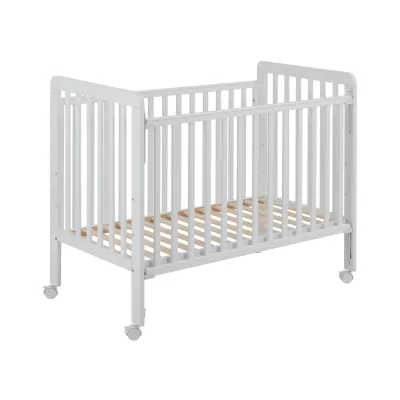
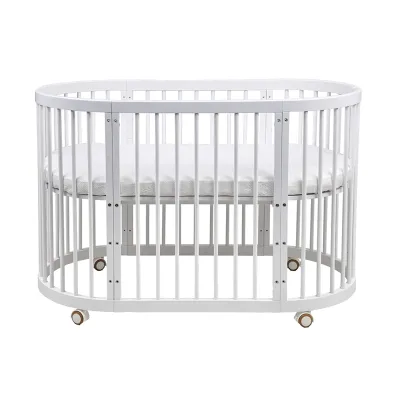
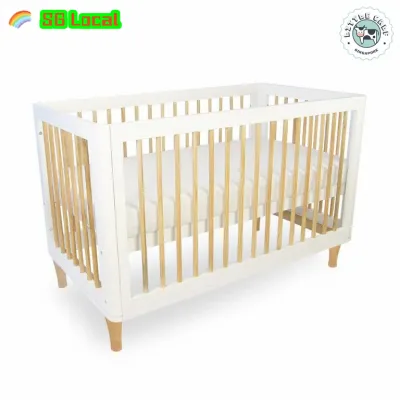
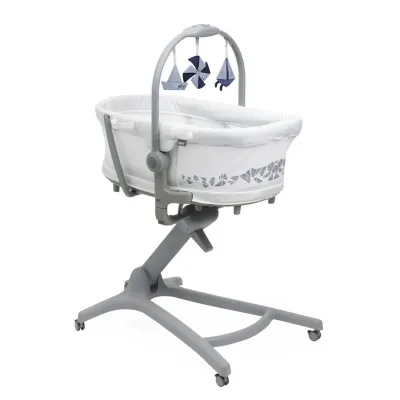
Prices are valid at publication and may change. Please refer to the product page for the latest price.
The two most widely accepted international benchmarks are the European standard EN 716 and the American standard ASTM F1169. The EN 716 standard specifically addresses children’s cots and folding cots for domestic use, focusing on preventing hazards such as entrapment, falls, and choking. It dictates precise requirements for the distance between slats, the height of the cot sides, and the structural strength of the base. Similarly, the ASTM F1169 standard establishes rigorous testing protocols for full-size baby cribs, ensuring they can withstand repeated impacts, structural loads, and environmental stressors without collapsing or splintering.
These standards test for critical safety dimensions that directly protect your baby. For instance, slat spacing must be tightly controlled—typically between 50mm and 65mm—to prevent an infant’s head, limbs, or torso from becoming trapped. Furthermore, the standards require that the mattress base be strong enough to support dynamic loads as the baby grows and begins to bounce or stand.
Multi-functional designs, such as 5-in-1 convertible cots, introduce additional safety complexities. Because these cots transition through various modes—such as a bassinet, playpen, toddler bed, daybed, and kids’ bench—they must maintain structural integrity across all configurations. A design that is stable as a standard crib might experience compromised stability or create new entrapment hazards when converted into a toddler bed or playpen if the locking mechanisms or joint connections are not thoroughly engineered and tested. Therefore, verifying that the multi-functional unit has been tested against these standards in all its intended configurations is vital.
How to Verify Certifications for the Happy Cot 5 in 1
When considering the Happy Cot 5 in 1, parents should actively verify the product’s safety credentials rather than relying solely on retail descriptions. The first step is to inspect the physical product, its original packaging, and the accompanying user manual. Legitimate, safety-compliant cribs typically feature permanently affixed labels or stamps indicating compliance with standards like EN 716 or ASTM F1169. These labels should also display the manufacturer’s details, model number, and production date, which are crucial for tracking potential product recalls.

To obtain definitive proof of compliance, you can request a copy of the official test reports or a Certificate of Conformity (CoC) directly from the retailer, local distributor, or manufacturer. A reputable distributor in Singapore should be able to provide documentation from an accredited third-party testing laboratory confirming that the specific model has successfully passed the relevant safety tests. When reviewing these documents, ensure that the model name on the certificate matches the “Happy Cot 5 in 1” exactly and that the certificate remains valid and active.
Be cautious of common red flags during your research. Vague marketing phrases such as “designed to meet safety standards” or “tested to international guidelines” without citing a specific, numbered standard (like EN 716-1 or ASTM F1169) are often warning signs. If a retailer cannot or will not provide official testing documentation upon request, it is safer to assume the product’s compliance has not been independently verified. Additionally, missing or poorly translated instruction manuals that lack clear safety warnings and step-by-step assembly diagrams should prompt immediate caution.
Essential Physical Safety Checks for Convertible Cribs
Even after verifying paper certifications, conducting a hands-on physical inspection of the assembled crib is a crucial line of defense. This is particularly important in Singapore’s humid tropical climate, which can cause wooden components to expand, contract, or warp over time if the materials are not properly treated.
Begin by measuring the slat spacing with a standard measuring tape. The gap between any two slats must not exceed 65mm. A practical home test is to check if a standard soda can (which has a diameter of approximately 66mm) can pass through the slats; if it does, the spacing is too wide and poses a severe head entrapment risk for your baby.
Next, evaluate the mattress fit within the crib frame. There should be no significant gaps between the edges of the mattress and the inner walls of the cot. Perform the “two-finger test” by inserting your index and middle fingers into the gap. If you can easily fit more than two fingers (approximately 3cm) between the mattress and any side of the crib, the mattress is too small. This gap presents a dangerous suffocation or entrapment hazard if the baby’s head or limbs slip into the space.
Carefully inspect all locking mechanisms, hinges, and hardware, especially those used during the conversion process. For a 5-in-1 cot, the mechanisms that secure the drop-side (if applicable) or the removable panels must require a deliberate, dual-action motion or the use of a tool to release. This ensures that an active infant or toddler cannot accidentally trigger a release while playing inside.
Finally, run your hands along the entire wooden frame to check for physical defects. Look for splinters, sharp edges, rough corners, or loose joints. Ensure that all screws, bolts, and metal fasteners sit flush with the wood or are safely recessed to prevent them from catching on your baby’s clothing. Additionally, check that the paint or varnish is smooth, non-toxic, and shows no signs of peeling or bubbling, as babies frequently chew on crib rails during teething.
Safe Usage, Maintenance, and Transition Boundaries
Maintaining a safe sleep environment requires ongoing vigilance as your child reaches new developmental milestones. For convertible cribs, the transition between modes must be carefully timed according to the manufacturer’s specific guidelines rather than the child’s age alone.
Pay close attention to physical milestones to determine when to adjust the crib’s configuration. The highest mattress base setting is designed strictly for newborns who cannot yet sit up. As soon as your baby shows signs of rolling over, pushing up on their hands and knees, or sitting independently, you must lower the mattress base to its lowest position to prevent falls. Once your child is able to stand confidently or reaches a height where the top rail is below their chest level (typically around 89cm), they have outgrown the standard crib mode and must be transitioned to the toddler bed or daybed configuration to prevent them from climbing out.
Routine maintenance is essential for preserving the structural integrity of a multi-functional cot. In Singapore’s humid environment, wooden joints can loosen over time. Establish a habit of checking all hardware every month. Gently shake the crib to test for wobbling; if you notice any instability, immediately tighten all bolts and screws. When converting the cot between its five modes, completely disassemble the unit and inspect each piece of hardware for wear, rust, or stripping before reassembling it in the new configuration.
Always establish clear stop-use conditions. If you discover any cracked wood, bent metal brackets, stripped screw threads, or missing hardware during your routine checks, stop using the crib immediately. Do not attempt to use the cot in any of its 5-in-1 modes if a critical structural component is compromised. If your child exceeds the maximum weight limit specified by the manufacturer for a particular mode—such as the toddler bed or kids’ bench—discontinue that configuration to prevent structural failure.
Frequently Asked Questions (FAQ)
Do I need to buy a specific mattress for the Happy Cot 5 in 1?
Yes, you must use a mattress that matches the exact dimensions specified by the manufacturer in the user manual. Standard crib mattresses may vary slightly in length, width, and thickness, and even a minor discrepancy can create dangerous gaps. Ensure the mattress is firm and does not conform easily to the shape of your baby’s head, as soft bedding increases the risk of Sudden Infant Death Syndrome (SIDS). Avoid using mattress toppers or additional padding, and verify that the mattress is made from breathable, non-toxic materials suitable for Singapore’s warm climate.
What should I do if the crib is missing hardware for conversion?
If you discover that any screws, bolts, brackets, or wooden dowels are missing or damaged during assembly or conversion, do not attempt to use the crib. Using substitute hardware from a local hardware store or a generic kit is a significant safety hazard, as these parts may not match the precise thread pitch, length, or load-bearing capacity required for the crib’s structural integrity. Instead, contact the authorized distributor or manufacturer in Singapore directly to request official, tested replacement parts. Keep the crib disassembled and find an alternative safe sleep space for your baby until the correct hardware is secured and installed.

Community discussion
Share your experience or ask a question. Comments are reviewed before publication.