
To keep your baby’s feeding gear pristine and safe, matching your bottle materials to the capabilities of your automated appliance is essential. The Momcozy bottle washer is a highly efficient, time-saving appliance for busy parents, but not all baby bottles react the same way to its automated cycles. High-grade plastics like polyphenylsulfone (PPSU) and food-grade silicone generally offer the most seamless compatibility, while glass bottles require careful positioning to prevent physical damage, and standard polypropylene (PP) bottles demand strict monitoring of temperature limits to avoid premature wear.
Choosing the right bottle material ensures that your daily sanitizing routine remains highly effective without compromising the structural integrity of your bottles. By understanding how different materials interact with high-pressure water jets, steam, and heated air, you can maximize the lifespan of your feeding equipment and guarantee a hygienic feed for your little one every single time.
Understanding the Momcozy Bottle Washer's Cleaning and Sanitizing Cycles
To make informed decisions about your baby bottles, you must first understand the mechanical and thermal processes occurring inside the Momcozy bottle washer. This appliance operates through three primary phases: high-pressure washing, high-temperature sanitizing, and heated-air drying. During the washing phase, rotating spray arms deliver targeted water jets combined with specialized detergent to mechanically strip away stubborn milk fats and proteins from every internal surface of the bottle.
Products mentioned in this guide
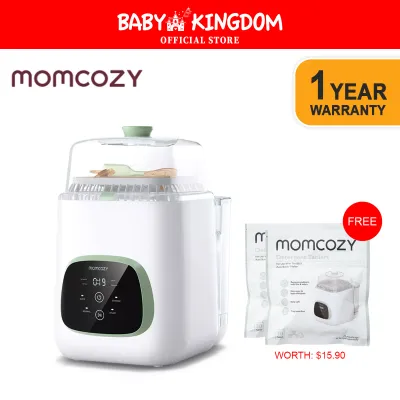
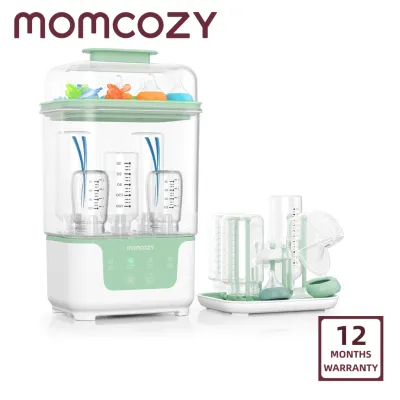
Prices are valid at publication and may change. Please refer to the product page for the latest price.
Following the wash cycle, the machine initiates the sanitizing phase, which typically utilizes high-temperature steam to eliminate common household bacteria and pathogens. Depending on your specific Momcozy model, this process can subject the internal chamber to temperatures reaching up to 100°C. Some advanced or alternative models may also incorporate UV-C light sanitization, which uses specific ultraviolet wavelengths to disrupt the DNA of microorganisms without relying solely on heat.
The final phase is drying, where a built-in heating element circulates hot air throughout the chamber to evaporate residual moisture. In warm and highly humid environments like Singapore, rapid and thorough drying is crucial to prevent the growth of mold and mildew on damp surfaces. However, this prolonged exposure to hot air—often ranging between 65°C and 80°C—can accelerate the degradation of certain low-tolerance materials.
Before loading any feeding gear into the appliance, always consult your specific Momcozy model’s user manual to verify its exact cycle temperatures and sanitizing mechanisms. Different cycles (such as quick wash, standard wash, or heavy-duty sterilizing) employ varying heat profiles, and matching these profiles to your bottles’ material limits is the only way to prevent warping, cracking, or chemical degradation.
Material Compatibility Breakdown: Glass, Plastic, and Silicone
Each bottle material possesses distinct physical properties that dictate how it responds to the intense water pressure, high heat, and potential UV exposure inside an automated bottle washer. Evaluating these materials individually helps you establish a safe, reliable cleaning routine.

Glass Bottles
Glass is widely favored by parents seeking a highly durable, chemically inert, and non-porous feeding option. Because glass does not contain synthetic polymers, it does not warp, melt, or degrade when subjected to the high-temperature steam sanitizing and hot-air drying cycles of the Momcozy washer. Furthermore, glass does not absorb milk odors or develop a cloudy film over time, making it exceptionally easy to maintain from a hygiene perspective.
The primary risk associated with washing glass bottles in an automated machine is physical breakage rather than thermal damage. The high-pressure water jets and the natural vibrations of the wash cycle can cause lightweight items to shift inside the chamber. If glass bottles are not loaded securely, they can rattle against adjacent bottles, plastic racks, or the machine’s walls, leading to chips, hairline fractures, or complete breakage.
To mitigate this risk, you must ensure precise and secure placement. Always utilize the designated rack slots designed to hold bottles firmly in place, ensuring that no two glass bottles are in direct contact. If your glass bottles feature removable silicone sleeves, check the manufacturer’s care instructions; while some sleeves can withstand automated washing, removing them generally ensures a more thorough clean and prevents water from becoming trapped between the sleeve and the glass.
Plastic Bottles (PP, PPSU, PES)
Plastic baby bottles are lightweight and shatterproof, but they are not chemically identical. To determine how your plastic bottles will fare in the Momcozy bottle washer, you must check the resin identification code or material label, usually located on the bottom of the bottle or in the manufacturer’s documentation. The three most common plastics used in baby bottles are Polypropylene (PP), Polyphenylsulfone (PPSU), and Polyethersulfone (PES).
Polypropylene (PP) is the most common and budget-friendly plastic, but it has the lowest heat tolerance of the three, typically safe only up to 110°C to 120°C. Frequent exposure to the high-temperature steam and heated drying cycles of the Momcozy washer can cause PP bottles to warp, lose their shape, or become cloudy over time. Even minor warping can compromise the precise fit of screw rings and anti-colic vents, resulting in frustrating leaks during feeds.
In contrast, PPSU and PES are medical-grade plastics engineered to withstand extreme temperatures, often up to 180°C or higher. These premium plastics are exceptionally durable, highly resistant to repeated steam sanitizing, and far less prone to warping or clouding. If you plan to use an automated bottle washer daily, investing in PPSU or PES bottles will yield a significantly longer product lifespan and maintain a more reliable seal.
Additionally, if your specific Momcozy model utilizes UV sanitizing, you must verify the UV compatibility of your plastic bottles. Prolonged exposure to UV-C light can cause certain plastics—especially lower-grade PP—to yellow, become brittle, and degrade structurally. Always verify with the bottle manufacturer’s packaging or official website to ensure the material is rated for UV sterilization.
Silicone Bottles and Components
Food-grade silicone has become incredibly popular for baby bottles and accessories due to its soft, breast-like texture and excellent thermal resistance. High-quality silicone can easily withstand temperatures up to 200°C, making it highly compatible with the high-heat steam sanitizing cycles of the Momcozy bottle washer without any risk of melting or warping.
However, silicone’s physical properties present unique challenges during the drying phase. Because silicone is highly flexible, prolonged exposure to intensive hot-air drying can cause thinner silicone parts—such as bottle nipples, valves, or collapsible bottle bodies—to temporarily lose their structural elasticity or become overly soft. Over several months of daily high-heat drying, this can lead to collapsed nipples or altered flow rates during feeding.
Another consideration is silicone’s slightly porous nature, which makes it prone to absorbing food odors and attracting mineral deposits or milk fats. If milk residues are allowed to dry on silicone components before they are placed in the washer, the automated cycle may not fully remove the oily film, leaving a sticky residue or a persistent sour milk smell. To prevent this, always perform a quick pre-rinse under warm running water to remove loose milk residues before loading silicone items into the appliance.
How to Verify Compatibility and Prevent Damage
To guarantee the safety of your infant and protect your investment in feeding gear, you should adopt a systematic approach to verifying compatibility and loading your Momcozy bottle washer. Following these four practical steps will help prevent damage and ensure optimal sanitization.
Step 1: Cross-Reference Specifications
Before running your first cycle, locate the user manuals for both your baby bottles and your Momcozy bottle washer. Compare the bottle manufacturer’s maximum temperature limits and care instructions directly against the operating specifications of your washer’s selected cycle. If the bottle manufacturer states that the item should not be exposed to temperatures exceeding 80°C, and your washer’s sanitizing cycle reaches 100°C, you must hand-wash that specific bottle or use a lower-temperature cycle to avoid damaging the material.
Step 2: Proper Disassembly
Never load a partially assembled bottle into the washer. Completely separate the bottle body, screw ring, nipple, cap, and any internal anti-colic valves, vents, or straws. Washing assembled bottles prevents the water jets from reaching critical areas, leaving milk residues trapped inside. In Singapore’s humid climate, any trapped moisture or unwashed residue quickly becomes a breeding ground for harmful bacteria and mold. Complete disassembly ensures that every surface is thoroughly exposed to the washing, sanitizing, and drying processes.
Step 3: Correct Loading Techniques
Proper loading is essential for effective cleaning and drainage. Position all bottles upside down and at a slight downward angle over the designated spray jets. This allows the high-pressure water to enter the bottle, cycle through, and drain out completely without pooling. Avoid overcrowding the racks; packing too many items together blocks the water spray paths, leaving some surfaces unwashed, and increases the risk of glass bottles clashing. Place small, delicate items like nipples, valves, and pacifiers securely inside the designated small parts basket to keep them from being dislodged by the water pressure.
Step 4: Post-Cycle Inspection and Stopping Conditions
Make it a habit to inspect your feeding gear as you unload the washer. Look for specific signs of material fatigue: micro-cracks or chipping in glass; warping, severe cloudiness, or poorly fitting threads in plastic; and stickiness, discoloration, or tears in silicone nipples. If you observe any of these conditions, stop using the affected component immediately. Damaged bottles can harbor bacteria, leak, or pose a choking hazard, so they must be discarded and replaced promptly to ensure your baby’s continued safety.
Frequently Asked Questions (FAQ)
Can I wash bottle nipples and pacifiers in the Momcozy bottle washer?
Yes, you can wash silicone bottle nipples and pacifiers in the Momcozy bottle washer, provided they are placed securely inside the machine’s designated small parts basket. This basket prevents lightweight silicone items from being dislodged by the high-pressure water jets and falling onto the heating element or blocking the drain. However, you should avoid washing items made of natural rubber or latex in the appliance. Natural latex degrades rapidly when exposed to high heat and steam, causing it to become sticky, cracked, and unsafe for baby use. Always inspect silicone nipples for thinning, stickiness, or tears after each cycle.
Do I need to use a specific detergent with the Momcozy bottle washer?
Yes, you must use a low-foam, baby-safe detergent that is specifically formulated for automatic baby bottle washers or explicitly recommended by Momcozy. Standard household dish soaps and liquid hand soaps are designed for manual washing and produce excessive suds. These suds can overflow the machine, cause mechanical malfunctions, and leave a stubborn, soapy residue on porous silicone parts. Additionally, avoid using harsh chemical cleansers, bleach, or abrasive detergents, as these can degrade plastic materials over time, etch glass surfaces, and leave harmful chemical residues that could be ingested by your baby.

Community discussion
Share your experience or ask a question. Comments are reviewed before publication.