
Quick Answer: What Is Inside Frosch Baby Detergent?
Frosch baby laundry detergent is formulated primarily with plant-based surfactants, biological enzymes, and carefully selected mild preservatives designed specifically for infant clothing. The brand prioritizes skin compatibility by avoiding harsh synthetic dyes, optical brighteners, and strong fragrances, though exact formulations can vary depending on the specific product line, such as their specialized sensitive or standard baby versions.
The core benefit of this formula lies in its ability to balance two competing laundry needs: effectively breaking down stubborn organic baby stains—such as breast milk, formula, spit-up, and solid food purees—while remaining exceptionally gentle on a newborn’s delicate skin barrier. In Singapore’s hot and humid climate, where babies sweat frequently and clothes require constant washing, minimizing chemical residues on fabrics is crucial. Because formulations can be updated or vary by region, caregivers should always verify the exact ingredient list on the physical product bottle before purchasing or using the detergent.
How Key Ingredients Clean Baby Clothes and Affect Skin
Understanding the science behind laundry detergent ingredients helps caregivers make informed decisions about what touches their baby’s skin. Every component in a baby detergent serves a specific purpose, from lifting dirt to preserving the liquid’s shelf life.
Products mentioned in this guide
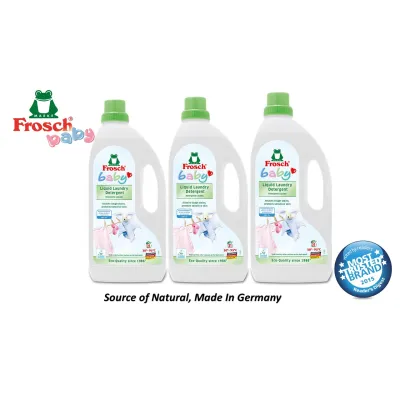
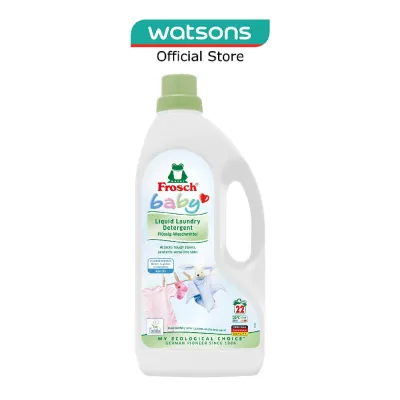
Prices are valid at publication and may change. Please refer to the product page for the latest price.

Plant-Based Surfactants: Gentle Stain Removal
Surfactants, or surface-active agents, are the fundamental cleaning engines of any detergent. These molecules consist of a hydrophilic (water-attracting) head and a hydrophobic (water-repelling) tail. When mixed with water, surfactants lower the surface tension of the liquid, allowing it to wet fabrics more deeply. The hydrophobic tails attach themselves to oily soils and dirt on the baby clothes, forming spherical structures called micelles that trap the dirt. When the washing machine agitates and rinses, these micelles are washed away, leaving the fabric clean.
Frosch baby detergent utilizes plant-derived surfactants, which are typically sourced from renewable plant oils such as coconut oil, palm kernel oil, or corn starch. These are often non-ionic surfactants, such as alkyl polyglucosides (for example, coco-glucoside), which are widely recognized for their mildness compared to traditional petroleum-based anionic surfactants like sodium lauryl sulfate (SLS). Petroleum-derived surfactants can strip the skin’s natural lipid barrier if residues remain on the clothing, leading to dryness and irritation. Plant-based alternatives tend to have a larger molecular size and a gentler action, making them less likely to penetrate and irritate the skin.
However, caregivers must remain vigilant. While plant-derived ingredients are generally milder and more environmentally sustainable, the term “plant-based” does not automatically equate to “allergen-free.” Some infants may possess highly specific sensitivities or contact allergies to particular plant proteins or derivatives. Always check the ingredient label for the specific botanical sources used, and monitor your baby’s skin for any localized reactions when introducing a new wash formula.
Biological Enzymes: Breaking Down Milk and Food Stains
Baby clothes are uniquely prone to organic, protein-rich, and starch-rich stains. Standard surfactants alone often struggle to lift dried breast milk, infant formula, spit-up, and early solid foods like fruit and vegetable purees. This is where biological enzymes become essential. Enzymes are specialized proteins that act as catalysts, accelerating the chemical breakdown of complex organic soils into smaller, water-soluble fragments that surfactants can easily wash away.
Different enzymes target specific types of stains:
- Proteases: These target and break down protein-based stains, which are highly prevalent in baby formula, breast milk, spit-up, and blood.
- Amylases: These focus on starch-based stains, helping to dissolve residues from baby porridges, purees, and carbohydrate-heavy infant foods.
- Cellulases: These help to prevent fabric pilling by removing loose microfibers, which keeps the garment surface smooth and prevents dirt particles from becoming trapped in the fabric weave.
These enzymes are highly efficient and operate optimally at lower washing temperatures, typically between 30°C and 40°C. This temperature range is ideal for baby care, as it thoroughly cleans garments while preserving the integrity, softness, and elasticity of delicate cotton baby clothes. However, there is a trade-off to consider. Because enzymes are active proteins, any enzyme residue that remains trapped in the fabric fibers after the wash cycle can potentially react with the baby’s skin moisture, leading to localized irritation or contact dermatitis. Ensuring a thorough rinse cycle is critical to flushing these active proteins out of the fabric.
Preservatives and Fragrance: Managing Sensitivity Risks
Liquid detergents are water-based products, making them highly susceptible to microbial contamination. In Singapore’s warm and humid climate, an unpreserved liquid detergent would quickly become a breeding ground for bacteria, mold, and yeast. This microbial growth poses a significant health risk to infants, particularly if contaminated clothing touches open scratches or sensitive skin. Therefore, preservatives are a mandatory safety component in liquid formulations to maintain product stability and hygiene.
Frosch typically utilizes mild, food-grade, or dermatologically tolerated preservatives (such as sodium benzoate or potassium sorbate) rather than harsh formaldehyde-releasing agents or paraben compounds, which are associated with higher rates of skin sensitization. These preservatives are selected to keep the product sterile in the bottle while minimizing the risk of triggering contact allergies once the clothes are dried and worn.
Fragrance is another major consideration for baby care. Synthetic perfumes are among the leading causes of cosmetic-induced contact dermatitis in infants. Frosch addresses this by either offering completely fragrance-free formulations or using extremely mild, low-allergen scents in reduced concentrations. If your baby has highly sensitive skin, is prone to allergies, or has been diagnosed with eczema, look for explicit “Fragrance-Free,” “Parfum-Free,” or “Dye-Free” claims on the specific bottle. Avoid assuming all products under a brand’s baby line are completely unscented, as regional product variations exist.
Is This Formula Suitable for Sensitive Skin and Eczema?
An infant’s skin barrier is up to 30% thinner than an adult’s, making it highly susceptible to environmental irritants, moisture loss, and chemical penetration. For babies diagnosed with infantile eczema or those with highly reactive skin, choosing the right laundry detergent is a critical part of daily skin-barrier management.
While Frosch baby detergent is formulated with plant-based surfactants and avoids many common irritants, no laundry detergent can be universally guaranteed to prevent skin reactions in every child. Eczema-prone skin has a compromised epidermal barrier, meaning even mild ingredients or natural enzymes can occasionally trigger a flare-up. To safely evaluate whether this detergent is appropriate for your baby’s specific skin needs, implement a systematic patch-testing protocol:
- Select a Test Garment: Choose a single, clean cotton clothing item that comes into direct contact with the baby's skin, such as a plain sleepsuit or bodysuit.
- Wash Separately: Wash this single item using the Frosch baby detergent, adhering strictly to the manufacturer's dosage instructions. Do not add fabric softeners, sanitizers, or other laundry additives.
- Conduct the Wear Test: Dress your baby in the washed garment for a short period (typically 4 to 6 hours) during the day when you can actively monitor them.
- Observe the Skin: Closely inspect the skin areas in direct contact with the fabric for any signs of irritation, such as localized redness, unusual dryness, raised bumps, or increased scratching.
If you observe any persistent rash, dry patches, or signs of discomfort, discontinue use immediately. Thoroughly re-wash the affected clothing in plain water or a previously tolerated detergent, and consult a pediatrician or pediatric dermatologist for professional guidance.
It is also worth noting that skin irritation is frequently caused not by the detergent ingredients themselves, but by inadequate rinsing. If a washing machine does not fully flush the detergent out of the fabric fibers, the concentrated residues of surfactants and enzymes can rub against the skin, causing irritant contact dermatitis. Always ensure your washing machine is not overloaded, as crowded drums prevent proper rinsing.
How to Read and Verify the Ingredient Label on Your Bottle
Empowering yourself to read the actual packaging label is the best way to bypass marketing claims and understand exactly what you are introducing to your household. Manufacturers often place the ingredient list on the back of the bottle, sometimes under a peel-back label. This list may use standard chemical names or INCI (International Nomenclature of Cosmetic Ingredients) terms.
When reading the label, look for the following key indicators:
- Surfactant Identifiers: Look for terms indicating mild, plant-derived cleaning agents, such as Coco-Glucoside, Lauryl Glucoside, or sodium salts derived from natural fatty acids.
- Enzyme Names: Check for the presence of Protease, Amylase, or Cellulase if you specifically require targeted stain-removing power, or avoid them if your pediatrician has recommended an enzyme-free formula.
- Preservative Listings: Identify the preserving agents used, ensuring they exclude parabens, methylisothiazolinone (MIT), or benzisothiazolinone (BIT), which are stronger preservatives more commonly linked to skin irritation.
Additionally, look for independent, third-party testing marks and certifications on the packaging. Labels such as “Dermatologically Tested” indicate that the formula has undergone standardized clinical patch testing on human volunteers to assess skin compatibility. Environmental certifications, such as the EU Ecolabel or other recognized ecological marks, verify that the ingredients meet strict environmental criteria, including biodegradability and low toxicity to aquatic life.
Remember that terms like “natural,” “organic,” or “gentle for baby” are often marketing descriptors rather than strictly regulated legal definitions. A product labeled “natural” can still contain synthetic preservatives or fragrances that might irritate sensitive skin. The only way to verify the product’s true composition is to read the ingredient list and look for recognized, independent certification logos.
Washing Tips to Maximize Effectiveness and Minimize Residue
How you wash baby clothes is just as important as the detergent you select. Implementing proper laundry habits ensures that the detergent performs effectively against stubborn stains while leaving zero irritating residues behind.
- Measure the Dosage Accurately: More detergent does not mean cleaner clothes. In fact, using an excessive amount of liquid detergent creates a surplus of suds that the washing machine cannot easily rinse away. This leads to detergent buildup within the fabric fibers, which can stiffen the clothes and irritate your baby's skin. Always use the measuring cap and follow the dosage guidelines based on your load size and soil level.
- Select an Extra Rinse Cycle: Most modern washing machines offer an "Extra Rinse" or "Sensitive" setting. Activating this option ensures that any remaining surfactants, soil particles, and active enzyme proteins are thoroughly flushed out of the garments. This is one of the simplest and most effective ways to prevent contact dermatitis.
- Optimize Water Temperature: To get the most out of the biological enzymes in Frosch baby detergent, select a wash temperature between 30°C and 40°C. This temperature range activates the enzymes, allowing them to break down proteins and starches efficiently. If you are washing heavily soiled items like cloth diapers or bed sheets after an illness, refer to the garment's care label first; some items may require higher temperatures (such as 60°C) for sanitization, which may require a specialized sanitizing cycle or pre-soak.
- Avoid Fabric Softeners: Fabric softeners work by leaving a thin, lubricating chemical film over fabric fibers to make them feel softer. This residue can trap detergent particles, reduce the absorbency of towels and cloth diapers, and act as a direct skin irritant. Skip the fabric softener entirely when washing baby items; the gentle action of plant-based surfactants is usually sufficient to keep cotton garments comfortable.
By combining a carefully formulated detergent with thorough rinsing habits, you can keep your baby’s wardrobe clean, soft, and completely safe for their delicate skin.

Community discussion
Share your experience or ask a question. Comments are reviewed before publication.