
Choosing the right laundry detergent for your baby’s clothes is more than a matter of household preference; it is a direct intervention in protecting their developing skin barrier. While beautifully scented baby washes and fresh-smelling laundry detergents are heavily marketed to new parents, fragrance-free baby clothes detergents are often a practical necessity rather than a marketing gimmick, especially for infants prone to eczema or sensitive skin. An infant’s skin is structurally different from adult skin, making it far more susceptible to the chemical residues left behind by standard laundry products.
Understanding how these residues interact with your baby’s skin can help you make informed decisions about the products you bring into your home. By learning to decode product labels and adopting safe laundry practices, you can significantly reduce the risk of skin irritation and support your baby’s overall comfort and health.
How Fragrances in Laundry Detergents Affect Sensitive Skin
To understand why fragrances pose a risk, it is helpful to look at how an infant’s skin barrier functions. A baby’s skin is up to 30% thinner than adult skin, loses moisture more rapidly, and has a less developed outer layer, known as the stratum corneum. This structural difference makes the skin highly permeable, allowing chemical residues trapped within fabric fibers to easily penetrate the skin barrier and trigger irritation.
Products mentioned in this guide
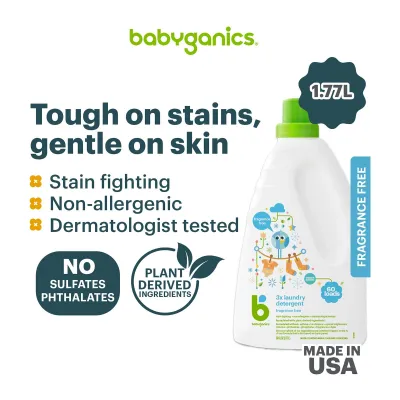
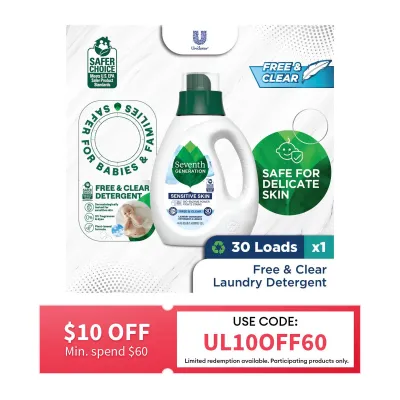
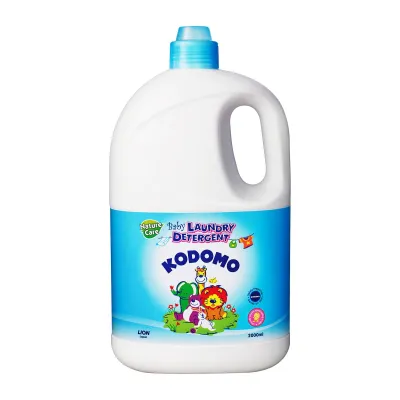
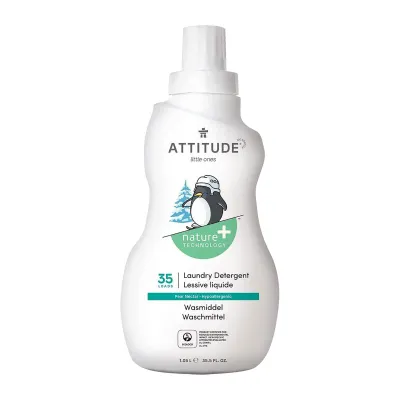
Prices are valid at publication and may change. Please refer to the product page for the latest price.
This continuous contact can trigger two distinct types of skin reactions: irritant contact dermatitis and allergic contact dermatitis. Irritant contact dermatitis is a non-allergic reaction that occurs when a harsh substance physically damages the skin’s protective outer layer. This often manifests as immediate redness, dry patches, or a rough texture in areas where clothing fits tightly. On the other hand, allergic contact dermatitis is an immune-mediated response. When the skin is repeatedly exposed to a specific allergen, such as a synthetic fragrance compound, the immune system eventually recognizes it as a threat, resulting in an itchy, red, and sometimes blistered rash that can appear hours or days after exposure.
Common observable skin reactions in infants often present in specific patterns. You might notice localized redness around the neck, wrists, ankles, or diaper area—places where clothing seams and cuffs create friction. If your baby is prone to eczema, fragrance residues can act as a persistent trigger, causing dry, scaly patches to flare up on the cheeks, torso, and outer limbs. Recognizing these patterns is the first step in determining whether your laundry routine is impacting your baby’s skin health.
Decoding "Fragrance-Free" vs. "Unscented" on Detergent Labels
Navigating the laundry aisle can be confusing, especially when terms like “fragrance-free” and “unscented” are used interchangeably. However, these labels have distinct regulatory meanings that directly impact skin safety. A “fragrance-free” detergent is formulated without any added fragrance chemicals or masking scents. This means the product contains no ingredients intended to create a pleasant smell or hide the natural scent of the raw materials. If you smell a fragrance-free detergent, it may have a slight, neutral chemical odor, which is completely normal.

In contrast, an “unscented” detergent is designed to have no noticeable smell, but this is often achieved by adding masking fragrances. These masking agents are chemicals formulated to neutralize the natural odors of the detergent’s active ingredients. While the final product may seem odorless to your nose, the masking chemicals are still present in the liquid or powder and can remain on your baby’s clothes, potentially triggering skin irritation. For babies with highly sensitive skin or eczema, “fragrance-free” is the safer and more reliable choice.
To ensure you are choosing a truly safe product, it is important to look beyond the front label and read the ingredient list. Avoid products that list generic terms like “fragrance,” “parfum,” or “aroma.” Additionally, watch out for specific fragrance allergens that must be disclosed under various labeling standards, such as limonene, linalool, geraniol, citronellol, and eugenol. Even botanical extracts and essential oils, which are often marketed as natural alternatives, can contain these volatile organic compounds and should be avoided if your baby has compromised skin.
When evaluating detergents, look for third-party dermatological testing or sensitive skin certifications printed on the packaging. Organizations such as the National Eczema Association or independent allergy foundations review product formulations to ensure they meet strict criteria for sensitive skin. You can verify these certifications by checking the official databases of the certifying bodies or reviewing the manufacturer’s detailed ingredient disclosures online. This extra step helps confirm that the product’s claims are backed by independent evaluation.
Signs Your Baby Needs a Fragrance-Free Baby Clothes Detergent
Determining whether your baby’s skin issues are linked to your laundry detergent requires careful observation. If your baby develops unexplained rashes, localized redness, or sudden eczema flare-ups, take note of where these symptoms appear. Irritation caused by laundry detergent residues typically concentrates in areas where clothing fits snugly or rubs against the skin, such as the collarbone, waistband, thighs, and inner elbows. If the rash improves when your baby spends time unclothed or wears garments washed in plain water, detergent residue is a highly likely culprit.
Before making a complete switch, it is helpful to rule out other common environmental, dietary, or fabric-related triggers. For instance, synthetic fabrics like polyester, nylon, or acrylic can trap heat and sweat, leading to friction-induced irritation or heat rash. Try transitioning your baby to loose-fitting, 100% organic cotton clothing and bedding to see if the skin clears. Additionally, consider whether you have recently introduced new foods, changed baby lotions, or if environmental factors like seasonal pollen or pet dander could be contributing to the flare-up.
While adjusting your laundry routine is a safe first step, there are clear conditions under which you should stop home trials and seek professional medical advice. If your baby’s rash becomes raw, starts oozing, develops yellow crusting, or feels warm to the touch, these are signs of a potential secondary skin infection that requires immediate medical attention. Furthermore, if the skin irritation is widespread, causes your baby significant discomfort, disrupts their sleep, or fails to improve after two weeks of using a fragrance-free detergent, consult a pediatrician or a pediatric dermatologist for a proper diagnosis and treatment plan.
Safe Laundry Practices to Minimize Skin Irritation
Switching to a fragrance-free baby clothes detergent is only part of the solution; how you wash your baby’s clothes plays an equally important role in minimizing skin irritation. One of the most common mistakes parents make is using too much detergent. When you overdose a load, the washing machine’s standard rinse cycle cannot fully flush out the excess soap. This leaves a concentrated buildup of surfactants and other chemicals embedded in the fabric fibers. Always measure your detergent carefully based on the load size, soil level, and the hardness of your local water, often using the minimum recommended amount for lightly soiled baby clothes.
To further reduce the risk of chemical buildup, utilize your washing machine’s extra rinse cycle. This additional flush of clean water is highly effective at removing any lingering surfactants, minerals, and trace residues that might have clung to the fabric during the main wash. If your washing machine does not have a dedicated extra rinse button, you can manually select a separate rinse and spin cycle after the main wash is complete. This simple step provides an extra layer of protection for your baby’s delicate skin barrier.
It is also crucial to eliminate other laundry additives that are designed to remain on fabrics. Fabric softeners, dryer sheets, and scent boosters work by depositing a thin, chemical film over fabric fibers to make them feel softer and smell stronger. This film is a primary source of contact irritation and can also reduce the absorbency of cotton diapers and towels. Instead of chemical softeners, consider using high-quality wool dryer balls in your dryer. They naturally soften fabrics and reduce static electricity by physically separating the clothes as they tumble, without leaving any chemical residue behind.
Finally, maintain your washing machine regularly to prevent internal buildup that can transfer to your baby’s laundry. Over time, detergent residues, fabric softeners, and hard water minerals can accumulate in the drum, detergent dispenser, and rubber door gasket, creating a breeding ground for mold, mildew, and bacteria. Run a monthly maintenance cycle using a dedicated washing machine cleaner or a hot water cycle with white vinegar. After each wash, leave the machine door slightly ajar and wipe down the rubber gasket to ensure the interior dries completely, keeping your baby’s laundry environment clean and hygienic.
Frequently Asked Questions (FAQ)
Can I use regular adult detergent if I add an extra rinse cycle?
While adding an extra rinse cycle is a helpful practice, it is generally not sufficient to make standard adult detergents safe for highly sensitive baby skin. Adult detergents are formulated to tackle heavy stains, body oils, and outdoor dirt, which means they contain much higher concentrations of strong anionic surfactants, optical brighteners, and synthetic dyes. Optical brighteners are chemical compounds designed to absorb ultraviolet light and emit blue light, making fabrics appear whiter and brighter. These compounds are specifically engineered to bind tightly to fabric fibers and do not wash out easily, even with multiple rinses, presenting a persistent source of irritation for a baby’s delicate skin.
Baby-specific detergents, on the other hand, are formulated with milder, non-ionic surfactants and typically exclude optical brighteners, synthetic dyes, and industrial-strength enzymes. If you prefer to wash the entire family’s laundry together to save time and water, the safest approach is to transition the household to a dedicated sensitive-skin formula. Look for a detergent that is explicitly labeled as fragrance-free, dye-free, and dermatologically tested, ensuring that every garment your baby comes into contact with—including your own clothes—is free from irritating residues.
Are natural or plant-based fragrances safer for baby eczema?
There is a widespread assumption that natural or plant-based ingredients are inherently safer and gentler than synthetic chemicals. However, when it comes to managing active eczema or highly sensitive skin, natural fragrances and essential oils should be treated with the same level of caution as synthetic perfumes. Essential oils, such as lavender, chamomile, tea tree, and citrus oils, are highly concentrated plant extracts that contain volatile organic compounds. These compounds are known contact allergens and can easily trigger allergic contact dermatitis when applied to a compromised skin barrier.
When a baby has eczema, their skin barrier is cracked, dry, and inflamed, allowing external substances to penetrate deeply and trigger an immune response. Even though a plant-based fragrance may smell pleasant and offer aromatherapeutic benefits, the volatile compounds it contains can exacerbate skin inflammation and lead to painful flare-ups. For babies with active eczema, highly sensitive skin, or a family history of atopic dermatitis, the safest and most effective strategy is to avoid all fragrances entirely, regardless of whether they are derived from a laboratory or a plant.

Community discussion
Share your experience or ask a question. Comments are reviewed before publication.