
When transitioning a baby or toddler from a crib to a larger bed, selecting the right protective barrier is essential for preventing accidental falls. The primary differences between foam, mesh, and fabric bed guards lie in their physical construction, how they attach to the bed, and their level of breathability. Foam guards are soft, wedge-shaped bumpers that sit directly on top of the mattress under a fitted sheet, relying on friction and mattress weight to stay in place. Mesh guards consist of a rigid metal or plastic frame covered in a tightly woven, breathable mesh fabric, securing underneath the mattress with straps or anchor plates. Fabric guards utilize a similar rigid frame structure but feature padded fabric covers, offering a middle ground between structural stability and surface softness. Understanding these material differences, installation requirements, and safety implications will help you choose the most secure setup for your child’s sleeping environment.
Core Differences in Material and Construction
Foam bed guards are typically constructed from high-density polyurethane or memory foam. These bumpers are designed as long, triangular wedges or semi-cylindrical bolsters. Instead of clamping to the bed frame, they are placed directly on the mattress surface along the outer edge. A tight fitted sheet is then pulled over both the mattress and the foam bumper, using tension to hold the guard in place. This design eliminates the need for rigid hardware, making the entire barrier soft to the touch and highly shock-absorbent.
Mesh bed guards rely on a structural frame, usually made of lightweight steel or durable plastic tubes, to create a tall, vertical barrier. The frame is wrapped in a tensioned mesh fabric panel. This mesh is engineered to be highly breathable and semi-transparent, allowing parents to monitor their child from a distance. The frame extends beneath the mattress with flat metal or plastic feet, which are often secured using adjustable straps that anchor to the opposite side of the bed frame. Many mesh guards also feature a folding mechanism, allowing the vertical panel to swing downward for easy access to the bed.
Products mentioned in this guide

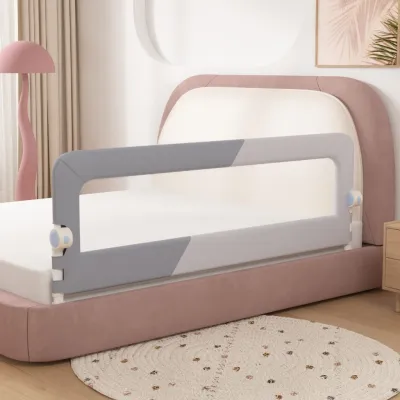
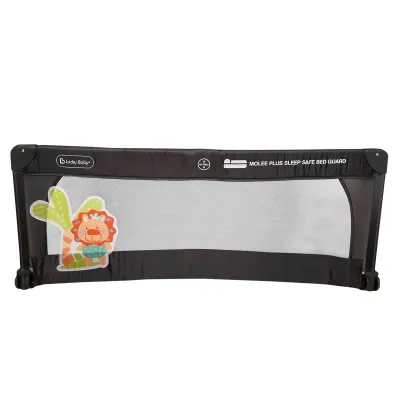
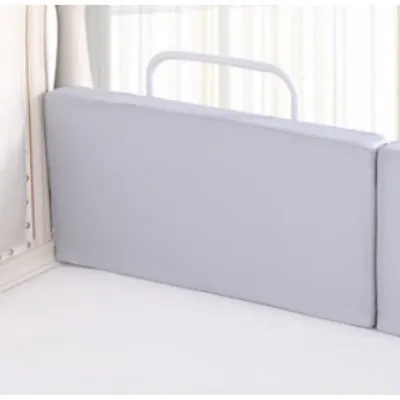
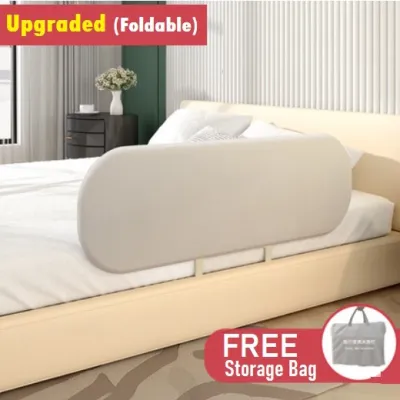
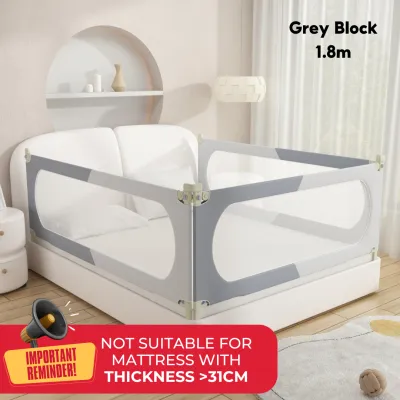
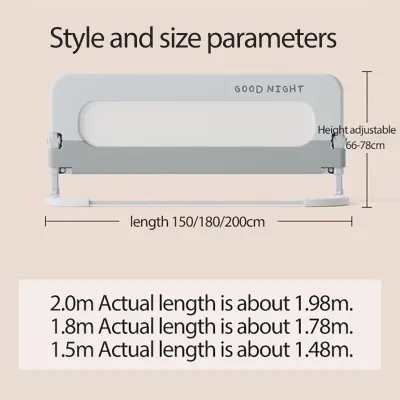
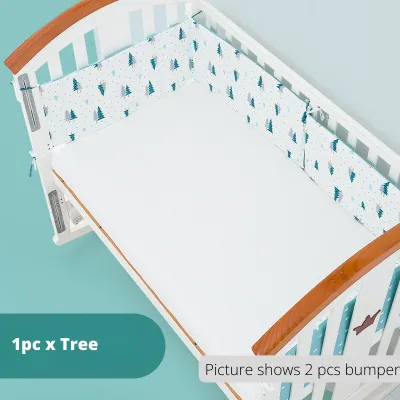
Prices are valid at publication and may change. Please refer to the product page for the latest price.
Fabric bed guards share a similar structural foundation with mesh guards, utilizing a rigid internal frame to maintain a vertical barrier. However, instead of a thin mesh panel, they feature a padded fabric cover, often made of cotton, polyester, or canvas. This padding covers the hard frame components, reducing the risk of minor bumps if a child rolls into the barrier. The fabric cover is typically removable and machine-washable, which is highly practical for managing spills, sweat, and general wear.
When evaluating these options on an online marketplace or in a local baby specialty store, caregivers should carefully inspect the structural components listed on the product labels. Look for details regarding the thickness of the internal padding, the gauge of the steel frame, and the density of the foam. High-density foam offers better resistance to flattening over time, while a thicker steel frame provides greater structural integrity when subjected to the weight of a rolling child.
Safety, Breathability, and Impact Protection
Breathability is a critical safety consideration, particularly in warm and humid climates, where air circulation is vital for a comfortable and safe sleeping environment. Mesh bed guards offer the highest level of airflow, as the woven fabric allows air to pass through freely, minimizing the risk of overheating if a child sleeps close to the edge. Solid foam bumpers and heavily padded fabric guards restrict airflow significantly more. If you choose a foam or padded fabric option, it is important to monitor the room temperature and ensure the sleeping area remains well-ventilated to prevent heat retention.

Entrapment and gap risks represent the most significant safety hazards associated with any bed guard, regardless of the material. If a guard is not securely fitted, a dangerous gap can form between the barrier and the mattress, creating a space where a child’s head, limbs, or torso can become trapped. Foam bumpers must be held tightly by a high-quality fitted sheet to prevent them from sliding outward under pressure. Mesh and fabric guards must be anchored so tightly that the vertical panel remains flush against the side of the mattress, even when a child pushes against it. Caregivers must perform daily visual checks to ensure no gaps have developed.
Impact protection is another area where these materials perform differently. Active babies who roll frequently during sleep may bump into the guard. Foam bumpers provide excellent impact absorption, gently cushioning the child and preventing them from waking up due to a hard collision. Mesh guards, while flexible, are stretched over rigid frames; if a child rolls forcefully into the frame support bars, they may experience a minor bump. Padded fabric guards mitigate this issue by wrapping the rigid frame in soft cushioning, balancing structural containment with impact protection.
Before purchasing any bed guard, caregivers must verify the manufacturer’s safety warnings, age limits, and weight restrictions. Most traditional bed guards are designed for children who can get in and out of bed unassisted, typically starting around 18 months to two years of age. They are generally not suitable for infants or babies who are still in the crawling stage, as these younger children lack the motor skills to extricate themselves if they roll into a soft barrier or get wedged in a gap. Always check the product documentation to confirm that the guard is certified for your child’s specific developmental stage.
Installation, Fit, and Bed Compatibility
The compatibility of a bed guard depends heavily on your mattress thickness, weight, and the design of your bed frame. Foam bumpers rely entirely on the weight of the mattress and the tension of the fitted sheet. If your mattress is exceptionally lightweight or thin, it may not provide enough downward pressure to keep the foam wedge secure, causing the sheet to lift and creating an entrapment hazard. Conversely, mesh and fabric guards require a mattress that is heavy enough to weigh down the under-mattress anchor plates or straps.
Bed frame compatibility varies significantly between platform beds, slatted bases, and box springs. Many mesh and fabric guards utilize anchor straps that must wrap around the bed slats or secure to the opposite side of the frame. If you have a solid platform bed or a storage bed with a hydraulic lift mechanism, routing these straps can be challenging or impossible. In such cases, a foam bumper that sits entirely on top of the mattress may be a more practical solution, provided the fitted sheet is tight enough to secure it. Alternatively, look for specialized guards designed with flat, screw-down brackets that can be secured directly to a wooden platform.
Portability and storage are practical factors for families who travel or need to clear the bed daily. Mesh and fabric guards are often bulky to transport due to their rigid frames, though some travel-specific models can be disassembled into smaller segments. Their folding mechanisms are highly convenient for daily use, allowing parents to fold the rail down to change sheets or sit on the edge of the bed. Foam bumpers cannot be folded, making them bulky to store, but they are incredibly lightweight and can easily be tossed into a closet or packed into a vacuum-seal bag for travel.
Regardless of the material chosen, the guard must be checked regularly to ensure it remains flush against the mattress. When a child leans or pushes against the barrier, the guard should not flex outward to create a pocket. If the guard moves or sags, the anchoring system must be adjusted or tightened immediately. Never rely on makeshift ties or loose ropes to secure a guard, as these can fail under pressure and create strangulation hazards.
How to Choose the Right Bed Guard for Your Setup
Selecting the ideal bed guard requires a careful assessment of your child’s sleeping habits, your bed configuration, and your daily routine. There is no single option that suits every household, so a conditional decision framework is the best way to determine the right fit.
Choose a foam bed guard if your primary goal is maximum impact cushioning for an active sleeper who tosses and turns. This option is highly suitable if you have a thick, heavy mattress and high-quality fitted sheets that can maintain strong tension over the bumper. Foam is also an excellent choice for platform beds where under-mattress straps cannot be easily installed, or for families who prefer a low-profile, visually unobtrusive barrier that blends seamlessly under the bedding.
Choose a mesh bed guard if breathability and clear visibility are your top priorities. This is particularly beneficial in warmer climates or for parents who want to monitor their child’s sleep position from a distance without entering the room. Mesh guards are ideal if you require a folding mechanism that allows the rail to swing down, making daily bed-making, sheet changes, and bedtime stories much more convenient. Ensure your bed frame allows for the proper routing of anchor straps.
Choose a fabric bed guard if you want to combine the structural security of a rigid frame with the soft, cushioned surface of a foam bumper. This option is well-suited for parents who want to prevent hard bumps against frame rails while maintaining a sturdy vertical barrier. Fabric guards are also a great choice if you prefer a product that matches your bedroom’s aesthetic, provided you are willing to regularly remove and wash the fabric cover to maintain hygiene.
Before making a final decision, always measure your mattress dimensions, including the height and length, to ensure the guard will fit without leaving dangerous gaps at the head or foot of the bed. Verify that the guard’s height is sufficient to extend well above the top of your mattress. Always read and follow the manufacturer’s specific installation instructions, and inspect the setup daily to guarantee your child’s safety.
Frequently Asked Questions (FAQ)
At what age should I stop using a bed guard for my baby?
Bed guards should generally be discontinued when a child reaches the developmental milestone of being able to climb over the barrier. Once a child can stand and attempt to climb over a vertical rail or a high foam bumper, the guard transitions from a safety feature into a significant fall hazard, as the fall height is increased. This transition typically occurs between the ages of two and five, depending on the child’s individual height, coordination, and mobility. Always consult the manufacturer’s documentation for the specific maximum age, height, and weight limits of your product, and transition to an open bed setup as soon as your child shows signs of climbing.
Can I use a bed guard on a floor bed or a Montessori-style setup?
Using traditional bed guards on a floor bed or a Montessori-style sleeping arrangement requires careful consideration. Traditional mesh and fabric guards that rely on under-mattress anchor straps may not sit flat on the floor, which can cause the mattress to tilt or create unstable gaps. Foam bumpers are often more compatible with floor beds because they sit directly on the mattress surface under the sheet. However, if the floor bed is placed directly against a wall, you must ensure that the guard does not create an entrapment gap between the mattress and the wall. Always look for low-profile guards specifically designed for floor-level use, and ensure the setup does not create a tripping hazard for caregivers entering the room.

Community discussion
Share your experience or ask a question. Comments are reviewed before publication.