
Choosing the right fan cover net requires matching the specific physical design, mounting style, and operational movement of your home’s cooling appliances. A standard elastic mesh net that fits a pedestal fan will not work on a wall-mounted unit with tight rear clearances, nor can it be safely wrapped around the spinning blades of a ceiling fan. To protect curious little fingers from moving blades, you must evaluate the fan’s physical dimensions, its location relative to your child’s reach, and the specific attachment mechanisms of the cover. By selecting a cover designed specifically for your fan type, you can maintain adequate airflow while establishing a reliable physical barrier.
Why Fan Type Dictates Your Cover Net Choice
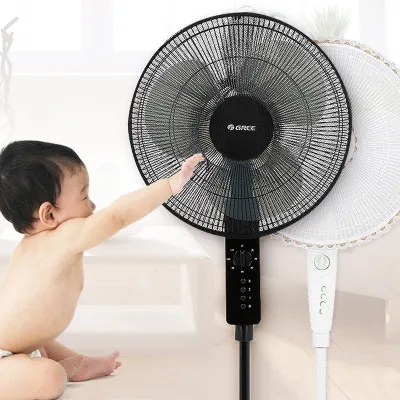
Children interact with household appliances differently depending on their developmental stage and the appliance’s location. A crawling baby or a toddler learning to stand will easily reach a pedestal fan sitting on the floor, making these units immediate safety hazards. Wall-mounted fans are higher up but can still pose a risk if they are positioned near climbable furniture like sofas, cribs, or changing tables. Ceiling fans are typically out of reach unless a child climbs onto a bed, bunk, or high-backed chair.
The physical forces and mounting structures of each fan type also influence how a cover must perform. Standing fans oscillate and can easily tip over if a child pulls on a loose cover, meaning the net must not add excessive weight or catch on passing objects. Wall-mounted fans experience constant downward gravitational pull, which can cause soft covers to sag and rub against the blades. Ceiling fans operate at high rotational speeds where any loose fabric can cause severe aerodynamic imbalance, leading to dangerous wobbling or motor strain.
Products mentioned in this guide
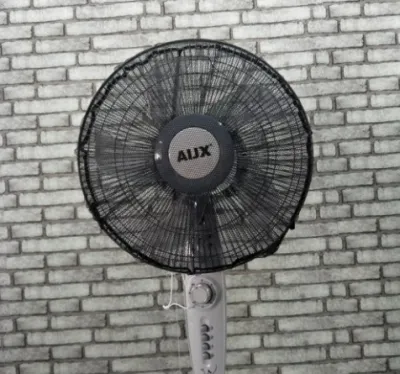
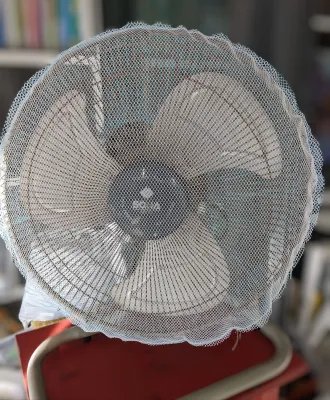
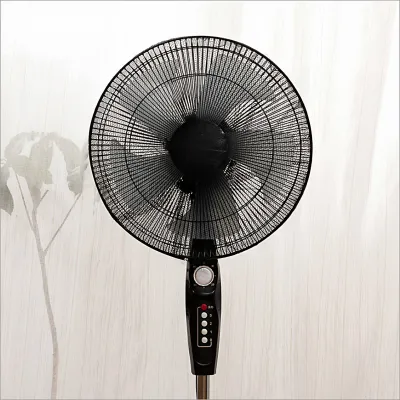
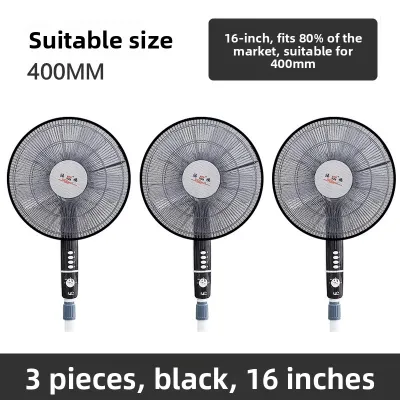
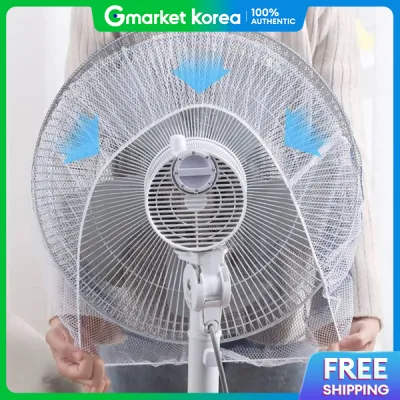
![[SG 🚚] 16/18 Inch Fan Dust-proof Protection Net Cover/ Electric Fan Safety Mesh Nets Cover/ Mesh Fan Guard Kids Finger Protector](https://img.lazcdn.com/g/p/f4bdc6756dedeeff9d67169ec4c9dda9.jpg_400x400q80.jpg_.webp)
Prices are valid at publication and may change. Please refer to the product page for the latest price.
Balancing safety with airflow is another critical design challenge. A denser mesh provides better protection against tiny fingers but restricts airflow, which can cause the fan motor to run hotter and reduce cooling efficiency. A looser mesh allows better airflow but might let a child’s finger slip through the gaps. The cover must be chosen based on the specific fan’s power, its mounting stability, and the environment in which it operates.
Key Safety and Fit Criteria for Baby-Proofing
Mesh density is the first line of defense when selecting a fan cover net. Parents should check the manufacturer’s specifications for the maximum gap size of the mesh openings. Ideally, the openings should be small enough that even a small infant’s pinky finger cannot penetrate the barrier to touch the blades. A fine, high-density mesh is generally recommended for homes with very young children.

Material selection is crucial for durability and health. Look for tear-resistant, non-toxic fabrics such as heavy-duty nylon or polyester mesh that can withstand pulling and scratching. Avoid materials with sharp edges, rigid plastic protrusions, or loose decorative elements that could become choking hazards if detached. The fabric should also be breathable enough to prevent the fan motor from overheating during extended use.
Securing mechanisms must resist determined toddlers who may try to remove the cover. Simple elastic bands might be easily pulled off by an active child, exposing the blades. Prioritize anti-tamper designs, such as covers with locking zippers, heavy-duty drawstring toggles, or secure buckle straps that wrap around the rear guard. These mechanisms should be positioned at the back of the fan, out of the child’s direct line of sight and reach.
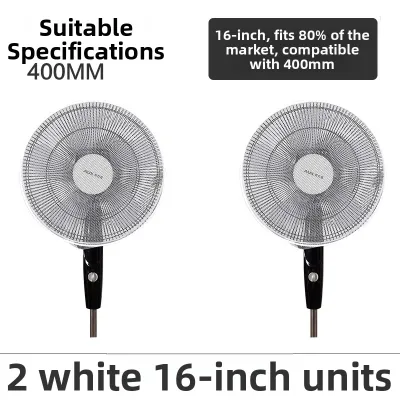
Accurate measurement is essential before purchasing any cover. Do not rely on generic size labels like “small” or “large,” as fan dimensions vary widely by brand. Use a measuring tape to find the exact diameter of the fan’s front cage, the depth of the fan head, and the clearance space behind the rear guard. A snug fit is necessary to prevent the fabric from sagging into the spinning blades.
Selecting a Cover Net for Standing and Pedestal Fans
When baby-proofing standing and pedestal fans, parents often choose between elastic fabric covers and hard plastic add-on grids. Elastic fabric covers are widely available, inexpensive, and easy to wash, making them popular for standard household fans. However, they can stretch out over time and may sag if not fitted tightly. Hard plastic add-on grids offer a rigid, non-deformable barrier but can be more difficult to clean and may not fit non-standard fan shapes.
Because standing fans are at eye level for toddlers, children often pull on the bottom edge of the cover. Ensure the cover wraps completely around the back of the fan cage and is secured tightly at both the top and bottom. This prevents the net from slipping forward and exposing the lower blade edges, which are often the easiest for a crawling child to reach.
Pedestal fans are frequently raised, lowered, or tilted to direct airflow. A poorly fitted cover can snag on the adjustment joints or stretch excessively when the fan head is tilted upward, leading to tears or sudden detachment. Check that the cover has enough slack around the neck joint to accommodate these movements without pulling loose or restricting the fan’s physical adjustments.
Adding a cover increases wind resistance, which can make a lightweight standing fan more prone to tipping over when running on high speed. Ensure the fan’s base is heavy and stable enough to handle the increased drag. If tipping is a concern, place the fan in a corner behind a safety gate or secure the base to the floor to prevent accidental falls.
Selecting a Cover Net for Wall-Mounted Fans
Gravity plays a significant role in how a cover fits a wall-mounted fan. Because these fans are angled downward, soft fabric covers tend to sag forward over time. This sagging can bring the fabric dangerously close to the spinning blades or cause it to bunch up at the bottom, blocking airflow and straining the motor. Look for covers with reinforced edges or adjustable tension straps that keep the mesh taut against the front guard.
Oscillation compatibility is another critical factor for wall-mounted units. These fans often swing side-to-side or tilt vertically to distribute air across a room. The cover and its securing straps must be installed so they do not catch on the wall bracket or the oscillation mechanism. A snagged strap can burn out the oscillation motor or pull the cover off entirely during operation.
Wall-mounted fans are often mounted close to the wall, leaving very little clearance behind the rear guard. Ensure the cover’s rear fastening system is low-profile and does not get pinched between the fan housing and the wall mount. A pinched cover can tear the fabric or prevent the fan from mounting securely, creating a falling hazard.
Selecting a Cover Net for Ceiling Fans
Assess the safety height of your ceiling fan before deciding on a baby-proofing strategy. While ceiling fans are generally out of reach, they become hazards in rooms with low ceilings, bunk beds, loft spaces, or climbable furniture. If a child can reach within arm’s length of the fan blades from any standing or jumping surface, safety measures are necessary.
Unlike standing or wall fans, ceiling fans do not have a built-in protective cage to wrap a soft net around. Wrapping a soft fabric net directly over spinning ceiling fan blades is extremely dangerous and physically impossible while maintaining operation. Instead, ceiling fans require rigid, structurally anchored metal or acrylic cages that mount directly to the ceiling or the fan’s support bracket.
Ceiling fans are finely balanced instruments; even a few grams of uneven weight distribution can cause severe wobbling. This wobbling puts immense stress on the ceiling mount and can lead to the fan falling. Never attempt to attach aftermarket soft covers or DIY nets to the blades themselves. Always follow the fan manufacturer’s guidelines for approved safety guards and professional installation.
In many cases, the safest approach is to modify the room layout rather than modifying the fan. Move bunk beds, changing tables, and climbable toys far away from the fan’s sweep area. Alternatively, restrict access to the room when the fan is in use, or replace the ceiling fan with a bladeless model or a high-mounted wall fan that is completely out of reach.
Installation and Ongoing Safety Checks
Once you install a fan cover net, perform immediate safety checks to verify its security. Conduct a gentle pull test on all sides of the cover to ensure it cannot be easily yanked off by a child. Perform a finger-probe check by attempting to push a finger through the mesh at various points, especially near the edges, to verify that the blades remain completely out of reach.
Establish a regular inspection routine to monitor the cover’s condition. Over time, dust accumulation, heat from the fan motor, and exposure to sunlight can degrade fabric covers, elastic bands, zippers, and hook-and-loop fasteners. Inspect these components weekly for signs of stretching, fraying, or cracking, and ensure the securing mechanisms remain tightly locked.
Follow safe cleaning procedures to maintain both hygiene and safety. Dust buildup on the mesh restricts airflow and forces the motor to work harder, which can lead to overheating. Always unplug the fan from the wall outlet before removing the cover for cleaning. Wash the cover according to the manufacturer’s instructions, and ensure it is completely dry before reinstalling it.
If you notice any tears in the mesh, broken zippers, stretched-out elastics, or loose fittings that cannot be tightened, immediately stop using the cover and replace it. A damaged or loose cover can be more dangerous than no cover at all, as it can get caught in the spinning blades, causing mechanical failure or creating a choking hazard.
Frequently Asked Questions (FAQ)
Can I use a DIY or homemade net for my fan?
Using a DIY or homemade net for your fan is not recommended due to significant safety risks. Homemade covers often lack the material strength to withstand a child’s pulling and may tear easily, exposing the blades. Additionally, improper materials can restrict airflow excessively, leading to motor overheating and potential fire hazards. It is always safer to rely on commercially tested products designed specifically for electrical appliance safety.
Will a fan cover net reduce airflow significantly?
A fan cover net will reduce airflow to some degree, as any physical barrier creates resistance. The extent of the reduction depends on the density of the mesh; a finer mesh will restrict more air than a coarser one. To compensate for this safely, you can increase the fan speed by one level or adjust the angle of the fan to improve air circulation. Avoid using the fan on its highest setting for extended periods if the motor feels excessively hot, as the restricted airflow can cause heat buildup.

Community discussion
Share your experience or ask a question. Comments are reviewed before publication.