
A safe baby crib is defined by its compliance with recognized international safety standards, which ensure the frame, slats, and mattress support can withstand daily use without posing entrapment, suffocation, or fall hazards. While aesthetics, color, and price often dominate nursery planning, physical safety is the single most critical factor in preventing severe sleep-related accidents. Verifying these certifications before making a purchase guarantees that the furniture has undergone rigorous mechanical testing to protect your infant during unsupervised sleep.
Why Safety Certifications Matter for Baby Cribs
Creating a secure sleep environment is paramount because infants spend the majority of their first year sleeping unsupervised. Uncertified or poorly designed cribs present severe physical risks, including head or limb entrapment between slats, suffocation in gaps between the mattress and the frame, falls over the rails, and sudden structural collapse. These hazards are not always visible to the naked eye, making independent verification essential.
Many parents assume that a premium price tag or an elegant designer label guarantees structural safety. However, price and design do not correlate with compliance. A beautifully crafted wooden crib can still feature unsafe slat spacing, hazardous corner posts, or toxic finishes if it has not been manufactured according to strict safety guidelines. Certifications indicate that a crib has been independently tested by accredited laboratories to withstand specific weight limits, impact forces, and structural stress.
Products mentioned in this guide
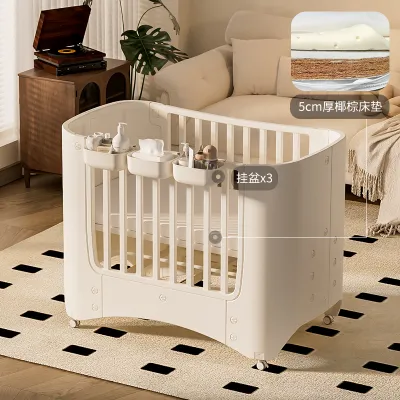
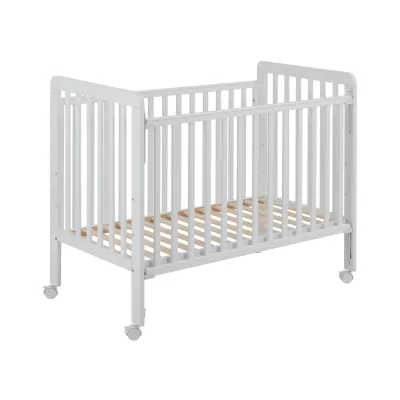
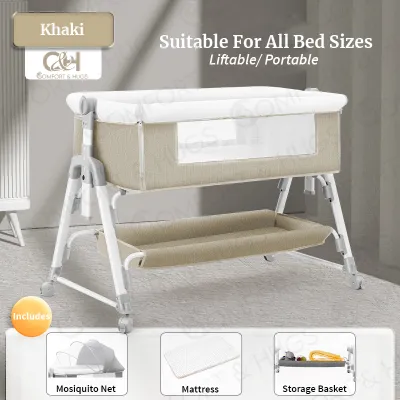
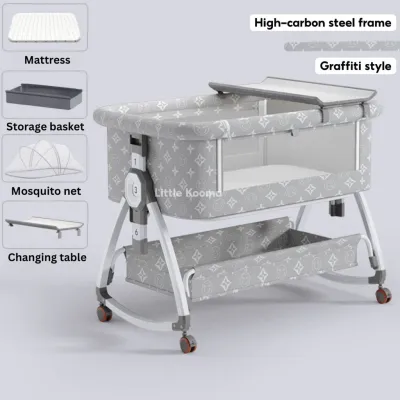
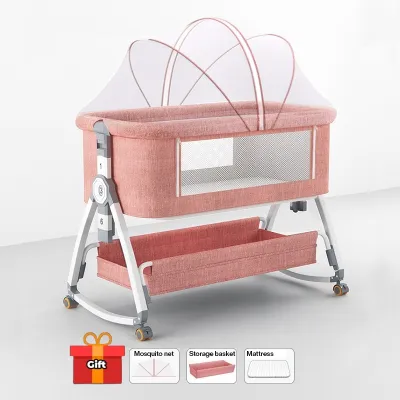
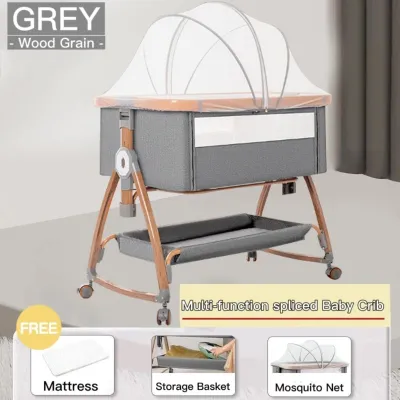
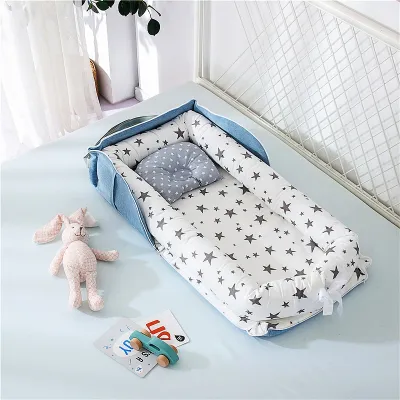
Prices are valid at publication and may change. Please refer to the product page for the latest price.
In Singapore’s diverse retail market, nursery furniture is imported from various regions across the globe, including North America, Europe, and Australia. Because there is no single mandatory global standard, cribs sold locally may conform to different regional frameworks. Parents must take an active role in identifying and verifying these international safety marks on packaging, labels, and product manuals rather than assuming every item on display automatically meets local safety requirements.
Recognized International Safety Frameworks to Verify
When shopping for a baby crib, you will encounter several distinct international safety standards depending on where the product was manufactured or designed. Understanding how to read these frameworks allows you to verify compliance confidently.

North American Standards (ASTM and JPMA)
Cribs imported from or designed for the North American market should reference standards established by ASTM International (formerly the American Society for Testing and Materials). For full-size baby cribs, the relevant standard is ASTM F1169, while non-full-size cribs and play yards must comply with ASTM F406. These standards mandate rigorous testing for structural integrity, slat strength, and lock reliability.
You should also look for the Juvenile Products Manufacturers Association (JPMA) certification seal. The JPMA certification is a voluntary program where manufacturers submit their products to independent, third-party testing facilities to validate compliance with the corresponding ASTM standards. A JPMA seal provides an extra layer of assurance that the crib has been tested and approved by an unbiased authority.
To verify these claims, avoid relying solely on vague marketing phrases such as “safety tested” or “meets all standards.” Instead, open the product manual, check the manufacturer’s official website, or look at the registration label permanently attached to the crib frame for explicit references to ASTM F1169 or ASTM F406.
European Standards (EN)
Cribs sourced from the United Kingdom and Europe are governed by European Standards (EN). The specific standard for domestic children’s cots and folding cots is EN 716 (typically split into EN 716-1 for safety requirements and EN 716-2 for test methods). This standard regulates everything from the height of the crib sides to the distance between individual components.
It is important to note that the CE (Conformité Européenne) mark alone is not sufficient proof of crib safety. The CE mark is a general declaration of conformity for products sold within the European Economic Area, often covering aspects like electrical safety or general toy safety, but it does not guarantee that a piece of furniture has passed the specific, rigorous mechanical testing required by EN 716. Always look for the explicit “EN 716” designation on the product documentation.
When purchasing a European-style cot, verify that the product complies with the latest revision of the EN 716 standard. Manufacturers who regularly update their designs to meet the newest revisions demonstrate a commitment to addressing newly identified safety risks.
Australian and New Zealand Standards (AS/NZS)
Nursery furniture imported from or tested for the Australasian market must comply with the joint Australian and New Zealand standard AS/NZS 2172. This standard is widely regarded as one of the strictest safety frameworks in the world, enforcing highly detailed regulations on structural strength, drop-side mechanisms, and mattress compatibility.
To confirm compliance, look for the AS/NZS 2172 mark printed directly on the packaging, the instruction booklet, or the safety warning label on the crib. This standard requires specific testing for impact resistance, ensuring that the wooden slats and frame can withstand repeated force without splintering or breaking.
Be aware that some global brands may only certify specific models within their product lines to AS/NZS standards while certifying others to European or American frameworks. Always verify that the exact model and production batch you are purchasing has been tested and certified to the relevant standard.
Observable Physical Safety Checks for Any Crib
While paperwork and certification labels provide a baseline of trust, you should perform physical inspections in-store or review detailed online product specifications to confirm the crib’s physical safety.
Slat Spacing and Mattress Fit
The distance between the crib slats is a critical measurement that prevents head and torso entrapment. Verify that the manufacturer’s specifications state a slat spacing of no more than 60 mm (6 cm). If the gaps are wider than this limit, an infant can slip their body through the slats, leading to dangerous entrapment or strangulation hazards.
Checking the mattress fit is equally vital to prevent suffocation. You can perform the “two-finger rule” by attempting to slide your fingers between the edge of the mattress and the crib frame on all sides. If you can fit more than two fingers (approximately 30 mm or 3 cm) into the gap, the mattress is too small for the crib, creating a dangerous space where a baby can become wedged.
Additionally, inspect the mattress support system underneath the bed. The support hangers, brackets, and bolts must be made of heavy-duty metal or reinforced plastic that locks securely into the frame. The support base should not sag, wobble, or shift when you apply downward pressure, ensuring it will remain stable as your baby grows and moves.
Structural Integrity and Banned Mechanisms
Certain design features that were once common are now recognized as major safety hazards. Drop-side cribs, which feature a side rail that slides down to make accessing the baby easier, are widely banned or restricted in multiple international jurisdictions. The moving hardware on drop-side models can warp, break, or be installed incorrectly, creating a gap where a baby’s head can become trapped; therefore, you should only purchase fixed-side crib models.
Inspect the corner posts of the crib frame to ensure they do not pose a strangulation hazard. Corner posts should be virtually flush with the end panels, extending no more than 1.5 mm above them. If a corner post extends higher, it can easily catch on loose clothing, sleep sacks, or pacifier ribbons, presenting a severe risk to an active infant.
Examine the overall finish of the crib. Run your hands along the wood to check for splinters, sharp edges, rough joints, or exposed hardware. Ensure that any paint, varnish, or lacquer used is certified non-toxic and lead-free, as infants frequently chew on crib rails when teething. Look for certifications such as EN 71-3 (the European standard for toy safety, which includes limits on heavy metal migration in finishes).
Finally, remember that Singapore’s high humidity can affect wooden furniture over time, causing wood to expand, contract, or warp. It is essential to inspect the crib regularly after assembly, checking that all screws, bolts, and connecting hardware remain tightly fastened and showing no signs of stripping or loosening.
Red Flags: When to Walk Away from a Purchase
Knowing when to reject a potential purchase or stop using an existing crib is just as important as knowing what certifications to look for. If you encounter any of the following red flags, walk away immediately.
- Missing Labels or Documentation: Every certified crib must feature a permanent label indicating the manufacturer's name, contact details, model number, and date of manufacture. If a crib lacks this label or does not include a clear, step-by-step assembly manual with safety warnings, you cannot verify its history, safety compliance, or recall status.
- Second-Hand and Vintage Cribs: Avoid using antique, vintage, or older hand-me-down cribs. These items often predate modern safety standards, may feature dangerous drop-side mechanisms, wide slat spacing, or decorative cutouts that can trap a baby's head. Furthermore, older paint finishes may contain toxic levels of lead, which poses a severe health hazard.
- Unverified Online Listings: Exercise extreme caution when shopping on online marketplaces or social media platforms. Unbranded, low-cost cribs shipped directly from overseas sellers often bypass local safety checks and carry counterfeit certification claims. If a seller cannot provide official compliance documentation upon request, do not purchase the product.
- Recall Status: Before buying any crib—even a new model from a reputable brand—cross-reference the exact model number with official safety recall databases, such as those managed by Enterprise Singapore or international consumer product safety commissions. A recalled crib should never be used under any circumstances.
- Stop-Use Conditions: If your active crib develops structural issues during use, such as cracked wood, loose or wobbly joints, missing slats, or a sagging mattress support, you must stop using it immediately. Do not attempt to repair the frame using hardware store screws or makeshift brackets. If you cannot obtain official, authorized replacement hardware directly from the manufacturer, the crib must be discarded.
Safe Sleep Practices Beyond the Crib Frame
Even the most rigorously certified crib cannot guarantee safety if the sleep environment is set up incorrectly. To protect your baby, you must combine a certified crib with safe sleep habits.
Always follow the “bare is best” principle for infant sleep. The crib should contain only a firm, flat, properly fitted mattress covered by a tight, well-fitting sheet. A soft sleep surface can conform to a baby’s face and block their airway, presenting a severe suffocation risk.
Keep all loose items out of the sleep space. This means you must completely avoid using crib bumpers, pillows, loose blankets, quilts, stuffed toys, and sleep positioners. While these items are often marketed as cozy nursery accessories, they are major hazards that can cause entrapment or suffocation.
To keep your baby warm without using loose blankets, opt for wearable blankets or sleep sacks. Ensure the sleep sack is sized correctly for your baby’s weight and height, with neck and arm openings that prevent their head from slipping inside the bag.
As your baby develops, you must adjust the crib to match their physical capabilities. Lower the mattress support platform to the middle or lowest setting as soon as your baby can sit up, push up on their hands and knees, or pull themselves up to a standing position. Once your baby reaches the manufacturer’s stated height or weight limits, or begins attempting to climb out of the crib, transition them to a toddler bed or a floor mattress immediately to prevent fall injuries.
Frequently Asked Questions (FAQ)
Is it safe to buy a second-hand baby crib if it looks in good condition?
No, purchasing or accepting a second-hand baby crib is generally not recommended, even if it appears to be in excellent physical condition. A simple visual inspection cannot reveal internal structural fatigue, micro-cracks in the wood, or weakened joint hardware. Additionally, older cribs may have been subject to safety recalls that you cannot easily verify, or they may lack the original assembly instructions and specialized hardware, leading to dangerous assembly errors. To ensure your baby’s safety, it is best to invest in a new crib that carries verifiable, up-to-date international safety certifications.
Do bedside sleepers and bassinets need the same certifications as full-size cribs?
Bedside sleepers, bassinets, and travel cots are governed by different, specialized safety standards because their designs and use cases differ from full-size cribs. For example, bassinets and cradles are tested under standards such as ASTM F2194 in the United States or EN 1130 in Europe. These standards address specific risks associated with portable sleep spaces, such as fabric breathability, folding mechanism locks, and base stability. When purchasing these smaller sleep products, always check for their specific category standards and strictly adhere to the manufacturer’s weight, age, and developmental limits, as babies outgrow these products much faster than a standard crib.

Community discussion
Share your experience or ask a question. Comments are reviewed before publication.