
Preparing meals for a weaning infant requires precision, speed, and strict hygiene. As your baby transitions from smooth purees to textured solid foods, a reliable pair of food scissors becomes an indispensable tool in your kitchen. Because these tools are used directly on food that goes straight into your child’s mouth, safety must be your primary consideration.
Selecting the right pair involves evaluating specific design elements, material compositions, and safety mechanisms to protect both you and your child. A well-designed tool not only makes meal preparation more efficient but also minimizes the risks of physical injury and bacterial contamination.
Blade Design and Cutting Mechanism
Rounded or blunt tips are a non-negotiable safety feature for baby food scissors. Standard kitchen shears often feature sharp, pointed tips designed to pierce packaging, but these pose a significant puncture risk if a baby suddenly reaches for the tool or if you slip while cutting food directly in a serving bowl. Blunt tips ensure that accidental contact does not result in painful punctures.
Products mentioned in this guide
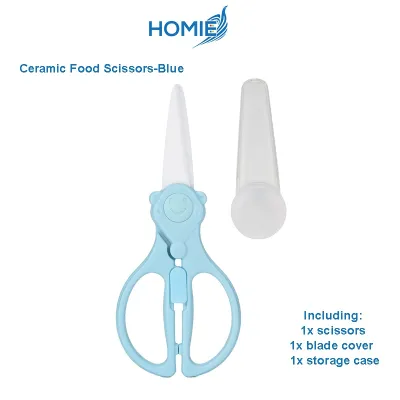
![[CHEAPEST] Baby Little Bear Ceramic Food Scissors / Stainless Steel Food Scissors High Quality with Travel Case Cover Safety Lock [Baebear.sg]](https://img.lazcdn.com/g/p/4b8b926562243d8539977af6f76205f8.jpg_400x400q80.jpg_.webp)
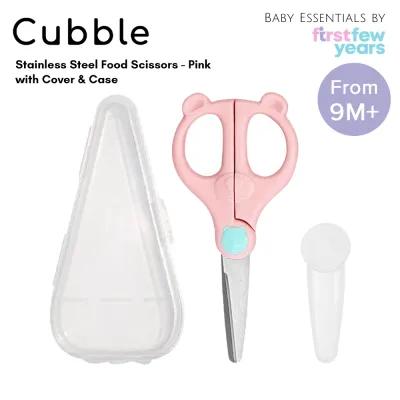
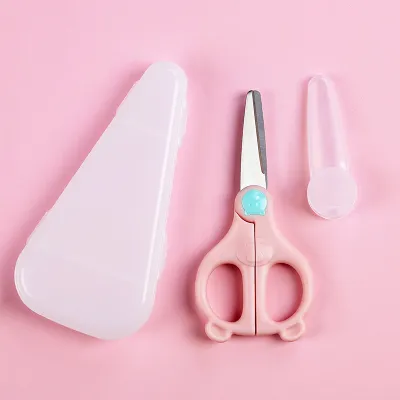
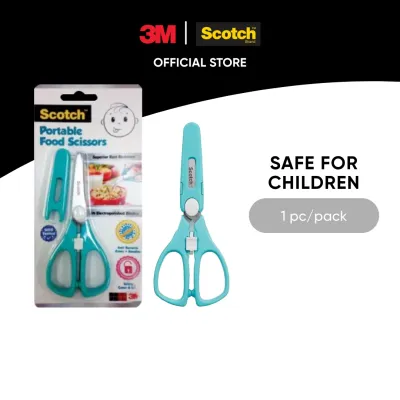
Prices are valid at publication and may change. Please refer to the product page for the latest price.
When evaluating the cutting edge, you will typically choose between serrated and smooth blades. Serrated blades excel at gripping slippery foods like noodles, steamed vegetables, and soft meats, preventing them from sliding forward during a cut. However, the tiny grooves in serrated edges can trap food fibers and starches, requiring meticulous scrubbing to prevent bacterial growth. Smooth blades offer clean cuts and are exceptionally easy to wipe clean, but they may require more downward pressure on slippery items, increasing the risk of hand fatigue.
A secure blade cover or sheath is essential for safe storage and transport, especially if you pack the scissors in a diaper bag for dining out. The cover should click firmly into place so it cannot be easily shaken loose. Some designs also feature a manual blade lock that keeps the handles closed even when the cover is off, adding an extra layer of protection against accidental cuts.
Material Safety and Food-Grade Compliance
The materials that come into contact with your baby’s food must be completely non-toxic and chemically stable. Look for clear product labeling indicating the use of food-grade stainless steel, such as 304 or 316 grade, for the blades. These grades are highly resistant to corrosion and do not leach metallic tastes or harmful elements into food.

The handles and protective sheaths are typically made of plastic or silicone. It is vital to verify that these components are certified as BPA-free, phthalate-free, and lead-free. Check the manufacturer’s packaging or official product documentation for compliance with recognized food safety standards, rather than assuming suitability based on product names alone.
Baby food preparation frequently involves cutting acidic fruits and salty or wet foods. Standard steel can rust quickly under these conditions, creating a breeding ground for bacteria. High-quality, rust-resistant materials ensure the blades remain smooth and sanitary over months of daily washing. Always verify the manufacturer’s stated temperature limits, especially if you plan to expose the scissors to boiling water or steam sterilizers.
Child-Proofing and Ergonomic Features
Preparing baby food often happens in a fast-paced, wet kitchen environment. Scissors with ergonomic, non-slip handles made of textured silicone or thermoplastic rubber provide a secure grip even when your hands are wet or covered in food oils. A secure grip reduces the physical effort required to cut tough foods and minimizes the risk of the tool slipping from your hand.
Children are naturally curious and quick to mimic adult actions. Look for scissors equipped with a robust child safety lock. The lock should require a level of hand span, finger strength, or dual-action coordination that a young child does not possess. This prevents toddlers from accidentally opening the blades if they manage to access the tool.
While bright colors and playful designs are common in baby products, food scissors should look like tools, not toys. Highly colorful scissors with cartoon motifs can attract a child’s attention, making them want to play with the item. Opting for neutral, professional-looking designs and storing them strictly out of sight and reach in a high cabinet or locked drawer is the safest practice.
Cleaning, Maintenance, and Hygiene Checks
Traditional scissors have a fixed pivot screw that creates a tight, inaccessible crevice where food particles, moisture, and bacteria can accumulate over time. To maintain strict hygiene, prioritize food scissors with a detachable design. These allow the two blades to separate completely at a specific angle, enabling you to wash and dry every surface thoroughly.
Always consult the manufacturer’s instructions regarding cleaning methods. While some scissors are labeled as dishwasher safe, the high heat and harsh detergents in dishwashers can sometimes degrade plastic handles or dull blade edges prematurely. If you prefer to sterilize baby utensils, verify whether the materials can safely withstand steam, boiling water, or UV sterilizers without warping or releasing chemicals.
Regularly inspect your food scissors for signs of wear and tear. Key indicators that it is time to replace the tool include loose pivot joints that cause the blades to misalign, micro-cracks in the plastic handles, stubborn rust spots that do not wash away, or a dulling of the blades that requires excessive force to cut soft foods. Using a compromised tool increases both physical safety risks and hygiene concerns.
How to Build Your Safety Checklist Before Buying
Before making a purchase, create a checklist of essential features to verify. Look for clear packaging labels that specify the exact materials used, manufacturer contact details, and explicit safety warnings. Avoid products with vague descriptions or those lacking clear compliance declarations.
When shopping on online marketplaces, filter out listings that do not provide comprehensive product specifications. Be cautious of unbranded or generic items that do not clearly state their material composition or country of origin. Reading verified customer reviews can provide insights into the tool’s durability and ease of cleaning, but always prioritize official manufacturer specifications over user anecdotes.
Once you receive the scissors, perform a thorough physical inspection before using them on your baby’s food. Check that the blades align perfectly without wobbling, test the safety lock to ensure it engages securely, and inspect the blade edges for any manufacturing defects, burrs, or sharp metal fragments. Wash and sanitize the tool completely before its first use.
Frequently Asked Questions (FAQ)
Can I use regular kitchen scissors for baby food preparation?
While it may be tempting to use standard kitchen shears, dedicated baby food scissors are highly recommended for several reasons. Regular kitchen scissors are often used for opening packages, cutting raw meats, or trimming non-food items, which introduces a high risk of cross-contamination and bacterial transfer to your baby’s sensitive digestive system. Additionally, standard shears are typically larger, heavier, and feature sharp, pointed tips that pose a higher risk of accidental injury. Dedicated baby scissors are sized for precise, small-portion cutting, feature rounded safety tips, and are made from verified food-safe materials that are easy to sanitize.
At what age should I stop using food scissors for my baby's meals?
There is no fixed age at which you must stop using food scissors, as every child develops chewing and swallowing skills at their own pace. Generally, food scissors are most useful during the initial stages of weaning and the transition to table foods, typically between 6 and 18 months. As your child develops a stronger bite, lateral tongue movements, and the ability to chew diverse textures, you can gradually increase the size of their food pieces. The decision to stop using scissors should be based on your child’s observed eating capabilities and developmental milestones rather than a calendar age. If you have concerns about your baby’s feeding progress or ability to handle larger textures, consult a pediatrician or a pediatric feeding specialist for personalized guidance.

Community discussion
Share your experience or ask a question. Comments are reviewed before publication.