
Selecting a toy storage cabinet for your baby’s nursery is a key step in creating an organized, functional space, but safety must always be your primary consideration. Because infants and toddlers naturally use furniture to pull themselves up, climb, or explore, any storage unit in their room can pose a physical hazard if it is not properly designed and secured. A safe nursery cabinet must feature robust tip-over prevention, non-toxic materials and finishes, rounded physical edges, and anti-entrapment designs. By systematically evaluating these features, you can create a secure environment that supports your child’s development while minimizing the risk of household accidents.
When shopping for nursery furniture, it is easy to get caught up in aesthetics, color schemes, and storage capacity. However, prioritizing structural integrity and child-safe design elements ensures that the cabinet remains a helpful organizational tool rather than a safety hazard. This guide outlines the critical safety features to look for, how to verify manufacturer claims, and how to safely position and maintain the cabinet in your home.
Structural Stability and Tip-Over Prevention
Furniture tip-overs are among the most severe safety risks in a nursery, making structural stability the absolute priority when choosing a cabinet. A safe toys storage cabinet should feature a wide, stable base and a low center of gravity. Avoid tall, narrow, or top-heavy designs that can easily lose balance if a child attempts to climb the shelves or pull themselves up using the cabinet frame. When evaluating a cabinet, check whether the unit remains perfectly balanced and stable even when drawers, bins, or doors are fully extended.
Products mentioned in this guide
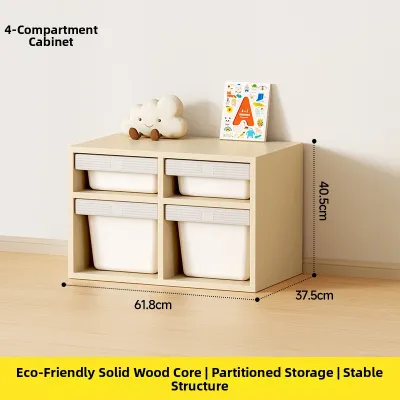
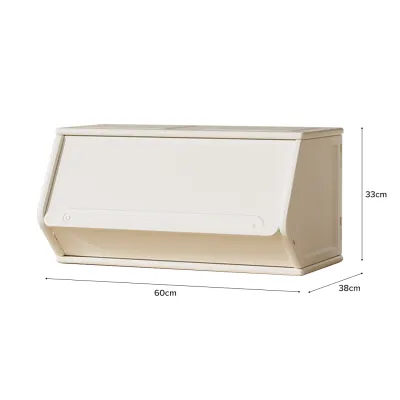
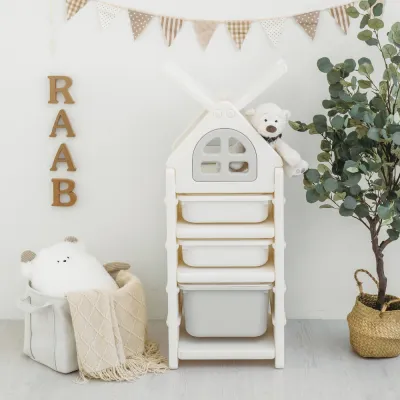
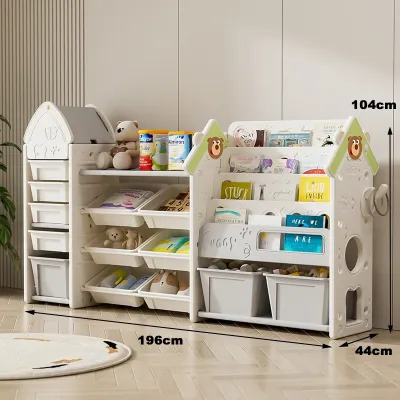
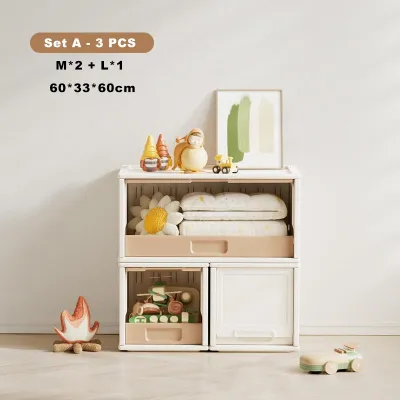
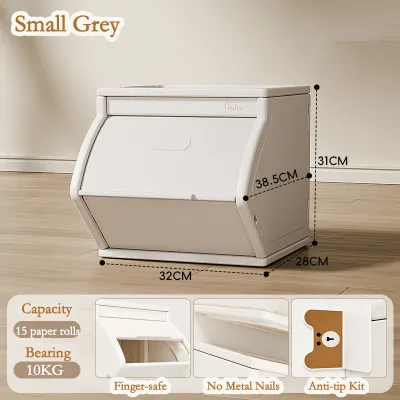
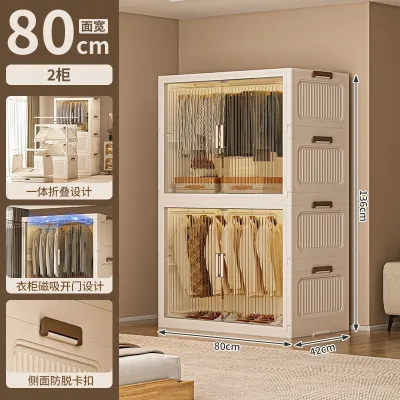
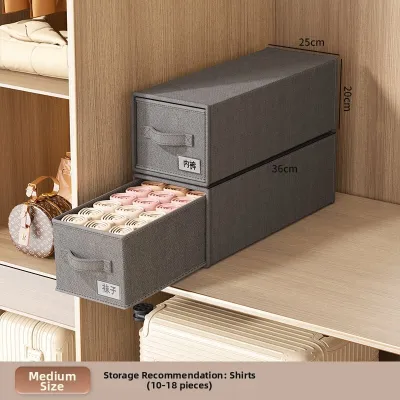
Prices are valid at publication and may change. Please refer to the product page for the latest price.
Regardless of how stable a cabinet appears on a showroom floor, securing it to the wall is a non-negotiable safety step. Always confirm whether the manufacturer includes a dedicated anti-tip restraint kit, such as heavy-duty wall anchor straps, steel cables, or L-brackets. If a kit is not included, you must purchase a high-quality aftermarket furniture anchoring system before assembling the unit.
Installation requirements will vary based on the construction of your home. In Singapore, where many residential walls are made of solid concrete or masonry, standard drywall screws will not suffice. You will need to use a hammer drill, appropriate masonry wall plugs, and heavy-duty screws to anchor the brackets securely into the concrete. For homes with drywall partitions, ensure that the anchors are screwed directly into the wooden or metal wall studs rather than the plasterboard alone, as drywall can easily crumble under the sudden force of a tipping cabinet.
Material Safety and Non-Toxic Finishes
Babies and toddlers explore their world through touch and taste, frequently mouthing furniture edges during teething phases. Consequently, the chemical composition of the cabinet and its surface coatings must be thoroughly vetted. When reviewing product specifications, look for clear indications that the materials are free from harmful substances such as lead, phthalates, and heavy metals.

Engineered wood products, such as medium-density fibreboard (MDF) or particleboard, are commonly used in modern furniture but can emit formaldehyde, a volatile organic compound (VOC) that can irritate a baby’s sensitive respiratory system. If you choose engineered wood, verify that the product complies with recognized low-emission standards, such as the California Air Resources Board (CARB) Phase 2 or European E1 standards. Solid wood is generally a more robust and chemically inert option, though it is still essential to verify that any adhesives used in its construction are non-toxic.
In Singapore’s warm and highly humid tropical climate, material selection also impacts long-term safety. High humidity can cause low-quality engineered wood to swell, warp, or degrade over time, potentially weakening the joints and compromising the cabinet’s structural integrity. If you opt for plastic storage bins or modular plastic cabinets, ensure they are made from food-grade, BPA-free plastics that will not degrade or become brittle when exposed to ambient heat and humidity.
Furthermore, the paints, varnishes, or laminates applied to the cabinet must be explicitly labeled as water-based and non-toxic. Avoid furniture finished with high-VOC solvent-based paints, which can off-gas harmful chemicals into the nursery air long after assembly. Look for finishes that comply with international toy safety standards, which restrict the migration of heavy metals from surface coatings.
Physical Design to Prevent Injuries
A cabinet’s physical detailing plays a crucial role in preventing common nursery injuries, such as painful pinches, deep scrapes, or severe bruising. Inspect the physical construction of the cabinet, paying close attention to the corners and edges. All corners should be smoothly rounded rather than sharp and angular. If you find a cabinet that fits your storage needs perfectly but has sharp edges, plan to install soft, child-proof corner guards immediately upon assembly.
For cabinets featuring doors, drawers, or lift-up lids, integrated safety hardware is essential. Look for hinges equipped with soft-close or damping mechanisms. These specialized hinges slow down the closing action, preventing heavy doors or lids from slamming shut on a child’s delicate fingers. If the cabinet features a toy chest design with a heavy top lid, ensure it has a lid support or gas strut that holds the lid open at any angle, preventing it from falling unexpectedly.
Another critical design aspect is the prevention of entrapment and suffocation. Toddlers love playing hide-and-seek and may attempt to climb inside large cabinet compartments or toy chests. To mitigate this risk, enclosed storage spaces should feature built-in ventilation holes or open-back designs that allow continuous airflow. Additionally, avoid cabinets with latching mechanisms that can lock from the outside, ensuring a child can easily push open any door or lid from the inside.
How to Verify Safety Claims Before Purchase
Verifying safety claims requires a proactive approach, especially when shopping online where you cannot physically touch or shake the furniture. Start by carefully reading the product packaging, instruction manuals, and online product descriptions. Look for specific safety warnings, recommended age ranges, and maximum weight limits for individual shelves and drawers. A reputable manufacturer will clearly state these limits to prevent overloading, which can lead to structural failure or tipping.
When purchasing from online marketplaces or ecommerce platforms, do not rely solely on promotional images. Scrutinize buyer-uploaded photos in the review sections to assess the real-world quality of the materials and the sturdiness of the joints. Look at the back of the cabinet in these photos to confirm if there are pre-drilled holes or reinforced areas designed specifically for mounting wall anchors.
If a product description is vague, lacks crucial safety details, or fails to mention tip-over prevention hardware, treat this as a red flag. Avoid purchasing furniture from sellers who cannot provide clear assembly instructions or material specifications. If you have doubts about a cabinet’s safety features, halt the purchase and contact the manufacturer directly to request clarification on their testing standards and material certifications.
Safe Placement and Ongoing Maintenance in the Nursery
Once you have selected a safe toys storage cabinet, its placement within the nursery is critical to maintaining a secure environment. Position the cabinet well away from windows to prevent children from using the shelves as a ladder to reach window sills or window locks. Keep the cabinet clear of curtain cords, blind chains, and electrical outlets, as these present severe strangulation and electrical hazards.
Additionally, avoid placing heavy items, such as large books, heavy wooden toys, or decorative objects, on the very top shelves of the cabinet. Keep heavier items in the bottom drawers or lower compartments to maintain a low center of gravity, and place only lightweight plush toys or soft items on the upper levels. This simple organizational habit significantly reduces the force of a tip-over if one should ever occur.
Maintaining nursery safety is an ongoing process that requires regular inspections. Establish a routine schedule—such as every three months—to check the cabinet’s structural integrity. Tighten any loose screws, check that the drawer slides operate smoothly without sticking, and inspect the wall anchor straps to ensure they remain tightly tensioned and securely fastened to both the cabinet and the wall.
Over time, daily wear and tear can compromise even the sturdiest furniture. You must define clear conditions for when to stop using the cabinet. If you notice structural cracks in the wood, severely rusted or stripped hardware, warped panels, or broken wall anchor straps, discontinue use immediately. Do not attempt temporary fixes with tape or glue; instead, keep the cabinet out of the child’s reach until you can replace the damaged parts with original manufacturer spares or replace the unit entirely.
Frequently Asked Questions (FAQ)
Are open shelving units safer than closed cabinets for a nursery?
Open shelving units and closed cabinets each have distinct safety profiles. Open shelves eliminate the risk of finger-pinching from heavy doors and completely remove the hazard of a child becoming trapped inside an enclosed compartment. However, open shelves make it easier for children to pull heavy toys off high shelves, and they can tempt adventurous toddlers to use the shelves as climbing steps. Closed cabinets prevent items from falling and keep clutter out of sight, but they require soft-close hinges, lid dampers, and adequate ventilation holes to be considered safe for a nursery. Whichever style you choose, both must be securely anchored to the wall.
Can I use a regular living room storage cabinet in the nursery?
Using a standard living room cabinet in a nursery is generally not recommended unless it undergoes rigorous safety modifications. Standard household furniture often lacks the child-specific safety designs built into nursery-specific furniture, such as rounded edges, non-toxic water-based finishes, and anti-pinch hinges. Furthermore, older or vintage living room cabinets may have been finished with lead-based paints or contain high levels of formaldehyde. If you must repurpose an existing cabinet, you must thoroughly sand and refinish it with certified non-toxic paint, install aftermarket soft-close dampers, add corner protectors, and anchor it securely to the wall using heavy-duty hardware suitable for your wall type.

Community discussion
Share your experience or ask a question. Comments are reviewed before publication.