
When potty training your toddler, the bathroom becomes the center of daily activity, but its slick surfaces introduce significant safety risks. To ensure your child’s safety, a baby step stool used in a wet bathroom must feature high-friction rubberized base grips, a textured or rubberized top surface, a wide and low-profile anti-tip base, and non-porous, water-resistant materials. These features work together to prevent slips and falls on wet tiles.
Quick Answer: Must-Have Safety Features for Wet Bathrooms
When choosing a step stool for a wet bathroom, prioritize these non-negotiable safety features to protect your toddler:
- High-Friction Rubberized Base Pads: Look for stools with continuous rubber borders or thick, molded-in rubber feet on the bottom. These grip wet porcelain or ceramic tiles, preventing the stool from sliding when stepped on.
- Textured or Rubberized Top Surface: A rubberized pattern or deep texture on the stepping platform ensures your child's bare, wet feet maintain traction.
- Wide, Low-Profile Base: A wide footprint with flared sides lowers the center of gravity, drastically reducing the risk of the stool tipping over when a child steps on the edge.
- Water-Resistant, Non-Porous Materials: High-density plastics or treated, non-porous materials prevent water absorption, mold growth, and structural decay.
Remember, no safety feature can replace active adult supervision. Always remain within arm’s reach of your child during use.
Products mentioned in this guide
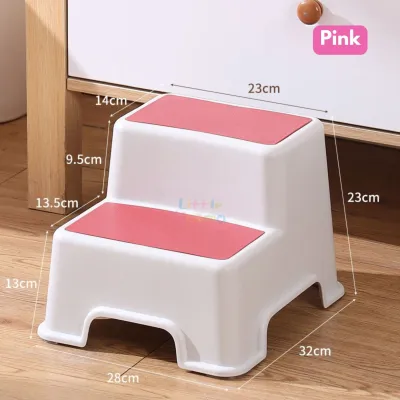
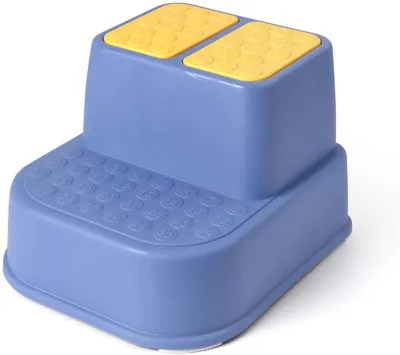
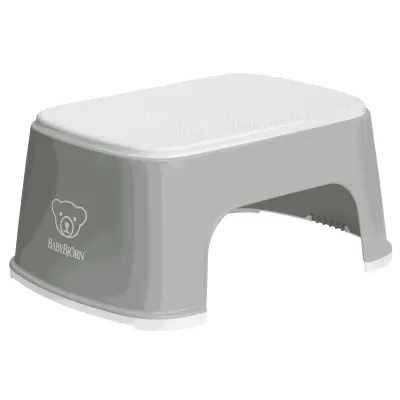
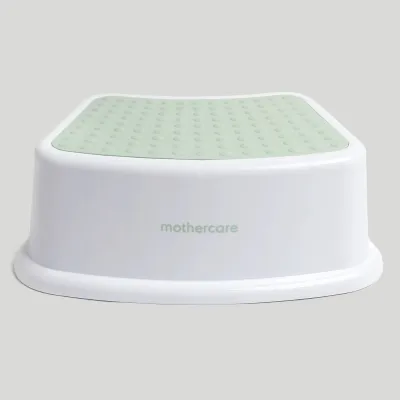
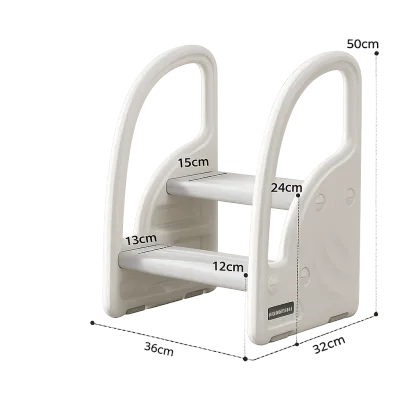
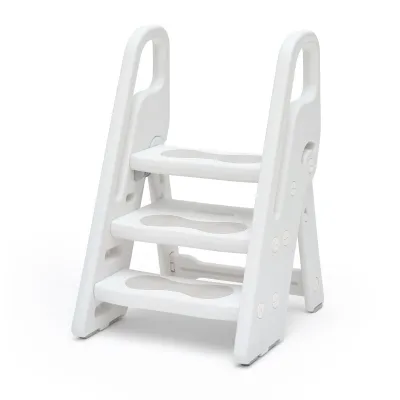
Prices are valid at publication and may change. Please refer to the product page for the latest price.
Understanding Bathroom Hazards During Potty Training
Bathrooms are inherently high-risk zones for young children, particularly during the active phase of potty training. In Singapore’s humid climate, bathroom floors dry slowly, leaving a persistent film of moisture on ceramic or homogeneous tiles. This moisture, combined with invisible residues from soaps, shampoos, and bath oils, creates an exceptionally slick surface. For a toddler whose gross motor skills and balance are still developing, navigating these surfaces is a complex physical challenge.

Unlike a dry bedroom or living room where a simple plastic stool might suffice, a wet bathroom demands a much higher tolerance for instability. Toddlers do not step directly onto the center of a stool with perfect balance; they often approach from an angle, placing their weight on the outer edges. On a wet floor, this uneven force can easily cause a standard stool to slide outward or tip sideways. Furthermore, wet bare feet have almost no traction on smooth plastic, making a slip off the top of the stool highly likely. Recognizing that a wet bathroom is a dynamic, high-slip environment is the first step in choosing gear specifically engineered to withstand these conditions.
Critical Safety Features to Evaluate Before Buying
Selecting the right baby step stool requires looking past appealing colors or cartoon designs to evaluate the engineering of the product. Parents should systematically assess three core pillars of safety: traction, stability, and material integrity. Each of these categories addresses a specific physical risk associated with wet, humid bathroom environments.
Quality bathroom step stools in Singapore typically range from S$15 to S$40, depending on the complexity of their anti-slip engineering and materials. When shopping, avoid relying solely on generic marketing terms like “slip-resistant.” Instead, examine the product specifications, material compositions, and manufacturer care labels. Understanding the physical mechanics of how a stool interacts with wet tiles and a child’s weight will help you make an informed decision that protects your toddler.
Non-Slip Surfaces and Grips
The point of contact between the stool and the floor, as well as the contact between your child’s feet and the stool, must provide absolute traction. For the top platform, look for step stools that incorporate a fully rubberized upper layer or a deeply textured pattern. A smooth plastic top becomes incredibly slick when wet, whereas a rubberized surface creates friction even when coated with soapy water. Ensure the textured pattern covers the entire stepping area, including the edges, so your child has grip no matter where they place their feet.
Equally critical is the underside of the stool. A safe bathroom step stool must feature robust, high-friction rubber pads on its feet. Ideally, these pads should be co-molded—integrated directly into the plastic frame during manufacturing—rather than simply glued on. In the high humidity of a Singapore bathroom, water can seep into adhesive layers over time, causing glued-on rubber pads to peel off and rendering the stool unsafe. Before purchasing, run your hand along the bottom grips to verify they are soft, pliable rubber—which grips wet tile effectively—rather than hard, slick plastic.
Base Stability and Weight Distribution
To prevent tipping, a step stool must have an engineered physical footprint that manages weight distribution safely. A wide, low-profile base is the gold standard for bathroom safety. Look for designs where the bottom of the stool is significantly wider than the top stepping platform, creating a flared or pyramidal shape. This structural design lowers the stool’s center of gravity, ensuring that even if your child steps directly on the very edge of the platform, the downward force remains within the footprint of the base, preventing a tip-over.
Additionally, check the manufacturer’s stated maximum weight limit. While many plastic stools can support adult weights, some lightweight toddler models are rated only up to 20 or 30 kilograms. Exceeding these limits can cause the plastic to flex or bow, destabilizing the entire structure. A heavier, slightly weighted base can also add stability, making it harder for a toddler to accidentally kick or push the stool out of place when stepping up.
Water-Resistant and Easy-to-Clean Materials
The materials used in a bathroom step stool directly impact its long-term safety and hygiene. High-density, seamless plastics (such as polypropylene) are highly recommended for wet environments. These materials are completely non-porous, meaning they will not absorb moisture, warp, or degrade when exposed to daily splashes or high humidity. Seamless designs are particularly beneficial because they lack deep crevices where water can pool, which quickly becomes a breeding ground for mold, mildew, and bacteria.
Avoid stools constructed from untreated wood, those featuring fabric covers, or models with porous foam padding. These materials trap moisture, leading to structural rotting, unpleasant odors, and a slimy surface texture that reduces grip. Additionally, ensure the stool’s design allows for rapid drainage; some models feature subtle slopes or drainage holes in the top platform to prevent water from pooling where your child steps. Finally, verify the manufacturer’s care instructions to ensure the material can withstand regular cleaning with standard household disinfectants without cracking or discoloring.
Safe Placement and Daily Usage Practices
Even the most securely engineered step stool can fail if placed or used incorrectly. Always position the step stool on a flat, level section of the bathroom floor. In many Singapore homes, bathroom floors are sloped slightly toward floor traps to facilitate drainage; avoid placing the stool directly on these sloped zones, as even a minor angle can compromise its anti-tip engineering. Ensure the stool is kept well away from high-risk impact zones, such as the sharp edges of glass shower screens, bathtubs, or metal towel racks.
Before letting your child use the stool, take a moment to wipe up any standing water or soapy puddles on the floor around it. Keeping the immediate area as dry as possible maximizes the grip of the rubber feet. Most importantly, remember that safety features are designed to assist, not replace, parental care. Active adult supervision is mandatory; always stand within arm’s reach of your child, ready to stabilize them if they lose their balance.
When the stool is not in use, store it in a dry corner or out of the main walkway. This prevents adults or older siblings from tripping over it in the dark or during humid, low-visibility conditions. If your bathroom layout makes storage difficult, look for compact, low-profile models that can slide neatly under the sink pedestal when not in use.
Maintenance, Inspection, and When to Replace
A step stool’s safety features can degrade over time due to constant exposure to moisture and cleaning chemicals. Establish a routine monthly inspection to ensure the stool remains safe for daily use. Check the underside of the stool to confirm that all rubber pads are intact, clean, and free of soapy buildup, which can make rubber slick. Inspect the plastic body carefully for hairline cracks, stress marks (which often appear as white lines in colored plastic), or loose joints if the stool is a multi-step model.
You must discontinue use and replace the stool immediately if you observe any of the following conditions:
- The stool wobbles or rocks when placed on a completely flat surface.
- The rubber non-slip pads on the base have peeled off, worn down, or hardened.
- You detect structural cracks or severe flexing when weight is applied.
- Persistent mold or mildew has penetrated the material and cannot be cleaned.
- Your child has exceeded the manufacturer's recommended weight or height limits.
Always refer to the manufacturer’s manual for specific guidelines on product lifespan and disposal. If you ever suspect the structural integrity of the stool has been compromised, do not attempt a DIY repair; replace it immediately to prevent accidents.
Frequently Asked Questions (FAQ)
Can I use a regular wooden step stool in the bathroom?
Standard wooden step stools are generally not suitable for wet bathrooms unless they are explicitly treated, sealed, and rated for high-moisture environments by the manufacturer. Untreated or poorly sealed wood absorbs humidity and water splashes, causing the wood to warp, swell, and eventually splinter. This absorption also fosters deep mold and bacterial growth within the wood fibers, which is nearly impossible to disinfect completely. Additionally, wooden stools often lack the specialized, molded-in rubber grips required to prevent sliding on wet bathroom tiles. For wet areas, stick to high-quality, non-porous plastic stools designed specifically for bathroom use.
At what age or height should a child stop using a step stool?
There is no single age at which a child must stop using a step stool; instead, you should rely on physical developmental milestones and the manufacturer’s specific height and weight limits. Generally, children are ready to transition away from a step stool when they can comfortably and safely reach the sink or toilet, wash their hands, and step down to the floor without tiptoeing, overreaching, or losing their balance. If your child’s chest or hips rise significantly above the sink level when standing on the stool, or if they exceed the maximum weight rating specified in the product manual, it is time to transition to standing directly on the floor or to a lower-profile step.

Community discussion
Share your experience or ask a question. Comments are reviewed before publication.