
To ensure a bedside crib is safe for your newborn in Singapore, it must carry recognized international safety certifications—specifically EN 1130 (the European standard) or ASTM F2906 (the US standard). These certifications prove the product has undergone rigorous third-party testing for structural stability, non-toxic materials, and safe gap dimensions.
However, a certification label is only the starting point. Parents must also verify the physical features of the crib, ensure a secure attachment to the adult bed, and understand the strict developmental limits for safe usage. This guide outlines the exact standards to look for, the physical checks to perform, and the local safety resources to consult before making your purchase.
Why Safety Certifications Matter for Bedside Cribs
When preparing a nursery in Singapore, safety is the paramount consideration for new parents. A bedside crib—often called a bedside sleeper—is designed to latch directly onto the side of an adult bed, allowing parents to sleep close to their newborn without sharing the same mattress. While this setup offers convenience for night-time feeding and comforting, it introduces unique mechanical risks that a standard standalone cot does not face.
Products mentioned in this guide

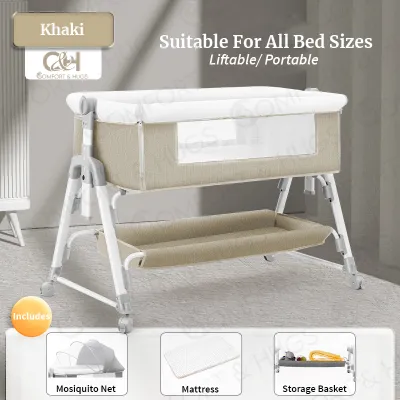

![[Ready Stock] Baby Cradle Crib Bed Height Adjustable Bed Safe Co-Sleeping with Detachable Side Panel for 0-2 Years](https://img.lazcdn.com/g/p/b92bf6151aa3a5b02eb88bf95f00031b.jpg_400x400q80.jpg_.webp)
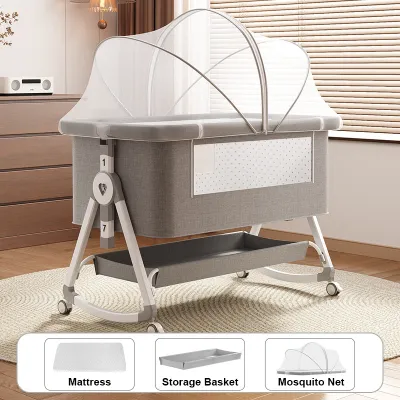
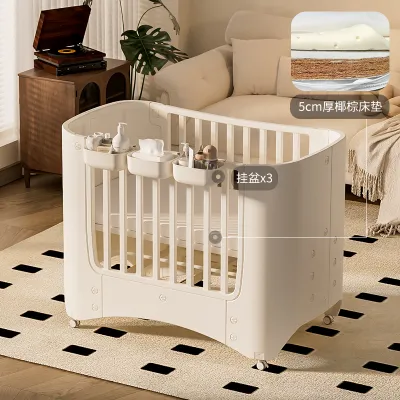
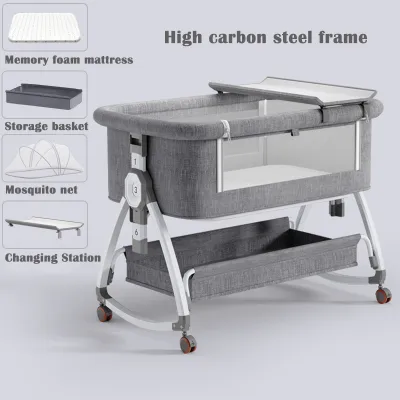
Prices are valid at publication and may change. Please refer to the product page for the latest price.
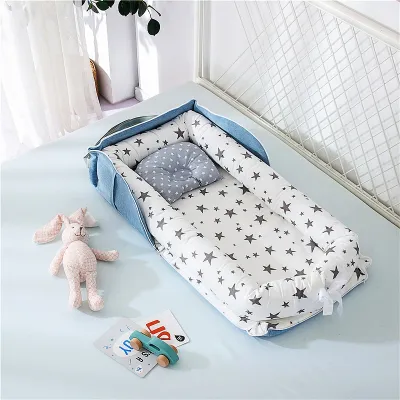
It is critical to distinguish between rigid bedside cribs and soft, fabric-based “co-sleepers” or nest beds that sit directly on the adult mattress. Rigid bedside cribs have a solid frame, breathable walls, and a dedicated attachment system to prevent gaps. Soft co-sleepers, on the other hand, lack structural support and present significant suffocation and entrapment hazards if the baby rolls against the soft sides or if adult bedding shifts over them.
Marketing terms like “baby-safe,” “pediatrician-approved,” or “ergonomic” are frequently used by manufacturers on online marketplaces and retail sites. However, these labels are completely unregulated and do not guarantee that the product has undergone any physical testing. They are promotional claims rather than verified safety assurances.
A legitimate, third-party certification indicates that a bedside crib has passed standardized, independent laboratory testing. These tests evaluate structural integrity under weight loads, the chemical safety of paints and plastics, and precise gap sizing to prevent head or limb entrapment. Relying on verified certifications is the only objective way to ensure a crib is safe for unsupervised sleep.
Key Safety Standards to Look For on the Label
When shopping for a bedside crib, you should look for explicit markings on the packaging, the instruction manual, or the product frame itself that indicate compliance with recognized international safety frameworks. Because Singapore adopts international safety standards for many consumer goods, products tested to European, American, or Australian standards are highly reliable.

The most common and rigorous standard for bedside sleepers is the European safety standard EN 1130 (specifically EN 1130:2019 or later). This standard covers cribs and cradles, detailing specific requirements for bedside sleepers, including attachment security and the prevention of gaps between the crib and the adult bed. Alternatively, the US standard ASTM F2906 (Standard Consumer Safety Specification for Bedside Sleepers) is another excellent benchmark that ensures the product meets strict federal safety requirements.
Do not accept generic furniture standards, such as those for general adult beds or standard household shelving. The certification must explicitly mention cribs, cots, or bedside sleepers. To verify these claims, check the product’s instruction manual or the manufacturer’s official website for a Declaration of Conformity or a test report reference number. You can cross-reference the specific model number on the crib’s label with these official documents to ensure the certification is authentic and matches the exact model you are buying.
In Singapore, consumer product safety is overseen by the Consumer Product Safety Office (CPSO). While the CPSO regulates various household appliances and children’s products under the Consumer Protection (Safety Requirements) Registration Scheme, parents should also actively check the CPSO recall database and general consumer protection alerts. Ensure that the brand and model of the bedside crib you plan to purchase have not been flagged for safety violations, structural failures, or voluntary recalls in Singapore or international markets.
Be highly skeptical of vague claims like “tested to international standards” or “meets safety guidelines” if the manufacturer does not provide a specific standard number (like EN 1130 or ASTM F2906) or the name of an independent testing laboratory (such as SGS, TÜV Rheinland, or Intertek). Avoid purchasing products from sellers who only offer photocopied certificates with blurred details, as these can easily be falsified or applied to different, uncertified models.
Physical Safety Features to Verify Beyond Certifications
Even if a bedside crib carries the correct certification labels, you should perform a physical inspection of the product—either in-store or immediately upon delivery and assembly—to ensure there are no manufacturing defects or assembly errors.
- Mattress Firmness and Fit: The mattress included with the bedside crib must be exceptionally firm and flat. Soft sleeping surfaces pose a severe suffocation risk for newborns who cannot yet lift their heads. When you press down on the mattress, it should spring back immediately without leaving an indentation. Furthermore, the mattress must fit snugly inside the crib frame. Check that there are no gaps larger than two fingers (approximately 2.5 cm) between the edge of the mattress and the crib walls to prevent your baby's head or limbs from becoming trapped.
- Breathable Mesh Sides: If the bedside crib features mesh panels on one or more sides, inspect the weave of the fabric. The mesh must be fine enough to prevent small fingers, toes, or clothing buttons from getting caught, while still allowing maximum airflow. This breathability is essential for reducing the risk of carbon dioxide rebreathing and keeping the baby cool.
- Attachment Mechanism: The system used to secure the crib to your bed—whether it uses heavy-duty straps, brackets, or anchor plates—must be robust and completely lockable. When fully installed, there must be absolutely no gap between the adult mattress and the bedside crib mattress. The crib must not shift or pull away from the bed when you apply moderate outward pressure.
- Drop-Side Locks: Many bedside cribs feature a drop-side panel that lowers to give you easy access to your baby. If your crib has this feature, verify that the lowering mechanism requires a deliberate, multi-step action to unlock (such as pressing a button while simultaneously sliding a latch). This prevents accidental release by an adult leaning against the crib, a sibling playing nearby, or shifting bedding.
- Stability and Base: The frame of the crib must have a wide, stable footprint to prevent tipping. If the crib is equipped with wheels or castors for easy movement around your home, every single wheel must have a reliable, independent locking mechanism. Ensure these locks are engaged whenever the crib is attached to your bed or used for sleeping.
Safe Setup and Usage Boundaries for Newborns
Proper installation is just as critical as choosing a certified product. Before purchasing, you must verify that the bedside crib is explicitly compatible with the design of your adult bed.
- Bed Compatibility: Singapore apartments often feature a variety of bed styles, including divans, platform beds, and framed beds with recessed mattresses. Not all bedside cribs are compatible with every bed type. Check the manufacturer's specifications to ensure the crib's attachment straps can wrap securely around your bed frame or box spring, and that the crib's height can adjust precisely to align with your mattress height. The top of the lowered side panel of the crib must never be higher than the adult mattress.
- Clear Sleep Space: The interior of the bedside crib must remain completely clear of any loose items. Do not place blankets, pillows, quilts, bumper pads, sleep positioners, or soft toys inside the crib. To keep your newborn warm, use a properly fitted infant sleep sack instead of loose blankets, which can easily cover the baby's face and cause suffocation.
- Climate and Maintenance: Singapore’s tropical, highly humid climate creates an environment where mold and mildew can develop rapidly. Regularly inspect the underside of the crib mattress, the fabric lining, and the wooden or metal frame for any signs of dampness or dark spots. Ensure your nursery is well-ventilated, and wash any removable, machine-washable fabric covers according to the manufacturer's care instructions to maintain hygienic and respiratory safety.
- Supervision Limits: Bedside cribs are designed specifically for sleeping under the direct supervision of an adult sleeping in the adjacent bed. They are not intended to be used as unsupervised daytime playpens or containment areas. If you need to leave your baby unattended, even for a short moment, ensure the drop-side panel is fully raised and locked, or place the baby in a dedicated, certified standalone playpen.
When to Stop Using the Bedside Crib
A bedside crib is a temporary sleeping solution designed specifically for the early months of a baby’s life. To prevent falls, entrapment, and other physical injuries, you must transition your baby out of the bedside sleeper mode as soon as they reach certain developmental or physical milestones.
- Weight and Height Limits: Every bedside crib has strict maximum weight and height limits specified by the manufacturer. These limits are typically printed on a warning label attached to the frame or detailed in the user manual. Never rely on your baby's age as a guide, as infants grow at highly variable rates. Weigh and measure your baby regularly to ensure they remain well within the certified safety limits of the crib.
- Developmental Milestones: You must stop using the bedside crib in its open, attached-to-bed configuration immediately when your baby shows signs of rolling over, pushing up on their hands and knees, or attempting to pull themselves up using the sides of the crib. Once a baby can transition into these positions, they are at a high risk of climbing or falling out of the lowered side of the crib onto the floor or the adult bed.
- Transitioning: Depending on the design of your specific model, you may be able to convert the bedside crib into a standalone cot by fully raising and locking the drop-side panel and lowering the mattress base to its lowest setting (if certified for this configuration). If your model does not support this transition, or if your baby has outgrown the dimensions of the crib, you must transition them to a standard, full-sized standalone wooden crib or cot that meets local safety standards.
Frequently Asked Questions (FAQ)
Is it safe to buy a second-hand bedside crib?
Purchasing a pre-owned bedside crib carries significant safety risks and is generally not recommended unless you can verify its complete history. Second-hand units often lack critical attachment hardware, such as the specific straps or brackets required to secure the crib to an adult bed, which are difficult to replace safely with generic parts.
Additionally, older models may have been manufactured under outdated safety standards, or they may have suffered hidden structural damage, hairline fractures, or weakened joints from previous use and assembly cycles. It is also challenging to verify if the specific unit was subject to a safety recall by the manufacturer.
If you must use a second-hand bedside crib, you must obtain the original printed user manual to verify that every single screw, strap, and bracket is present and original. Test all locking mechanisms and drop-side latches to ensure they function perfectly without sticking or slipping. Finally, you must discard the old mattress and purchase a brand-new, firm mattress directly from the original manufacturer that is specifically sized for that exact crib model to eliminate suffocation and hygiene risks.

Community discussion
Share your experience or ask a question. Comments are reviewed before publication.