
Finding the right diaper pants for your baby is a highly individualized journey that often involves trial, observation, and adjustment. While major brands like Drypers, Huggies, and Pampers each offer distinct design philosophies, the ideal choice for your household depends on your baby’s unique body shape, skin sensitivity, and your family’s budget. Rather than relying on marketing claims or universal recommendations, parents can make an objective decision by evaluating how these diaper pants perform in real-world conditions. This guide provides a structured approach to comparing these three prominent brands across key performance areas—absorbency, physical fit, and true financial value—helping you identify the most reliable option based on observable results.
Core Criteria for Comparing Diaper Pants
To establish a fair comparison baseline among Drypers, Huggies, and Pampers pants, parents must first define the key performance indicators that directly impact daily use. A diaper’s primary function is to contain moisture and waste, but the ease of use associated with pull-up pants introduces additional variables. When evaluating these brands, you should look beyond the colorful packaging designs and focus on specific structural elements that dictate performance.
Absorbency metrics are the first critical indicator, which you can identify on packaging through descriptions of core technology, distribution layers, and the presence of wetness indicators. These features indicate how the diaper manages liquid flow and whether it distributes wetness evenly or allows it to pool in one spot. A reliable core technology should lock moisture away from the surface, keeping the inner lining dry to the touch even after multiple wettings.
Products mentioned in this guide
![[1 Carton] Drypers DryPantz (Sizes M L XL XXL)](https://img.lazcdn.com/g/p/5e3e411e79777887deee5a23ddca4550.png_400x400q80.png_.webp)
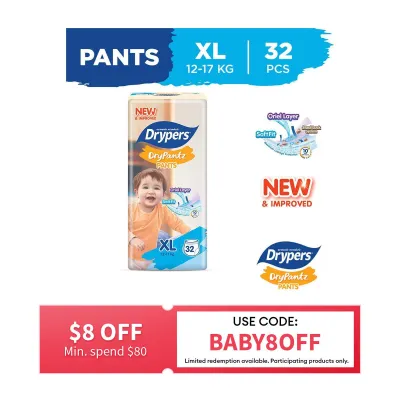
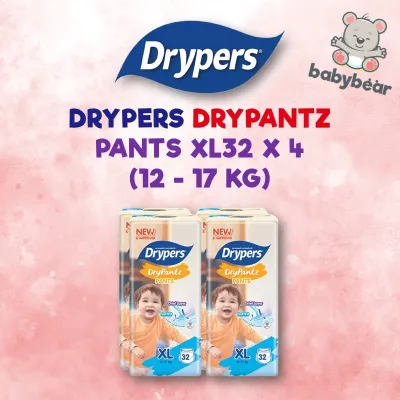
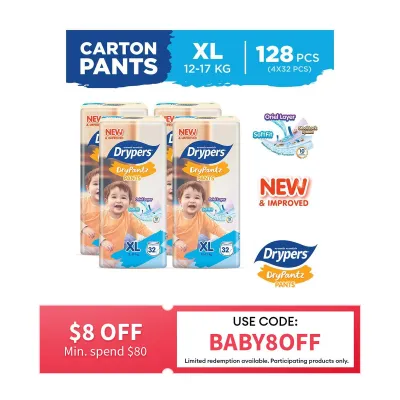
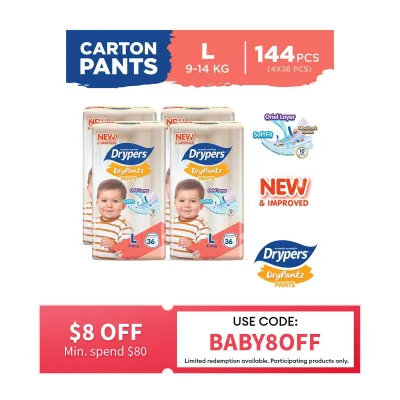
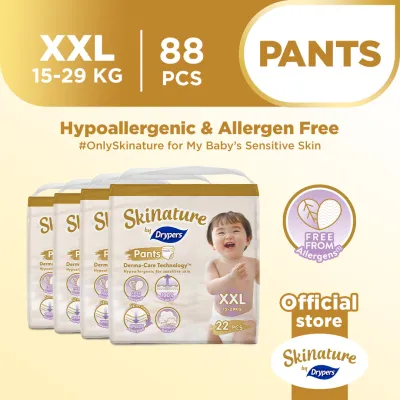
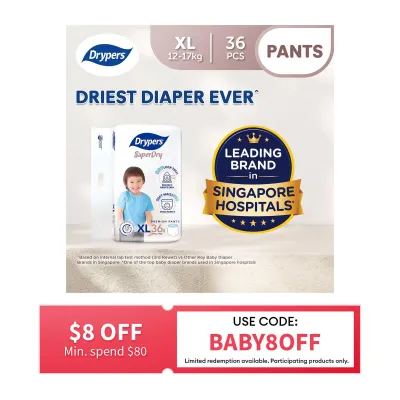
Prices are valid at publication and may change. Please refer to the product page for the latest price.
Physical fit indicators are equally vital, particularly for active babies who are crawling, cruising, or walking. Look for packaging claims regarding waistband elasticity, stretchability, and the specific structure of the leg cuffs. The waistband must stretch sufficiently to allow easy pulling up and down during changes, yet retain enough tension to stay secure without slipping. Leg cuffs should feature double-barrier designs to catch lateral leaks during sudden movements.
Finally, true value calculation extends far beyond the upfront price of a single pack. A cheaper diaper that requires frequent changes due to premature sagging or causes regular leaks is often more expensive in the long run than a premium option that performs reliably. By establishing these baseline criteria—absorbency, fit, and overall performance reliability—you can systematically test each brand to see how they measure up in your daily routine.
Evaluating Absorbency and Overnight Leak Protection
Verifying absorbency claims requires careful observation during daily use rather than relying on unverified brand promises. When examining diaper pants, start by reading the packaging to understand the manufacturer’s proprietary absorption systems, such as channel designs or absorbent gel materials. These technologies are designed to distribute liquid evenly across the core, preventing the diaper from becoming heavy and sagging in a single area.

During use, the wetness indicator—typically a line that changes color when exposed to moisture—serves as a helpful visual guide. However, parents should also perform physical checks to assess how well the diaper handles saturation. After your baby has worn the pants for a few hours, gently press a dry tissue against the inner lining during a change; a dry tissue indicates that the core is successfully locking moisture away from your baby’s skin.
Observable signs of saturation and pooling differ significantly between active daytime play and overnight sleep. During the day, gravity and constant movement can cause compression leaks, where liquid is squeezed out of a saturated core when the baby sits down. If you notice dampness on the outside of the diaper or on your baby’s clothes during play, it suggests the core material may not be holding up to physical pressure.
Overnight protection presents a different challenge, as babies remain in the same diaper for extended periods. If you consistently observe leaks along the back or sides when your baby wakes up, the diaper’s capacity may be fully exhausted. In such cases, regardless of your preferred daytime brand, you may need to switch to a dedicated, high-capacity overnight diaper or size up to accommodate the increased volume of urine during long sleep stretches.
Assessing Fit, Comfort, and Skin Sensitivity
Achieving the correct physical fit is essential not only for leak prevention but also for maintaining your baby’s comfort and skin health. Diaper pants rely heavily on elastic materials to create a secure seal around the waist and thighs. Because babies have diverse body shapes—some being long and lean, others having rounder bellies and chunky thighs—a brand that fits one child perfectly may cause issues for another.
To evaluate the fit of Drypers, Huggies, or Pampers pants, use a simple physical checklist during your next change. First, check the waistband: you should be able to run two fingers comfortably between the elastic and your baby’s skin without feeling excessive resistance. Next, inspect the leg cuffs; ensure the outer frills are fully flipped outward rather than tucked inward, as tucked frills are a common cause of side leaks and chafing. If you notice deep, persistent red marks around the waist or thighs after removal, the elastic is too tight, indicating a need to adjust the size or try a different brand’s cut.
Skin sensitivity is another critical factor, particularly in Singapore’s warm and humid climate, which can trap moisture and heat inside the diaper. Carefully observe the texture of the inner lining; it should feel soft and smooth to the touch, minimizing friction against your baby’s delicate skin. Many brands claim high breathability, which you can verify by checking if the outside of the diaper feels slightly warm or damp during use—a sign that water vapor is escaping while liquid is contained.
Despite careful selection, some babies may develop skin irritation or diaper rash due to individual sensitivities to materials, fragrances, or wetness. If you observe persistent redness, small bumps, or a worsening rash that does not improve with standard barrier creams, stop using the current brand immediately. Always consult a qualified pediatrician or healthcare professional to address persistent skin issues and obtain appropriate medical guidance.
Calculating True Value and Cost Per Diaper
To make an informed financial decision, parents must look past the retail price of a single pack and calculate the exact cost per diaper. Because different brands package their diaper pants in varying quantities, comparing pack prices directly can be highly misleading. A simple mathematical calculation allows you to establish a clear, standardized comparison across all options.
To find the cost per diaper, divide the total price of the pack (in S$) by the number of diapers contained inside. For example, if a pack costs S$24.00 and contains 40 diaper pants, the cost per diaper is S$0.60. Performing this calculation across different sizes and packaging options reveals the true unit cost, allowing you to compare Drypers, Huggies, and Pampers on an equal footing.
When applying this formula, consider the purchasing channel, as buying in bulk often yields significant savings. Standard packs purchased at local convenience stores typically carry the highest unit cost. In contrast, purchasing jumbo boxes or multi-pack bundles from official brand stores or major online marketplaces during promotional events can dramatically lower the cost per diaper. Keep a running log of these unit costs to identify when and where to purchase your preferred brand.
However, a low unit cost is only beneficial if the diaper performs reliably. You must factor the hidden costs of poor performance into your overall value assessment. If a cheaper diaper pants option results in frequent blowouts, you will face increased expenses from extra laundry cycles, ruined clothing, and a higher consumption of baby wipes and barrier creams. If you find yourself changing a cheaper diaper twice as often to prevent leaks, a slightly more expensive, higher-capacity diaper may actually prove more economical.
Decision Framework: Which Brand Fits Your Baby?
Selecting the right diaper pants involves matching your specific household priorities with the observable physical characteristics of your baby. Because no single diaper brand is universally superior, parents can use a conditional decision framework to guide their choice during trial periods.
You may want to choose Drypers pants if your cost-per-diaper calculations show they offer a highly favorable unit price for your budget, and your baby’s skin remains clear and free of irritation during a trial run. This option is often suitable for families prioritizing day-to-day economy without compromising basic containment needs.
You may want to choose Huggies pants if you observe that your baby is highly active and requires a particularly secure, structured fit. If your child is constantly climbing, crawling, or running, and you find that the specific waistband elasticity and double-barrier leg cuffs of this brand prevent shifting and gaps during movement, the physical design aligns well with your baby’s activity level.
You may want to choose Pampers pants if your primary observation is that your baby has highly sensitive skin that reacts quickly to friction. If you note that the inner lining texture of this brand feels exceptionally soft to your touch and visibly reduces red friction marks around the thighs and waist, the material composition may offer the gentle contact your baby needs.
If your baby consistently experiences leaks despite using a brand that matches your criteria, neither option may be at fault. First, verify if your baby’s weight falls exactly on the boundary between two sizes on the manufacturer’s packaging, as fit tolerances and cut dimensions vary significantly between brands. If the size is correct but leaks persist, it may indicate a need to check for underlying changes in your baby’s output volume or digestive shifts, which may require a temporary change in diaper style or capacity.
Frequently Asked Questions (FAQ)
Can I mix different diaper brands for day and night use?
Yes, mixing different diaper brands is a highly practical and cost-effective strategy used by many parents. You can utilize a more budget-friendly diaper pants brand during the day when changes are frequent—typically every two to three hours—and switch to a high-absorbency, premium brand for overnight sleep. This approach ensures your baby remains dry and comfortable during long sleep stretches while optimizing your overall diapering budget.
How do I know if it is time to size up in diaper pants?
Several physical signs indicate it is time to transition to a larger size, regardless of the brand you are using. Look for deep red marks left by the waistband or leg cuffs, which suggest the elastic is under too much tension. Additionally, if the diaper pants sit too low on your baby’s waist, fail to cover the buttocks fully, or if you experience sudden, frequent leaks that did not occur previously, these are clear indicators that your baby has outgrown the current size capacity.

Community discussion
Share your experience or ask a question. Comments are reviewed before publication.