
Choosing between disposable and reusable swim diapers depends primarily on how often your baby enters the water, your budget, and your preference for convenience versus sustainability. For families enrolled in weekly swim classes, reusable swim diapers are highly practical, offering significant long-term savings and adjustable snaps that grow with your baby. Conversely, if you only plan occasional trips to the pool, beach holidays, or spontaneous water play sessions, disposable swim diapers provide a convenient, hassle-free option that you can simply discard after use. Understanding how each type performs across key areas like containment, cost, and ease of cleaning will help you select the right fit for your family’s lifestyle.
Understanding the Core Function of Swim Diapers
Before comparing disposable and reusable options, it is essential to understand what a swim diaper is actually designed to do. Unlike standard diapers, which are engineered to absorb as much liquid as possible, swim diapers are designed solely to contain solid waste. They do not absorb urine or water from the pool. If they did, they would instantly saturate, become extremely heavy, drag your baby down, and lose their ability to function safely.
Because swim diapers do not absorb liquids, they allow water to pass through while keeping feces securely contained. This design prevents harmful bacteria from contaminating public swimming pools and splash pads. Consequently, almost all public pools, swim schools, and water parks require babies who are not yet toilet-trained to wear a swim diaper before entering the water.
Products mentioned in this guide
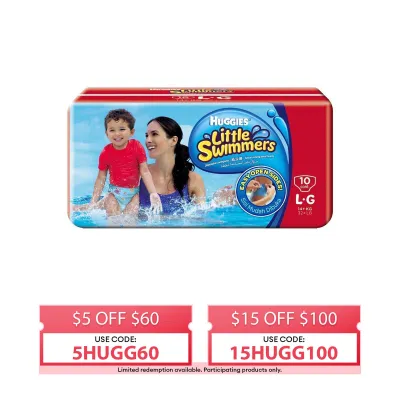
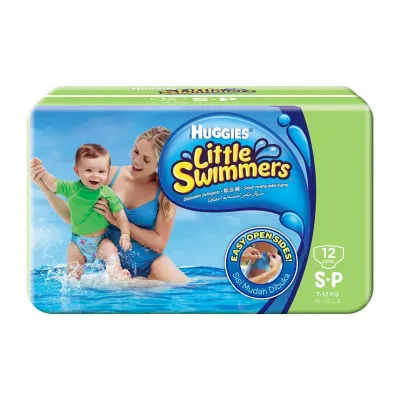
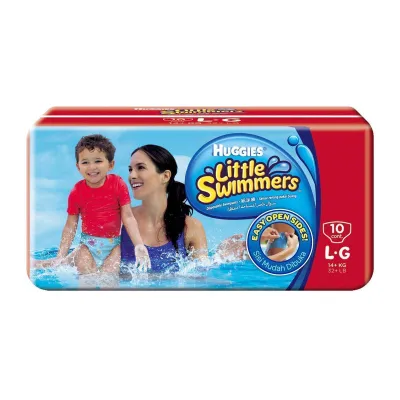
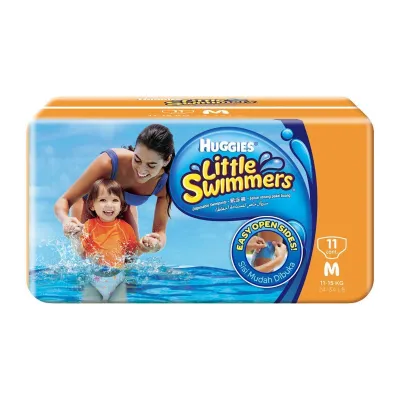
![[SG Seller] Disposable Baby Swimming Diapers Trunk / 5 Packets / Infant Swim Diaper Pants / Cloth Waterproof](https://img.lazcdn.com/g/p/f2015285678421d34766d9a4b41caaab.jpg_400x400q80.jpg_.webp)
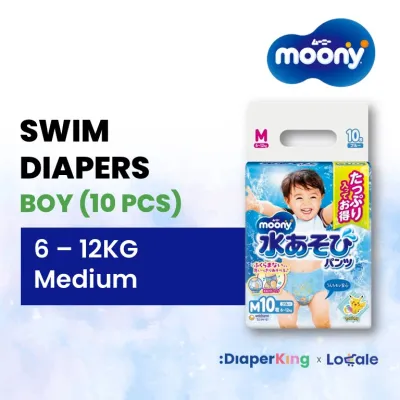
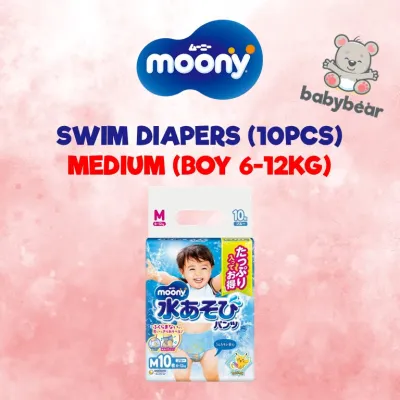
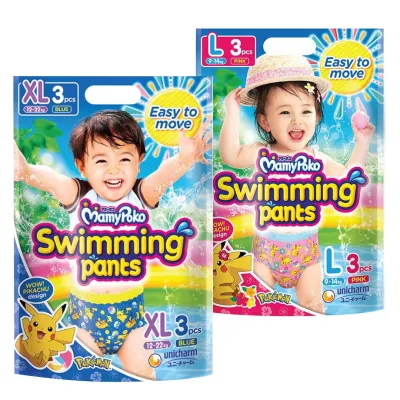
Prices are valid at publication and may change. Please refer to the product page for the latest price.
Using a regular diaper in a swimming pool is a common mistake that poses serious safety risks. Standard disposable diapers contain super-absorbent polymers that swell rapidly when submerged in water. Within minutes, a regular diaper will balloon to several times its original size, weighing down your baby and potentially tearing open. When the diaper material breaks apart, it releases gel beads into the pool, which can clog filtration systems and create a safety hazard. Always ensure your baby is wearing a dedicated swim diaper before they get near the water.
Evaluating Disposable Swim Diapers for Your Needs
Disposable swim diapers are single-use options that look and feel similar to regular diapers but are made with non-swelling materials. They typically feature tear-away sides for easy removal, making them highly convenient when dealing with a messy diaper change at a public facility. For many parents, the primary appeal of disposables is the convenience of a single-use item, as there is no need to carry a wet, soiled diaper home in your bag.

This convenience makes disposable swim diapers a practical choice for travel, beach vacations, and infrequent pool visits. If your baby only swims during occasional weekend trips or holiday getaways, buying a single pack of disposables is highly efficient. You can pack exactly what you need, use them at the beach or pool, and discard them immediately. There is no need to worry about finding laundry facilities to wash a reusable diaper while away from home.
However, the convenience of disposables comes with ongoing financial and environmental considerations. If your baby swims regularly, the cost of purchasing packs of disposable swim diapers will accumulate over time. Additionally, because they are single-use items, they contribute directly to landfill waste. Proper disposal is also critical; parents must always dispose of soiled swim diapers in designated waste bins rather than leaving them in changing areas or near pool decks.
Evaluating Reusable Swim Diapers for Your Needs
Reusable swim diapers are washable, fabric-based garments designed to be used repeatedly. They are typically constructed with a waterproof outer layer, often made of polyurethane laminate, and a soft mesh or polyester interior lining that catches solid waste. Many reusable models feature adjustable snaps or hook-and-loop fasteners along the waist and thighs, allowing the diaper to expand as your baby grows.
For families participating in weekly infant swim classes, reusable swim diapers offer substantial long-term cost benefits. Instead of buying new packs of disposables every few weeks, a single reusable diaper can last for months or even years. Because they are highly adjustable, one reusable diaper can often span multiple clothing sizes, saving you from having to purchase new swim gear every time your baby goes through a growth spurt.
The primary trade-off with reusable swim diapers is the maintenance required. When your baby has an accident, you must carefully remove the diaper, dump any solid waste into a toilet, and wash the diaper according to the manufacturer’s instructions. This process requires you to carry a wet bag to transport the soiled diaper home safely. For some parents, the prospect of handling and washing a soiled swim diaper is less appealing than simply throwing a disposable one away, but the environmental benefits and cost savings make it a highly rewarding choice for frequent swimmers.
Head-to-Head Comparison: Cost, Convenience, and Fit
When deciding between disposable and reusable swim diapers, comparing them across cost, convenience, and fit can clarify which option fits your routine. The financial comparison is particularly straightforward when you calculate the break-even point. While a single reusable swim diaper has a higher upfront cost—often ranging from S$15 to S$30—it requires no recurring purchases. In contrast, a pack of disposable swim diapers costs less initially but must be replaced constantly. If your baby swims more than ten times a year, investing in one or two reusable swim diapers is almost always more economical than buying multiple packs of disposables.
Convenience is another major point of contrast, particularly during diaper changes. Disposable swim diapers excel in ease of use, especially when dealing with solid waste. You can simply tear the sides, roll up the diaper, and throw it away. Reusable swim diapers require a bit more effort; you must rinse them out, store them in a waterproof wet bag, and run them through a laundry cycle. However, many parents find that keeping a backup reusable diaper in their swim bag minimizes the inconvenience of on-the-go accidents.
In terms of fit and containment, both styles rely on different design principles to prevent leaks. Disposable swim diapers rely on elasticized leg cuffs and waistbands, which must fit snugly against your baby’s skin to be effective. Because they come in standard diaper sizes, finding a snug seal can sometimes be challenging if your baby falls between sizes. Reusable swim diapers, on the other hand, often feature multiple rows of snaps that allow you to customize the fit around both the waist and the thighs independently. This customizable fit often provides a secure seal, reducing the risk of leaks.
Decision Framework: Matching the Diaper to Your Routine
To simplify your choice, you can match your selection directly to your family’s specific swimming habits and lifestyle preferences.
Choose disposable swim diapers if:
- Your baby swims infrequently, such as during occasional holidays, pool parties, or seasonal summer outings.
- You are traveling and will not have easy access to laundry facilities or a washing machine.
- You prefer the convenience of discarding soiled diapers immediately rather than carrying them home to wash.
- You want a quick, low-cost option for a spontaneous day at the beach or splash pad.
Choose reusable swim diapers if:
- Your baby is enrolled in regular, weekly swim lessons or visits the pool multiple times a month.
- You want to minimize your household's environmental footprint and reduce single-use plastic waste.
- You want to save money over the course of your baby's diaper-wearing years by avoiding recurring purchases.
- Your baby has a unique body shape that benefits from the highly adjustable snap systems found on reusable models.
Verify first if:
- Your local public pool or swim school has a "double-diapering" policy, which often requires a disposable swim diaper underneath a snug-fitting reusable swim cover.
- Your baby has sensitive skin, as some babies may react to the synthetic materials or elastics in certain brands, requiring you to check labels for hypoallergenic fabrics.
Essential Safety, Fit, and Pool Rule Checks
Regardless of whether you choose disposable or reusable swim diapers, ensuring a proper fit is the most critical step in preventing pool contamination. A swim diaper must fit snugly around your baby’s waist and thighs. There should be no visible gaps between the diaper’s elastic and your baby’s skin, as even a small gap can allow solid waste to escape into the water. However, the diaper should not be so tight that it leaves deep red marks on your baby’s skin; you should be able to slide a finger comfortably under the waistband.
Always read the manufacturer’s labels for weight limits and sizing guidelines before purchasing. Sizing for swim diapers can differ significantly from standard diaper sizes, and choosing a size based solely on your baby’s age can lead to a poor fit. For reusable options, pay close attention to the washing instructions. Avoid using fabric softeners or bleach, as these can degrade the waterproof lining and reduce the diaper’s containment capabilities over time.
Finally, always verify the specific rules of the facility you plan to visit. Many public pools, water parks, and swim schools enforce strict hygiene policies to protect all swimmers. Some facilities mandate a double-diaper system, while others may only permit specific types of reusable covers. Checking these guidelines in advance will save you from being turned away at the gate and ensure a safe, fun, and hygienic swimming experience for your baby and everyone else in the pool.
Frequently Asked Questions (FAQ)
Do swim diapers hold urine?
No, swim diapers do not hold urine. They are designed specifically to contain solid waste while allowing liquids to pass through. If swim diapers were absorbent, they would absorb the pool water instantly, swelling up and becoming extremely heavy. This would make it difficult and unsafe for your baby to move in the water. Because they do not absorb urine, you should wait to put the swim diaper on your baby until right before they enter the pool, and change them back into a regular diaper as soon as they get out.
Can I put a regular diaper under a swim diaper?
No, you should never put a regular diaper under a swim diaper. The regular diaper will immediately absorb pool water, swell up, and become incredibly heavy, which poses a safety hazard for your baby in the water. It can also tear open and release absorbent gel particles into the pool, clogging the filtration system. If you want extra protection against leaks, look into a double-diapering system, which involves placing a disposable swim diaper underneath a snug-fitting reusable swim diaper cover.

Community discussion
Share your experience or ask a question. Comments are reviewed before publication.