
Quick Answer: The Non-Negotiable Diaper Change Table Specs
When choosing a diaper change table, safety and ergonomics are the absolute priorities. The non-negotiable specifications include robust physical safety rails on all sides, a secure strapping system, and a wide, stable base to prevent tipping. For daily usability, prioritize a table height that aligns with your waist to prevent back strain, alongside easily accessible storage that keeps diapers and wipes within arm’s reach.
Safety and Stability: Decoding Rails, Straps, and Weight Limits
A physical safety rail is a rigid barrier built into the wooden or metal frame of the table itself, designed to physically contain a rolling baby. In contrast, contoured changing pads rely on raised foam edges. While contoured pads offer a soft barrier, they are flexible and should always be paired with a rigid frame or secure barrier for optimal protection.

Always verify the manufacturer’s maximum weight limit on the product label before purchase, as these limits vary significantly based on materials and construction. A common misconception is that a heavier table is inherently more stable. In reality, a wide, solid footprint—where the legs flare slightly outward or cover a larger floor area—is far more critical for preventing tip-overs than the overall weight of the unit.
Products mentioned in this guide
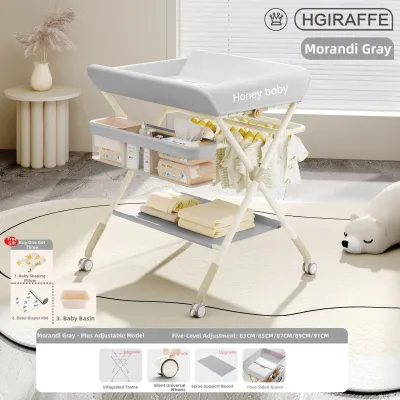
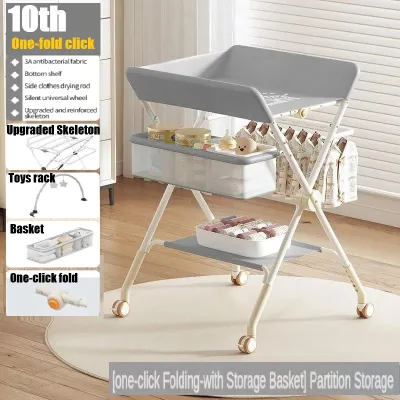
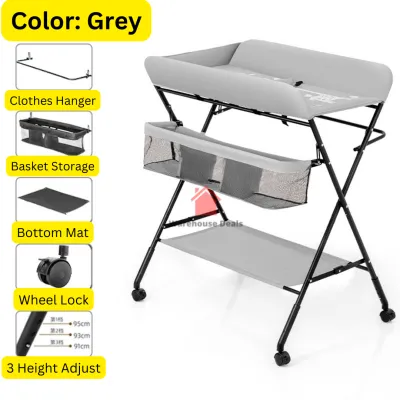
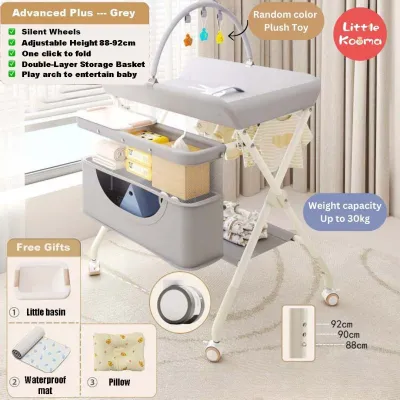
Prices are valid at publication and may change. Please refer to the product page for the latest price.
Safety straps attached to the table or pad serve as a secondary backup measure. They are designed to help keep a wriggling baby in place momentarily, but they must never replace active, hands-on supervision. Never leave your baby unattended on a changing surface, even for a split second, regardless of how secure the straps or rails appear.
Ergonomics: Translating Height and Pad Specs into Caregiver Comfort
Repetitive bending during diaper changes can quickly lead to chronic back strain. To prevent this, look for a table where the top surface aligns closely with the primary caregiver’s waist level. This allows you to stand upright with your elbows bent at a comfortable angle while changing your baby, eliminating the need to hunch over.
The changing pad itself requires careful evaluation. Look for a pad with sufficient thickness to cushion your baby against the hard table surface, combined with firm edges that do not collapse easily under pressure. In humid climates, prioritize highly wipeable, waterproof materials over plush fabrics. Waterproof surfaces can be sanitized instantly, whereas plush covers trap moisture, sweat, and spills, requiring frequent washing to prevent mold and odor.
Some modern tables offer adjustable-height mechanisms, while others feature a fixed-height design. Adjustable models provide excellent flexibility if caregivers of vastly different heights share changing duties. However, they often come with a trade-off in long-term sturdiness, as moving joints can loosen over time. Fixed-height tables generally offer a more rigid, wobble-free structure, making them a highly reliable choice if a single height suits your household.
Storage and Footprint: Balancing Capacity with Nursery Space
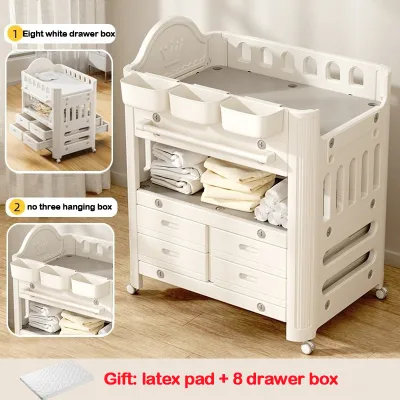
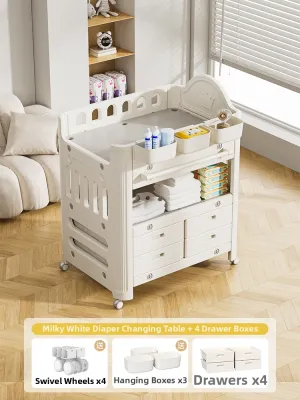
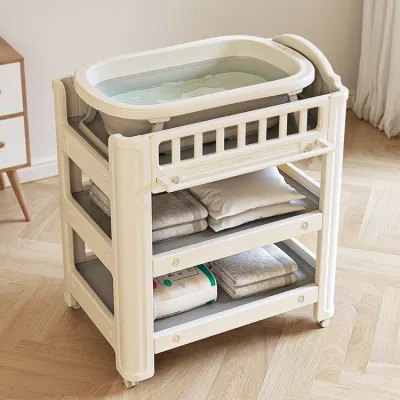
Open shelving allows for rapid, one-handed access to diapers, wipes, and creams while you keep your other hand securely on your baby. However, open shelves can look cluttered and allow dust to accumulate on baby essentials. Closed drawers keep items clean and hidden, but they require you to open and close them while managing an active baby, which can be challenging.
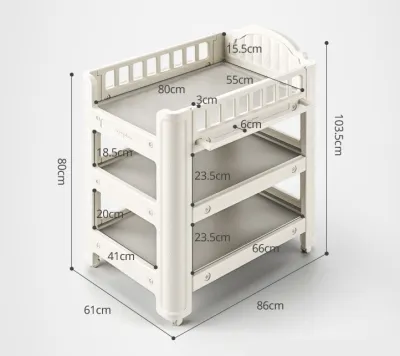
In compact living spaces, such as typical HDB flats or apartments, floor space is at a premium. Before purchasing, measure the exact dimensions of the designated nursery area. Ensure there is sufficient clearance for nursery doors to swing fully open, walkways to remain clear, and adjacent furniture to be accessed comfortably. A bulky table can quickly make a small room feel cramped and difficult to navigate.
Mobility features like lockable casters offer great convenience for cleaning routines, allowing you to easily roll the table aside to vacuum or mop. If you choose a mobile model, verify that the casters feature robust, easy-to-engage locks that keep the table completely stationary during use. Stationary legs, on the other hand, provide a permanent, rock-solid foundation and often allow for larger, uninterrupted bottom shelves since there are no wheel mechanisms taking up lower clearance.
Longevity: Evaluating Convertible and Multi-Use Designs
Investing in a convertible diaper change table can extend the furniture’s utility far beyond the diaper-wearing years. Many convertible models are designed to transition seamlessly into standard chests of drawers, toy storage units, or study shelving once your child outgrows the changing phase. This adaptability makes them a highly sustainable choice for growing families.
These multi-use designs typically carry a higher upfront cost (often ranging from S$300 to over S$600) and feature a heavier, more substantial build. While the initial investment is greater, the extended lifespan often delivers better long-term value compared to a single-purpose table that you must discard or sell after two years.
However, a convertible model may not suit every household. If you have limited space, a tight budget, or already own a sturdy chest of drawers, a simple, dedicated changing table or a secure dresser-top changing pad is a highly practical and cost-effective alternative. This setup allows you to utilize existing furniture without committing to a bulky, expensive new piece.
Specs You Can Safely Deprioritise
When shopping, it is easy to get distracted by high-tech add-ons. Built-in wipe warmers, integrated electronic scales, or complex sound machines built directly into the table are features you can safely deprioritise. These electronic components often malfunction over time, require specific refills or power outlets, and quickly become redundant as your baby grows.
Similarly, avoid choosing overly specific theme-matching finishes or highly stylised, custom hardware. While a pastel-painted table with cartoon carvings might look charming in a newborn nursery, it limits the furniture’s ability to blend into other rooms or suit an older child’s bedroom later on. Opting for neutral tones and classic hardware ensures the piece remains versatile for years to come.
Frequently Asked Questions (FAQ)
Can I use a regular dresser instead of a dedicated diaper change table?
Yes, you can safely adapt a regular dresser, provided you follow strict safety guidelines. You must use a secure, contoured changing pad equipped with a safety strap that anchors directly to the back of the dresser or the wall. Additionally, verify the dresser’s overall stability; it is critical to anchor the dresser securely to the wall studs using anti-tip brackets to prevent forward tipping when drawers are pulled out or when weight is applied to the top.
Do I need a changing table with wheels?
Whether you need wheels depends entirely on your home layout and daily routine. Wheels are highly useful if you need to move the table frequently to vacuum underneath or reposition it between rooms, provided the wheels have reliable, easy-to-engage locks. If your changing table will remain in a fixed spot, stationary legs are often preferable, as they provide a slightly more rigid, wobble-free feel and typically offer more usable storage space underneath.

Community discussion
Share your experience or ask a question. Comments are reviewed before publication.