
Selecting a car seat is one of the most critical safety decisions you will make for your child. When evaluating premium options like the maxi cosi mica 360 pro, you will quickly encounter a complex array of technical terms, safety standards, and independent test badges. Understanding what these certifications actually mean is essential for verifying whether a seat meets your safety expectations and fits your daily lifestyle.
In Singapore, where families navigate both bustling urban expressways and tight parking structures, a car seat must offer robust protection alongside practical usability. Safety certifications are not just marketing labels; they are rigorous frameworks designed to simulate real-world crash dynamics. By decoding these standards, you can make an informed decision based on empirical testing rather than promotional claims.
Decoding i-Size (UN R129): What the Core Standard Actually Requires
The i-Size standard, formally known as UN R129, is the latest European safety regulation governing child car seats. Unlike older standards that grouped seats primarily by the child’s weight, i-Size uses height-based classification. This shift is crucial because children grow at highly variable rates, and height provides a far more accurate baseline for ensuring that the seat’s harness, headrest, and protective shell align correctly with the child’s skeletal structure.
Products mentioned in this guide
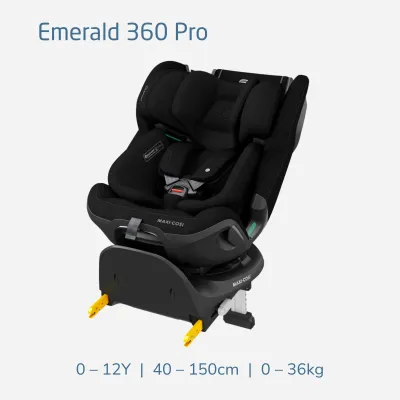
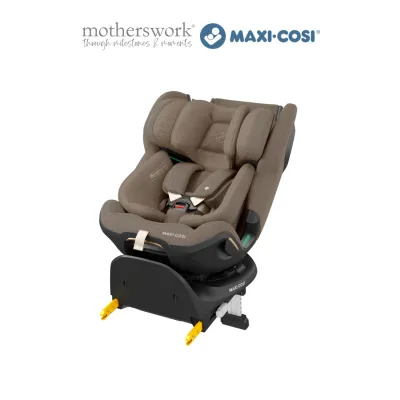
Prices are valid at publication and may change. Please refer to the product page for the latest price.
One of the most significant advancements introduced by the UN R129 standard is mandatory side-impact testing. Under older regulations, car seats were only required to undergo frontal and rear-impact crash simulations. Because side-impact collisions account for a high percentage of severe injuries due to the minimal crumple zone on the sides of vehicles, i-Size forces manufacturers to integrate advanced lateral protection systems to absorb crash energy before it reaches the child.
Additionally, the i-Size standard mandates that children must travel in a rear-facing position until they are at least 15 months old. Pediatric safety experts recommend keeping children rear-facing for as long as possible because an infant’s head is disproportionately heavy compared to their developing neck muscles. In a frontal collision, a rear-facing seat cradles the head and neck, distributing the impact forces evenly across the strong back shell rather than pulling the head forward.
To verify these limits on your seat, locate the orange UN R129 approval label permanently affixed to the shell. This label details the specific height range (for example, 40 cm up to 105 cm) and the maximum allowable weight for the seat and base combination. Always cross-reference these official specifications with your child’s current measurements to confirm the seat remains safe for continued use.
Reading Independent Test Labels: How ADAC and Similar Scores Work
While legal standards like UN R129 establish the baseline requirements for a car seat to be legally sold, voluntary independent tests provide a deeper look into real-world performance. Organizations such as the German Automobile Club (ADAC), ÖAMTC, and Stiftung Warentest conduct highly respected, independent consumer testing. These entities purchase seats anonymously from retail channels and subject them to crash tests that exceed legal minimums in speed, force, and configuration.

Understanding the ADAC scoring system can be counterintuitive for parents accustomed to standard grading systems. ADAC uses a German school-style grading scale where a lower numerical score represents a better safety and usability rating. For instance, a score between 0.6 and 1.5 is rated as “Very Good” (sehr gut), while a score above 4.6 is deemed “Poor” (mangelhaft). When reviewing test results, a lower number indicates superior crash protection, lower risk of installation error, better ergonomics, and fewer harmful chemicals in the fabrics.
When researching the maxi cosi mica 360 pro, it is important to search for the specific test year and configuration in the ADAC database. Independent scores are highly specific to the exact model, integrated base, and testing protocols active during that assessment year. Be sure to verify that the test results you are reading match the exact version of the seat you intend to purchase, as minor design updates or base configurations can influence the overall rating.
How the Maxi-Cosi Mica 360 Pro Rotation Mechanism Affects Real-World Safety
The “360 Pro” rotation mechanism is often highlighted for its convenience, but its primary safety benefit lies in reducing installation and harnessing errors. In tight Singapore parking spaces, trying to buckle a wriggling child into a fixed, rear-facing seat can lead to a loose harness or twisted straps. By rotating the seat to face the open door, you can easily view the buckle, adjust the chest pads, and pull the harness tight, ensuring a secure fit every time.
However, a rotating seat only provides its certified level of protection when it is fully locked into its designated travel position. The internal locking mechanisms are engineered to withstand extreme crash forces, keeping the seat shell securely anchored to the base. If the seat is left in an intermediate or unlocked position, the rotational forces during a sudden stop or collision could cause the seat to spin violently, placing immense strain on the child’s neck and spine.
To prevent this risk, always consult the user manual to identify the visual and audio safety indicators on your seat. Most modern rotating seats feature color-coded indicators that turn from red to green only when the seat is fully locked in either the rear-facing or forward-facing position. Make it a strict habit to double-check that these indicators are green and that you hear a distinct physical “click” before starting your vehicle’s engine.
Verifying Your Seat: Labels, Limits, and Vehicle Compatibility in Singapore
To ensure the certified safety features of your seat function as intended, you must verify compatibility with your specific vehicle. The i-Size standard relies heavily on ISOFIX anchorage points and a stabilizing support leg to prevent the seat from tipping forward during a crash. In Singapore, where vehicle models vary widely from compact hatchbacks to spacious SUVs, you must confirm that your car’s floor structure can safely accommodate a support leg.
Some vehicles have underfloor storage compartments in the rear passenger footwell. Placing a heavy support leg on top of a hollow storage lid can cause the lid to collapse under the extreme forces of a collision, rendering the support leg useless. Always consult both your car’s manual and the manufacturer’s vehicle fit list to verify that the seat is approved for installation in your specific make, model, and seating position.
Additionally, perform regular checks on your child’s physical development. Compare their current height and weight against the limits printed on the seat’s orange certification label. If your child’s head exceeds the highest point of the headrest even when fully extended, or if they surpass the maximum weight limit, it is time to transition to a larger, age-appropriate car seat. Never ignore these physical limits, as doing so voids the safety certifications and compromises your child’s protection.
Frequently Asked Questions (FAQ)
Is i-Size (R129) inherently safer than the older ECE R44/04 standard?
Yes, the i-Size (UN R129) standard is designed to be safer because it mandates side-impact crash testing and uses advanced Q-dummies with highly sensitive sensors to measure crash forces. Additionally, grouping seats by height rather than weight ensures a more secure and accurate fit for growing children, reducing the risk of premature transition to forward-facing travel.
Does a 360-degree rotation mechanism compromise the car seat's structural strength?
No, certified rotating car seats undergo the same rigorous dynamic crash testing as fixed seats to achieve their safety approvals. The rotation joints and locking mechanisms are engineered to handle extreme impact forces, provided the seat is fully locked into its rear-facing or forward-facing travel position and the visual indicators show green before you drive.

Community discussion
Share your experience or ask a question. Comments are reviewed before publication.