
When preparing your nursery, selecting a safe sleep environment is one of the most critical decisions you will make. With a vast array of baby cribs available on e-commerce platforms and in local showrooms, navigating the technical specifications can feel overwhelming. Whether you are investing S$300 in a compact wooden cot or S$1,200 in a convertible nursery suite, safety certifications are the most critical indicators of structural and material compliance.
However, acronyms like EN 716, ASTM F1169, and GB can be confusing for parents trying to make an informed decision. Understanding what these labels actually mean, how they are tested, and how to verify them ensures you choose a sleep environment that meets rigorous safety baselines for your nursery.
Understanding the Major Crib Safety Standards
Let’s break down the three primary standards you will encounter when shopping for a baby crib.
Products mentioned in this guide
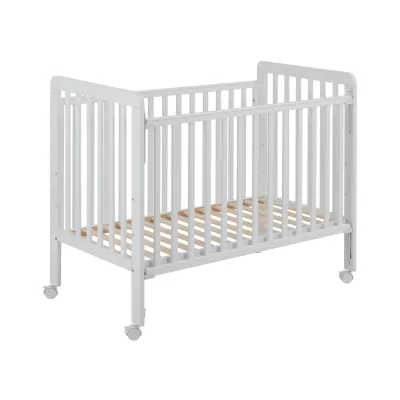
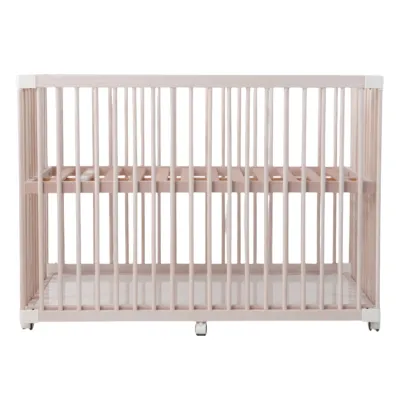
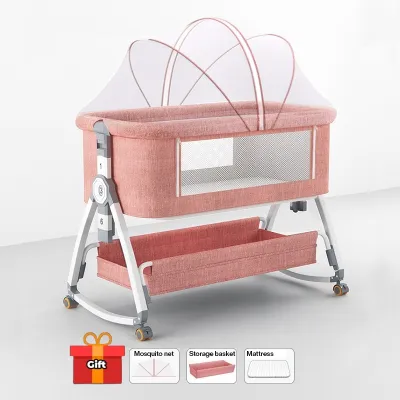
Prices are valid at publication and may change. Please refer to the product page for the latest price.
The EN 716 standard is the European benchmark for children’s cots and folding cots for domestic use. This standard focuses heavily on structural integrity, material safety, and entrapment prevention. It dictates precise dimensions, such as the spacing between crib slats, which must be narrow enough to prevent a baby’s head or limbs from becoming trapped. Additionally, EN 716 regulates the height of the crib sides to prevent falls and ensures that the materials used, including paints and varnishes, are non-toxic and flame-retardant.
The ASTM F1169 standard is the United States safety specification for full-size baby cribs, developed by the American Society for Testing and Materials. This standard places a strong emphasis on structural stability, hardware security, and strict dimensional requirements. Notably, ASTM standards led the industry-wide ban on traditional drop-side cribs due to safety risks associated with malfunctioning hardware. It requires rigorous testing for mattress support strength, slat strength, and the durability of all latching mechanisms to withstand daily wear and tear.
The GB standards represent the national safety requirements of China. For baby furniture and cribs, these standards cover similar structural, mechanical, and chemical safety requirements as their Western counterparts. They mandate strict testing for physical hazards, such as sharp edges or small parts that could pose choking risks, alongside chemical limits on heavy metals and volatile organic compounds in finishes.
While these standards represent baseline regulatory compliance for their respective regions, they are not an absolute guarantee against all risks. They establish that a crib has passed standardized mechanical and chemical tests under controlled conditions, but they cannot account for improper assembly, wear and tear, or misuse. Caregiver supervision and correct assembly remain essential.
How to Verify Genuine Safety Compliance on a Baby Crib
With many parents sourcing furniture from global e-commerce platforms, verifying that a crib actually complies with these standards is essential. Vague marketing claims like “meets international standards” or “certified safe” without specifying the exact standard code (such as EN 716-1 or ASTM F1169) should be approached with caution.

To confirm authenticity, start by inspecting the physical product. Genuine safety compliance typically requires permanent, physical certification labels attached directly to the crib frame, the mattress support board, or the inside of the headboard. These labels should clearly state the manufacturer’s details, the model number, and the specific safety standard it complies with.
Next, ask the retailer or manufacturer for the official test reports corresponding to the exact model number of the crib. Reputable brands will readily provide documentation from independent, accredited testing laboratories. Ensure the model number on the test report matches the model number on your purchase invoice and the physical label on the crib.
If you are purchasing a crib online, do not rely solely on the product listing text. Cross-reference the brand and model with official regulatory databases or product recall lists to ensure the item has not been flagged for safety violations or structural failures.
Key Safety Features to Inspect Beyond the Certification Label
Even a fully certified crib requires active inspection and proper setup to remain safe. Certifications cover the manufacturing design, but they do not account for assembly errors, missing parts, or gradual wear and tear over time.
First, perform a thorough check of the mattress fit. There should be no dangerous entrapment gaps between the mattress and the crib sides. A standard rule of thumb is that if you can fit more than two fingers between the mattress and the crib frame, the mattress is too small, posing a severe suffocation or entrapment risk. Always use a firm mattress specifically sized for your crib model.
Second, inspect the assembled crib for loose hardware, sharp edges, or protruding parts. During assembly, ensure every screw and bolt is tightened securely according to the manufacturer’s instructions, but avoid over-tightening, which can strip the wood or damage the metal threads. Check the crib regularly—at least once a month—to ensure no joints have loosened from the baby’s movement.
Finally, strictly follow the manufacturer’s stated weight, height, and developmental limits for transitioning out of the crib. For instance, as soon as your baby can sit up or pull themselves up to a standing position, you must lower the mattress base to its lowest setting to prevent falls. Once your child reaches the height limit or attempts to climb out of the crib, it is time to transition them to a toddler bed or a floor mattress. If you suspect any structural damage or are unsure about assembly, consult a qualified professional or the manufacturer before placing your baby in the crib.
Frequently Asked Questions (FAQ)
Is a crib with multiple certifications safer than one with a single standard?
Not necessarily. Multiple certifications simply indicate that the manufacturer has tested the crib to comply with different regional markets for export purposes. For example, a crib carrying both EN 716 and ASTM F1169 certifications can be legally sold in both Europe and North America. It means the design satisfies the overlapping safety criteria of both regions, but it does not mean the crib is inherently safer than a model that strictly and fully complies with a single, rigorous local standard.
Do second-hand or vintage cribs meet current safety standards?
Older, second-hand, or vintage heirloom cribs rarely meet modern safety standards and should generally be avoided. Over time, safety regulations have evolved significantly; for example, older cribs may feature drop-side rails, wider slat spacing that poses entrapment risks, or decorative cutouts that can catch a child’s clothing. Furthermore, older paint finishes may contain lead, and the structural integrity of the wood and hardware can degrade with age, making them unsafe for unsupervised sleep. Always verify the model number against recall databases before using any pre-owned baby furniture.

Community discussion
Share your experience or ask a question. Comments are reviewed before publication.