
Verifying whether the Cybex Sirona T is compliant with Singapore’s car seat laws and international safety standards requires a careful inspection of the physical product labels and the official manufacturer specifications. In Singapore, the law mandates that anyone under the height of 1.35 metres must be secured with an appropriate child restraint when travelling in a private vehicle. To ensure a car seat like the Cybex Sirona T meets these legal requirements, parents must confirm that the seat carries a recognized international certification label, such as the United Nations Economic Commission for Europe (UNECE) standard R129 (commonly known as i-Size) or R44/04. Checking these physical markers before purchase or installation is the most reliable way to guarantee both legal compliance and peace of mind on local roads.
Understanding Singapore's Child Restraint Laws
Singapore’s Road Traffic Act establishes clear rules regarding passenger safety, with a specific focus on protecting young children in motor vehicles. Under these regulations, any passenger under the height of 1.35 metres, regardless of age, must be secured with an approved child restraint, booster seat, or adjustable seat belt appropriate for their height and weight. This law applies to all private passenger vehicles operating on Singapore roads. Failing to comply with these rules not only carries legal penalties for the driver but also significantly increases the risk of safety hazards for the child in the event of a sudden stop or collision.
To satisfy the legal definition of an approved child restraint, the equipment must conform to recognized international safety standards. The Singapore traffic authorities officially recognize several major global standards. These include the European standards (ECE R44/04 and the newer ECE R129), the American standard (FMVSS 213), the British standard (BS 3254), the Australian standard (AS 1754), and the Japanese standard (JIS D0401). When purchasing a car seat in Singapore, parents must verify that the product has been tested and certified under at least one of these frameworks.
Products mentioned in this guide
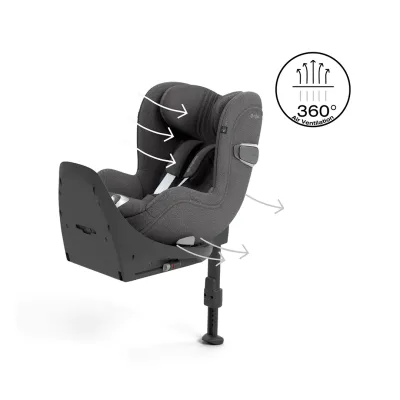
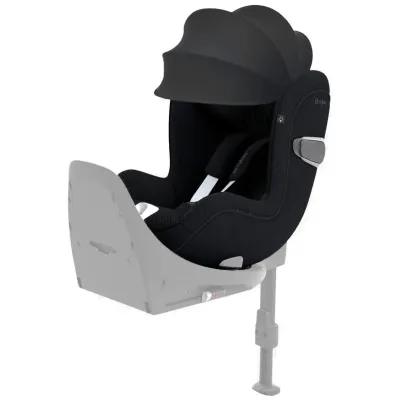
Prices are valid at publication and may change. Please refer to the product page for the latest price.
The responsibility for ensuring compliance rests entirely on the driver of the vehicle. While retail stores in Singapore offer a wide variety of child car seats, not all imported models may carry the necessary certification labels required by local traffic police. Relying solely on a brand’s reputation or the country of origin is insufficient. Drivers must actively inspect the physical seat for the appropriate regulatory markings before installing it in their vehicles.
How to Check the Cybex Sirona T for Safety Certifications
To verify that a specific Cybex Sirona T unit is fully compliant with Singapore’s legal standards, you must locate the official approval label on the physical seat. This label is typically a bright orange or white sticker permanently affixed to the plastic shell, the underside of the seat, or the base unit. This sticker serves as the official certificate of compliance, proving that the specific model has undergone rigorous testing and meets international safety criteria.

When inspecting the label on the Cybex Sirona T, look closely for the specific regulatory markers. Because this model is designed to meet modern European safety protocols, you should expect to find the “ECE R129” or “i-Size” designation printed clearly on the tag. The label will also display a circle containing the letter “E” followed by a number, which indicates the European country that granted the approval. Additionally, the label will specify the height range and maximum weight limit for which the seat is certified. For i-Size seats, compliance is primarily determined by the child’s height rather than weight alone, which aligns directly with Singapore’s height-based traffic laws.
Authenticity is another critical factor to consider when verifying compliance. Counterfeit or non-compliant car seats can sometimes find their way into online marketplaces. To ensure your Cybex Sirona T is genuine, locate the serial number and model number, which are usually printed on a separate white barcode sticker near the main approval label. You can cross-reference these numbers with the official Cybex user manual or register the product on the manufacturer’s official website. If the physical labels are missing, damaged, or look altered, the seat should not be used, as traffic authorities and safety experts cannot verify its compliance without these official markings.
Key Safety Features to Evaluate Beyond Basic Compliance
While meeting the legal baseline is mandatory, evaluating the practical safety design of the Cybex Sirona T provides a deeper understanding of how the seat protects your child. One of the primary safety advantages of modern i-Size seats is their support for extended rear-facing travel. Parents should consult the product manual to identify the exact maximum height and weight limits allowed for the rear-facing position. Keeping a child rear-facing for as long as possible is widely recommended by safety experts, as it provides superior protection for the child’s delicate head, neck, and spine during a frontal collision.
Another critical design element to inspect is the side-impact protection system. The Cybex Sirona T features integrated or deployable side-impact guards, often referred to as the Linear Side-impact Protection (L.S.P.) system. You should refer to the instruction manual to understand how to correctly deploy or activate these guards on the side of the car seat facing the vehicle door. Ensuring these mechanisms are set up correctly according to the manufacturer’s guidelines is essential for maximizing lateral protection, as passive safety features only work effectively when deployed as intended.
Finally, the harness system requires careful evaluation to ensure a secure fit during every journey. Inspect the five-point harness for any signs of wear, twisting, or fraying. When securing your child, check that the harness straps are adjusted to the correct height—typically at or just below shoulder level for rear-facing, and at or just above shoulder level for forward-facing, as specified in the manual. Many modern seats include visual or audible indicators, such as color-coded guides or tensioning clicks, to help parents confirm that the harness is sufficiently tightened and that the seat is locked securely into its base.
Installation and Usage Boundaries for Maximum Safety
The safety performance of the Cybex Sirona T depends heavily on correct installation within your vehicle. This model is designed to be used with an ISOFIX base, which secures the seat directly to the anchor points built into your car’s chassis. When installing the base, you must verify that the ISOFIX connectors are fully engaged. Most compatible bases feature visual indicators, such as green and red mechanical flags, that change color to confirm a secure connection. Additionally, the support leg must be extended firmly to the vehicle floor, with its own visual or audible indicator confirming correct tension and contact.
Before purchasing or installing the seat, it is vital to check the manufacturer’s vehicle compatibility list. Not all ISOFIX-equipped vehicles are compatible with every car seat base, especially if your car has underfloor storage compartments that prevent the proper use of a support leg. Cybex maintains an updated list of approved vehicles on their official website. Checking this list ensures that the seat and base will fit securely in your specific car model without compromising the structural integrity of the safety system.
Lastly, parents must remain aware of the strict usage boundaries that dictate when a car seat must be adjusted or retired. You must stop using the seat in its current configuration immediately once your child reaches the maximum height or weight limit specified by the manufacturer. Furthermore, any car seat that has been involved in a moderate to severe traffic accident must be replaced, even if there is no visible damage. The structural integrity of the plastic and internal foam can be compromised during a crash, rendering the seat unsafe for future use. Always consult the manufacturer’s guidelines regarding post-accident replacement policies and the overall lifespan of the product.
Frequently Asked Questions (FAQ)
Can I use the Cybex Sirona T in a taxi or private hire car in Singapore?
In Singapore, there is a distinct legal difference between standard public taxis and private hire cars (such as ride-hailing services) regarding child restraints. Public taxis are legally exempt from the child restraint requirement, meaning passengers under 1.35 metres may travel in the rear seat using the vehicle’s standard seat belts, though this is not the safest practice. Private hire cars, however, enjoy no such exemption. If you are travelling in a private hire vehicle, your child must be secured in an approved restraint. Because the Cybex Sirona T requires an ISOFIX base and a support leg for proper installation, it is generally too heavy and cumbersome for quick transfers in and out of hired vehicles. For frequent ride-hailing users, a highly portable, belt-installed infant carrier or a lightweight folding booster seat may be more practical for daily travel.
Does the Cybex Sirona T allow rear-facing travel for older toddlers?
Yes, the Cybex Sirona T is designed to support rear-facing travel well into the toddler years, but you must verify the exact limits in the product manual. Under the ECE R129 (i-Size) standard, the seat is engineered to accommodate children in the rear-facing position up to a specific height limit, typically around 105 centimetres, or a maximum weight limit of 18 kilograms. Parents should regularly measure their child’s height and weight to ensure they remain within these official thresholds. Transitioning the seat to a forward-facing position should only occur once the child has fully outgrown the rear-facing limits specified by the manufacturer, as extended rear-facing travel provides the highest level of protection for a developing child’s neck and spine.

Community discussion
Share your experience or ask a question. Comments are reviewed before publication.