
Cybex car seats are widely compliant with Singapore’s road safety regulations, provided the specific model you choose carries an approved international safety certification label and matches your child’s current height and weight. In Singapore, child passenger safety is strictly regulated by the Land Transport Authority (LTA). To legally use any car seat, including those from premium brands like Cybex, the seat must meet recognized international standards and be installed correctly according to both the manufacturer’s instructions and local traffic laws.
Parents must verify the specific certification sticker on their individual Cybex model, as compliance is determined by the physical label on the seat rather than the brand name alone. Choosing the right model involves matching your child’s developmental stage to the seat’s certified limits and ensuring a secure fit in your vehicle.
Understanding Singapore's Child Restraint Laws
Singapore’s Road Traffic Act mandates strict safety measures for young passengers to minimize the risk of injury during travel. Under the Land Transport Authority (LTA) regulations, anyone below the height of 1.35 metres must be secured with an approved child restraint appropriate for their height and weight when riding in a motor vehicle. This law applies to all private passenger vehicles operating on Singapore roads, making the use of a compliant car seat a legal necessity for families.
Products mentioned in this guide
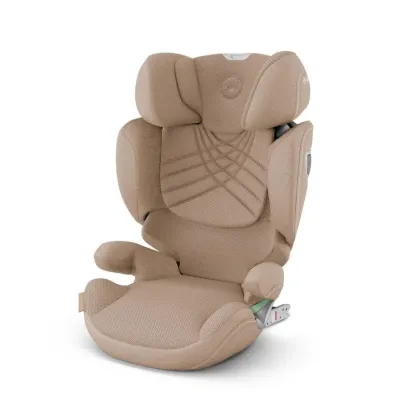
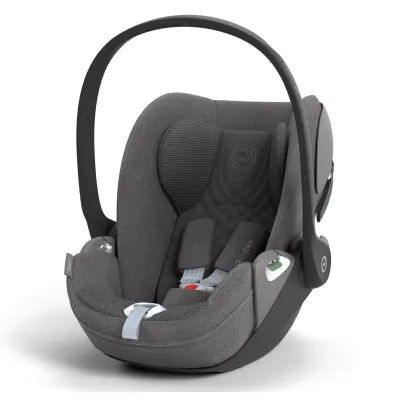
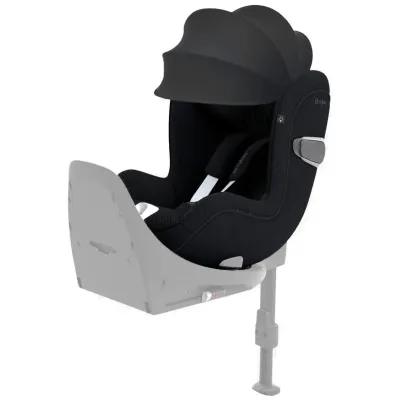
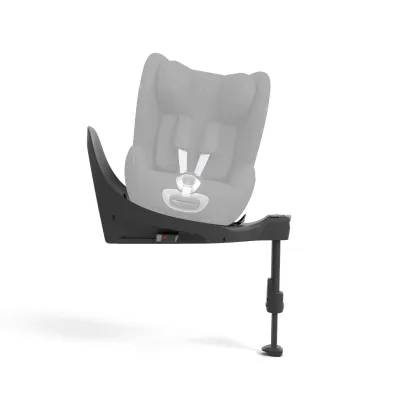
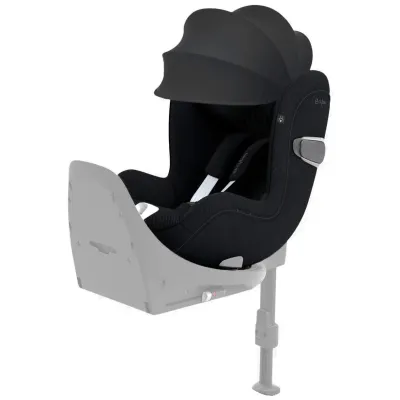
Prices are valid at publication and may change. Please refer to the product page for the latest price.
The height threshold of 1.35 metres is chosen because standard vehicle seatbelts are designed for adult bodies. When a child who is shorter than this threshold uses a standard seatbelt without a booster or safety seat, the belt can rest dangerously across their neck or abdomen rather than their collarbone and pelvis. This improper fit can cause severe internal injuries in the event of sudden braking or a collision.
To meet local legal requirements, a child restraint must comply with recognized international safety standards. Singapore authorities officially accept several global standards, with the United Nations Economic Commission for Europe (UNECE) regulations—specifically UNECE R44/04 and the newer UNECE R129 (commonly known as i-Size)—being the most prevalent. Other accepted standards include those from the United States (FMVSS 213), the United Kingdom, Australia, and Japan.
The legal responsibility for ensuring that child passengers are properly secured rests entirely on the driver of the vehicle. Failing to provide an approved child restraint for a passenger under 1.35 metres is a traffic offense in Singapore. Drivers found non-compliant face composition fines, demerit points, or potential prosecution in court for subsequent offenses. Consequently, verifying that your Cybex car seat meets these legal baselines is essential before taking it onto the road.
How to Verify Safety Certifications on Cybex Car Seats
Confirming that your Cybex car seat is legally compliant in Singapore requires a physical inspection of the seat itself. Every approved car seat must feature an official, tamper-evident certification label, which is typically orange. On Cybex models, this sticker is usually affixed to the underside of the plastic shell, the back of the seat, or along the side of the base. If this label is missing, defaced, or illegible, the seat cannot be verified as legally compliant.

When examining the orange approval label, look closely at the specific testing standard printed on it. You will most commonly see references to either ECE R44/04 or ECE R129. The ECE R44/04 standard categorizes car seats based on the child’s weight groups, whereas the newer ECE R129 (i-Size) standard classifies seats primarily by the child’s height. Both standards are fully recognized and legal for use under Singapore’s current traffic regulations.
The label also contains other critical pieces of regulatory information that you must verify. It will display the word “Universal” or “Semi-Universal,” indicating whether the seat is designed to fit in almost all vehicles or if it requires specific vehicle compatibility (such as an ISOFIX system or a support leg). Additionally, the label features an “E” mark inside a circle, followed by a number that represents the European country that granted the safety approval.
Beyond checking the standard’s name, you must verify that the weight or height range printed on the label matches your child’s current physical measurements. A seat that is legally compliant in theory becomes non-compliant and unsafe in practice if used for a child who falls outside the specified limits. Regularly inspect this label as your child grows to ensure they have not exceeded the maximum weight or height threshold designated by the manufacturer.
Choosing a Compliant Cybex Model Based on Child's Size
Cybex designs a wide range of car seats tailored to different stages of a child’s development, and selecting the correct category is vital for both legal compliance and physical safety. Infant carriers are designed specifically for newborns and young babies, offering a highly reclined position and deep side-impact protection. These seats must always be installed in a rear-facing position to protect the infant’s fragile neck and spine during a sudden stop.
As your child outgrows their infant carrier, they will transition to a convertible car seat or a multi-stage seat. These models can be adjusted to accommodate growing children and often allow for extended rear-facing travel, which is widely recommended by safety experts. When configuring a convertible seat, you must consult the specific Cybex product manual to determine the exact height or weight limit at which the seat must be transitioned from rear-facing to forward-facing.
For older children who have outgrown convertible seats but remain under the legal height threshold of 1.35 metres, a high-back booster seat is the appropriate choice. High-back boosters raise the child so that the vehicle’s three-point seatbelt fits correctly across their shoulder and hips. These seats ensure that the belt does not ride up against the neck or press into the soft tissue of the stomach, maintaining legal compliance until the child can safely use the vehicle’s seatbelt alone.
Never transition your child to the next stage of car seat prematurely. Each transition—from infant carrier to convertible, and from convertible to booster—actually represents a slight reduction in overall containment and support. Always refer to the exact measurements specified in your Cybex user manual, and keep your child in their current seat category until they reach the maximum weight or height limit allowed by the manufacturer.
Ensuring Proper Installation for Maximum Safety
A certified Cybex car seat can only provide its engineered level of protection if it is installed correctly in your vehicle. There are two primary methods for securing a car seat: the vehicle’s three-point seatbelt or the ISOFIX system. ISOFIX utilizes rigid metal anchor points built directly into the vehicle’s chassis, offering a highly secure connection that minimizes the risk of installation errors. You must check your vehicle’s manual to confirm if ISOFIX anchor points are available in your desired seating positions.
Many Cybex models, particularly those with ISOFIX bases, feature integrated safety mechanisms such as support legs or top tethers. A support leg extends from the base of the car seat to the floor of the vehicle, preventing the seat from tipping forward in a crash. To ensure these components are deployed correctly, look for the built-in color indicators on the seat or base. These indicators typically turn from red to green when the ISOFIX connectors are locked and the support leg is under the correct tension against the vehicle floor.
If you are installing a Cybex seat using the vehicle’s seatbelt, you must ensure the belt is routed precisely through the designated green or blue belt guides (for R129 seats) or red guides (for R44 seats). The seatbelt must be pulled tight to eliminate any slack. Once installed, perform a physical check by grasping the seat near the belt path or ISOFIX anchors and giving it a firm tug. The seat should not move more than 2.5 centimeters (one inch) in any direction.
Incorrect installation is one of the most common safety hazards on the road. If your vehicle has underfloor storage compartments, you must verify whether a support leg can safely rest on the compartment lid, as some manufacturers prohibit this due to the risk of the floor collapsing under impact. Always read both your Cybex instruction manual and your vehicle’s owner manual thoroughly, and if you are uncertain, consult a certified child passenger safety technician in Singapore to verify the installation.
Frequently Asked Questions (FAQ)
Can I use a Cybex car seat purchased overseas in Singapore?
Yes, you can use a Cybex car seat purchased overseas in Singapore, provided it carries an internationally recognized safety certification label accepted by the Land Transport Authority (LTA). The most common accepted standard is the UNECE R44/04 or UNECE R129 (i-Size) standard, which is widely used across Europe and other regions. Before using an imported seat, physically inspect it to locate the orange certification sticker. If the seat was manufactured for a market that does not use recognized standards, or if the label is missing, it cannot be legally verified for use on Singapore roads.
Do I need a car seat for a taxi or private hire car in Singapore?
Under Singapore law, public taxis are legally exempt from the child restraint requirement, meaning children under 1.35 metres can travel in them using only the vehicle’s rear seatbelts. However, this exemption does not apply to private hire cars (such as those booked via ride-hailing apps), where children under 1.35 metres must legally use an approved child restraint or booster seat. Despite the legal exemption for taxis, safety experts strongly recommend using a portable car seat or infant carrier in all hired transport to protect your child from injury during sudden stops or collisions.
When should I replace my Cybex car seat after an accident?
You must follow the manufacturer’s strict guidelines regarding replacement after any vehicle collision. Cybex generally recommends replacing a car seat that has been involved in an accident, even if the crash occurred at low speeds and there is no visible damage to the seat. The force of an impact can cause hairline fractures and internal structural stress within the plastic shell or webbing that cannot be seen with the naked eye. Using a compromised seat in a subsequent journey significantly reduces its ability to protect your child, so you should consult your insurance provider and the manufacturer’s instructions to arrange for a replacement.

Community discussion
Share your experience or ask a question. Comments are reviewed before publication.